Fill out revocable trust forms
with AI.
Revocable trust forms are essential tools in estate planning, allowing individuals to manage assets during their lifetime and ensure a smooth transition of those assets after death. Unlike irrevocable trusts, these documents allow the grantor to maintain control, offering the flexibility to modify or cancel the trust as circumstances change. They are primarily used to avoid the lengthy and often expensive probate process, providing privacy and ensuring that beneficiaries receive their inheritance according to specific, pre-defined instructions.
By continuing, you acknowledge Instafill's Privacy Policy and agree to get occasional product update and promotional emails.
About revocable trust forms
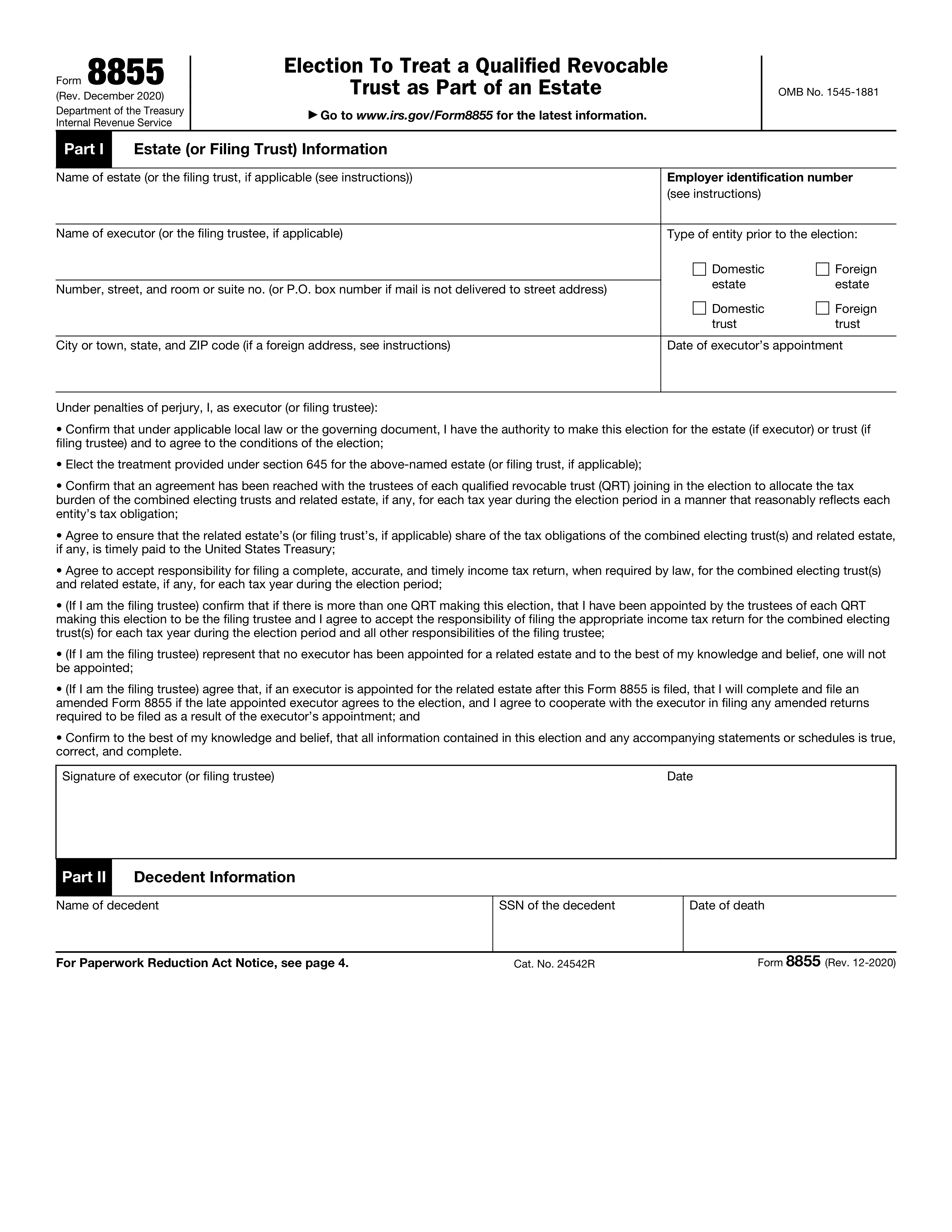
These forms are typically utilized by individuals looking to organize their financial legacy, including homeowners, investors, and business owners. For instance, a Letter of Authorization to Change Account Title is necessary when moving personal brokerage accounts into a trust's name to ensure they are governed by the trust's terms. Additionally, tax-specific documents like Form 8855 are vital for trustees and executors who need to elect to treat a qualified revocable trust as part of an estate for tax purposes, simplifying compliance during the administration period.
Accurately completing these documents is crucial for maintaining the legal integrity of an estate plan. Tools like Instafill.ai use AI to fill these forms in under 30 seconds, handling data accurately and securely to save users time on administrative tasks. This technology ensures that the transition of assets remains organized and legally sound without the burden of manual data entry.
Every form on this page can be completed without typing. Instafill is form filling software that reads a PDF and fills it for you — including flat and scanned documents that carry no fillable fields at all.
Forms in This Category
The forms in this category have a median Form Complexity Index of 41/100 (Basic), measured across 2 forms by field count, input difficulty, length, conditional logic and structure. See how it is calculated.
| Form Name | Pages | FCI | |
|---|---|---|---|
| 1. | Form 8855, Election To Treat a Qualified Revocable Trust | 4 | Basic 41 |
| 2. | Letter of Authorization to Change Account Title to a Grantor Revocable Trust | 1 | Basic 30 |
- Enterprise-grade security & data encryption
- 99%+ accuracy powered by AI
- 1,000+ forms from all industries
- Complete forms in under 60 seconds
How to Choose the Right Form
Choosing the right revocable trust form depends entirely on whether you are currently setting up your estate plan or managing the tax implications of an existing trust after a grantor has passed away. Use the guide below to identify which document matches your current needs.
For Tax Elections and IRS Compliance
If you are a trustee or an executor managing a trust following a death, you likely need Form 8855, Election To Treat a Qualified Revocable Trust. This is a specialized tax document rather than a document used for the initial creation of a trust.
- Purpose: This form allows you to elect to treat a qualified revocable trust (QRT) as part of a related decedent’s estate for federal income tax purposes under Section 645.
- When to use it: Use this during the administration process to simplify tax filings by combining the trust and estate income onto a single return (Form 1041).
- Key Users: Trustees and executors working together during the probate or post-death administration period to ensure proper tax treatment.
For Funding Your Trust with Financial Assets
If you have already established your trust and now need to "fund" it by moving your personal assets into the trust's name, you will need account-specific transfer documents.
- Letter of Authorization to Change Account Title to a Grantor Revocable Trust: This specific form is designed for individuals who hold accounts with Merrill Lynch, Pierce, Fenner & Smith Incorporated.
- Purpose: It serves as the formal request to change the title of an individual or joint brokerage account into the name of your Grantor Revocable Trust.
- When to use it: Use this during the active planning phase of your estate. Simply creating a trust is not enough; you must use this form to ensure your brokerage assets are legally owned by the trust so they can be managed and distributed according to your trust's terms.
Quick Summary
- Choose Form 8855 if you are handling tax reporting for a deceased person's trust.
- Choose the Letter of Authorization if you are a Merrill Lynch client looking to transfer your current investment accounts into your trust.
Form Comparison
| Form | Primary Purpose | Who Files It | When to Use |
|---|---|---|---|
| Form 8855, Election To Treat a Qualified Revocable Trust | Elects to treat a revocable trust as part of an estate for taxes. | Trustees and executors of the related estate. | After a grantor's death to simplify income tax reporting. |
| Letter of Authorization to Change Account Title to a Grantor Revocable Trust | Transfers ownership of financial accounts from individuals to a trust. | Individual or joint account holders and grantors. | When funding a trust with existing bank or brokerage assets. |
Tips for revocable trust forms
When filling out account title change forms, ensure the trust's name matches your trust agreement word-for-word. Even minor discrepancies in the spelling or the date the trust was established can lead to processing delays or rejection by financial institutions.
For Form 8855, it is crucial that both the trustee and the estate executor are in agreement before filing. Since this form treats the trust as part of the estate for tax purposes, failing to coordinate signatures can result in conflicting tax filings and potential IRS audits.
Managing complex estate planning documents can be overwhelming, but AI-powered tools like Instafill.ai can complete these forms in under 30 seconds with high accuracy. Your sensitive data stays secure during the process, making it a reliable and practical time-saver for those handling multiple trust-related documents.
Double-check all account numbers when transferring titles to a grantor revocable trust to avoid administrative errors. Providing incorrect account information can lead to assets being improperly titled, requiring you to restart the entire paperwork process with the brokerage.
Most institutions require a Certificate of Trust or specific pages from the original trust document alongside your change-of-title forms. Having a digital scan of these documents ready will allow you to quickly provide the necessary proof of authority to banks or the IRS without searching through physical files.
Many trust-related forms require signatures to be witnessed or notarized to be legally binding. Review the signature section of each form before finalizing to ensure you have the necessary parties present, which prevents the need for multiple trips to a notary public.
When updating account titles, ensure any required information regarding successor trustees is current and matches your latest estate plan. This ensures that the management of trust assets can transition smoothly in the future without additional administrative hurdles.
Frequently Asked Questions
Revocable trust forms are used to establish, manage, or adjust the legal structure of a living trust, allowing a grantor to maintain control over their assets while they are alive. These forms facilitate the transfer of assets into the trust and ensure the entity is recognized correctly by financial institutions and tax authorities.
Form 8855 is intended for trustees and executors who wish to treat a qualified revocable trust as part of a decedent's estate for federal income tax purposes. This election can simplify the administrative process by allowing the trust and the estate to file a single consolidated income tax return.
To transfer an account, you typically need to submit a Letter of Authorization to your financial institution requesting an account title change. This document formally instructs the bank or brokerage to move the assets from an individual or joint name into the name of the trust.
Yes, you can use AI tools like Instafill.ai to complete various revocable trust forms accurately. These tools are designed to extract necessary data from your existing documents and place it into the correct fields on the PDF, reducing the risk of manual entry errors.
Using AI-powered services, you can often complete these forms in under 30 seconds. The technology quickly identifies required information and populates the form automatically, which is significantly faster than typing out legal and financial details by hand.
The grantor is the individual who creates the trust and provides the assets, while the trustee is the person or entity responsible for managing those assets. In many revocable trusts, the grantor serves as the initial trustee, but these roles must be clearly defined in the paperwork.
Form 8855 is generally filed after the death of the grantor to treat the trust as part of the estate for tax purposes. It must be submitted by the due date of the estate's first income tax return, including any extensions, to ensure the election is valid.
Many trust-related documents, especially those involving the transfer of financial assets or changes to account titles, require a notary public to witness the signature. Some financial institutions may specifically require a Medallion Signature Guarantee for account title changes.
Yes, once these forms are signed and submitted to the relevant authorities or financial institutions, they become legal instructions for how assets should be handled. It is important to ensure all information is accurate before submission to avoid delays in estate administration.
The forms in this category are specifically designed for revocable trusts, which allow for changes by the grantor. Irrevocable trusts have different legal and tax requirements and typically require a different set of specialized forms and filings.
Glossary
- Form Complexity Index
- Instafill’s 0–100 measure of how much effort a form takes to complete, calculated deterministically from the form’s own structure rather than estimated. It combines the number of fillable fields (the largest factor), how difficult those fields are to complete based on their type, the number of pages that contain fields, the amount of conditional “fill-only-if” logic, and how many sections the form is divided into, then adds modifiers for tables and repeating lists, bundled instruction pages, and dense page layouts. A higher score means the form is harder to fill out by hand. The forms in this category have a median Form Complexity Index of 41/100 (Basic). See exactly how it is calculated.
- Grantor
- The individual who creates the trust and transfers their assets into it, typically retaining the power to change or cancel the trust during their lifetime.
- Trustee
- A person or entity designated to manage and oversee the assets held within the trust according to the specific terms and instructions set by the grantor.
- Qualified Revocable Trust (QRT)
- A trust that was treated as owned by the decedent during their life and can be merged with their estate for tax purposes after their death.
- Section 645 Election
- A tax election made using Form 8855 that allows a qualified revocable trust to be treated as part of a deceased person's estate for federal income tax purposes.
- Account Titling
- The legal process of changing the name on a financial account to reflect that it is owned by a trust rather than an individual or joint owners.
- Executor
- The person appointed to manage a deceased person's estate who must coordinate with the trustee to file joint tax elections like Form 8855.
- Fiduciary
- A person or institution, such as a trustee or executor, who is legally and ethically bound to act in the best interests of the trust's beneficiaries.
- EIN (Employer Identification Number)
- A unique nine-digit number assigned by the IRS to identify a trust or estate for tax reporting and banking purposes.