Fill out TE Connectivity forms
with AI.
TE Connectivity forms encompass a range of administrative and HR documents essential for employees managing their professional records and benefits. These forms are particularly crucial during organizational transitions, such as updates to the company’s Retirement Savings and Investment Plan (RSIP). Maintaining accurate documentation ensures that your financial future and employment benefits remain secure and up to date, especially when recordkeeping services migrate between different financial providers.
By continuing, you acknowledge Instafill's Privacy Policy and agree to get occasional product update and promotional emails.
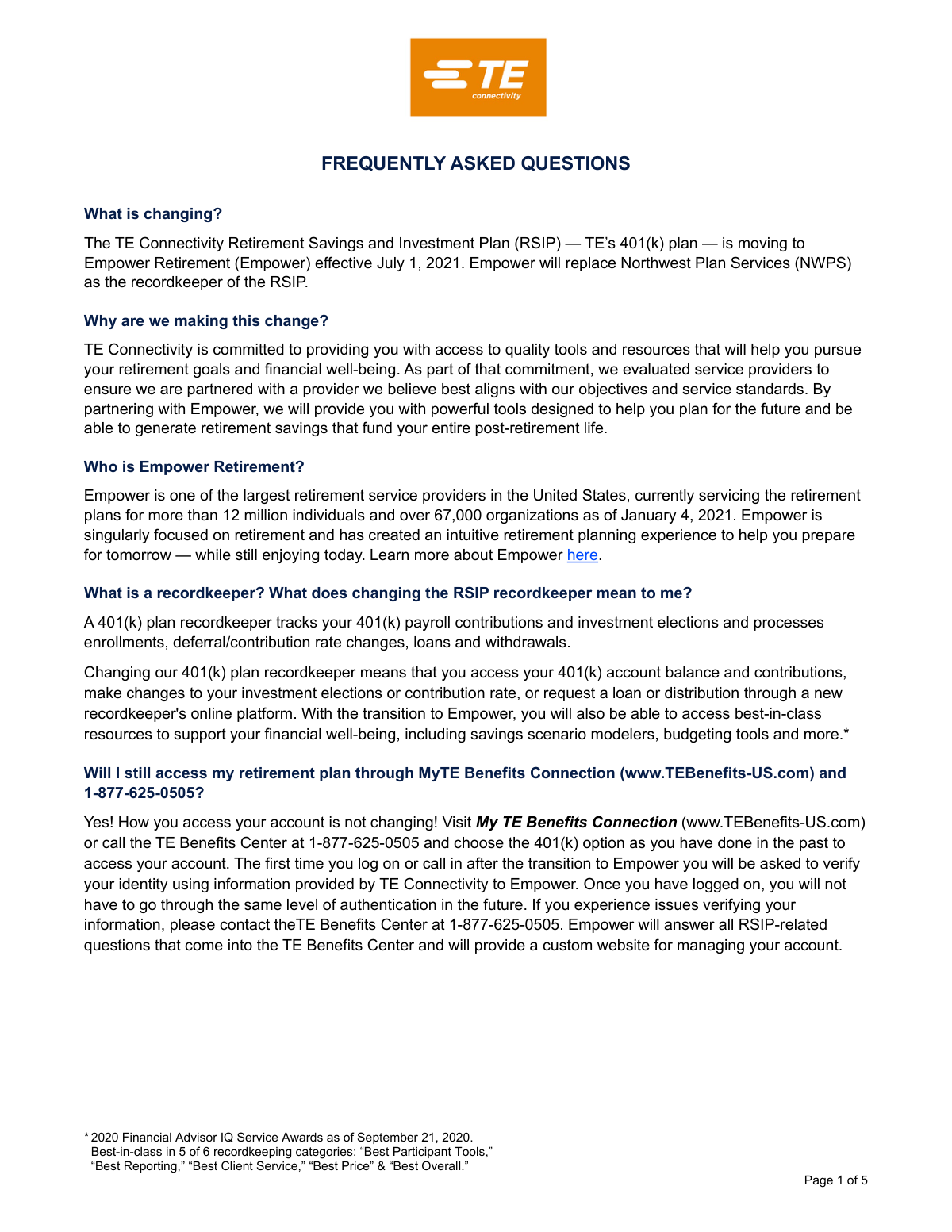
About TE Connectivity forms
These documents are primarily utilized by current and former TE Connectivity employees who need to manage their retirement portfolios, update beneficiary information, or process loans and withdrawals. During transition periods—such as shifts in recordkeeping to platforms like Empower Retirement—participants often need to review detailed FAQs and submit specific paperwork to ensure their investment choices and account settings are correctly transferred. Navigating these requirements accurately is vital to avoid delays in processing financial requests or missing critical deadlines for account changes.
Dealing with complex retirement paperwork can be time-consuming, but tools like Instafill.ai use AI to fill these forms in under 30 seconds while maintaining high standards for data accuracy and security. By automating the data entry process, you can quickly handle RSIP transition forms or other benefit documents, ensuring that your information is submitted correctly without the manual effort usually required for traditional PDF filing.
Every form on this page can be completed without typing. Instafill is form filling software that reads a PDF and fills it for you — including flat and scanned documents that carry no fillable fields at all.
Forms in This Category
| Form Name | Pages | FCI | |
|---|---|---|---|
| 1. | TE Connectivity Retirement Savings and Investment Plan (RSIP) Transition Frequently Asked Questions | 1 | – |
- Enterprise-grade security & data encryption
- 99%+ accuracy powered by AI
- 1,000+ forms from all industries
- Complete forms in under 60 seconds
How to Choose the Right Form
Navigating retirement plan changes can be complex, especially during a major service provider transition. While this category currently features a foundational informational document, it serves as the essential roadmap for any TE Connectivity employee or former employee managing their 401(k) or retirement assets.
Managing Your Retirement Account Transition
The primary document available is the TE Connectivity Retirement Savings and Investment Plan (RSIP) Transition Frequently Asked Questions. This is more than just a simple Q&A; it is a critical guide for any participant during the shift of recordkeeping services to Empower Retirement. You should consult this document if you are looking to understand the following:
- Blackout Periods: Use the guide to identify specific dates when you will be unable to make investment changes, request loans, or process withdrawals.
- Loan and Withdrawal Deadlines: If you are in the middle of a financial transaction, the FAQ outlines the final dates for processing requests before the transition and when services will resume.
- Account Access: Find instructions on how to register your account with the new recordkeeper and ensure your historical data is accurate.
Identifying Necessary Action Steps
While the RSIP Transition FAQ is an informational document, it often points to specific administrative actions you may need to take. If the FAQ mentions a specific form for a loan application, a rollover, or a distribution request that is currently in a non-fillable PDF format, you can use Instafill.ai to convert those requirements into interactive, AI-assisted documents for faster processing.
Who Should Use This Category?
This section is specifically designed for:
- Current Employees: Anyone actively contributing to the TE Connectivity RSIP.
- Former Employees: Individuals who still maintain a balance within the TE Connectivity retirement plan.
- Financial Advisors: Professionals assisting TE Connectivity staff with portfolio management during the transition period.
By reviewing the TE Connectivity Retirement Savings and Investment Plan (RSIP) Transition Frequently Asked Questions, you ensure that your financial planning remains uninterrupted and that you meet all necessary administrative deadlines.
Form Comparison
| Form | Purpose | Target Audience | Key Information |
|---|---|---|---|
| TE Connectivity Retirement Savings and Investment Plan (RSIP) Transition Frequently Asked Questions | Explains the transition of retirement plan recordkeeping services to Empower Retirement. | Employees and participants in the TE Connectivity RSIP program. | Provides critical deadlines for account changes, loans, and withdrawal requests. |
Tips for TE Connectivity forms
Pay close attention to the specific dates listed for the transition to Empower Retirement. There are often blackout periods where you cannot make changes to your investments, so ensure any necessary adjustments are made before these windows begin.
AI-powered tools like Instafill.ai can complete these retirement forms in under 30 seconds with high accuracy. Your data stays secure during the process, making it a reliable way to handle multiple documents during a complex plan transition.
When a plan moves to a new recordkeeper, it is a critical time to re-confirm your beneficiary information. Ensure that your designations are correctly reflected in the new system to avoid potential legal complications for your heirs later.
Before the transition is finalized, download or print your most recent statements from the previous provider. Having a clear record of your ending balances and investment allocations helps you verify that all assets transferred correctly to the new RSIP platform.
Once the transition is complete, prioritize setting up your new login credentials on the Empower Retirement portal. This allows you to monitor your RSIP account in real-time and ensures you receive important digital notices regarding your retirement savings.
Transition periods can temporarily affect your ability to take out new loans or request distributions. Check the FAQ to understand how existing loans are handled and what the waiting period is before you can initiate new financial transactions.
Frequently Asked Questions
This category primarily includes administrative and financial documents related to employee benefits, such as the Retirement Savings and Investment Plan (RSIP). These forms are used for managing contributions, updating beneficiary designations, and navigating transitions between different recordkeeping services.
Current and former employees of TE Connectivity who participate in the company's retirement plans will need these forms. They are essential for anyone looking to adjust their investment strategy, update personal information, or understand changes during a plan transition period.
You should check for new forms whenever there is a change in the plan's service provider or during the annual enrollment period. Staying updated ensures that your requests for loans, withdrawals, or account changes are processed using the most current administrative requirements.
Most forms related to the RSIP are submitted directly to the plan's recordkeeper, such as Empower Retirement, either through their online portal or by mail. Always check the specific instructions on the form to ensure you are sending it to the correct department or third-party administrator.
Yes, AI tools like Instafill.ai can be used to fill out TE Connectivity forms by accurately extracting data from your existing records and placing it into the required fields. This technology can also convert static PDF guides or informational documents into interactive, fillable formats for easier completion.
Using AI-powered services, most TE Connectivity forms can be completed in under 30 seconds. The AI quickly parses your source documents to populate the form, significantly reducing the manual effort required compared to traditional handwriting or manual typing.
Generally, you will need your employee identification number, social security number, and current contact information. For investment-related forms, you may also need details regarding your current portfolio allocations or specific beneficiary details.
During a transition, there is often a 'blackout period' where certain transactions like loans or withdrawals are temporarily suspended while data is moved to the new system. It is crucial to review transition FAQs to understand these deadlines and ensure your forms are submitted before the cutoff dates.
Yes, forms related to retirement savings and investment plans are legal documents that govern your financial assets. It is important to ensure all information provided is accurate and that you understand the terms before submitting them to the plan administrator.
Keeping a record of your submitted forms provides proof of your requests and protects you in case of administrative errors. Digital copies are particularly useful for tracking changes to your retirement account over time and for future tax preparation purposes.
Glossary
- RSIP
- The Retirement Savings and Investment Plan, which is TE Connectivity's specific 401(k) retirement savings program for employees.
- Recordkeeper
- A third-party company, such as Empower Retirement, that manages the administrative tasks of a retirement plan, including tracking contributions and account balances.
- Blackout Period
- A temporary window during a plan transition where participants are unable to make account changes, such as fund transfers or loan requests.
- Vesting
- The process by which an employee earns ownership of the employer-matched funds in their retirement account based on their years of service.
- Beneficiary Designation
- The formal process of naming the person or entity who will receive the assets in your retirement account in the event of your death.
- Catch-up Contribution
- An additional contribution amount permitted by the IRS for participants aged 50 or older that exceeds the standard annual limit.
- Direct Rollover
- A tax-free transfer of retirement funds directly from one qualified plan or provider to another to maintain the account's tax-deferred status.
- Hardship Withdrawal
- An emergency distribution from a retirement plan taken to meet an immediate and heavy financial need, as defined by specific IRS guidelines.