Fill out coverage application forms
with AI.
Coverage application forms are critical documents used by professionals and businesses to secure specific types of insurance protection, such as professional liability or project-specific coverage. These forms serve as the primary communication tool between the applicant and the insurance underwriter, providing a comprehensive overview of the risks involved. By detailing the scope of work, project timelines, and historical claims data, these applications ensure that the resulting policy is accurately priced and tailored to the unique requirements of a specific venture or professional practice.
By continuing, you acknowledge Instafill's Privacy Policy and agree to get occasional product update and promotional emails.
About coverage application forms
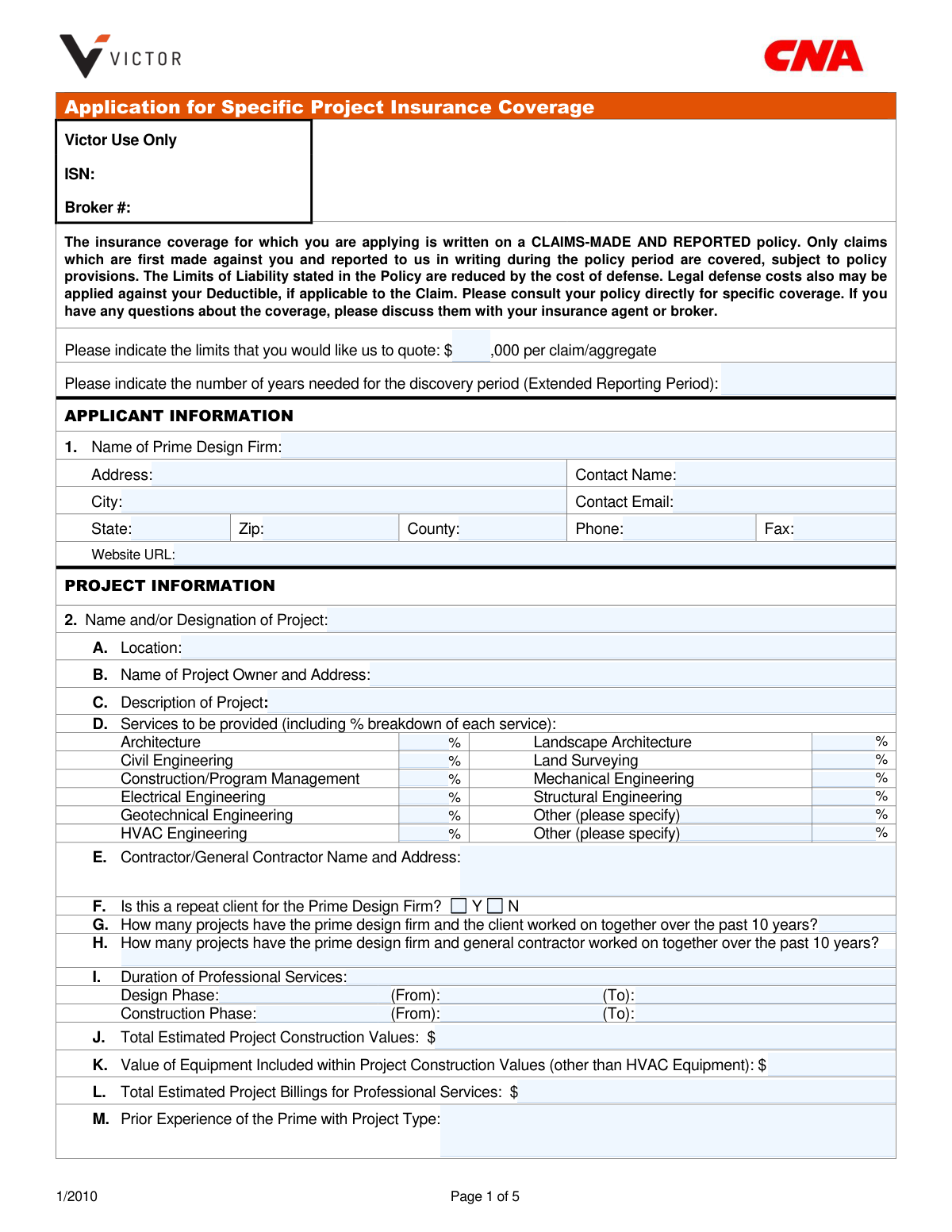
Typically, these forms are required by prime design firms, engineering consultants, and lead contractors who need to mitigate risks associated with high-stakes projects. Whether you are applying for an Application for Specific Project Insurance Coverage or a general professional indemnity policy, the process involves gathering complex data about your design team, risk management protocols, and previous performance. Navigating these requirements is essential for maintaining compliance with client contracts and protecting your firm from unforeseen financial liabilities during the lifecycle of a project.
Completing these detailed applications manually can be time-consuming and prone to errors. Tools like Instafill.ai use AI to fill these forms in under 30 seconds, ensuring that your data is handled accurately and securely while saving you from repetitive manual entry. This allows firms to focus on project delivery rather than administrative paperwork, making the insurance application process significantly more efficient.
Every form on this page can be completed without typing. Instafill is form filling software that reads a PDF and fills it for you — including flat and scanned documents that carry no fillable fields at all.
Forms in This Category
The forms in this category have a median Form Complexity Index of 54/100 (Moderate), measured across 1 forms by field count, input difficulty, length, conditional logic and structure. See how it is calculated.
| Form Name | Pages | FCI | |
|---|---|---|---|
| 1. | Application for Specific Project Insurance Coverage | 5 | Moderate 54 |
- Enterprise-grade security & data encryption
- 99%+ accuracy powered by AI
- 1,000+ forms from all industries
- Complete forms in under 60 seconds
How to Choose the Right Form
Selecting the correct coverage application form is vital for ensuring your firm and your specific projects are adequately protected against professional liability. Currently, this category focuses on high-stakes project insurance, specifically for firms managing complex design contracts.
For Prime Design Firms
If you are the lead firm on a major architecture or engineering project, the Application for Specific Project Insurance Coverage is the primary document you need. This form is specifically tailored for scenarios where standard annual professional liability insurance is insufficient. You should choose this form for:
- Project-Specific Liability: When you need a dedicated policy that covers a single, large-scale project from start to finish.
- Design-Build Teams: When you are coordinating coverage across a multi-firm design team and need to disclose the roles of all sub-consultants.
- Underwriting Compliance: When you need to provide detailed data for underwriters to assess risk and determine the pricing for a claims-made policy.
Key Information to Have Ready
To complete the Application for Specific Project Insurance Coverage efficiently, you should gather the following details before you begin the filling process:
- Project Scope: A clear description of the project, including the physical location, estimated construction value, and the anticipated timeline.
- Team Composition: Detailed information regarding all partners and sub-consultants involved in the design process.
- Risk Management & History: Data on your firm's previous claims history and current risk mitigation strategies.
- Financial Projections: Revenue estimates specifically related to the project in question.
Streamlining Your Application
Because this form is used to assess significant professional risk, accuracy is paramount. Errors or omissions can lead to coverage delays or increased premiums. Using an AI-powered tool like Instafill.ai allows you to complete the Application for Specific Project Insurance Coverage quickly, ensuring that even non-fillable PDF versions are converted into interactive, easy-to-complete documents.
Form Comparison
| Form | Purpose | Targeted At | Key Information Required |
|---|---|---|---|
| Application for Specific Project Insurance Coverage | Secures professional liability insurance for a specific architectural or engineering project. | Prime design firms and lead consultants overseeing specific large-scale design projects. | Project scope, design team composition, risk management practices, and past claims history. |
Tips for coverage application forms
Ensure the project description and estimated duration on your application match your client contract exactly. Underwriters use these specific dates to define the coverage period, and any discrepancies could lead to gaps in professional liability protection.
Be thorough when listing past claims or potential circumstances that might lead to a claim. Omitting information, even if it seems minor, can result in a denial of coverage or policy cancellation if discovered during the underwriting process.
AI-powered tools like Instafill.ai can complete these complex coverage forms in under 30 seconds with high accuracy. This technology ensures your data stays secure while significantly reducing the time spent on repetitive data entry for multiple project applications.
Provide detailed evidence of your firm's quality control measures and risk mitigation practices. Demonstrating a proactive approach to preventing professional errors can help underwriters offer more favorable terms and competitive premium pricing.
Gather accurate fee structures and insurance information from all sub-consultants before you begin the application. Inconsistent data across the design team can delay the approval process and complicate the assessment of the project's total risk profile.
Confirm that the liability limits requested on the form meet or exceed the specific requirements outlined in your project contract. It is much more efficient to set these limits correctly during the initial application than to request policy endorsements later.
Frequently Asked Questions
These forms are used by professional firms to apply for specialized insurance policies that cover specific projects rather than the firm's entire operations. They provide underwriters with the necessary data to assess risks associated with a particular development or infrastructure project.
Typically, the prime design firm or the lead consultant on a project is responsible for filling out this application. They must provide comprehensive details about their own firm as well as the sub-consultants and other design team members involved in the scope of work.
It is best to start the application process well before the project commences or during the contract negotiation phase. This ensures that the insurance terms and costs are finalized and can be factored into the project budget and contract requirements before any work begins.
Applicants generally need to provide the project's scope, duration, and estimated construction value, along with details about the design team's experience. Information regarding the firm's risk management practices and past insurance claims history is also standard for underwriting purposes.
Yes, modern AI tools like Instafill.ai can automatically populate these forms by extracting data from your existing project documents and firm profiles. This technology ensures that complex fields are filled accurately based on the source information provided, minimizing manual errors.
Using AI-powered services, these applications can often be completed in under 30 seconds. The AI quickly maps relevant data from your documents to the correct fields on the PDF, significantly reducing the time spent on manual data entry.
Underwriters need to evaluate the collective risk of all parties involved in the design process to set appropriate premiums. Knowing the qualifications and roles of sub-consultants helps the insurer understand the overall professional liability exposure for the specific project.
Once the form is filled out and signed, it is typically submitted to an insurance broker or directly to the underwriting department of the professional liability insurance carrier. They will then review the application to provide a quote or request further clarification if needed.
Many project-specific policies are 'claims-made,' meaning the policy must be active both when the professional service was rendered and when the claim is filed. The application form helps establish the retroactive date and other critical parameters of this specific coverage type.
If you have a static or non-interactive PDF, services like Instafill.ai can convert these documents into interactive fillable forms. This allows you to type directly into the fields or use AI to automate the data entry process even on legacy documents.
The data provided—such as project complexity, the firm's experience with similar projects, and previous claims—directly influences the underwriter's risk assessment. Higher perceived risks usually result in higher premiums or more restrictive policy terms, while strong risk management can lead to better rates.
Glossary
- Form Complexity Index
- Instafill’s 0–100 measure of how much effort a form takes to complete, calculated deterministically from the form’s own structure rather than estimated. It combines the number of fillable fields (the largest factor), how difficult those fields are to complete based on their type, the number of pages that contain fields, the amount of conditional “fill-only-if” logic, and how many sections the form is divided into, then adds modifiers for tables and repeating lists, bundled instruction pages, and dense page layouts. A higher score means the form is harder to fill out by hand. The forms in this category have a median Form Complexity Index of 54/100 (Moderate). See exactly how it is calculated.
- Professional Liability Insurance (PLI)
- A type of insurance that protects professionals and businesses from financial losses resulting from claims of negligence, errors, or omissions in the performance of their services.
- Claims-Made Policy
- An insurance policy that provides coverage for claims only if the claim is filed and reported to the insurer while the policy is active.
- Project-Specific Coverage
- Insurance designed to cover only one specific project, ensuring that the policy limits are not shared with other projects or the firm's general annual policy.
- Underwriting
- The process used by insurance companies to assess the risk of a project or firm to determine whether to offer coverage and what the premium should be.
- Retroactive Date
- A date set in a claims-made policy that excludes coverage for any incidents or errors that occurred before that specific point in time.
- Prime Design Firm
- The lead architecture or engineering company that holds the main contract for a project and is typically responsible for coordinating all design services.
- Subconsultant
- A secondary professional or firm hired by the prime design firm to perform specialized tasks, such as structural engineering or landscape architecture.
- Limit of Liability
- The maximum amount an insurance company is obligated to pay for a covered loss or claim under the terms of the insurance contract.