Fill out end of life forms
with AI.
End-of-life forms are essential documents designed to protect your medical preferences and legal rights during critical health transitions. This category covers a broad range of paperwork, including advance directive forms and medical directive forms, which serve as a roadmap for healthcare providers and family members when an individual is unable to communicate their own decisions. By documenting these preferences in advance, you ensure that your values are respected and provide your loved ones with much-needed guidance during emotionally challenging times.
By continuing, you acknowledge Instafill's Privacy Policy and agree to get occasional product update and promotional emails.
About end of life forms
These documents are typically utilized by individuals looking to secure their future, as well as those facing serious health diagnoses or managing long-term care. For instance, DNR forms are crucial for clearly stating a preference against invasive resuscitation, while specific disability claim forms help facilitate the financial support needed during a period of illness. Whether you are a patient, a caregiver, or a legal representative, having these forms completed and accessible is a vital step in comprehensive estate and healthcare planning.
Navigating these requirements can feel overwhelming, but tools like Instafill.ai use AI to fill these forms in under 30 seconds, handling your data accurately and securely to save you time and effort.
Every form on this page can be completed without typing. Instafill is form filling software that reads a PDF and fills it for you — including flat and scanned documents that carry no fillable fields at all.
Forms in This Category
The forms in this category have a median Form Complexity Index of 67/100 (Complex), measured across 2 forms by field count, input difficulty, length, conditional logic and structure. See how it is calculated.
| Form Name | Pages | FCI | |
|---|---|---|---|
| 1. | Assurity Life Insurance Company Disability Claim Form — Attending Physician’s Statement | 3 | Complex 64 |
| 2. | Texas Out-of-Hospital Do-Not-Resuscitate (OOH-DNR) Order | 1 | Complex 67 |
- Enterprise-grade security & data encryption
- 99%+ accuracy powered by AI
- 1,000+ forms from all industries
- Complete forms in under 60 seconds
How to Choose the Right Form
Navigating end-of-life and medical directive paperwork can be overwhelming. Whether you are documenting specific medical wishes or processing insurance claims related to a serious illness, choosing the correct document is the first step toward ensuring your preferences—and financial protections—are honored.
Medical Preferences and Emergency Care
If your goal is to provide legally binding instructions to emergency responders and healthcare providers regarding life-sustaining treatments, you need a medical directive.
- Texas Out-of-Hospital Do-Not-Resuscitate (OOH-DNR) Order: Choose this form if you reside in Texas and wish to refuse specific resuscitation efforts (like CPR, defibrillation, or artificial ventilation) in settings outside of a hospital. This is a critical document for individuals with terminal illnesses or those who want to ensure a natural death without aggressive intervention by EMS or other first responders.
Disability and Insurance Documentation
Some forms in this category are focused on the administrative requirements of insurance policies during a period of severe illness or disability rather than end-of-life medical instructions.
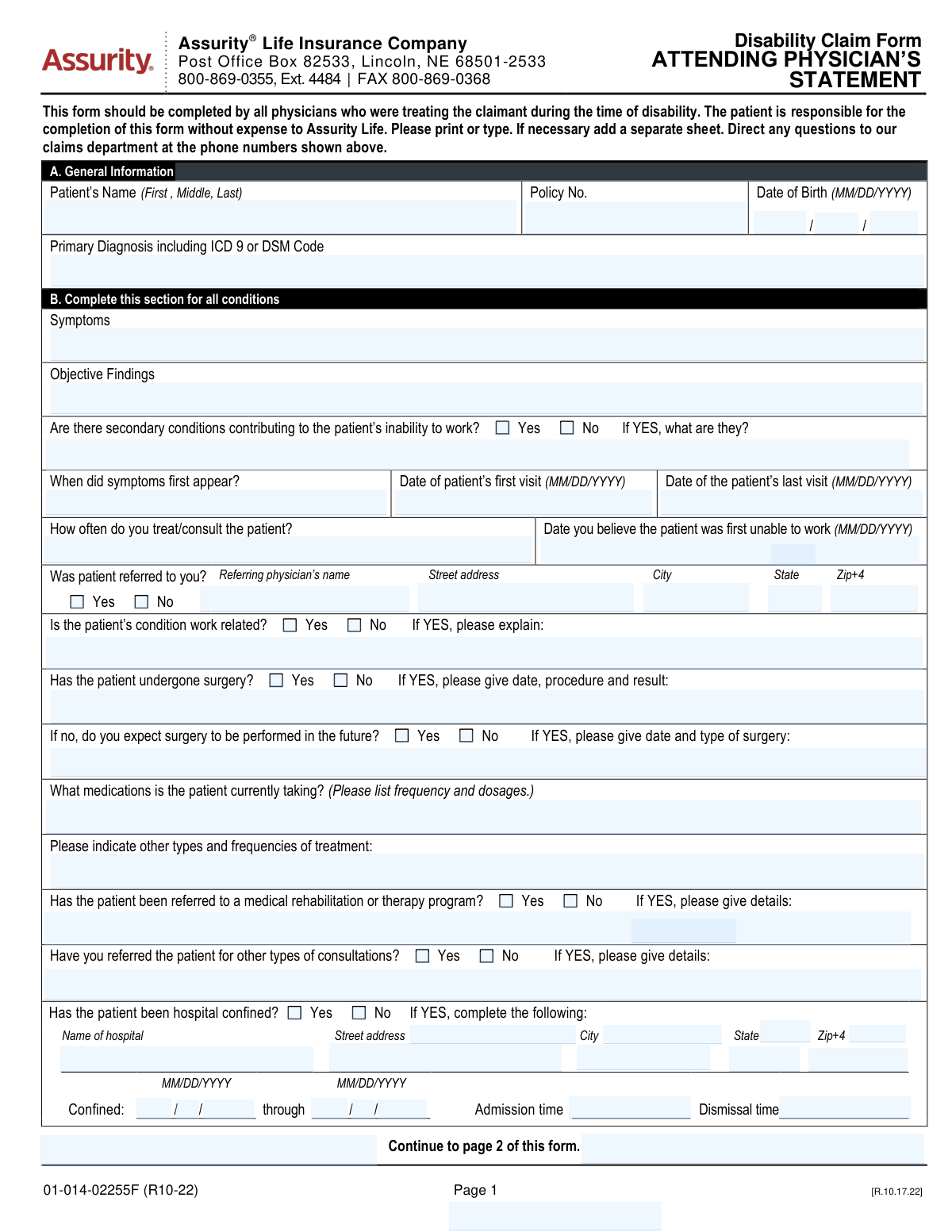
- Assurity Life Insurance Company Disability Claim Form — Attending Physician’s Statement: This form is required if you are filing a disability claim through Assurity Life Insurance. Unlike a DNR, this document must be completed by a treating physician. It captures clinical details, treatment history, and work limitations to help the insurer evaluate medical eligibility for benefits. Use this form to bridge the gap between medical care and financial support during a period of disability.
Quick Selection Guide
- For Texas residents refusing emergency resuscitation: Use the Texas Out-of-Hospital Do-Not-Resuscitate (OOH-DNR) Order.
- For Assurity policyholders seeking disability benefits: Ensure your doctor completes the Assurity Life Insurance Company Disability Claim Form — Attending Physician’s Statement.
Managing these sensitive documents is easier with Instafill.ai, which allows you to accurately complete these PDFs online using AI-powered assistance to ensure no field is left blank.
Form Comparison
| Form | Primary Purpose | Completed By | Scope of Care |
|---|---|---|---|
| Assurity Life Insurance Company Disability Claim Form — Attending Physician’s Statement | Provides clinical evidence required to support a disability insurance claim. | The attending physician or healthcare provider treating the patient. | Covers diagnoses, treatment history, and specific work-related physical restrictions. |
| Texas Out-of-Hospital Do-Not-Resuscitate (OOH-DNR) Order | Legally refuses life-sustaining resuscitation efforts in non-hospital settings. | The patient or legal representative and a licensed physician. | Specifies refusal of CPR, defibrillation, and artificial ventilation. |
Tips for end of life forms
Both disability claims and DNR orders require specific medical input or signatures from your attending physician. Discuss these forms during your appointment to ensure clinical details, such as diagnoses or resuscitation preferences, are recorded accurately to prevent claim denials or medical errors.
An Out-of-Hospital DNR order is only effective if emergency responders can find it immediately during a crisis. Keep a printed, signed copy in a prominent location like your refrigerator or near your bed, and consider carrying a wallet-sized version to ensure your wishes are respected outside the home.
End-of-life and medical directive forms often have strict legal requirements for witnessing or notarization to be valid. Double-check the specific rules for your jurisdiction before filing to ensure the document is legally enforceable and will be honored by medical staff.
Managing multiple medical and legal documents can be overwhelming, but AI-powered tools like Instafill.ai can complete these forms in under 30 seconds with high accuracy. Your sensitive personal data stays secure during the process, making it a reliable and practical way to handle urgent paperwork efficiently.
Medical conditions and personal preferences can change over time, rendering older documents outdated. Periodically review your advance directives and disability claim details to ensure they still reflect your current health status and end-of-life wishes, especially after a new diagnosis.
Missing information on a physician's statement or a DNR order can lead to immediate rejection by insurance companies or emergency services. Ensure every section, including ICD codes for disability or specific refusal instructions for resuscitation, is fully addressed before final submission.
Frequently Asked Questions
End-of-life forms are legal and medical documents that outline your preferences for medical treatment and financial arrangements if you become unable to communicate. These forms, which include medical directives and insurance claims, ensure that your wishes are respected by healthcare providers and that your family is supported during difficult times.
An OOH-DNR is designed for individuals who wish to refuse specific life-sustaining treatments, such as CPR or artificial ventilation, when they are outside of a hospital setting. This form is particularly important for those with terminal illnesses or those who prefer a natural death in their home or a care facility.
Disability claim forms, like the Attending Physician’s Statement, are often used when a person can no longer work due to a severe or terminal condition. Filing these forms helps secure financial benefits from insurance providers, which can be critical for covering medical costs and supporting dependents during the final stages of an illness.
Yes, AI tools like Instafill.ai can fill out these forms accurately by extracting data from your source documents and placing it directly into the required fields. This ensures that sensitive medical and personal information is recorded correctly without the need for manual data entry.
Using AI-powered services like Instafill.ai, you can complete end-of-life forms in under 30 seconds. The system automatically processes the information from your records and populates the form, making the process much faster than traditional handwriting or manual typing.
You should keep the original DNR order in a prominent and easily accessible location, such as on your refrigerator or by your bedside, where emergency responders can quickly find it. It is also highly recommended to provide copies to your primary care physician, your health care proxy, and close family members.
The Attending Physician’s Statement on a disability claim form must be completed and signed by the licensed healthcare professional who is currently treating the patient. They provide the necessary clinical data, including diagnoses and functional limitations, to verify the claim for the insurance company.
No, they are different documents. A DNR order specifically tells medical staff not to perform CPR or other resuscitation efforts if your heart stops, whereas a living will provides broader instructions about various medical treatments, such as tube feeding or organ donation, that you may or may not want.
Many end-of-life forms, including DNR orders and certain insurance certifications, require signatures from witnesses or a notary public to be legally valid. You should always review the signature section of the specific form to ensure you meet the legal requirements for your state or the insurance provider.
In the absence of clear directives, healthcare professionals are legally obligated to use all available life-saving measures to keep you alive. Having these forms completed ensures that your specific preferences are known, which can prevent confusion and emotional distress for your family members during a medical crisis.
Glossary
- Form Complexity Index
- Instafill’s 0–100 measure of how much effort a form takes to complete, calculated deterministically from the form’s own structure rather than estimated. It combines the number of fillable fields (the largest factor), how difficult those fields are to complete based on their type, the number of pages that contain fields, the amount of conditional “fill-only-if” logic, and how many sections the form is divided into, then adds modifiers for tables and repeating lists, bundled instruction pages, and dense page layouts. A higher score means the form is harder to fill out by hand. The forms in this category have a median Form Complexity Index of 67/100 (Complex). See exactly how it is calculated.
- Advance Directive
- A general legal term for documents that outline your healthcare preferences or appoint someone to make decisions for you if you become incapacitated.
- DNR (Do-Not-Resuscitate) Order
- A medical order instructing healthcare providers not to perform CPR or other emergency life-saving measures if your heart stops or you stop breathing.
- Attending Physician’s Statement (APS)
- A formal report completed by a treating doctor that provides clinical evidence of a patient's medical condition for insurance or legal purposes.
- Out-of-Hospital (OOH) Order
- A directive specifically designed to be honored by emergency medical personnel and first responders in settings outside of a hospital, such as a home or nursing facility.
- Medical Power of Attorney
- A legal document that names a 'healthcare agent' or proxy to make medical decisions for you if you are unable to speak for yourself.
- ICD and DSM Codes
- Standardized classification systems (International Classification of Diseases and Diagnostic and Statistical Manual) used by doctors to code specific diagnoses for insurance claims.
- Artificial Ventilation
- A medical intervention where a machine or manual device is used to assist or replace spontaneous breathing.
- Defibrillation
- The administration of an electric shock to the heart to stop a critically irregular heartbeat and allow a normal rhythm to resume.