Fill out learner permit forms
with AI.
Learner permit forms are the essential first step for any individual looking to gain legal driving privileges. These documents serve as the formal application to state agencies like the Department of Motor Vehicles (DMV) or Department of Transportation, allowing them to verify your identity, residency, and medical fitness. Completing these forms accurately is critical, as they form the legal basis for your driving record and ensure you meet all state-specific safety requirements before you ever hit the road.
By continuing, you acknowledge Instafill's Privacy Policy and agree to get occasional product update and promotional emails.
About learner permit forms
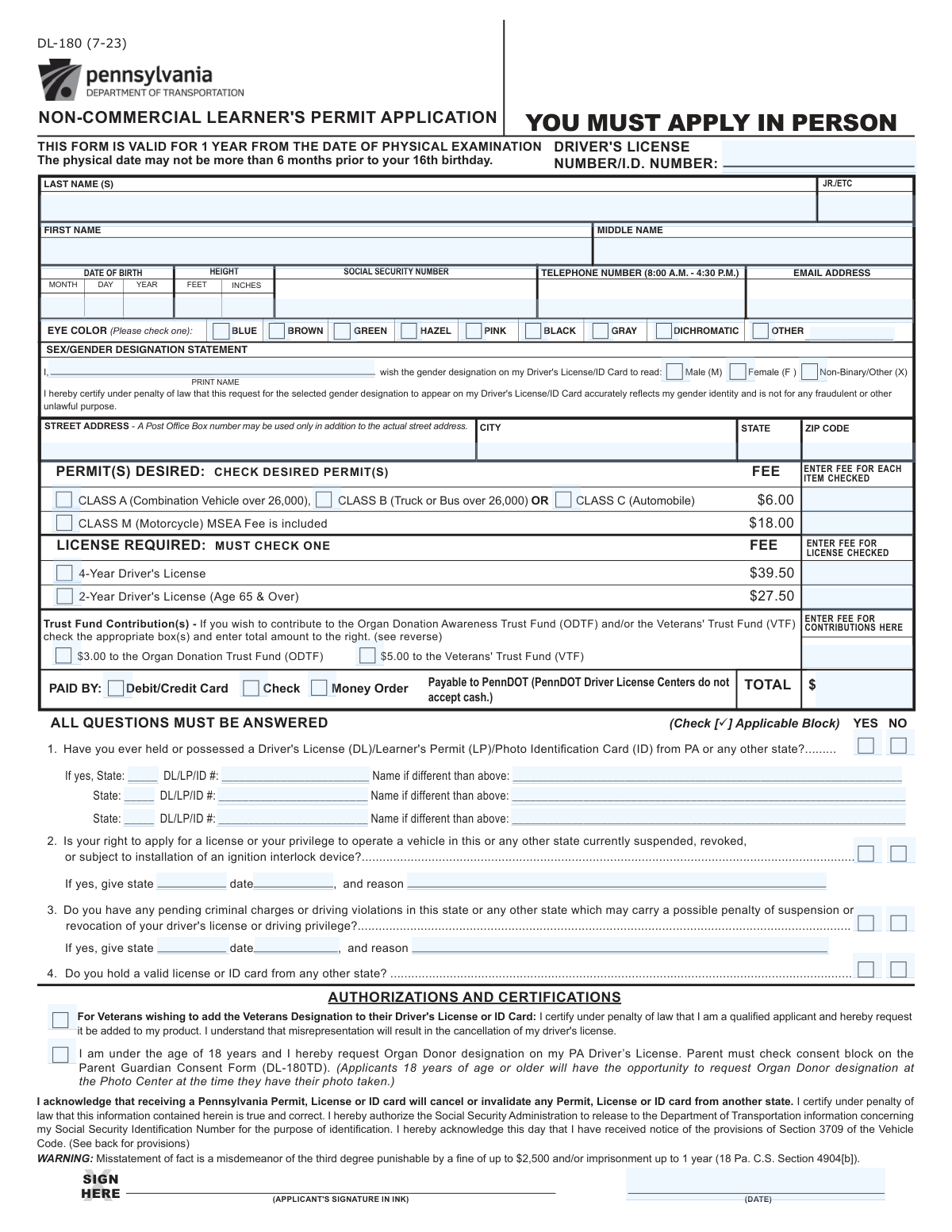
This category of paperwork is typically required for first-time drivers, teenagers seeking their initial permit, or adults transitioning to a new state licensing system. Common documents in this category include Pennsylvania's Form DL-180 and Connecticut's Form R-229, which often require detailed personal information, driving history, and sometimes even a physician's signature. Because these forms are the gateway to your written and road tests, any mistakes can lead to frustrating delays or rejected applications during your DMV appointment.
Tools like Instafill.ai use AI to fill these forms in under 30 seconds, handling your data accurately and securely so you can skip the manual paperwork. By automating the data entry process, you can ensure every field is completed correctly, allowing you to focus on learning the rules of the road rather than navigating complex PDF layouts.
Every form on this page can be completed without typing. Instafill is form filling software that reads a PDF and fills it for you — including flat and scanned documents that carry no fillable fields at all.
Forms in This Category
The forms in this category have a median Form Complexity Index of 74/100 (Complex), measured across 2 forms by field count, input difficulty, length, conditional logic and structure. See how it is calculated.
| Form Name | Pages | FCI | |
|---|---|---|---|
| 1. | Form DL-180, Pennsylvania Non-Commercial Learner's Permit Application | 3 | Complex 74 |
| 2. | State of Connecticut Form R-229, Application for a Non-Commercial Learner Permit and/or Driver License | 1 | Basic 44 |
- Enterprise-grade security & data encryption
- 99%+ accuracy powered by AI
- 1,000+ forms from all industries
- Complete forms in under 60 seconds
How to Choose the Right Form
Selecting the correct application is the first step toward getting on the road. Because driver licensing is handled at the state level, your choice depends entirely on where you reside and whether you are applying for a first-time permit or a full license.
By State Residency
The most important factor in choosing a form is the state issuing your permit.
- Pennsylvania Residents: If you are a resident of Pennsylvania looking to start the licensing process, you must use Form DL-180 (Non-Commercial Learner's Permit Application). This form is the standard entry point for new drivers in the state.
- Connecticut Residents: For those in Connecticut, the standard document is Form R-229 (Application for a Non-Commercial Learner Permit and/or Driver License). This form is used by the Connecticut DMV for both initial learner permits and standard driver's license applications.
By Applicant Requirements
Understanding the specific requirements of each form will help you prepare for your appointment:
- Medical Certifications: If you are applying in Pennsylvania, Form DL-180 includes a mandatory medical examination report. You will need a healthcare provider to complete this section to certify you are fit to operate a vehicle.
- Parental Consent for Minors: If you are under the age of 18 applying in Connecticut, Form R-229 includes the necessary sections for parental or guardian consent. Ensure this is signed before heading to the DMV.
- Dual-Purpose Filings: While the Pennsylvania form is specific to the learner's permit, the Connecticut Form R-229 is versatile, serving as the application for both the permit and the eventual driver's license.
Speed Up the Process with AI
DMV forms are notorious for being rejected due to illegible handwriting or missed fields. Whether you are filling out Form DL-180 or Form R-229, using Instafill.ai ensures your data is placed accurately into the PDF. Our AI-powered tools can help you navigate these state forms quickly, ensuring you have a clean, professional document ready for submission.
Form Comparison
| Form | State/Jurisdiction | Application Scope | Key Requirements |
|---|---|---|---|
| Form DL-180, Pennsylvania Non-Commercial Learner's Permit Application | Pennsylvania (PennDOT) | Specifically for non-commercial learner permit applications within the state. | Includes a mandatory medical examination report signed by a physician. |
| State of Connecticut Form R-229, Application for a Non-Commercial Learner Permit and/or Driver License | Connecticut (DMV) | Used for applying for both learner permits and driver licenses. | Requires medical certification and parental consent for applicants under 18. |
Tips for learner permit forms
AI-powered tools like Instafill.ai can complete these learner permit forms in under 30 seconds with high accuracy. Your data stays secure during the process, making it a reliable time-saver for applicants managing complex state-specific paperwork.
Many learner permit applications, such as Pennsylvania's DL-180, require a physical examination and a doctor’s signature on the document. Ensure your medical provider completes their specific section before you head to the DMV to avoid having your application rejected.
If the applicant is under the age of 18, a parent or legal guardian must sign the designated consent sections. Double-check if these signatures need to be witnessed or notarized, as missing authorizations are a primary cause of processing delays.
Minor errors in your Social Security number or date of birth can lead to the immediate rejection of your application. Cross-reference your official identification cards with the data entered into the form to ensure every digit is perfectly accurate.
While the form collects your address, you will still need physical documents like utility bills or bank statements to prove residency at the DMV. Keeping these documents organized in a single folder with your application ensures a smooth experience at the service counter.
After filling out your learner permit form, save a digital copy before printing and signing it. Having a digital backup allows you to quickly reprint the document if the original is lost or damaged on your way to your testing appointment.
Frequently Asked Questions
Learner permit forms are official state documents used to apply for a temporary license that allows an individual to practice driving under supervision. These forms collect essential personal information, residency verification, and driving history to ensure the applicant meets the state's legal requirements for operating a motor vehicle.
Anyone who has never held a driver's license or those whose previous license has been expired for a long period typically needs to complete these forms. They are necessary for teenagers starting their driving journey as well as adults seeking their first non-commercial driver's license.
You must select the form specific to the state where you currently reside and plan to take your driving test. For instance, residents of Connecticut should use Form R-229, while those in Pennsylvania must use Form DL-180, as each state has its own specific regulatory and medical requirements.
Yes, AI tools like Instafill.ai can be used to fill out these forms accurately and quickly. The AI extracts relevant data from your source documents and places it directly into the PDF fields, ensuring that all information is entered correctly and legibly.
Using AI-powered services, you can complete complex learner permit applications in under 30 seconds. This technology automates the data entry process, allowing you to review and print the form almost instantly rather than manually typing in every field.
Many states, including Pennsylvania and Connecticut, require a medical certification section to be completed by a licensed physician. This part of the form confirms that the applicant is physically and mentally capable of safely operating a motor vehicle on public roads.
Yes, if an applicant is under the age of 18, a parent or legal guardian must typically sign the application to provide legal consent. Most learner permit forms include a dedicated section for this signature, which must often be notarized or signed in the presence of a DMV official.
Completed applications are generally submitted in person at a local Department of Motor Vehicles (DMV) office or a state-specific licensing center. This is because most states require you to pass a vision screening and a written knowledge test at the time of submission.
While requirements vary by state, you will generally need to provide original documents proving your identity, Social Security number, and legal residency. It is recommended to check your specific state's checklist to ensure you have the correct combination of documents before heading to the DMV.
If you encounter a flat or non-interactive PDF, tools like Instafill.ai can convert these documents into interactive fillable forms. This allows you to complete the application digitally, which is often preferred over handwriting to ensure the DMV can process the information without errors.
Glossary
- Form Complexity Index
- Instafill’s 0–100 measure of how much effort a form takes to complete, calculated deterministically from the form’s own structure rather than estimated. It combines the number of fillable fields (the largest factor), how difficult those fields are to complete based on their type, the number of pages that contain fields, the amount of conditional “fill-only-if” logic, and how many sections the form is divided into, then adds modifiers for tables and repeating lists, bundled instruction pages, and dense page layouts. A higher score means the form is harder to fill out by hand. The forms in this category have a median Form Complexity Index of 74/100 (Complex). See exactly how it is calculated.
- Non-Commercial
- Refers to a standard driver's license or permit intended for personal use, such as driving a car or SUV, rather than for professional employment like operating heavy trucks or buses.
- PennDOT
- The Pennsylvania Department of Transportation, which is the state agency responsible for issuing driver licenses, learner permits, and vehicle registrations in Pennsylvania.
- Medical Examination Report
- A mandatory section of the permit application that must be completed and signed by a licensed healthcare provider to certify that the applicant is physically and mentally fit to operate a motor vehicle.
- Secondary Identification
- Additional documents, such as a Social Security card, birth certificate, or utility bill, required to prove an applicant's identity and residency beyond their primary photo ID.
- Parental Consent
- The legal authorization required for applicants under the age of 18, where a parent or legal guardian must sign the application to grant permission for the minor to obtain a permit.
- REAL ID
- A federal security standard for state-issued identification that allows the holder to use their driver's license or permit to board domestic flights and enter certain federal buildings.
- Vision Screening
- A basic eye test required by the DMV to ensure an applicant's eyesight meets the minimum safety standards for driving, often requiring corrective lenses if specified.
- Graduated Driver Licensing (GDL)
- A system of phased licensing for new drivers that includes a learner's permit stage and a restricted intermediate stage before full licensure is granted.