Fill out private equity forms
with AI.
Private equity forms are essential legal and financial documents used to facilitate investments in non-public companies or alternative assets. This category covers a variety of administrative and legal requirements, ranging from subscription agreements to investment authorization letters. These forms are critical because they establish the legal relationship between the investor, the fund, and the custodian, ensuring that high-stakes transactions are properly documented and compliant with regulatory standards.
By continuing, you acknowledge Instafill's Privacy Policy and agree to get occasional product update and promotional emails.
About private equity forms
Typically, these forms are required by individual accredited investors, institutional entities, and retirement account holders looking to diversify their portfolios through self-directed IRAs. You will often encounter these documents when authorizing a custodian to execute a buy direction or when signing a Subscription Agreement and Power of Attorney for a private markets fund. Because these investments involve significant capital and strict compliance with anti-money laundering (AML) and tax laws, accuracy in completing these forms is paramount to avoid delays in funding or legal complications.
Navigating the dense legal language and repetitive data entry required for private equity documentation can be a significant administrative burden. Tools like Instafill.ai use AI to fill these forms in under 30 seconds, handling complex financial data accurately and securely to streamline the investment process.
Every form on this page can be completed without typing. Instafill is form filling software that reads a PDF and fills it for you — including flat and scanned documents that carry no fillable fields at all.
Forms in This Category
The forms in this category have a median Form Complexity Index of 61/100 (Moderate), measured across 4 forms by field count, input difficulty, length, conditional logic and structure. See how it is calculated.
| Form Name | Pages | FCI | |
|---|---|---|---|
| 1. | Alpine SPRIM™ Private Markets Fund Subscription Agreement and Power of Attorney | 1 | Moderate 61 |
| 2. | Form AOB-03, Private Equity Investment Authorization | 1 | – |
| 3. | IRA-5054 Private Equity Investment Authorization | 1 | – |
| 4. | The Entrust Group - Private Equity Buy Direction Letter | 1 | Basic 43 |
- Enterprise-grade security & data encryption
- 99%+ accuracy powered by AI
- 1,000+ forms from all industries
- Complete forms in under 60 seconds
How to Choose the Right Form
Choosing the right private equity form depends on whether you are entering a specific fund agreement or instructing a custodian to execute a trade on your behalf. Most forms in this category are institution-specific, so your first step is identifying where your capital is currently held.
Specific Fund Subscriptions
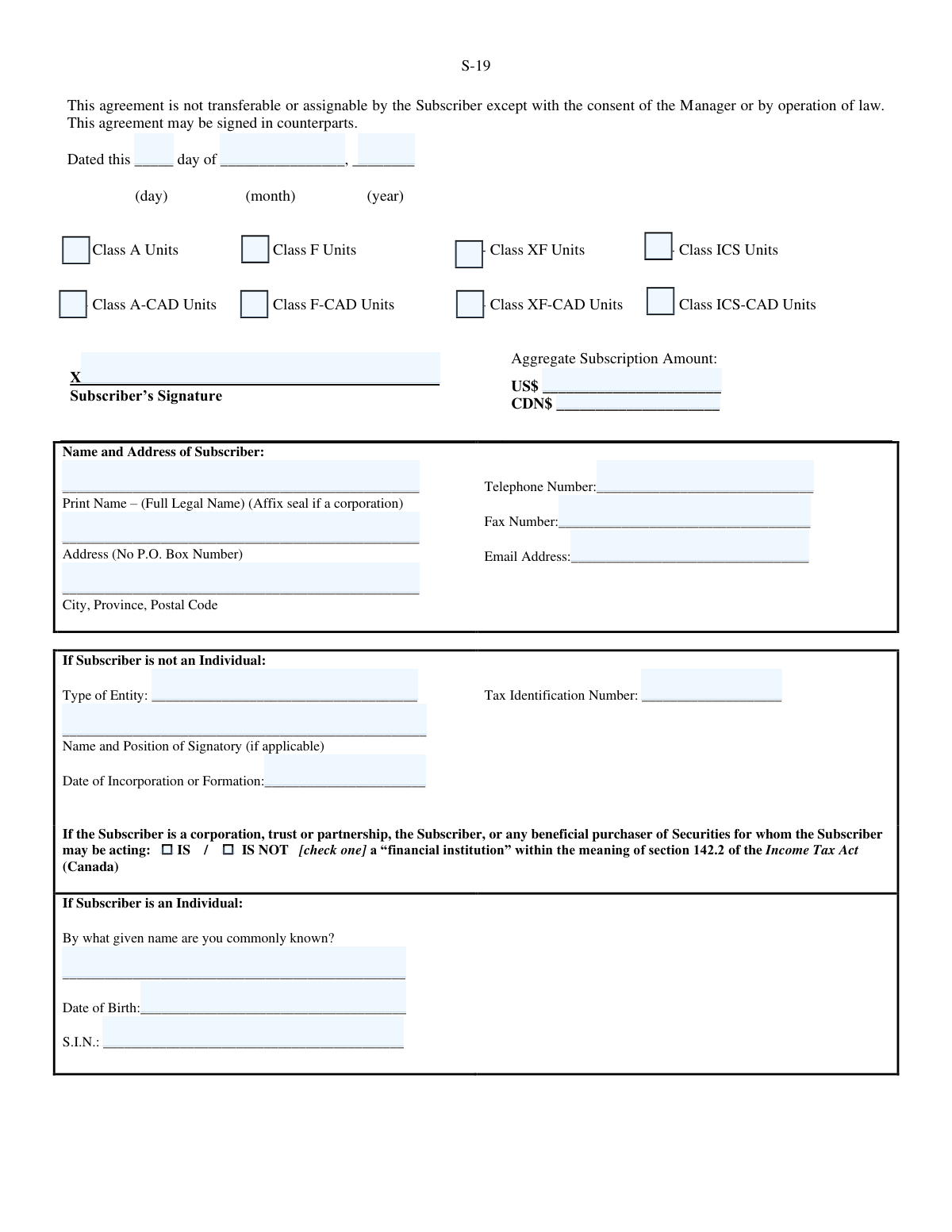
If you are an investor looking to commit capital to a particular private equity vehicle, you will likely need a subscription agreement. The Alpine SPRIM™ Private Markets Fund Subscription Agreement and Power of Attorney is a specialized document for investors in that specific fund. Unlike general authorization forms, this includes a Power of Attorney clause and detailed representations regarding your status as an accredited investor or qualified purchaser.
Custodial Buy Directions and Authorizations
If you hold a self-directed IRA or a trust account and wish to invest in private equity, you must provide your custodian with formal instructions. Select the form that corresponds to your financial institution:
- Columbia Private Trust: Use Form AOB-03, Private Equity Investment Authorization to provide instructions on funding methods and legal acknowledgments for non-deposit products.
- Pacific Premier Trust: Choose the IRA-5054 Private Equity Investment Authorization if you are directing a purchase within a self-directed IRA to ensure the asset is correctly titled for tax purposes.
- The Entrust Group: Use The Entrust Group - Private Equity Buy Direction Letter to authorize a new purchase, add funds to an existing private equity investment, or facilitate an asset exchange within your retirement account.
Key Decision Factors
When selecting your form, consider the following:
- Account Type: Is the investment being made through a standard brokerage account or a tax-advantaged self-directed IRA?
- Action Required: Are you authorizing a new purchase, or are you providing a Power of Attorney for ongoing fund management?
- Institution: Does the form match the custodian (e.g., Entrust vs. Pacific Premier) that will be executing the wire transfer?
Form Comparison
| Form | Primary Purpose | Custodian or Entity | Account Type |
|---|---|---|---|
| Alpine SPRIM™ Private Markets Fund Subscription Agreement and Power of Attorney | Purchase fund securities and grant legal power of attorney | Alpine SPRIM™ Private Markets Fund | Direct fund investment |
| Form AOB-03, Private Equity Investment Authorization | Authorize custodian to invest in private equity on account holder's behalf | Columbia Private Trust | Trust or private investment accounts |
| IRA-5054 Private Equity Investment Authorization | Direct custodian to execute private equity purchases within an IRA | Pacific Premier Trust | Self-directed IRA |
| The Entrust Group - Private Equity Buy Direction Letter | Directing the purchase, funding, or exchange of private equity assets | The Entrust Group | Self-directed IRA |
| The Entrust Group Private Equity Buy Direction Letter | Official authorization for custodian to execute a private equity transaction | The Entrust Group | Self-directed IRA |
Tips for private equity forms
Private equity subscription agreements often require you to certify your status as an accredited or qualified investor. Ensure your financial data and supporting documentation are consistent across all forms to avoid delays during the fund's review process.
When using forms from custodians like Pacific Premier or The Entrust Group, the asset must be titled in the name of your IRA rather than your personal name. Double-check the 'For Benefit Of' (FBO) phrasing to ensure the investment remains tax-compliant within your retirement account.
Managing complex subscription agreements and power of attorney forms can be time-consuming. AI-powered tools like Instafill.ai can complete these forms in under 30 seconds with high accuracy, ensuring your sensitive financial data stays secure throughout the process.
Errors in funding amounts or bank details are common reasons for rejected investment authorizations. Always cross-reference the investment amount on your Buy Direction Letter with the specific requirements of the private markets fund to ensure a smooth capital call.
Many private equity subscription agreements include a limited Power of Attorney section. Read these carefully to understand exactly what authority you are granting the fund manager, particularly regarding administrative tasks and signing future fund documents.
Private equity forms frequently require Anti-Money Laundering (AML) and Know Your Customer (KYC) disclosures. Having your tax ID and government-issued identification ready before you start filling out the forms will prevent mid-process interruptions.
Once you submit a Buy Direction Letter to your custodian, keep a digital copy of the signed document for your records. This serves as vital proof of your instructions should any discrepancies arise during asset valuation or annual reporting periods.
Frequently Asked Questions
Private equity forms are legal and administrative documents used to facilitate investments in private companies or funds. They serve as formal contracts or instructions that outline the terms of the investment, investor eligibility, and regulatory compliance requirements.
These forms are generally required by individual investors, institutional investors, or account owners of self-directed IRAs who wish to allocate capital to private market funds. They are also used by fund managers and custodians to verify that the investor meets specific accreditation or suitability standards.
A Power of Attorney is often included to grant the fund's general partner the authority to execute administrative tasks on behalf of the investor. This might include signing tax documents or legal amendments that affect the partnership as a whole without needing every individual investor's signature for minor updates.
The specific form you need depends on the financial institution or custodian holding your funds and the specific private market fund you are entering. For instance, if you have a self-directed IRA with Pacific Premier Trust or The Entrust Group, you must use their specific authorization or buy direction letters to initiate the transaction.
Yes, private equity forms can be filled out efficiently using AI-powered tools. Services like Instafill.ai can process these complex documents in under 30 seconds by accurately extracting data from your source documents and populating the required fields automatically.
Most buy direction letters require the investor's account details, the name of the private equity entity, the investment amount, and specific funding instructions. You will also need to provide information about how the asset should be titled and acknowledge the risks associated with non-traditional investments.
Using traditional manual methods, these forms can take significant time due to the dense legal language and numerous data points. However, with AI automation, you can complete these forms online in less than 30 seconds, ensuring that data is placed accurately and reducing the risk of clerical errors.
Yes, if you are making a private equity investment through a self-directed IRA, you must coordinate with a custodian. The custodian holds the assets on behalf of the retirement account and requires formal authorization, such as a Buy Direction Letter, to release funds and ensure the investment remains tax-advantaged.
A subscription agreement is a contract between an investor and a fund to purchase shares or units, focusing on the legal terms of the partnership. In contrast, a buy direction letter is an instruction sent to a custodian or trustee telling them to move funds from your account to the investment fund.
Once completed and signed, these forms are typically submitted to the fund manager or the custodian of your investment account. Most modern institutions accept digital submissions via secure portals or email, though some may still require original signatures depending on their internal policies.
Glossary
- Form Complexity Index
- Instafill’s 0–100 measure of how much effort a form takes to complete, calculated deterministically from the form’s own structure rather than estimated. It combines the number of fillable fields (the largest factor), how difficult those fields are to complete based on their type, the number of pages that contain fields, the amount of conditional “fill-only-if” logic, and how many sections the form is divided into, then adds modifiers for tables and repeating lists, bundled instruction pages, and dense page layouts. A higher score means the form is harder to fill out by hand. The forms in this category have a median Form Complexity Index of 61/100 (Moderate). See exactly how it is calculated.
- Subscription Agreement
- A legal contract between an investor and a fund that outlines the terms of purchasing shares or units. It includes the investor's commitment to provide a specific amount of capital and details their rights within the fund.
- Custodian
- A financial institution that holds and safeguards an investor's assets, such as a bank or trust company. In private equity, the custodian is responsible for executing investment instructions and ensuring assets are properly titled.
- Self-Directed IRA (SDIRA)
- An individual retirement account that allows for a broader range of investment options than a standard IRA, including private equity and real estate. These accounts require the owner to direct their own investment choices through a specialized custodian.
- Power of Attorney (POA)
- A legal authorization that grants an individual or entity the power to act on another person's behalf. In private equity forms, this often allows fund managers to sign administrative documents or execute partnership agreements for the investor.
- Buy Direction Letter
- A formal document submitted by an account owner to their custodian to authorize the purchase of a specific asset. It serves as the official instruction to move funds from a retirement account into a private equity investment.
- Accredited Investor
- An individual or entity that meets specific financial criteria, such as a high net worth or significant annual income, as defined by security regulations. This status is usually required to participate in private equity offerings.
- AML/KYC Compliance
- Short for Anti-Money Laundering and Know Your Customer, these are regulatory requirements used to verify the identity of investors. These sections in forms help prevent financial crimes by ensuring the source of the investment funds is legitimate.
- Representations and Warranties
- Statements of fact provided by the investor regarding their financial standing, legal authority, and understanding of investment risks. These assertions are legally binding and protect the fund from certain liabilities.