Fill out risk management forms
with AI.
Risk management forms are essential tools for businesses to identify, evaluate, and mitigate potential liabilities. In the context of insurance and corporate governance, these documents—ranging from NAIC-standardized forms to specific ERM (Experience Rating Modification) filings—ensure that insurers and regulatory bodies have a clear understanding of a company's operational and ownership structure. This data is critical for maintaining legal compliance and ensuring that insurance premiums accurately reflect the actual risks associated with the business's current state.
By continuing, you acknowledge Instafill's Privacy Policy and agree to get occasional product update and promotional emails.
About risk management forms
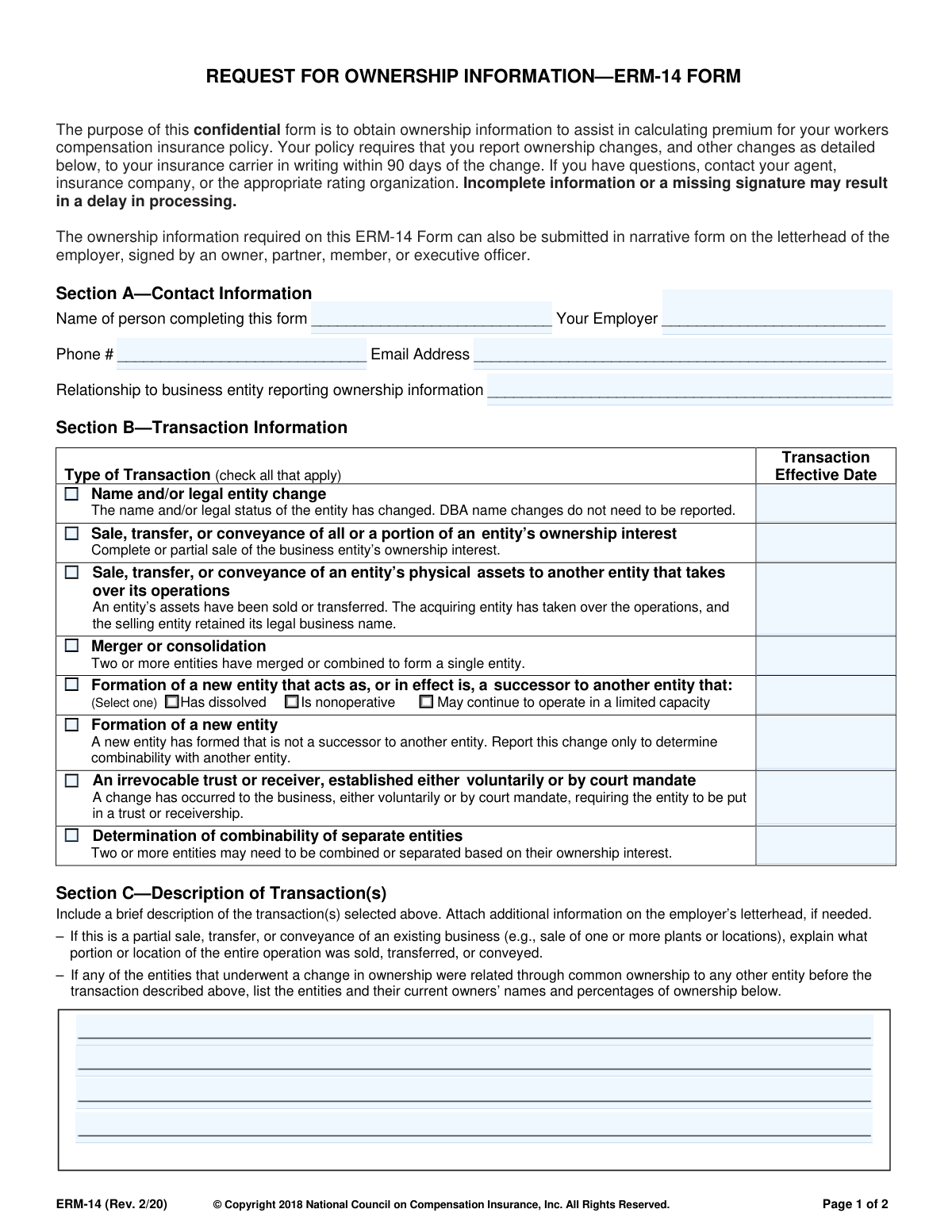
These documents are typically required by business owners, HR professionals, and insurance brokers during significant organizational transitions. For instance, when a company undergoes a merger, acquisition, or a change in its legal entity status, forms like the ERM-14 are used to report these shifts to rating bureaus. Providing precise ownership information is vital because it directly impacts workers' compensation rates and experience ratings. Without timely and accurate reporting, businesses risk administrative delays, incorrect premium calculations, or potential coverage gaps.
While manually documenting corporate changes can be a meticulous and time-consuming process, tools like Instafill.ai use AI to fill these forms in under 30 seconds. This technology handles data accurately and securely, allowing professionals to focus on strategic risk mitigation rather than repetitive paperwork.
Every form on this page can be completed without typing. Instafill is form filling software that reads a PDF and fills it for you — including flat and scanned documents that carry no fillable fields at all.
Forms in This Category
| Form Name | Pages | FCI | |
|---|---|---|---|
| 1. | REQUEST FOR OWNERSHIP INFORMATION—ERM-14 FORM | 1 | – |
- Enterprise-grade security & data encryption
- 99%+ accuracy powered by AI
- 1,000+ forms from all industries
- Complete forms in under 60 seconds
How to Choose the Right Form
Risk management involves identifying and mitigating liabilities, particularly within workers' compensation and corporate structure. In this category, the primary focus is on documentation required for experience rating and ownership verification, which are essential for accurate insurance reporting.
Identifying Ownership Changes
If your business has recently undergone a structural change, you likely need the REQUEST FOR OWNERSHIP INFORMATION—ERM-14 FORM. This is the standard document used by insurance carriers and rating bureaus (such as NCCI) to track how changes in ownership affect your workers' compensation history.
You should select the ERM-14 Form if any of the following apply to your situation:
- Mergers or Acquisitions: You have acquired another business or merged two existing entities into one.
- Sales or Transfers: A significant portion of the business assets or equity has been sold to a new party.
- Formation of New Entities: You have created a new legal entity that shares common ownership with an existing one.
- Internal Restructuring: There has been a change in the legal status (e.g., transitioning from a partnership to a corporation) even if the primary owners remain the same.
Why the ERM-14 is Critical for Risk Management
The ERM-14 Form is essential for maintaining an accurate Experience Modification Rate (MOD). Failure to report these changes promptly can lead to incorrect premium calculations, unexpected back-billing, or complications during a workers' compensation audit. Because these forms are confidential and data-heavy, using an AI-powered tool like Instafill.ai ensures that your ownership percentages and entity details are captured accurately without the manual entry errors that often plague insurance filings.
Quick Tips for Completion
- Gather Documentation: Have your FEIN (Federal Employer Identification Number) for all involved entities ready before starting.
- Verify Dates: Ensure you have the exact dates of the ownership transfer or structural change to avoid processing delays.
- Use AI Filling: Utilize Instafill to convert standard PDF versions into interactive, fillable formats to speed up the submission to your carrier or regulatory bodies.
Form Comparison
| Form | Purpose | Who Files It | Trigger Event |
|---|---|---|---|
| REQUEST FOR OWNERSHIP INFORMATION—ERM-14 FORM | Reports ownership changes to determine workers' compensation insurance experience ratings. | Business owners or entities undergoing structural changes like mergers or sales. | Required after sales, mergers, or formation of new business entities. |
Tips for risk management forms
When completing ERM-14 or similar risk management forms, accuracy in detailing ownership percentages and entity relationships is vital. Incorrect data can lead to improper experience rating calculations, which may result in unexpected premium adjustments or audits.
Filling out detailed risk management documents can be tedious, but AI-powered tools like Instafill.ai can complete these forms in under 30 seconds with high accuracy. Your data stays secure during the process, making it a reliable way to handle high volumes of paperwork without manual entry errors.
Risk management forms often require verification through legal documents such as articles of incorporation or purchase agreements. Organizing these documents beforehand ensures you can quickly cross-reference details and provide proof if requested by insurance carriers.
A common mistake is waiting until the policy renewal period to report structural changes like mergers or acquisitions. Submitting ownership forms immediately after a change occurs helps maintain accurate experience ratings and prevents retroactive billing issues.
Ensure that the information provided in risk management forms aligns with your other regulatory filings, such as NAIC reports. Discrepancies between different sets of forms can trigger red flags during audits or lead to delays in processing your insurance applications.
Errors in Tax Identification Numbers (FEIN) are among the most frequent mistakes on risk management forms. Always verify these numbers against official IRS documentation to ensure the insurance carrier correctly identifies the entities involved in the filing.
Frequently Asked Questions
Risk management forms, such as ERM and NAIC documents, are used by insurance companies and regulatory bodies to assess the liability profile of a business. They help determine appropriate insurance premiums by tracking ownership changes, safety records, and financial stability.
Business owners, legal representatives, or insurance brokers usually complete this form when a significant change in ownership or entity structure occurs. It ensures that the business's experience rating for workers' compensation is accurately maintained across different corporate entities.
You should file an ERM-14 form whenever there is a change in the ownership of your business, such as a sale, merger, consolidation, or the formation of a new legal entity. Timely submission is critical to ensure your workers' compensation premiums reflect your current risk profile.
Insurance carriers use ownership data to determine if a company’s experience rating should follow it to a new owner or entity. Accurate reporting via risk management forms ensures that premiums are calculated based on the correct historical data rather than default rates.
Yes, modern AI tools like Instafill.ai allow you to complete complex risk management forms by automatically extracting data from your corporate documents. This reduces the risk of manual entry errors and ensures all required fields are addressed accurately.
Using AI-powered services, you can complete risk management forms in under 30 seconds. These tools analyze your source documents and place the relevant information into the correct fields instantly, which is much faster than manual typing.
Completed forms are generally submitted to the National Council on Compensation Insurance (NCCI) or the specific state workers' compensation rating bureau. Your insurance carrier or broker can also facilitate the submission process to ensure your policy is updated.
You will typically need the legal names of all entities involved, their Federal Employer Identification Numbers (FEIN), and details regarding the percentage of ownership held by each party before and after the change. Providing clear documentation of the transaction helps prevent delays in processing.
Yes, these forms contain sensitive business and financial information and are treated as confidential by insurance carriers and rating bureaus. They are used specifically for the purpose of calculating insurance rates and are not typically accessible to the general public.
NAIC forms are standardized documents used across the insurance industry to ensure regulatory compliance and uniform data collection. They help regulators and insurers monitor the financial health and risk exposure of entities operating within the insurance market.
Failing to report ownership changes can lead to incorrect experience ratings, which may result in significantly higher workers' compensation premiums or even policy cancellation. It is essential to keep risk management documentation up to date to avoid financial penalties and coverage gaps.
Glossary
- Experience Rating
- A method used by insurance companies to adjust an employer's workers' compensation premiums based on their past loss and claims history.
- Experience Modification Rate (MOD)
- A numerical factor or multiplier applied to insurance premiums that reflects an employer's safety record compared to the industry average.
- NCCI (National Council on Compensation Insurance)
- The organization that manages workers' compensation data and calculates experience ratings for the majority of states in the U.S.
- ERM-14
- A confidential reporting form used to notify insurance bureaus of changes in ownership, mergers, or acquisitions that may impact a business's experience rating.
- Combinability
- The criteria used to determine if multiple business entities under common ownership should have their insurance records grouped together for premium calculation.
- NAIC (National Association of Insurance Commissioners)
- The standard-setting and regulatory support organization created and governed by the chief insurance regulators from the 50 states and U.S. territories.
- Ownership Interest
- The legal right to a portion of a business's assets and profits, which must be documented to ensure insurance ratings are transferred correctly during business changes.
- Entity
- A legal business structure, such as a corporation, partnership, or LLC, that is recognized as having its own rights and responsibilities for insurance purposes.