Fill out tribunal forms
with AI.
Tribunal forms are specialized legal documents used within the UK’s judicial system to facilitate administrative justice across various sectors, including immigration, employment, and social security. These forms serve as the primary vehicle for individuals and organizations to present their cases, seek reviews of government decisions, or appeal previous rulings. Because tribunal proceedings are often the final recourse for resolving complex disputes, ensuring these documents are completed correctly is essential for maintaining the integrity of the legal process.
By continuing, you acknowledge Instafill's Privacy Policy and agree to get occasional product update and promotional emails.
About tribunal forms
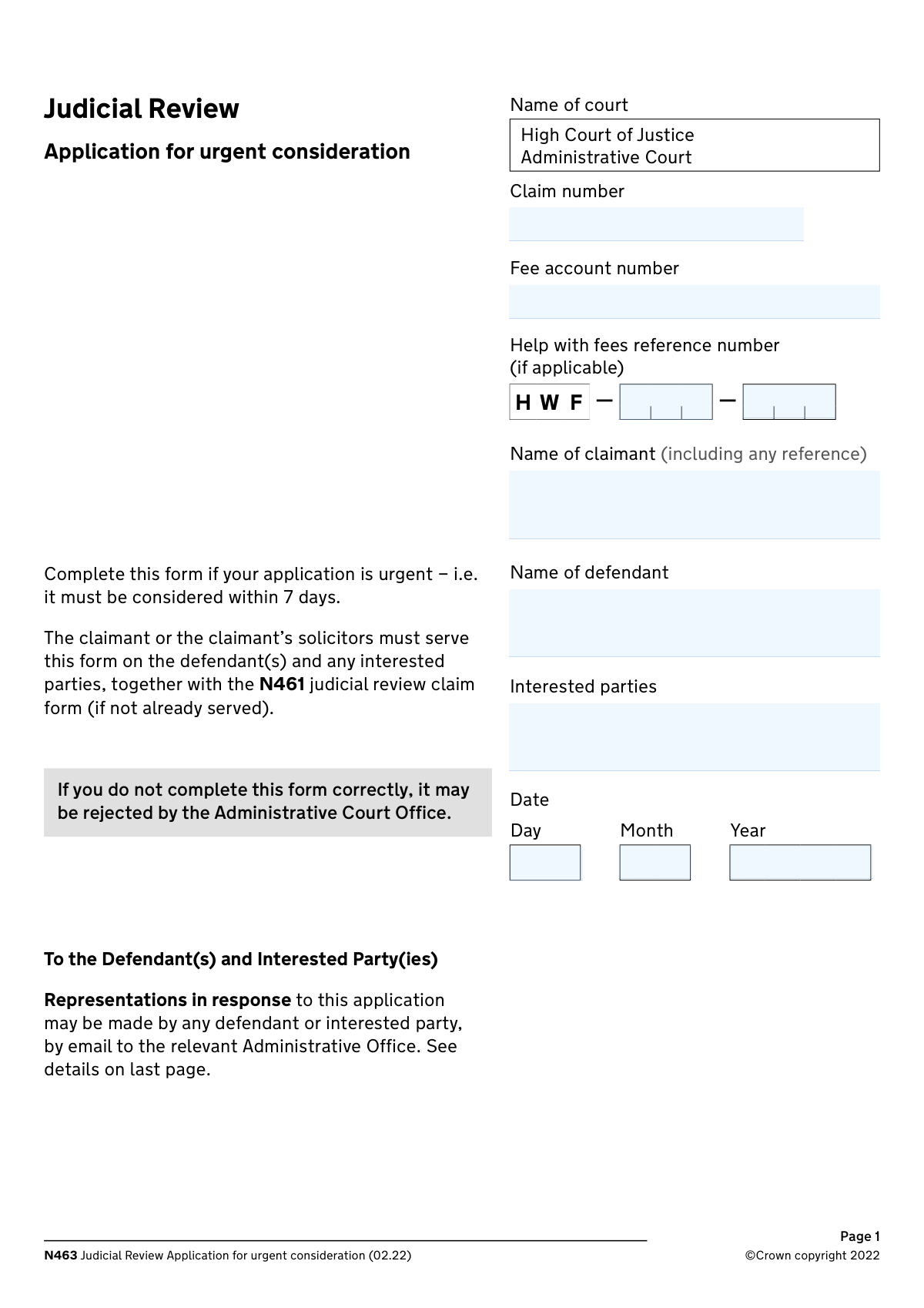
This category typically serves legal professionals, claimants, and litigants in person who need to navigate the UK court system efficiently. For example, judicial review forms like Form N463 are used in high-stakes situations where urgent consideration is required to prevent immediate legal prejudice. Whether you are filing an immigration appeal or a general legal application, these forms are necessary whenever a formal, structured response is required by the court to move a case forward.
Navigating the technical requirements of these documents can be a significant administrative challenge, especially when deadlines are tight. Tools like Instafill.ai use AI to fill these forms in under 30 seconds, handling data accurately and securely to streamline the application process. This technology provides a practical way to manage the paperwork involved in judicial reviews and other tribunal matters, allowing users to focus on the substantive details of their legal claims.
Every form on this page can be completed without typing. Instafill is form filling software that reads a PDF and fills it for you — including flat and scanned documents that carry no fillable fields at all.
Forms in This Category
The forms in this category have a median Form Complexity Index of 50/100 (Moderate), measured across 1 forms by field count, input difficulty, length, conditional logic and structure. See how it is calculated.
| Form Name | Pages | FCI | |
|---|---|---|---|
| 1. | Form N463, Judicial Review Application for urgent consideration | 8 | Moderate 50 |
- Enterprise-grade security & data encryption
- 99%+ accuracy powered by AI
- 1,000+ forms from all industries
- Complete forms in under 60 seconds
How to Choose the Right Form
Selecting the correct legal documentation is critical when challenging a decision made by a public body, government department, or lower court. While the standard judicial review process follows a set timeline, certain situations require immediate judicial intervention to prevent irreparable harm.
For Urgent Legal Challenges
If your case involves an immediate threat—such as imminent deportation, an urgent housing crisis, or a time-sensitive medical decision—you cannot rely on standard processing times. In these instances, Form N463, Judicial Review Application for urgent consideration is the essential document to prioritize your case.
You should choose Form N463 specifically when:
- Urgency is Paramount: Your case needs to be considered by a judge within 7 days or less due to an impending deadline or action.
- Supplemental Filing: You are already filing or have already filed the main claim form (Form N461) but require a "fast-track" review due to changing circumstances.
- Interim Relief is Needed: You are seeking an interim injunction or a stay of proceedings to pause a government action before the full review takes place.
Distinguishing Between Forms
It is important to note that Form N463 is not a standalone claim form. It acts as a specialized request to the High Court of Justice Administrative Court to flag a case for priority. While other tribunal forms may handle the substance of an appeal, this form specifically addresses the *timing* of the judicial review. If your matter is not time-sensitive, you may only need the standard application forms rather than this urgent supplement.
Preparing Your Application
When completing Form N463 on Instafill.ai, ensure you have a clear justification for the urgency ready. The court requires a proposed timetable and a detailed explanation of why the application was not made sooner. Using AI-powered tools helps ensure these high-stakes documents are filled out accurately and formatted correctly, which is vital when every hour counts toward your legal deadline.
Form Comparison
| Form | Primary Purpose | Urgency Level | Target Court | Key Requirement |
|---|---|---|---|---|
| Form N463, Judicial Review Application for urgent consideration | Requests immediate judicial attention for review cases with time-sensitive circumstances. | High; intended for cases requiring consideration typically within 7 days. | High Court of Justice Administrative Court in the UK. | Detailed explanation of urgency and a proposed legal timetable. |
Tips for tribunal forms
When submitting supplementary forms alongside a main claim, verify that all dates, names, and case references match exactly. Discrepancies between your primary application and urgent requests can lead to administrative delays or rejection by the court registry.
For urgent tribunal applications, avoid vague justifications for haste. Provide a specific timeline explaining why the matter cannot wait for the standard processing period and include any imminent deadlines that necessitate immediate judicial attention.
Tribunal forms often reference external evidence, such as previous decisions or correspondence. Ensure all referenced documents are clearly labeled and attached in the correct order to help the judge or tribunal member navigate your application quickly.
Dealing with complex judicial forms can be overwhelming, but AI-powered tools like Instafill.ai can complete these forms in under 30 seconds with high accuracy. Your sensitive legal data stays secure during the process, making it an efficient solution for managing multiple tribunal filings.
When requesting urgent consideration, you should suggest a specific schedule for the next steps in the litigation. This shows the court you are prepared and helps the administrative staff understand the exact window of time available to process your request.
Most tribunal and judicial review forms require you to serve the documents on the defendant or respondent. Double-check the specific rules for service to ensure the other party receives the paperwork within the required timeframe to avoid your application being struck out.
Frequently Asked Questions
Tribunal forms are official documents used to initiate or respond to legal proceedings within specialized courts or administrative bodies. They cover a wide range of issues including employment disputes, immigration appeals, and administrative reviews of government decisions.
A judicial review form is used when you want to challenge the lawfulness of a decision, action, or failure to act by a public body. This process focuses on whether the decision-maker followed the correct legal procedures rather than the merits of the decision itself.
Urgent consideration is typically requested when there is an immediate risk of harm or a deadline that requires a court's attention within a very short timeframe, such as seven days. In these cases, specific forms like the N463 are filed alongside the main claim to alert the court to the time-sensitive nature of the matter.
Yes, you can use AI tools like Instafill.ai to automate the completion of complex tribunal and judicial review forms. These tools accurately extract data from your supporting documents and place it into the correct fields, ensuring that the final PDF is professional and ready for submission.
While manual entry for legal forms can take hours, using AI-powered services like Instafill.ai allows you to complete these forms in under 30 seconds. The system processes the information instantly, significantly reducing the risk of clerical errors in urgent legal filings.
Most judicial review and tribunal forms are submitted to the Administrative Court or the specific tribunal office handling your case, such as the Upper Tribunal (Immigration and Asylum Chamber). Depending on the specific rules of the court, submissions may be made via post, in person, or through authorized electronic filing systems.
Generally, any individual or organization with a 'sufficient interest' in the matter being contested can file an application. This often includes people directly affected by a government decision or those representing a public interest group relevant to the case.
Requirements usually include providing your personal details, the specific decision you are appealing, and a clear statement of your grounds for the appeal. You must also include any relevant evidence or supporting documentation that justifies your claim or request for review.
While it is often recommended to seek legal advice for complex tribunal matters, many forms are designed to be accessible for individuals representing themselves. Using clear language and ensuring all required fields are filled accurately is essential for the court to process your application.
Yes, judicial reviews must generally be filed as soon as possible and typically no later than three months after the decision being challenged was made. Certain types of cases, such as those involving planning or urgent immigration matters, may have even stricter deadlines.
Glossary
- Form Complexity Index
- Instafill’s 0–100 measure of how much effort a form takes to complete, calculated deterministically from the form’s own structure rather than estimated. It combines the number of fillable fields (the largest factor), how difficult those fields are to complete based on their type, the number of pages that contain fields, the amount of conditional “fill-only-if” logic, and how many sections the form is divided into, then adds modifiers for tables and repeating lists, bundled instruction pages, and dense page layouts. A higher score means the form is harder to fill out by hand. The forms in this category have a median Form Complexity Index of 50/100 (Moderate). See exactly how it is calculated.
- Judicial Review
- A legal process where a judge examines the lawfulness of a decision or action made by a public body, such as a government department or local authority.
- Claimant
- The person or organization who initiates a legal claim or applies to the court for a judicial review.
- Administrative Court
- A specialized division of the High Court of Justice that deals with public law cases, including applications for judicial review.
- Interim Relief
- A temporary court order granted to protect a person's rights or prevent a specific action from happening until the court makes a final decision on the case.
- Stay of Execution
- A court order that temporarily suspends the enforcement of a decision or judgment, often used in urgent cases to prevent immediate harm.
- Permission to Proceed
- The initial stage of a judicial review where a judge decides if the case is 'arguable' and has a realistic prospect of success before it can go to a full hearing.
- Interested Party
- A person or organization, other than the claimant or defendant, who is directly affected by the legal proceedings and has a right to be involved in the case.
- Pre-Action Protocol
- A set of mandatory steps that parties must follow before starting legal proceedings, designed to encourage the resolution of disputes without going to court.