Fill out anti-money laundering forms
with AI.
Anti-money laundering (AML) forms are critical regulatory tools designed to prevent the illegal movement of funds and the financing of criminal activities. These documents serve as a primary defense for the global financial system, ensuring that institutions can verify the legitimacy of their clients and the source of their wealth. By standardizing the collection of identity and financial data, these forms help organizations comply with strict legal frameworks, such as the Anti-Money Laundering and Counter-Terrorism Financing Act, which aim to maintain market integrity and national security.
By continuing, you acknowledge Instafill's Privacy Policy and agree to get occasional product update and promotional emails.
About anti-money laundering forms
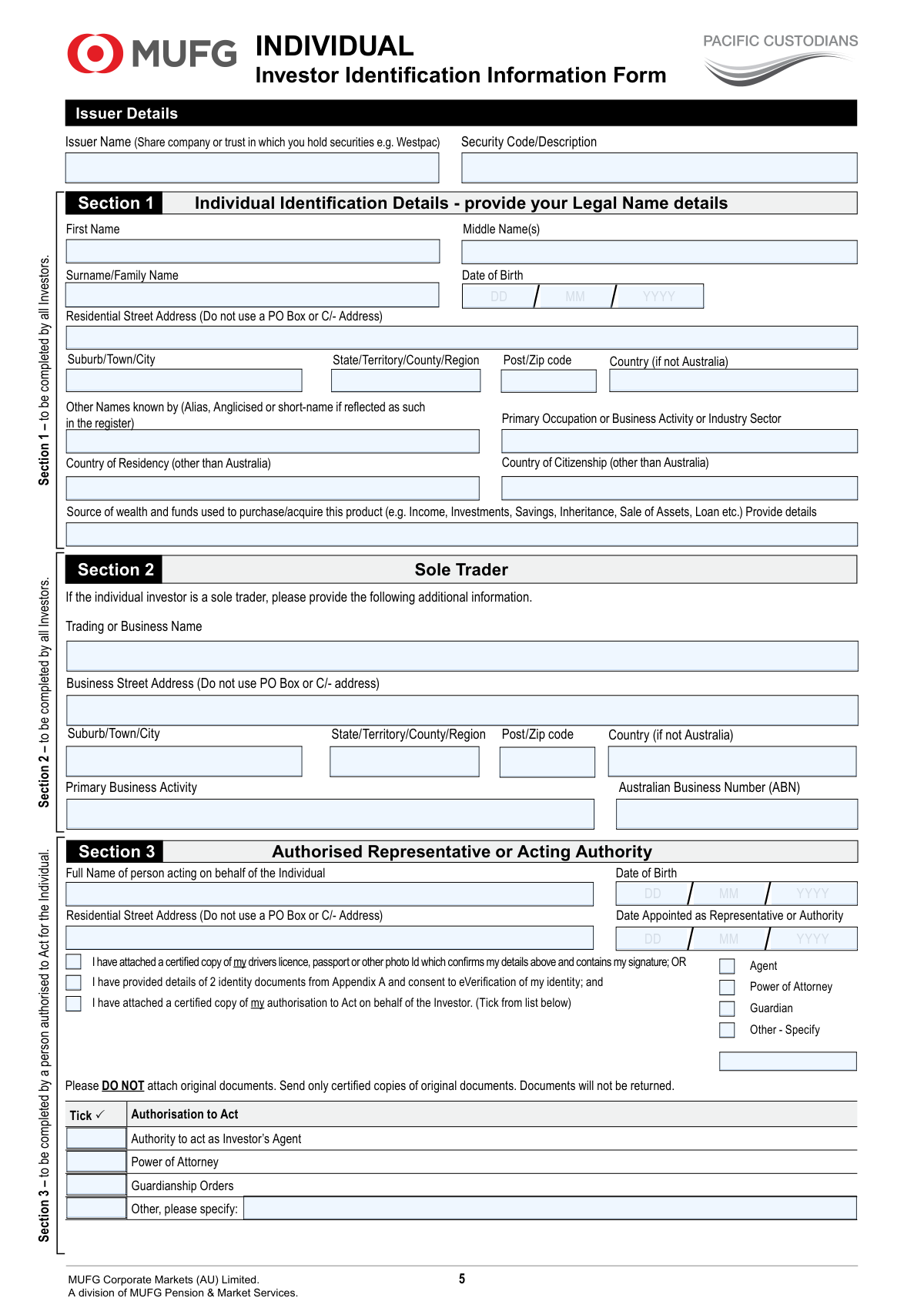
These forms are typically required by investors, financial advisors, and corporate entities when establishing new accounts or conducting high-value transactions. Whether you are an individual investor or representing a complex trust or company, providing accurate identification information is a mandatory part of the "Know Your Customer" (KYC) process. For instance, documents like an AML/CTF Investor Identification Information Form are often the first step in onboarding, requiring detailed verification of personal and business details to mitigate the risk of fraud or illicit financial behavior.
Completing these detailed documents can be a meticulous and time-consuming task, often requiring precise data entry to avoid compliance delays. Tools like Instafill.ai use AI to fill these forms in under 30 seconds, ensuring that sensitive data is handled accurately and securely while saving significant administrative effort. This allows professionals and investors to focus on their core activities while remaining fully compliant with regulatory standards.
Every form on this page can be completed without typing. Instafill is form filling software that reads a PDF and fills it for you — including flat and scanned documents that carry no fillable fields at all.
Forms in This Category
| Form Name | Pages | FCI | |
|---|---|---|---|
| 1. | AML/CTF Investor Identification Information Form | 1 | – |
- Enterprise-grade security & data encryption
- 99%+ accuracy powered by AI
- 1,000+ forms from all industries
- Complete forms in under 60 seconds
How to Choose the Right Form
Navigating Anti-Money Laundering (AML) and Counter-Terrorism Financing (CTF) regulations is a critical compliance step for any investor or financial entity operating in Australia. These requirements are governed by AUSTRAC to prevent financial crimes and ensure transparency in the financial system.
Identifying the Primary Compliance Form
Currently, the cornerstone of this category is the AML/CTF Investor Identification Information Form. This document is essential for satisfying 'Know Your Customer' (KYC) requirements. You should select this form if you are establishing a new financial relationship or making a significant investment where the following applies:
- Individual Investors: You need to verify your personal identity, including full name, date of birth, and residential address, to open a brokerage or managed fund account.
- Companies and Corporations: You are required to disclose corporate structures, Australian Business Numbers (ABNs), and the details of beneficial owners who exercise control over the entity.
- Trusts and Trustees: You must identify the nature of the trust (e.g., family, discretionary, or unit trust) and provide identification for the trustees and beneficiaries.
When to Use This Form
You will typically be asked to complete the AML/CTF Investor Identification Information Form during the onboarding process with a financial institution, fund manager, or legal entity. It is a mandatory prerequisite before any funds can be moved or accounts officially activated.
Streamlining Your Compliance
AML forms are notoriously detailed and require high accuracy to avoid being rejected by compliance officers. Using Instafill.ai simplifies this process by allowing you to:
- Convert non-fillable versions of the AML/CTF Investor Identification Information Form into interactive documents.
- Use AI to accurately map your personal or corporate data into the required fields.
- Ensure that complex sections, such as those for 'Politically Exposed Persons' (PEPs) or international tax residency (FATCA/CRS), are addressed correctly to prevent processing delays.
Form Comparison
| Form | Target Audience | Primary Purpose | Regulatory Framework |
|---|---|---|---|
| AML/CTF Investor Identification Information Form | Investors including individuals, companies, and trusts operating within Australia. | Verifies identity to prevent money laundering and terrorism financing activities. | Complies with Australia's Anti-Money Laundering and Counter-Terrorism Financing Act. |
Tips for anti-money laundering forms
When completing AML forms, your name must appear exactly as it does on your government-issued ID, such as a passport or driver's license. Even minor discrepancies like missing middle names or nicknames can lead to the form being rejected by financial institutions during the verification process.
If you are filing on behalf of a company or trust, you must provide details for all beneficial owners who own or control a significant portion of the entity. Failing to disclose these individuals is a common reason for processing delays in Anti-Money Laundering compliance checks.
Completing complex investor identification forms can be tedious, but AI-powered tools like Instafill.ai can complete these forms in under 30 seconds with high accuracy. Your sensitive data stays secure during the process, making it a practical time-saver for those handling multiple compliance documents.
Most AML/CTF forms require accompanying certified copies of your identification to prove your identity. Gathering these documents and having them signed by an authorized witness before you start the form will prevent interruptions and ensure a smoother submission.
Be prepared to provide clear information regarding the origin of the funds being invested. Providing specific details rather than vague descriptions helps compliance officers quickly verify that the transaction meets regulatory standards and prevents unnecessary follow-up questions.
Incomplete forms are often returned, which can stall your investment for days or weeks. Double-check that every required field is filled and that you have signed and dated all necessary sections before submitting the final document to the institution.
Frequently Asked Questions
These forms are designed to help financial institutions verify the identity of their clients to prevent illegal activities like money laundering and terrorism financing. By collecting specific data, institutions can ensure they are not processing transactions for sanctioned individuals or criminal organizations.
Any individual or legal entity, such as a company or trust, looking to invest in financial products or open new accounts in Australia must complete this form. It is a standard requirement under the Anti-Money Laundering and Counter-Terrorism Financing Act to satisfy 'Know Your Customer' (KYC) protocols.
Most institutions require primary photographic identification, such as a valid passport or driver's license. For entities like trusts or companies, additional documentation such as trust deeds or certificates of incorporation may be necessary to verify the ultimate beneficial owners.
Regulations require institutions to have a high level of confidence in the identity of their investors to mitigate the risk of financial crime. Collecting details about the source of funds and the nature of the business relationship helps the institution monitor for suspicious activity.
Yes, you can use AI tools like Instafill.ai to fill out these complex forms efficiently. The AI can accurately extract your personal data from source documents and place it into the correct fields, ensuring the form is completed without manual entry errors.
While manual entry can take 10 to 15 minutes depending on the complexity of the entity, using AI-powered services can reduce this time significantly. Tools like Instafill.ai can often complete these forms in under 30 seconds by automating the data mapping process.
Completed forms should be submitted directly to the financial institution, fund manager, or platform where you are making the investment. Most institutions provide a secure upload portal or a specific email address for compliance documentation.
If the required identification information is not provided, the financial institution is legally obligated to refuse the service or investment. They may also be required to report the refusal to regulatory bodies if they suspect the non-disclosure is linked to illegal activity.
Generally, once you have been onboarded by a specific institution, you may not need to fill out the form again for subsequent investments with that same entity. However, if your personal details change or if you invest with a different institution, a new form will likely be required.
Many modern financial institutions accept digital signatures, provided they meet specific security and verification standards. However, some traditional institutions may still require a physical signature or a certified copy of your ID, so it is best to check the specific requirements of the receiver.
Glossary
- KYC (Know Your Customer)
- A mandatory process where financial institutions verify the identity, suitability, and risks of an investor before or during the start of a business relationship.
- AML/CTF
- An abbreviation for Anti-Money Laundering and Counter-Terrorism Financing, referring to the legal framework and regulations designed to prevent illegal financial activities.
- Beneficial Owner
- An individual who ultimately owns or controls a customer, such as a company or trust, or the person on whose behalf a financial transaction is actually being conducted.
- Politically Exposed Person (PEP)
- An individual who holds a prominent public position, or their immediate family members, who may require higher levels of scrutiny due to potential risks of corruption or bribery.
- AUSTRAC
- The Australian Transaction Reports and Analysis Centre, which is the government agency responsible for overseeing compliance with anti-money laundering laws.
- Customer Due Diligence (CDD)
- The process of collecting and verifying information about a customer to assess the risk of money laundering or terrorism financing associated with that person or entity.
- Certified Copy
- A duplicate of an original identification document that has been verified and signed by an authorized person, such as a Justice of the Peace or a lawyer, to prove its authenticity.
- Ultimate Beneficial Owner (UBO)
- The natural person who stands at the top of a corporate structure and exercises final control over a legal entity, even if they are not listed as the direct owner.