Fill out investment forms
with AI.
Investment forms are the essential paperwork required to manage, move, and protect your wealth. This category covers a broad spectrum of financial documents, ranging from internal brokerage forms for institutions like Fidelity and Charles Schwab to specialized IRS filings such as Form 3468 for investment credits. These documents serve as the formal mechanism for critical actions like transferring assets between accounts, establishing standing transfer instructions, or managing alternative investments. Because these forms often involve significant capital and sensitive legal designations, completing them accurately is vital for maintaining tax compliance and ensuring your financial legacy is handled according to your wishes.
By continuing, you acknowledge Instafill's Privacy Policy and agree to get occasional product update and promotional emails.
About investment forms
Typically, these forms are used by individual investors, retirement plan participants, and financial trustees during key milestones in their investment journey. Whether you are rolling over a 401(k) after a career change, setting up a 529 College Savings Plan for a family member, or authorizing a one-time withdrawal from an IRA, clear documentation is a requirement. Navigating the density of these PDFs can be time-consuming, but tools like Instafill.ai use AI to fill these forms in under 30 seconds, handling your data with high precision and security. By streamlining the paperwork, investors can focus more on their long-term strategy and less on the administrative friction of financial management.
Every form on this page can be completed without typing. Instafill is form filling software that reads a PDF and fills it for you — including flat and scanned documents that carry no fillable fields at all.
Forms in This Category
The forms in this category have a median Form Complexity Index of 53/100 (Moderate), measured across 82 forms by field count, input difficulty, length, conditional logic and structure. See how it is calculated.
- Enterprise-grade security & data encryption
- 99%+ accuracy powered by AI
- 1,000+ forms from all industries
- Complete forms in under 60 seconds
How to Choose the Right Form
Navigating investment and brokerage paperwork can be complex, especially when moving assets between different financial institutions. To find the correct document, identify whether you are moving money, withdrawing funds, or managing tax and beneficiary settings.
Moving or Consolidating Assets
If you are shifting retirement funds from a previous employer or another provider, you will likely need a transfer or rollover document.
- For Fidelity accounts: Use the Fidelity Investments Transfer/Rollover/Exchange Form to consolidate 401(k) or IRA funds. If you are specifically moving assets from a stock plan, refer to the How to Transfer Assets from Morgan Stanley to Fidelity Investments guide.
- For TIAA-CREF: Use Form F11380, Rollover from your Retirement Investments.
- For Health Savings: Use the HSA Bank Investment Account Transfer Form to move assets into a Schwab Health Savings Brokerage Account.
Withdrawing Funds and Distributions
When you need to access your money, the form you choose depends on the account type and the frequency of the payout.
- Standard IRAs: Use the Fidelity One-Time Withdrawal – IRA for single distributions.
- Required Minimum Distributions (RMDs): Use TIAA Form F11489 to automate your annual RMDs and avoid IRS penalties.
- Education Savings: Use the Fidelity Investments Withdrawals—529 College Savings Plan for qualified education expenses or Roth IRA rollovers.
- Specialty Accounts: For annuity contracts, use the Fidelity Investments Withdrawal — One-Time form.
Account Setup and Tax Compliance
Managing the legal structure of your investments requires specific authorization and tax forms.
- Designating Heirs: Ensure your assets bypass probate by completing the Fidelity Investments 403(b)/401(a) Beneficiary Designation or the Fidelity Qualified Plan Beneficiary Designation.
- Granting Access: Use the Fidelity Investments Account Authority Form to give a third party limited or full power over your accounts.
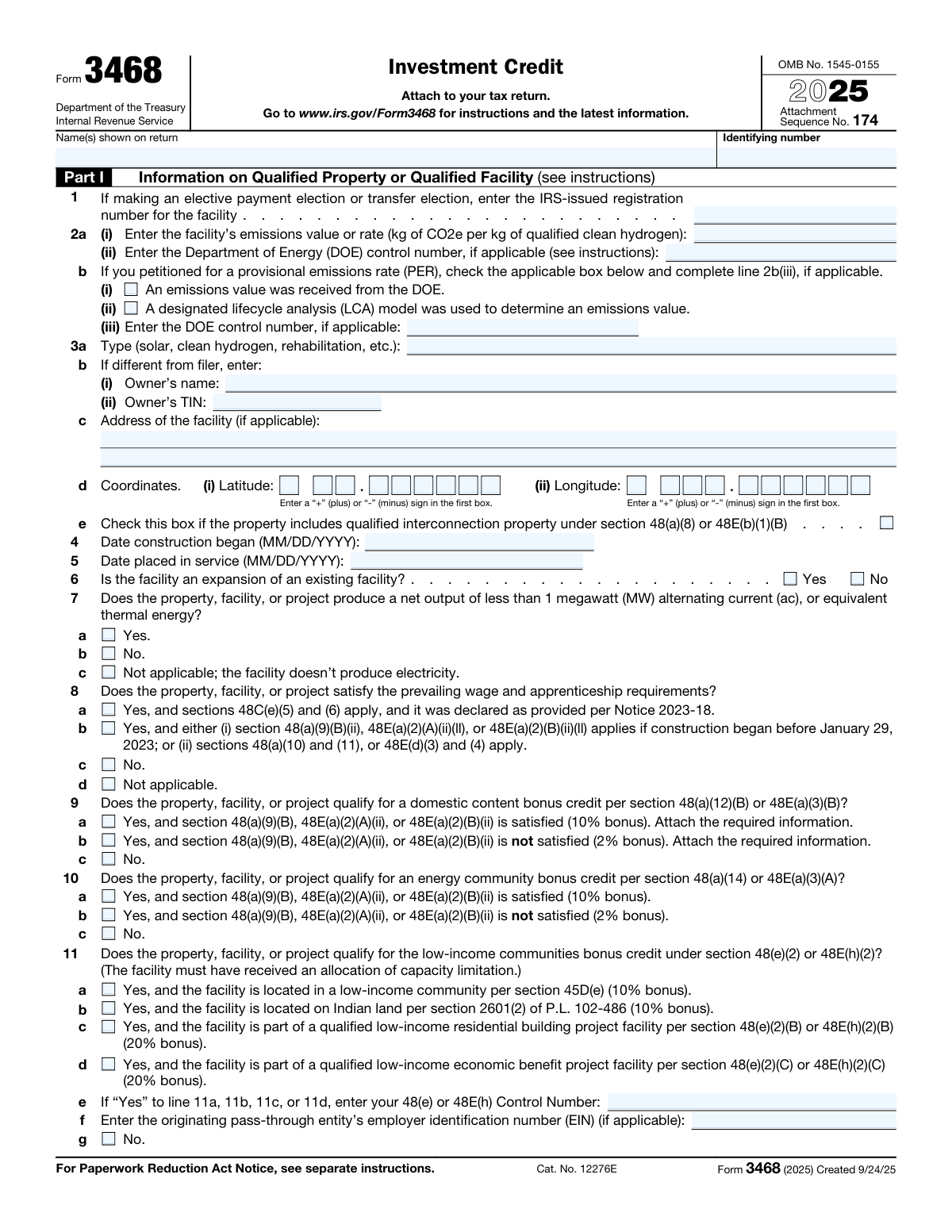
- Tax Reporting: Use IRS Form 8960 to calculate Net Investment Income Tax or Form 3468 to claim credits for energy-related investments.
Form Comparison
| Form | Purpose | Who Files It | When to Use |
|---|---|---|---|
| Form 3468, Investment Credit | Claim tax credits for energy property investments | Businesses and individuals investing in energy properties | Filing taxes with qualifying energy investment credits |
| Form 8960, Net Investment Income Tax | Calculate and report Net Investment Income Tax | Individuals, estates, and trusts with investment income | When net investment income exceeds IRS thresholds |
| Schwab One® Account Application for Personal Accounts | Open a personal brokerage account with Charles Schwab | U.S. citizens or resident aliens with U.S. address | Opening a new Schwab brokerage or margin account |
| Momentum Wealth Retirement Income Option Application (WIS060E) | Set up or transfer into a living annuity for retirement income | South African retirees seeking ongoing invested retirement income | At retirement or when transferring existing retirement funds |
Tips for investment forms
Many brokerage and investment forms, particularly those involving third-party transfers or account authority, require a Medallion Signature Guarantee rather than a standard signature. Check the specific requirements for each form before submitting, as missing a notary or guarantee is the most common reason for processing delays.
Investment assets typically pass directly to named beneficiaries, often overriding instructions in a will. It is a best practice to review and update your beneficiary designation forms after major life events like marriage, divorce, or the birth of a child to ensure your assets are distributed according to your current wishes.
When completing one-time withdrawal forms for IRAs or 401(k) plans, you will be asked to select a tax withholding percentage. Take the time to estimate your total annual income first, as selecting an incorrect withholding amount can lead to unexpected tax liabilities or early withdrawal penalties during tax season.
To expedite rollover and asset transfer forms, have your current account statement and the delivering institution's DTC number ready before you start. Providing precise account numbers and plan types ensures that funds are credited to the correct investment elections without manual intervention from the brokerage.
Managing multiple investment and tax forms can be a time-consuming task prone to manual errors. AI-powered tools like Instafill.ai can complete these forms in under 30 seconds with high accuracy, and your sensitive financial data stays secure throughout the entire automated process.
When moving assets between firms, such as transferring from Morgan Stanley to Fidelity, always include cost basis documentation. Ensuring this information is accurately reflected on your transfer forms prevents future tax reporting issues and helps you correctly calculate capital gains or losses when you eventually sell.
Frequently Asked Questions
These forms are used by individual investors, financial advisors, and plan trustees to manage assets within brokerage or retirement accounts. They are necessary for tasks such as opening new accounts, moving funds between institutions, designating heirs, or reporting investment-related income to the IRS.
A transfer usually involves moving assets directly between two accounts of the same type, such as an IRA to an IRA, without the funds being distributed to the owner. A rollover typically refers to moving funds from an employer-sponsored plan, like a 401(k), into an IRA or a new employer's plan, which often involves specific IRS reporting requirements.
To move assets, you generally need to complete a Transfer or Rollover form from the receiving institution, such as Fidelity or Schwab. You will need to provide your current account numbers, the delivering firm's information (like a DTC number), and often a recent account statement to ensure the assets are identified correctly.
Taxpayers commonly use Form 8960 to calculate Net Investment Income Tax and Form 3468 to claim credits for specific investments, such as those in renewable energy. These forms are filed with your annual tax return to ensure compliance with IRS regulations regarding investment gains and credits.
Beneficiary forms are legal documents that determine who will inherit your account assets upon your death. Because these designations usually override instructions in a will, keeping them updated ensures your investments are distributed according to your wishes and helps your heirs avoid the lengthy probate process.
A Medallion Signature Guarantee is a certification stamp provided by a financial institution that confirms a signature is genuine. It is frequently required for high-security requests, such as changing account ownership, transferring securities, or setting up standing transfer instructions between different parties.
Yes, many modern investors use AI tools like Instafill.ai to complete complex financial paperwork. These AI tools can accurately extract data from source documents and place it into the correct fields on a PDF form in under 30 seconds, ensuring high accuracy and saving time.
While manual entry can take 20 minutes or more for detailed brokerage forms, using AI-powered services can reduce the process to less than a minute. AI can instantly populate account numbers, addresses, and personal details from your existing files directly into the new investment document.
RMDs are the minimum amounts the IRS requires you to withdraw from your retirement accounts annually once you reach a certain age. Forms like TIAA’s F11489 allow you to authorize your provider to calculate and distribute these funds automatically, helping you avoid significant tax penalties.
An LOI is used when you want to authorize a brokerage to handle non-traditional assets, such as private equity or hedge funds, on your behalf. This form confirms that you understand the risks involved and that the brokerage is acting solely as a custodian for these specialized investments.
Glossary
- Form Complexity Index
- Instafill’s 0–100 measure of how much effort a form takes to complete, calculated deterministically from the form’s own structure rather than estimated. It combines the number of fillable fields (the largest factor), how difficult those fields are to complete based on their type, the number of pages that contain fields, the amount of conditional “fill-only-if” logic, and how many sections the form is divided into, then adds modifiers for tables and repeating lists, bundled instruction pages, and dense page layouts. A higher score means the form is harder to fill out by hand. The forms in this category have a median Form Complexity Index of 53/100 (Moderate). See exactly how it is calculated.
- Rollover (Direct vs. Indirect)
- A tax-free transfer of assets from one qualified retirement plan or IRA to another. A direct rollover moves funds directly between providers, while an indirect rollover involves the account holder receiving the funds and reinvesting them within 60 days to avoid taxes and penalties.
- Medallion Signature Guarantee
- A special certification stamp used by financial institutions to verify that a signature authorizing a transfer of securities is authentic. It is more rigorous than a standard notary and protects against fraudulent transfers by providing a financial guarantee.
- Required Minimum Distribution (RMD)
- The minimum amount the IRS requires retirement account owners to withdraw annually once they reach a certain age, or for those who inherit certain IRAs. Failure to take these distributions results in a significant tax penalty.
- Cost Basis
- The original value of an asset, typically the purchase price, adjusted for stock splits or dividends. It is used by the IRS to calculate capital gains or losses when the asset is sold or transferred.
- DTC Number
- A unique four-digit identification number assigned to financial institutions by the Depository Trust Company. It is required on transfer forms to facilitate the electronic movement of securities between different brokerage firms.
- Letter of Instruction (LOI)
- A formal document signed by an account holder that provides specific, one-time directions to a financial institution. It is often used for complex transactions like moving alternative investments or authorizing third-party account access.
- 1035 Exchange
- A tax-free transfer of funds from an existing annuity or life insurance policy to a new one, as permitted by Section 1035 of the Internal Revenue Code. This allows investors to change providers without triggering immediate capital gains taxes.
- Net Investment Income Tax (NIIT)
- A 3.8% tax applied to certain investment income for individuals, estates, and trusts that exceed specific income thresholds. It is calculated and reported using IRS Form 8960.