Fill out Canadian tax forms
with AI.
Canadian tax forms are the essential bridge between taxpayers and the Canada Revenue Agency (CRA), serving as the primary mechanism for reporting income, claiming deductions, and ensuring compliance with federal tax laws. Whether you are an individual filer, a small business owner, or a corporate investor, these documents are critical for documenting financial activities and securing the tax credits or refunds you are entitled to. Navigating this category involves understanding specific filing requirements that range from standard income reporting to specialized disclosures for resource investments and corporate expenses.
By continuing, you acknowledge Instafill's Privacy Policy and agree to get occasional product update and promotional emails.
About Canadian tax forms
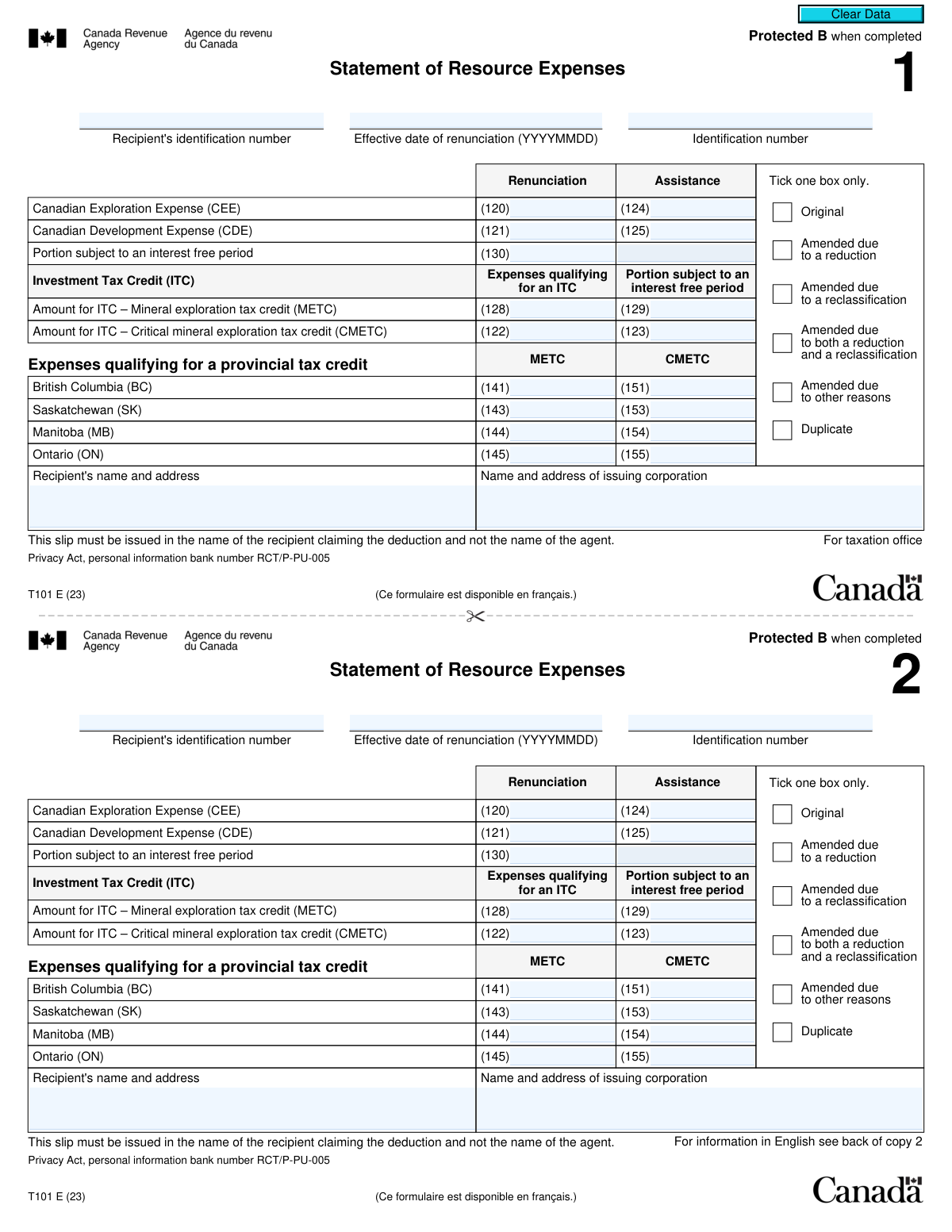
These forms are typically required during the annual tax season or when specific financial transactions occur throughout the fiscal year. For instance, investors involved in flow-through shares or resource-based sectors often deal with specialized slips like Form T101 to track resource expenses and investment tax credits. Managing these documents accurately is vital to avoid audits and ensure that every eligible deduction is accounted for. For many, the challenge lies in the complexity of the data required and the precision needed to satisfy CRA standards, making the preparation process feel overwhelming.
To simplify this process, tools like Instafill.ai use AI to complete these forms in under 30 seconds, ensuring data is handled accurately and securely. This approach eliminates the manual effort of typing into static documents, allowing users to focus on their financial planning rather than the administrative burden of paperwork. By leveraging AI, taxpayers can ensure their submissions are consistent and professional while significantly reducing the time spent on repetitive data entry.
Every form on this page can be completed without typing. Instafill is form filling software that reads a PDF and fills it for you — including flat and scanned documents that carry no fillable fields at all.
Forms in This Category
The forms in this category have a median Form Complexity Index of 68/100 (Complex), measured across 1 forms by field count, input difficulty, length, conditional logic and structure. See how it is calculated.
| Form Name | Pages | FCI | |
|---|---|---|---|
| 1. | Form T101, Statement of Resource Expenses | 4 | Complex 68 |
- Enterprise-grade security & data encryption
- 99%+ accuracy powered by AI
- 1,000+ forms from all industries
- Complete forms in under 60 seconds
How to Choose the Right Form
Navigating Canadian tax forms can be complex, especially when dealing with specialized investment vehicles like flow-through shares. While the CRA provides various income tax forms for general filing, specific resource-related deductions require precise documentation to ensure you receive the tax benefits you are entitled to.
Identifying the Correct Resource Form
If you are an investor who has purchased flow-through shares in a corporation—typically within the mining, oil, gas, or renewable energy sectors—you will likely need to interact with Form T101, Statement of Resource Expenses.
This form is the primary document used in this category for the following scenarios:
- Individual or Corporate Investors: Use this if you have received an information slip from a corporation detailing resource expenses that have been transferred to you.
- Claiming Resource Deductions: This is necessary if you are looking to deduct Canadian Exploration Expenses (CEE) or Canadian Development Expenses (CDE) on your personal or corporate income tax return.
- Applying Investment Tax Credits: If the issuing corporation has allocated specific credits to you, these must be reported using the data from this form to reduce your overall tax liability.
Why Form T101 is Unique
Unlike standard CRA forms that focus on earned income or common expenses, Form T101 acts as a specialized information slip. It bridges the gap between a corporation's exploration costs and your personal tax filing. It ensures that the tax incentives designed to encourage resource development in Canada are correctly attributed to the shareholders who provided the capital.
How to Prepare Your Filing
Before you begin filling out your tax forms, ensure you have the statement provided by the issuing corporation. You will need to accurately transfer specific figures regarding resource expenses and credits. If you are working with a non-fillable PDF version of these Canadian tax forms, you can use Instafill.ai to convert them into interactive documents, making it easier to complete your filing accurately and efficiently.
Form Comparison
| Form | Purpose | Issued By | Key Tax Benefit |
|---|---|---|---|
| Form T101, Statement of Resource Expenses | Reports resource expenses and tax credits transferred from corporations to flow-through share investors. | Corporations that renounce resource expenses in favor of their shareholders or investors. | Enables investors to claim deductions for exploration and development expenses on income tax returns. |
Tips for Canadian tax forms
Ensure that your Social Insurance Number (SIN) or Business Number (BN) on the form matches your CRA records exactly. Even a small typo in these identification fields can lead to significant delays in processing your resource expense deductions or tax credits.
Carefully review the slip to distinguish between Canadian Exploration Expenses (CEE) and Canadian Development Expenses (CDE). These categories often have different deduction rates on your income tax return, so miscategorizing them can result in an incorrect tax calculation.
If you hold flow-through shares in multiple corporations, you will likely receive multiple T101 slips. Organize and sum the amounts from each corresponding box across all slips to ensure your total deduction is accurate and supported by your documentation.
Manually transferring data from information slips to tax forms is time-consuming and prone to error. AI-powered tools like Instafill.ai can complete these forms in under 30 seconds with high accuracy, and your sensitive financial data stays secure throughout the automated process.
The CRA requires you to keep your T101 slips and related investment records for at least six years after the end of the tax year they apply to. Keeping these documents organized in a digital or physical folder ensures you can quickly respond to any future requests for information.
Resource expenses often qualify for specific provincial tax credits depending on where the exploration occurred. Check the specific boxes on your T101 slip for provincial codes to ensure you are claiming all regional incentives available to you.
Frequently Asked Questions
Canadian tax forms are official documents used by individuals and corporations to report income, claim deductions, and calculate tax obligations to the Canada Revenue Agency (CRA). These forms ensure that taxpayers comply with federal and provincial tax laws while accessing available credits and benefits.
Typically, corporations or organizations that manage specific financial activities, such as resource exploration, are responsible for issuing these slips to their investors. The issuer must provide these documents to both the recipient and the CRA so that the transferred expenses or credits can be accurately tracked.
The correct form depends on your specific financial situation, such as whether you are an employee, a business owner, or an investor in specialized sectors like mining or energy. You should review the types of income or expenses you have incurred during the tax year and match them with the corresponding CRA form or information slip.
Yes, modern AI tools like Instafill.ai can process Canadian tax forms in under 30 seconds by accurately extracting data from your source documents and placing it in the correct fields. This technology simplifies the filing process by automating data entry and reducing the risk of manual errors.
If you receive a form like the T101, you must use the data provided to claim deductions or investment tax credits on your annual income tax return. You should keep the slip for your records as the CRA may request it to verify the resource expenses you have claimed.
While many CRA forms are available as PDFs, they are not always natively interactive. Services like Instafill.ai can convert static documents into fillable forms, allowing you to complete your tax paperwork digitally without needing to print or scan physical copies.
Most forms are submitted directly to the Canada Revenue Agency (CRA) either through their online portals, such as My Account or My Business Account, or by mail. If you are using a tax professional or specialized software, the forms are often transmitted electronically as part of your tax return package.
Filing tax forms after the deadline may result in interest charges or late-filing penalties imposed by the CRA. It is important to stay aware of annual deadlines, which generally fall in the spring for individuals, to avoid unnecessary costs and delays in processing.
While manual entry can take significant time depending on the complexity of the data, using AI-powered tools can complete these forms in less than 30 seconds. These tools extract relevant information from your supporting documents and populate the form automatically and accurately.
If you are filing electronically, you generally do not need to attach physical copies of your slips, but you must keep them in your records for at least six years. If you are filing a paper return, you typically need to include the original slips to support the claims made in your return.
While some information slips are used by both, the final tax returns, such as the T1 for individuals and T2 for corporations, are distinct. Information from slips like the T101 is transferred to specific lines on whichever return the taxpayer is required to file.
Glossary
- Form Complexity Index
- Instafill’s 0–100 measure of how much effort a form takes to complete, calculated deterministically from the form’s own structure rather than estimated. It combines the number of fillable fields (the largest factor), how difficult those fields are to complete based on their type, the number of pages that contain fields, the amount of conditional “fill-only-if” logic, and how many sections the form is divided into, then adds modifiers for tables and repeating lists, bundled instruction pages, and dense page layouts. A higher score means the form is harder to fill out by hand. The forms in this category have a median Form Complexity Index of 68/100 (Complex). See exactly how it is calculated.
- CRA
- The Canada Revenue Agency, which is the federal government department responsible for administering tax laws and collecting taxes in Canada.
- Flow-through Shares (FTS)
- A type of investment that allows resource companies to transfer their tax deductions for exploration and development expenses directly to their investors.
- Canadian Exploration Expenses (CEE)
- Costs incurred while searching for petroleum, natural gas, or minerals that can be used as a tax deduction to reduce an investor's taxable income.
- Canadian Development Expenses (CDE)
- Expenses related to bringing a resource property into production, which are deducted from income at a slower rate than exploration expenses.
- Investment Tax Credit (ITC)
- A credit that directly reduces the total amount of tax you owe, often provided to those who invest in specific sectors like mining or clean energy.
- Renunciation
- The formal process where a corporation gives up its right to claim resource expenses so that those tax benefits can be passed on to its shareholders.
- Business Number (BN)
- A unique nine-digit identifier assigned by the CRA to businesses and legal entities for tax reporting and identification purposes.
- Tax Year
- The twelve-month period, usually the calendar year for individuals, for which income is reported and taxes are calculated.