Fill out clemency forms
with AI.
Clemency forms represent a critical pathway for individuals seeking legal relief or formal forgiveness for past criminal convictions. These documents, such as pardon applications, allow individuals to request an act of mercy from a government authority, typically a state governor or a parole commission. Securing clemency can be a life-changing milestone, as it often helps restore civil rights, improves employment opportunities, and provides a sense of closure for those who have demonstrated significant rehabilitation and positive contributions to their communities.
By continuing, you acknowledge Instafill's Privacy Policy and agree to get occasional product update and promotional emails.
About clemency forms
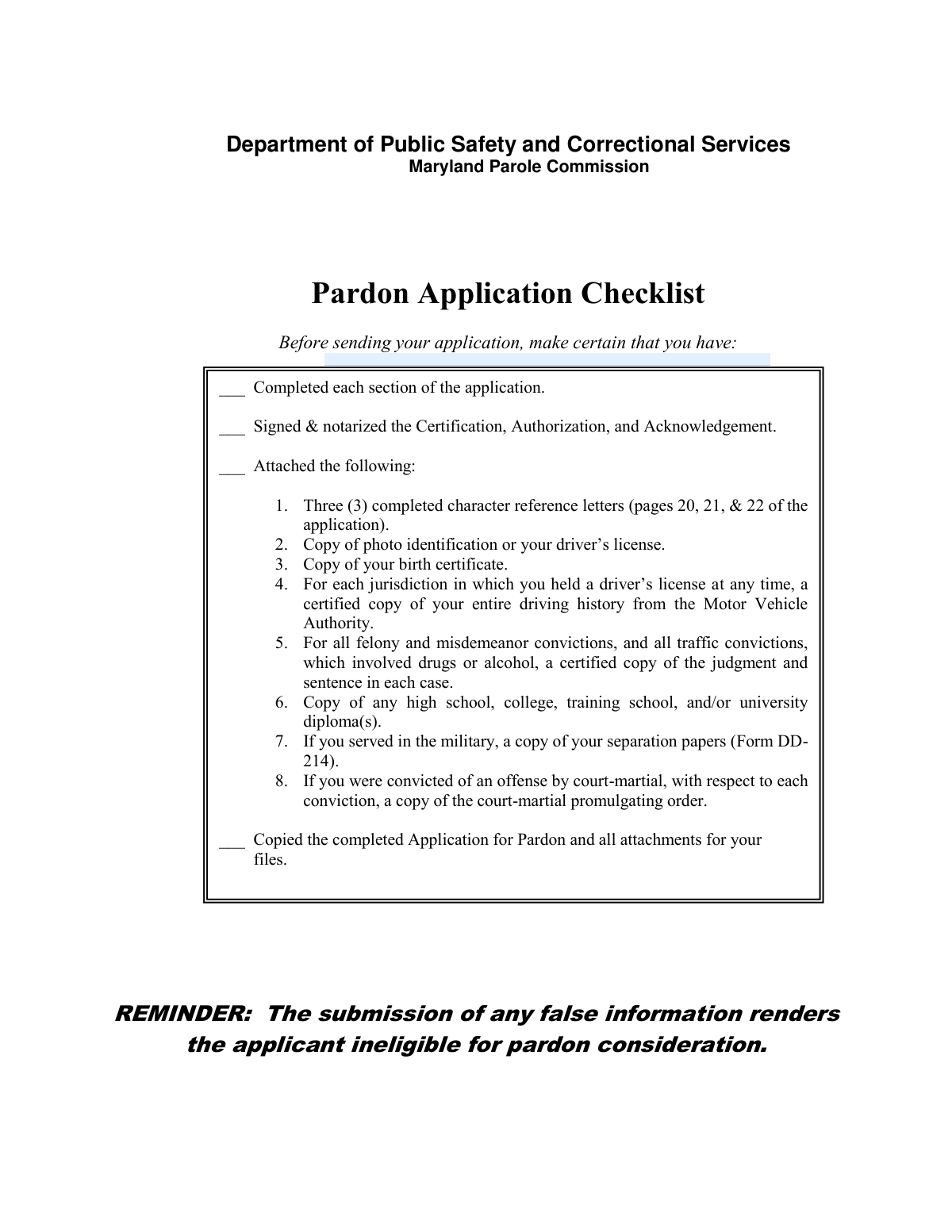
These forms are typically required by individuals who have completed their sentences and are looking to mitigate the long-term consequences of a criminal record. For example, the Maryland Application for Pardon requires a comprehensive disclosure of an applicant's personal history, financial status, and the specific reasons for seeking executive mercy. Navigating these requirements can be a daunting task, as the process involves gathering extensive documentation and providing detailed justifications to convince state officials of one's eligibility for a second chance.
Completing these detailed applications accurately is essential for a successful review. Tools like Instafill.ai use AI to fill these forms in under 30 seconds, ensuring that sensitive data is handled securely and precisely. This streamlined approach helps applicants manage complex paperwork efficiently, allowing them to focus on the substantive aspects of their application.
Every form on this page can be completed without typing. Instafill is form filling software that reads a PDF and fills it for you — including flat and scanned documents that carry no fillable fields at all.
Forms in This Category
The forms in this category have a median Form Complexity Index of 70/100 (Complex), measured across 1 forms by field count, input difficulty, length, conditional logic and structure. See how it is calculated.
| Form Name | Pages | FCI | |
|---|---|---|---|
| 1. | Maryland Department of Public Safety and Correctional Services Application for Pardon | 27 | Complex 70 |
- Enterprise-grade security & data encryption
- 99%+ accuracy powered by AI
- 1,000+ forms from all industries
- Complete forms in under 60 seconds
How to Choose the Right Form
Navigating Maryland Clemency and Pardons
Navigating the path to restorative justice in Maryland requires selecting the correct legal instrument. While "clemency" is a broad term that can include commutations or reprieves, the most common path for individuals seeking to move past their criminal record is the formal pardon process.
The Maryland Application for Pardon
The primary document in this category is the Maryland Department of Public Safety and Correctional Services Application for Pardon. This form is specifically designed for individuals who have already been convicted of a crime and are seeking formal forgiveness from the Governor of Maryland.
You should choose this form if:
- You have completed your sentence: This includes any time served, as well as the completion of parole or probation.
- You seek to restore civil rights: A pardon can help restore certain rights that may have been lost due to a felony conviction.
- You want to improve employment prospects: While a pardon does not expunge a record automatically in all cases, it serves as a powerful official recognition of your rehabilitation.
Key Requirements for the Application
Because the Maryland Application for Pardon is a request for executive grace, it is exceptionally detailed. Before starting, ensure you are prepared to provide:
- Detailed Criminal History: You must disclose your full record, not just the specific offense you are seeking a pardon for.
- Financial Disclosures: The form requires a comprehensive look at your current financial status.
- Evidence of Rehabilitation: You will need to provide reasons for your request and supporting documentation that proves you have been a law-abiding citizen since your conviction.
Streamlining the Process
The complexity of the Maryland Department of Public Safety and Correctional Services Application for Pardon can be daunting. Using Instafill.ai allows you to convert the standard PDF into a manageable, fillable format, ensuring that every required field is addressed accurately before submission to the Parole Commission.
Form Comparison
| Form | Purpose | Eligible Applicants | Key Requirements |
|---|---|---|---|
| Maryland Department of Public Safety and Correctional Services Application for Pardon | Formally request executive forgiveness from the Maryland Governor for past criminal convictions. | Individuals with Maryland criminal records who have completed all sentencing requirements. | Requires extensive criminal history, financial disclosures, personal background details, and supporting documentation. |
Tips for clemency forms
One of the most common mistakes is omitting past offenses or providing inaccurate dates. Review your official criminal record thoroughly before filling out the form to ensure every incident is accounted for, as discrepancies can lead to an immediate denial.
Clemency applications often require supplemental materials like character references, employment history, and proof of community service. Gathering these documents before you start the form ensures you can provide a comprehensive package that strengthens your case.
Clearly explain how a pardon will impact your life, such as restoring professional licensing or voting rights. Providing specific examples of your rehabilitation and contributions to society helps the review board understand the merit of your application.
Many pardon forms require detailed financial disclosures and residential history. Taking the time to verify these details against your own records prevents administrative errors that could delay the lengthy review process.
AI-powered tools like Instafill.ai can complete complex clemency forms in under 30 seconds with high accuracy. This technology streamlines the process by extracting your data and populating the form automatically while ensuring your data stays secure.
If the form requires contact information for personal references or employers, ensure all addresses and phone numbers are current. Outdated contact information can stall the background investigation phase of your clemency petition.
Frequently Asked Questions
Clemency forms, such as the Maryland Application for Pardon, allow individuals to request official forgiveness for a past criminal conviction from the Governor. While a pardon does not typically erase the record, it serves as a formal recognition of rehabilitation, which can be helpful for employment, licensing, and restoring certain civil rights.
Eligibility usually depends on the nature of the offense and the amount of time that has passed since the completion of the sentence, including any parole or probation. Most applicants are required to demonstrate a significant period of law-abiding conduct and show that they have been productive members of society before their request is considered.
Applicants must provide a comprehensive personal history, including employment records, financial status, and a full disclosure of their criminal history. The forms also require a detailed written statement explaining why the pardon is being sought and how the individual has rehabilitated themselves since the time of the conviction.
Yes, AI tools like Instafill.ai can be used to fill out complex clemency forms in under 30 seconds. The technology accurately extracts relevant data from your source documents and places it into the correct fields, ensuring the extensive personal and criminal history sections are completed efficiently and accurately.
A pardon is an act of executive clemency that forgives the crime but does not automatically remove it from public records. Expungement is a separate legal process that physically removes or shields a record from public view; in some cases, receiving a pardon can be a helpful step toward a subsequent expungement request.
Most pardon applications require several attachments, such as certified copies of court transcripts, police reports, and character references. You may also be asked to provide proof of employment, recent tax returns, or letters of recommendation from community members to support your claim of rehabilitation.
Completed Maryland pardon applications are submitted to the Maryland Parole Commission, which serves as the investigative body for the Governor. After a thorough review and investigation, the Commission provides a recommendation to the Governor, who holds the ultimate authority to grant or deny the request.
While these forms are traditionally time-consuming due to the level of detail required, using AI-powered platforms can reduce the process to less than a minute. These tools can also convert static PDF forms into interactive versions, making it easier to input and verify your information before final submission.
Yes, Maryland generally requires a specific number of years to pass after the completion of a sentence before an individual is eligible to apply. The length of this waiting period varies depending on whether the conviction was for a non-violent crime, a violent crime, or a more serious felony offense.
Generally, you must have completed your entire sentence, including all terms of parole, probation, or mandatory supervision, before you are eligible to apply for a pardon. The state typically requires a demonstrated period of 'clean' time following the end of all court-ordered supervision.
Once submitted, the Parole Commission conducts an investigation that may include interviews and a comprehensive review of your social and criminal history. Following this investigation, the Commission makes a confidential recommendation to the Governor, who then makes the final decision at their discretion.
Not necessarily. While a pardon is a significant step, the restoration of firearm rights often depends on the specific language included in the pardon granted by the Governor. Applicants seeking the restoration of specific rights should clearly state their intent within the application materials.
Glossary
- Form Complexity Index
- Instafill’s 0–100 measure of how much effort a form takes to complete, calculated deterministically from the form’s own structure rather than estimated. It combines the number of fillable fields (the largest factor), how difficult those fields are to complete based on their type, the number of pages that contain fields, the amount of conditional “fill-only-if” logic, and how many sections the form is divided into, then adds modifiers for tables and repeating lists, bundled instruction pages, and dense page layouts. A higher score means the form is harder to fill out by hand. The forms in this category have a median Form Complexity Index of 70/100 (Complex). See exactly how it is calculated.
- Clemency
- The overarching authority of a high government official, such as a Governor, to grant leniency to an individual convicted of a crime, which includes pardons and commutations.
- Pardon
- An official act of executive forgiveness for a past criminal offense that restores certain civil rights and can help mitigate the long-term consequences of a conviction.
- Parole Commission
- The administrative body that investigates and evaluates pardon applications before providing a formal recommendation to the Governor for a final decision.
- Expungement
- The legal process of sealing or destroying a criminal record so it is not accessible to the public; notably, a pardon in Maryland does not automatically result in an expungement.
- Commutation
- A specific type of clemency that reduces a person's punishment, such as shortening a prison sentence, without completely erasing the conviction from their record.
- Legal Disability
- A legal disqualification or loss of rights—such as the right to vote, serve on a jury, or hold certain professional licenses—that occurs as a result of a criminal conviction.
- Character Reference
- A written statement from a reputable person in the community that provides evidence of an applicant's rehabilitation, current lifestyle, and suitability for clemency.
- Remission of Fine
- A form of clemency that relieves a person from the obligation to pay an outstanding fine or forfeiture resulting from a criminal sentence.