Fill out electronic account forms
with AI.
Electronic account forms serve as the digital foundation for establishing financial relationships and administrative protocols. These documents are critical for ensuring that sensitive data—such as banking details, tax identification numbers, and authorization permissions—is captured accurately to facilitate seamless electronic transactions. Whether you are setting up a new brokerage account or authorizing government fund transfers, these forms bridge the gap between traditional record-keeping and modern digital efficiency, providing a secure trail for all parties involved.
By continuing, you acknowledge Instafill's Privacy Policy and agree to get occasional product update and promotional emails.
About electronic account forms
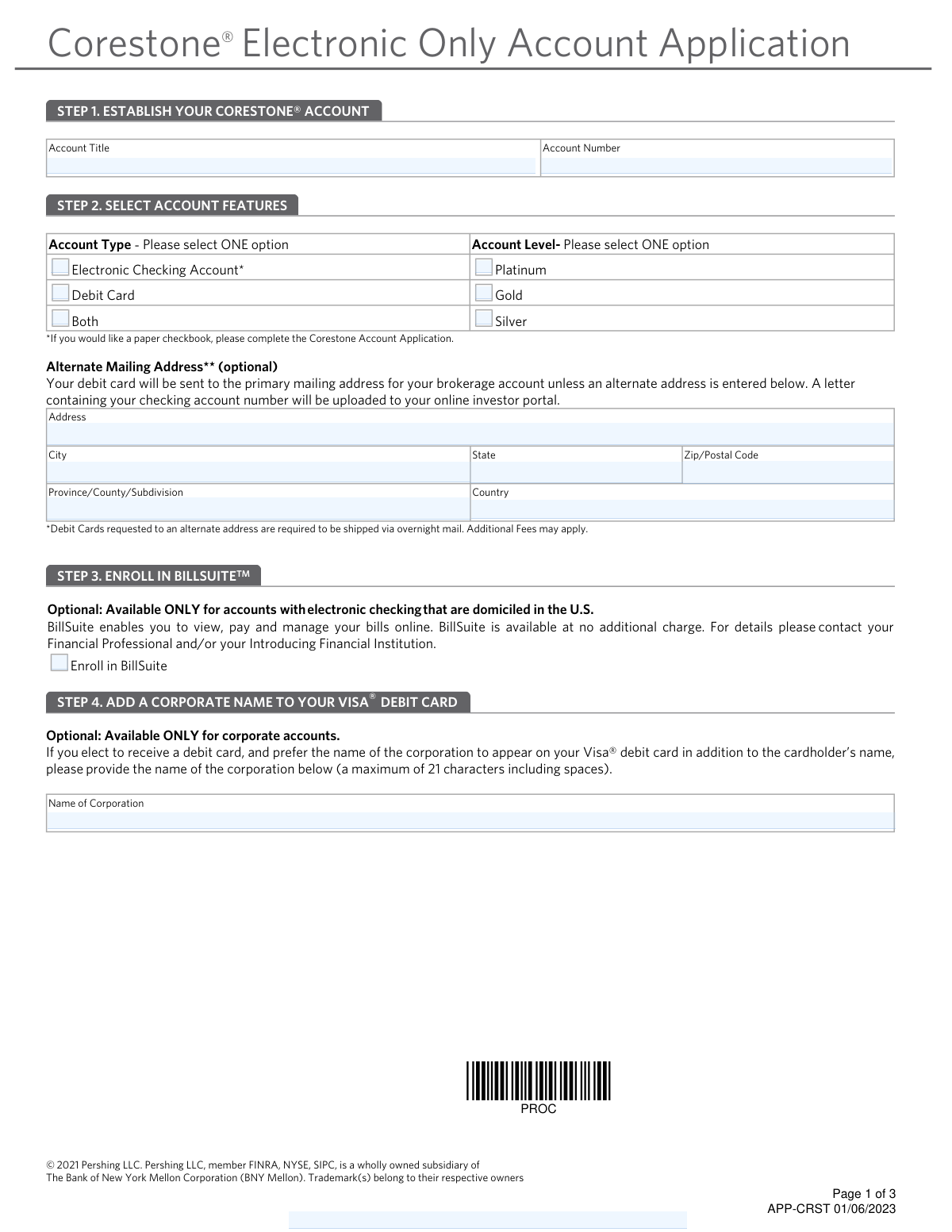
This category is typically utilized by business administrators, healthcare providers, and individual investors who need to formalize their digital presence. For example, organizations participating in Medicare programs use specific authorization agreements like the CMS-588 to manage electronic funds transfers, while individuals might use brokerage applications like the Corestone Electronic Only Account Application to establish digital-first investment accounts. These documents are essential during onboarding phases or when updating financial arrangements to ensure that payments and communications are directed to the correct legal entities. Tools like Instafill.ai use AI to fill these forms in under 30 seconds, handling complex data accurately and securely to save you significant administrative time.
Every form on this page can be completed without typing. Instafill is form filling software that reads a PDF and fills it for you — including flat and scanned documents that carry no fillable fields at all.
Forms in This Category
The forms in this category have a median Form Complexity Index of 40/100 (Basic), measured across 2 forms by field count, input difficulty, length, conditional logic and structure. See how it is calculated.
| Form Name | Pages | FCI | |
|---|---|---|---|
| 1. | Corestone® Electronic Only Account Application | 1 | Basic 40 |
| 2. | Form CMS-588, Electronic Funds Transfer (EFT) Authorization Agreement for Accountable Care Organizations | 1 | Basic 39 |
- Enterprise-grade security & data encryption
- 99%+ accuracy powered by AI
- 1,000+ forms from all industries
- Complete forms in under 60 seconds
How to Choose the Right Form
Determining Your Financial or Administrative Needs
Selecting the correct electronic account form depends entirely on whether you are setting up a private investment account or managing federal healthcare reimbursements. While both forms facilitate electronic financial transactions, they serve vastly different regulatory environments and industries.
Brokerage and Investment Accounts
If you are an individual or business looking to establish a new brokerage relationship with Pershing LLC, you will need the Corestone® Electronic Only Account Application. This form is specifically designed for modern, paperless financial management and is the correct choice for:
- Opening a new account: Establishing a Corestone® electronic-only brokerage account.
- Adding features: Selecting integrated financial tools such as electronic checking or a Visa® debit card.
- Digital Bill Pay: Enrolling in the BillSuite™ online bill payment service to manage your liabilities from a single portal.
Medicare and Healthcare Reimbursements
For healthcare entities participating in federal programs, the requirements are strictly administrative and regulatory. You should use Form CMS-588 (Electronic Funds Transfer Authorization Agreement for Accountable Care Organizations) if you represent an Accountable Care Organization (ACO) and need to:
- Facilitate Medicare Payments: Set up direct electronic payments for shared savings programs through the Centers for Medicare & Medicaid Services (CMS).
- Update Banking Info: Change existing EFT arrangements or banking details for an established ACO.
- Verify Tax Status: Provide the necessary legal entity information and Taxpayer Identification Number (TIN) to ensure federal payments are routed correctly to the organization or a Chain Home Office.
Quick Selection Tip
- Choose the Corestone® Application if you are an investor or financial advisor setting up a private brokerage account with debit and checking capabilities.
- Choose Form CMS-588 if you are a healthcare administrator managing the flow of federal funds for a Medicare-affiliated Accountable Care Organization.
Form Comparison
| Form | Primary Purpose | Target User | Key Information Required |
|---|---|---|---|
| Corestone® Electronic Only Account Application | Establish a digital brokerage account with Pershing LLC and optional bill pay services. | Individual or joint applicants seeking brokerage and electronic checking services. | Personal details, account feature selections, and BillSuite™ enrollment preferences. |
| Form CMS-588, Electronic Funds Transfer (EFT) Authorization Agreement for Accountable Care Organizations | Authorize direct electronic payments of shared savings from Medicare programs. | Accountable Care Organizations (ACOs) participating in Medicare programs. | Legal entity info, taxpayer ID, tax status, and banking/EFT details. |
Tips for electronic account forms
Using AI-powered tools like Instafill.ai allows you to complete complex electronic account forms in under 30 seconds with high accuracy. This technology streamlines the data entry process while ensuring your sensitive financial information stays secure, providing a significant time-saving advantage for busy professionals.
The most common reason for the rejection of electronic account forms is a simple typo in the banking digits. Always cross-reference your routing and account numbers against a voided check or an official bank statement to ensure payments and transfers are processed without delay.
For forms like the CMS-588, it is critical that the legal business name matches the name registered with the IRS or Medicare precisely. Any discrepancy between your banking records and your official registration can lead to significant delays in receiving shared savings or electronic funds.
Before starting your application, have your Taxpayer Identification Number (TIN), Social Security Number, and bank routing information readily available. Collecting these details in advance prevents session timeouts and ensures you can finish the document in one sitting without searching for paperwork.
Electronic account forms often require signatures from multiple authorized officials or joint account holders. Ensure every required signature line is filled before submission, as missing even one authorization can result in the entire form being returned as incomplete.
Always save a timestamped, digital copy of your completed PDF after submission for your internal records. This practice provides a clear audit trail for your financial history and makes it much easier to resolve any future inquiries regarding payment authorizations or account features.
Frequently Asked Questions
Electronic account forms are used to establish digital-first financial or administrative relationships, such as opening brokerage accounts or setting up electronic funds transfers (EFT). They allow individuals and organizations to authorize the movement of funds and enroll in paperless services without needing physical paperwork.
The target audience varies depending on the specific form; for example, investors may use them to set up electronic brokerage accounts with firms like Pershing LLC. Meanwhile, healthcare entities like Accountable Care Organizations (ACOs) use them to authorize Medicare payments through the Centers for Medicare & Medicaid Services (CMS).
Most forms require legal entity or personal identification, such as a Social Security Number or Taxpayer Identification Number (TIN). You will also need specific banking details, including your bank's name, routing number, and account number, to facilitate electronic transactions.
Yes, AI tools like Instafill.ai can be used to fill out these forms by accurately extracting data from your existing documents and placing it into the correct fields. This technology can even convert static PDF documents into interactive, fillable versions automatically.
While manual entry can take significant time, using AI-powered services like Instafill.ai allows you to complete these forms in under 30 seconds. The system handles the data mapping and extraction for you, ensuring a fast and accurate filing process.
Submission instructions depend on the organization issuing the form. Brokerage applications are typically sent directly to the financial institution, while government forms like the CMS-588 are often submitted to specific Medicare contractors or regional offices.
Electronic-only accounts are designed for efficiency, offering faster transaction speeds and reducing the environmental impact of paper mailings. They often provide users with immediate access to online tools like bill pay, digital statements, and real-time balance tracking.
If your bank account or contact details change, you will usually need to submit a new version of the authorization form to update the records. It is recommended to keep your old account active until the new electronic arrangement has been fully verified and tested by the institution.
Yes, these forms function as legal agreements that authorize an institution to manage your funds or execute financial transactions on your behalf. By signing the form, you agree to the terms and conditions set forth by the provider, such as Pershing LLC or CMS.
Providing banking information is a standard requirement for these forms to function. To ensure security, you should only use trusted platforms that utilize encryption and follow strict data privacy standards when handling sensitive financial identifiers.
Glossary
- Form Complexity Index
- Instafill’s 0–100 measure of how much effort a form takes to complete, calculated deterministically from the form’s own structure rather than estimated. It combines the number of fillable fields (the largest factor), how difficult those fields are to complete based on their type, the number of pages that contain fields, the amount of conditional “fill-only-if” logic, and how many sections the form is divided into, then adds modifiers for tables and repeating lists, bundled instruction pages, and dense page layouts. A higher score means the form is harder to fill out by hand. The forms in this category have a median Form Complexity Index of 40/100 (Basic). See exactly how it is calculated.
- EFT (Electronic Funds Transfer)
- The electronic movement of money from one bank account to another, eliminating the need for paper checks and manual processing.
- TIN (Taxpayer Identification Number)
- A unique identification number used by the IRS for tax purposes, which can include a Social Security Number (SSN) or an Employer Identification Number (EIN).
- CMS (Centers for Medicare & Medicaid Services)
- The federal agency within the U.S. Department of Health and Human Services that administers the Medicare program and works with state governments to manage Medicaid.
- Brokerage Account
- An arrangement between an investor and a licensed financial firm that allows the user to deposit funds and buy or sell securities such as stocks, bonds, and mutual funds.
- ACO (Accountable Care Organization)
- A group of healthcare providers and hospitals that coordinate care for Medicare patients to ensure high-quality treatment while reducing unnecessary costs.
- Clearing Firm
- A financial institution, such as Pershing LLC, that handles the backend processing of trades, maintains custody of assets, and manages account statements for brokerage firms.
- Chain Home Office
- The central administrative headquarters of a group of related healthcare providers that handles financial and operational management for the entire network.
- BillSuite™
- A specific online bill payment service integrated into financial accounts that allows users to schedule and automate payments to third-party vendors.