Fill out insurance application forms
with AI.
Insurance application forms are the essential documents used by individuals and businesses to request coverage and provide insurers with the data necessary to evaluate risk. These forms serve as the foundation for various policies, ranging from personal life insurance and Social Security survivor benefits to complex commercial liability coverage. By accurately documenting personal, financial, and operational details, these forms allow underwriters to determine eligibility and set fair premium rates, ensuring that the policyholder is adequately protected against unforeseen events.
By continuing, you acknowledge Instafill's Privacy Policy and agree to get occasional product update and promotional emails.
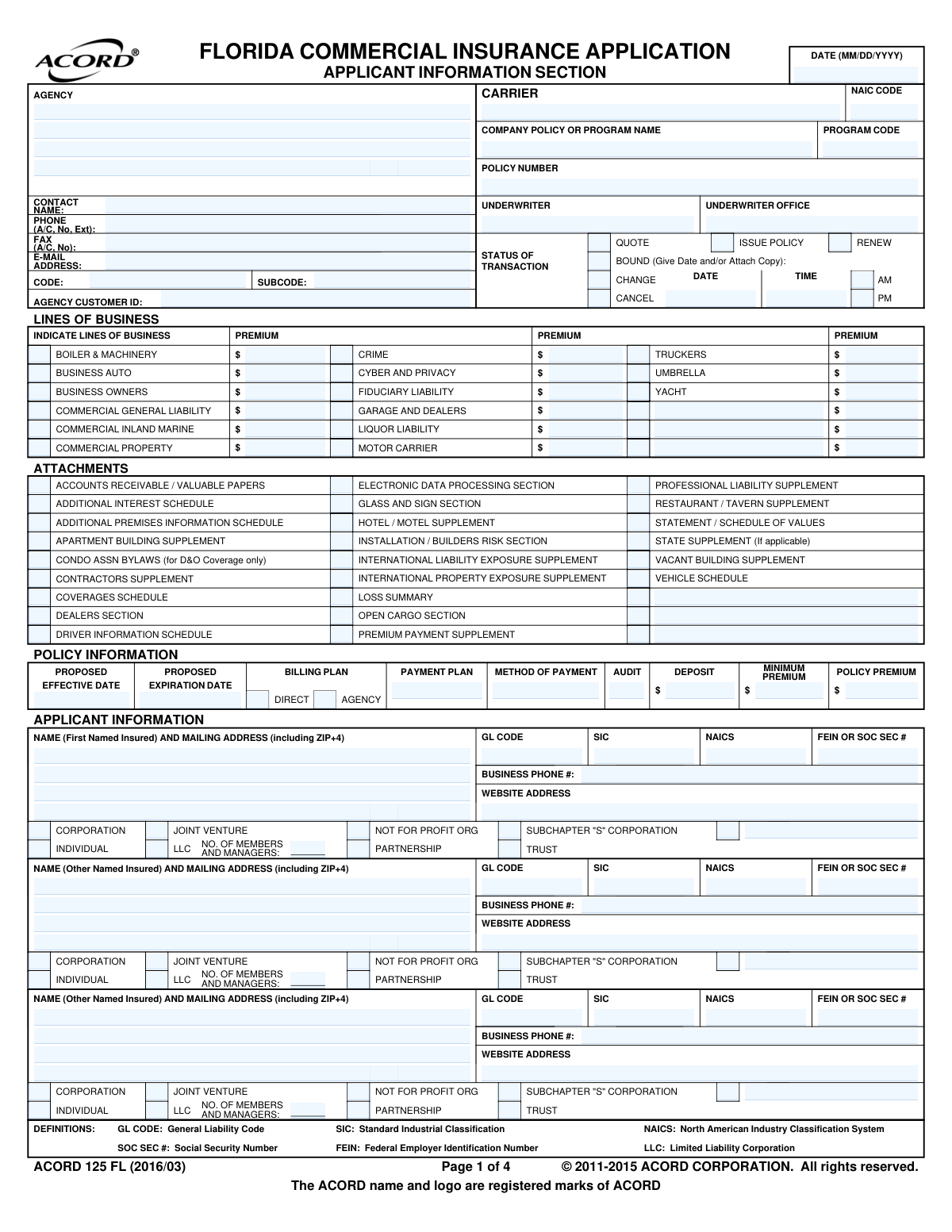
About insurance application forms
This category includes a wide array of specialized documents tailored to different industries and life stages. For example, business owners might need specific liability applications for martial arts studios or equine training, while prime design firms often require project-specific professional liability forms for large-scale contracts. Individuals also use these documents to apply for child or widow insurance benefits through federal programs. Because these forms often require extensive historical data and technical details, completing them manually can be a meticulous and error-prone process.
To streamline this administrative task, tools like Instafill.ai use AI to fill insurance application forms in under 30 seconds, maintaining high standards of data accuracy and security. Whether you are dealing with standard property insurance forms, industry-standard acord forms, or specialized dwelling fire forms, leveraging AI helps you move from application to coverage faster and with greater confidence.
Every form on this page can be completed without typing. Instafill is form filling software that reads a PDF and fills it for you — including flat and scanned documents that carry no fillable fields at all.
Forms in This Category
The forms in this category have a median Form Complexity Index of 69/100 (Complex), measured across 31 forms by field count, input difficulty, length, conditional logic and structure. See how it is calculated.
- Enterprise-grade security & data encryption
- 99%+ accuracy powered by AI
- 1,000+ forms from all industries
- Complete forms in under 60 seconds
How to Choose the Right Form
Selecting the right insurance application depends on whether you are seeking government-funded social benefits, personal life coverage, or specialized commercial liability protection for your business. Use the categories below to identify the correct document for your needs.
Social Security and Survivor Benefits
If you are applying for financial support through the Social Security Administration based on a family member’s work history, choose from these government forms:
- Form SSA-4-BK (Application for Child's Insurance Benefits): Use this if you are applying on behalf of a child or dependent grandchild of a worker who is retired, disabled, or deceased.
- Form SSA-10 (Application for Widow's or Widower's Insurance Benefits): Choose this form if you are a surviving spouse looking to claim survivors benefits.
Professional and Niche Business Liability
For business owners and contractors, insurance applications are highly specific to the industry and the scope of work.
- Martial Arts Studio General Liability and Property Application: Select this if you operate a fitness or wellness facility and need coverage for operations, sparring, and property risks.
- AEIG Instructors and Trainers Liability Application: This is specifically designed for equine professionals. Use this if you are a horse trainer or riding instructor needing liability protection.
- Application for Specific Project Insurance Coverage: Choose this if you are a prime design firm. Unlike a general annual policy, this form is intended to secure professional liability coverage for one specific, high-stakes project.
Personal Life Insurance
- Transamerica Life Insurance Company Individual Whole Life Insurance Application: If you are an individual seeking permanent life insurance coverage that includes a cash value component, this is the correct application to begin your underwriting process.
Once you have identified the correct form, you can use Instafill.ai to quickly complete the PDF, ensuring all medical, financial, and professional details are accurately captured for the underwriter.
Form Comparison
| Form | Purpose | Who Files It | When to Use |
|---|---|---|---|
| Form SSA-4-BK, Application for Child's Insurance Benefits | Apply for Social Security benefits for dependent children | Parent or guardian of eligible child or grandchild | When a worker retires, becomes disabled, or dies |
| Form SSA-10, Application for Widow's or Widower's Insurance Benefits | Claim survivor Social Security benefits after spouse's death | Surviving spouse of a deceased insured worker | After spouse's death to secure survivors benefits |
| Martial Arts Studio General Liability and Property Application (Fitness and Wellness Insurance / Philadelphia Insurance Companies) (03/2011) | Apply for liability and property coverage for martial arts studios | Martial arts studio owner or insurance broker | When seeking commercial insurance for a martial arts business |
| ACORD 84, Dwelling Fire Application (2013/09) | Apply for dwelling fire insurance on residential properties | Property owner or insurance agent on applicant's behalf | When insuring a home, apartment, condo, or co-op for fire risk |
Tips for insurance application forms
When filling out business or property insurance forms, always provide a complete history of past claims and incidents. Inaccurate or omitted information can lead to denied claims later or the cancellation of your policy during the underwriting process.
Insurance applications often require specific data like annual revenue, payroll figures, or Social Security numbers for dependents. Having these documents ready prevents errors and ensures that the figures you enter match your official tax and bank records.
AI-powered tools like Instafill.ai can complete these forms in under 30 seconds with high accuracy, which is a real time-saver when dealing with multiple forms. Your data stays secure during the process, allowing you to move from application to quote much faster.
For life insurance and Social Security benefit forms, ensure that names, dates of birth, and relationship statuses are 100% accurate. Even a small typo in a Social Security number can cause significant delays in processing benefits for children or surviving spouses.
For specialized liability forms, such as those for martial arts studios or equine trainers, be very specific about the activities you supervise. Clearly outlining the scope of your work helps underwriters categorize your risk correctly, which can often result in more favorable premium rates.
When applying for project-specific insurance, highlight the safety protocols and risk management strategies your firm has in place. Demonstrating a proactive approach to risk can make your application more attractive to underwriters and may influence the final terms of your coverage.
Frequently Asked Questions
Insurance application forms are formal documents used by individuals and businesses to request coverage from an insurance carrier or a government agency. These forms collect essential data regarding the applicant's identity, history, and the specific risks being insured, allowing underwriters to determine eligibility and calculate appropriate premiums.
Selecting the correct form depends on your specific needs, such as whether you are seeking personal life insurance, professional liability for a business, or government benefits. For instance, a business owner would look for general liability applications, while a surviving spouse would look for Social Security Administration (SSA) benefit forms.
Yes, you can use AI-powered tools like Instafill.ai to complete these forms quickly. The AI can accurately extract data from your existing documents and automatically place it into the correct fields on the insurance application, ensuring a high level of precision.
While manually filling out complex insurance applications can take 30 minutes or more, using an AI tool can reduce that time to under 30 seconds. These tools streamline the process by mapping information from your source files directly onto the PDF form.
Most commercial liability forms require details about your business operations, annual revenue, employee count, and previous claims history. Specialized forms, such as those for martial arts studios or equine trainers, may also ask for specific details regarding safety protocols and equipment.
Submission methods vary by the type of form; government forms like those for Social Security are typically filed with the SSA, while private insurance applications should be sent to your insurance broker or the carrier's underwriting department. Always refer to the specific filing instructions provided by the organization issuing the form.
Personal insurance forms focus on individual factors like health, age, and family relationships to determine benefits or life insurance eligibility. Commercial forms focus on business-related risks, professional experience, and the specific nature of a project or company operation.
Insurance is a legal contract based on the information provided in the application. Providing inaccurate or incomplete data can lead to a delay in getting a quote, a higher premium, or even the denial of a future claim if the insurer discovers the risk was not correctly represented.
Often, yes. Depending on the form, you may need to provide supplemental documents such as financial records, proof of previous coverage, or identification documents like a birth certificate for Social Security benefits. Check the requirements listed on the application to ensure a complete submission.
Generally, the person seeking coverage or an authorized representative of a business must sign the form to certify that the information provided is true and complete. For government benefits, a legal guardian or representative may sign on behalf of a minor or dependent.
Glossary
- Form Complexity Index
- Instafill’s 0–100 measure of how much effort a form takes to complete, calculated deterministically from the form’s own structure rather than estimated. It combines the number of fillable fields (the largest factor), how difficult those fields are to complete based on their type, the number of pages that contain fields, the amount of conditional “fill-only-if” logic, and how many sections the form is divided into, then adds modifiers for tables and repeating lists, bundled instruction pages, and dense page layouts. A higher score means the form is harder to fill out by hand. The forms in this category have a median Form Complexity Index of 69/100 (Complex). See exactly how it is calculated.
- Underwriting
- The process an insurance company uses to evaluate the risk of a potential customer to decide whether to offer coverage and what the premium should be.
- Premium
- The specific amount of money an individual or business must pay periodically to an insurance company to keep a policy active.
- Liability Insurance
- Coverage that protects the policyholder from financial loss if they are found legally responsible for causing bodily injury or property damage to others.
- ACORD Forms
- Standardized documents used by insurance agents and companies to collect and share data consistently across the industry.
- Claims-Made Policy
- A type of insurance that provides coverage only for claims that are filed during the policy period, regardless of when the actual incident happened.
- Professional Liability (E&O)
- Also called Errors and Omissions insurance, this covers legal costs and damages resulting from mistakes or negligence while providing professional services.
- Whole Life Insurance
- A type of permanent life insurance that remains in effect for the insured's entire lifetime and includes a savings component known as cash value.
- Exposure
- A measure of the vulnerability to loss, which underwriters use to calculate the level of risk associated with a specific business activity or property.