Fill out taxpayer information forms
with AI.
Taxpayer information forms serve as the essential link between private entities and government agencies, ensuring that financial data and legal identities are correctly recorded for administrative purposes. These documents are vital for maintaining tax compliance, facilitating the accurate reporting of income, and enabling the secure disbursement of federal funds. By formalizing the relationship between an organization and agencies like the Social Security Administration, these forms help prevent delays in processing payments and ensure that official communications reach the correct point of contact.
By continuing, you acknowledge Instafill's Privacy Policy and agree to get occasional product update and promotional emails.
About taxpayer information forms
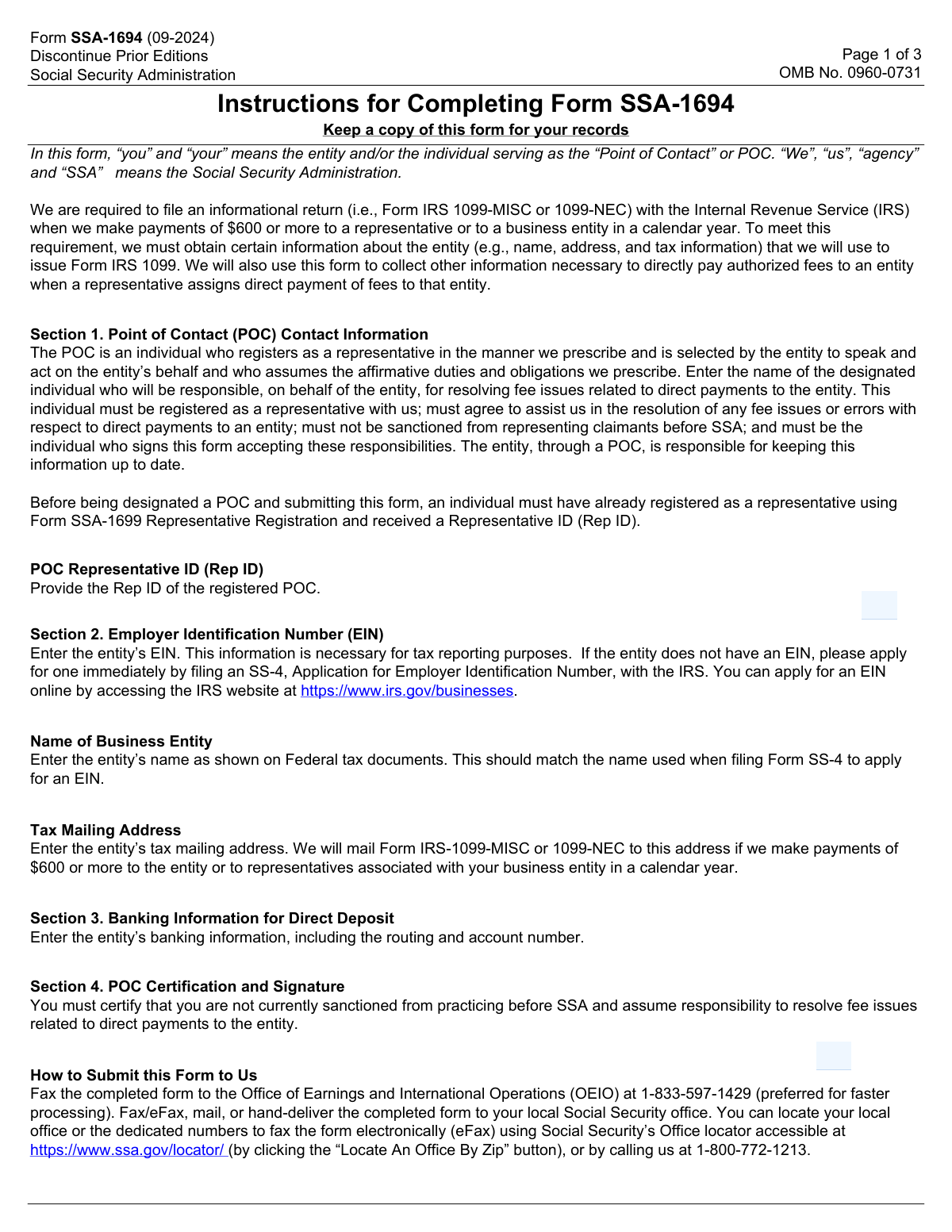
This category is most relevant for business entities, legal representatives, and professional practitioners who must register their details to receive direct payments or represent claimants. For example, forms like the SSA-1694 are used by organizations to establish their Employer Identification Number (EIN) and banking information within federal systems. Whether you are setting up a new professional entity or updating existing registration data, providing precise taxpayer information is a critical step in managing the administrative side of legal and financial services.
Completing these documents manually can be time-consuming, especially when dealing with complex data fields and banking details. Tools like Instafill.ai use AI to fill these taxpayer information forms in under 30 seconds, handling sensitive data accurately and securely to streamline your administrative workflow. This automation allows professionals to maintain high standards of documentation while significantly reducing the time spent on manual data entry.
Every form on this page can be completed without typing. Instafill is form filling software that reads a PDF and fills it for you — including flat and scanned documents that carry no fillable fields at all.
Forms in This Category
The forms in this category have a median Form Complexity Index of 35/100 (Basic), measured across 1 forms by field count, input difficulty, length, conditional logic and structure. See how it is calculated.
| Form Name | Pages | FCI | |
|---|---|---|---|
| 1. | Form SSA-1694, Entity Registration and Taxpayer Information | 3 | Basic 35 |
- Enterprise-grade security & data encryption
- 99%+ accuracy powered by AI
- 1,000+ forms from all industries
- Complete forms in under 60 seconds
How to Choose the Right Form
When to Use Form SSA-1694
If you are representing a claimant before the Social Security Administration (SSA) as part of a business entity, Form SSA-1694 (Entity Registration and Taxpayer Information) is the specific document you need. This form is essential for organizations—such as law firms, non-profits, or professional associations—that wish to receive direct payment of fees for their services.
Key Requirements for Registration
To determine if this is the right form for your current needs, consider the following requirements for the entity:
- Entity Representation: This form is specifically for business entities, not individual representatives. While individual representatives file their own paperwork, the entity itself must be registered via the SSA-1694 to handle the financial and tax-related side of the representation.
- Taxpayer Identification: You will need your business’s Employer Identification Number (EIN). The form serves as the official record for the SSA to associate your entity's tax information with the fees paid out during the year.
- Banking and Direct Deposit: A core purpose of Form SSA-1694 is to establish or update direct deposit details. If your organization wants to receive electronic payments for claimant representation fees rather than paper checks, this is the mandatory filing.
- Point of Contact (POC): The form requires you to designate a specific individual within your organization to act as the primary contact for any administrative or tax-related inquiries from the Social Security Administration.
Ensuring Accuracy in Your Filing
Because Form SSA-1694 involves sensitive financial and taxpayer data, accuracy is critical to avoid payment delays. Using an AI-powered tool like Instafill.ai ensures that fields like your EIN and banking routing numbers are captured correctly. If you are setting up a new legal practice or updating the banking information for an existing organization, this is the primary form to select from the taxpayer information category.
Form Comparison
| Form | Primary Purpose | Who Files It | Key Information Required |
|---|---|---|---|
| Form SSA-1694, Entity Registration and Taxpayer Information | Registers business entities to receive direct fee payments for claimant representation. | Business entities or law firms representing individuals before the Social Security Administration. | Requires Employer Identification Number, banking details, and designated point of contact info. |
Tips for taxpayer information forms
Double-check that the Employer Identification Number (EIN) matches official IRS records exactly before submission. Errors in this field are the primary cause of processing delays or rejected payments from the Social Security Administration.
Ensure the routing and account numbers provided are for a business account capable of receiving automated payments. Small typos in banking information can lead to significant delays in receiving representative fees or other distributions.
When registering an entity, choose a Point of Contact (POC) who is consistently available to handle administrative inquiries. This ensures that any follow-up questions from the SSA regarding your taxpayer status are handled promptly by a knowledgeable staff member.
Maintain a secure digital copy of every taxpayer information form you submit to ensure consistency across future filings. Having these records easily accessible helps you quickly reconcile payments and verify the information currently on file with the government.
AI-powered tools like Instafill.ai can complete these forms in under 30 seconds with high accuracy, saving significant time for those handling multiple filings. The data stays secure during the process, providing a reliable way to manage sensitive taxpayer information efficiently.
Use the exact legal name of your entity as it appears on your tax returns and registration documents. Inconsistencies between the name on the form and the name associated with the EIN can trigger secondary verification processes and administrative hurdles.
Ensure the person signing the document has the legal authority to bind the entity for tax and payment purposes. Forms submitted without an authorized signature or with an incorrect title may be returned for correction, slowing down the registration process.
Frequently Asked Questions
These forms are used to provide government agencies, such as the Social Security Administration, with the necessary identification and financial data for business entities. They ensure that the agency has accurate records for tax reporting and the processing of direct payments to the organization.
Business entities, such as law firms or advocacy groups that represent individuals in social security claims, usually need to complete these forms. Registration allows the entity to receive direct payments for services rendered and establishes a formal point of contact with the agency.
You need this form if your business entity intends to receive direct payment of authorized fees for representing claimants before the Social Security Administration. It is the standard document for registering your Employer Identification Number (EIN) and banking information for this specific purpose.
Most taxpayer information forms require the entity's legal name, physical address, and a valid Employer Identification Number (EIN). You will also typically need to provide banking details, such as a routing and account number, to facilitate electronic fund transfers.
Yes, AI tools like Instafill.ai can fill these forms in under 30 seconds by accurately extracting and placing data from your source documents. This technology ensures that complex fields are populated correctly, reducing the risk of manual entry errors.
Completed forms are usually submitted directly to the agency requesting the information, such as the Social Security Administration. Submission methods vary and may include online portals, faxing to a specific processing center, or mailing physical copies to a designated regional office.
While manual entry can take several minutes or longer depending on the complexity of the data, using an AI-powered service can complete the process in less than 30 seconds. These tools automate the mapping of your business information directly into the PDF fields.
Yes, agencies typically require a designated Point of Contact to handle communications regarding the entity's registration and tax information. This individual is responsible for ensuring the entity's data remains current and responding to any inquiries from the agency.
If your information changes, you must generally submit an updated taxpayer information form to the relevant agency as soon as possible. Keeping this data current is essential to prevent delays in payments or issues with tax reporting at the end of the year.
No, these are administrative registration forms used to establish a profile for an entity rather than to report annual income or calculate taxes owed. They serve as a foundational record that allows the agency to interact with your business for financial and reporting purposes.
Glossary
- Form Complexity Index
- Instafill’s 0–100 measure of how much effort a form takes to complete, calculated deterministically from the form’s own structure rather than estimated. It combines the number of fillable fields (the largest factor), how difficult those fields are to complete based on their type, the number of pages that contain fields, the amount of conditional “fill-only-if” logic, and how many sections the form is divided into, then adds modifiers for tables and repeating lists, bundled instruction pages, and dense page layouts. A higher score means the form is harder to fill out by hand. The forms in this category have a median Form Complexity Index of 35/100 (Basic). See exactly how it is calculated.
- EIN (Employer Identification Number)
- A unique nine-digit number assigned by the IRS to identify business entities for tax reporting and administration purposes.
- SSA (Social Security Administration)
- The federal agency that oversees social insurance programs, including retirement, disability, and survivor benefits.
- Claimant
- The individual who is applying for or receiving Social Security benefits and is being represented by an authorized person or entity.
- Point of Contact (POC)
- The designated individual within an organization who acts as the primary liaison for communications with the Social Security Administration.
- Entity
- A business, partnership, or corporation that provides representation services to claimants and is registering to receive fee payments.
- Direct Payment
- A process where the SSA pays authorized representative fees directly from the claimant's past-due benefits to the representative or their firm.
- Appointed Representative
- An individual or organization officially authorized by a claimant to act on their behalf during the Social Security claims process.
- TIN (Taxpayer Identification Number)
- An identification number used by the IRS for tax purposes, which may include an individual's Social Security Number or a business's Employer Identification Number.