Fill out title transfer forms
with AI.
Title transfer forms are the essential legal bridge for changing vehicle ownership between individuals or entities. Whether you are selling a car, purchasing a vehicle from a private seller, or transferring a title to a family member, these documents ensure that the Department of Motor Vehicles (DMV) has an accurate record of who is legally responsible for the asset. Properly filing these forms is critical to protecting the seller from future liabilities, such as tickets or accidents, and ensuring the buyer can legally register the vehicle in their name.
By continuing, you acknowledge Instafill's Privacy Policy and agree to get occasional product update and promotional emails.
About title transfer forms
Navigating the requirements of the DMV can be daunting, especially when dealing with lost or damaged titles. Forms like the REG 227, Application for Replacement or Transfer of Title, are frequently used when the original ownership document is missing but a transfer still needs to occur. These documents are necessary for a wide range of people, from individual car owners and estate executors to small business owners managing a fleet. Having the correct paperwork ready prevents delays at the DMV and ensures that the transition of property is recognized by state authorities.
Completing these complex documents accurately is vital to avoid processing errors or legal disputes. Tools like Instafill.ai use AI to fill these forms in under 30 seconds, handling your data securely while ensuring every field is addressed correctly. This approach simplifies the often tedious process of vehicle documentation, allowing you to focus on the transaction rather than the paperwork.
Every form on this page can be completed without typing. Instafill is form filling software that reads a PDF and fills it for you — including flat and scanned documents that carry no fillable fields at all.
Forms in This Category
The forms in this category have a median Form Complexity Index of 75/100 (Complex), measured across 3 forms by field count, input difficulty, length, conditional logic and structure. See how it is calculated.
| Form Name | Pages | FCI | |
|---|---|---|---|
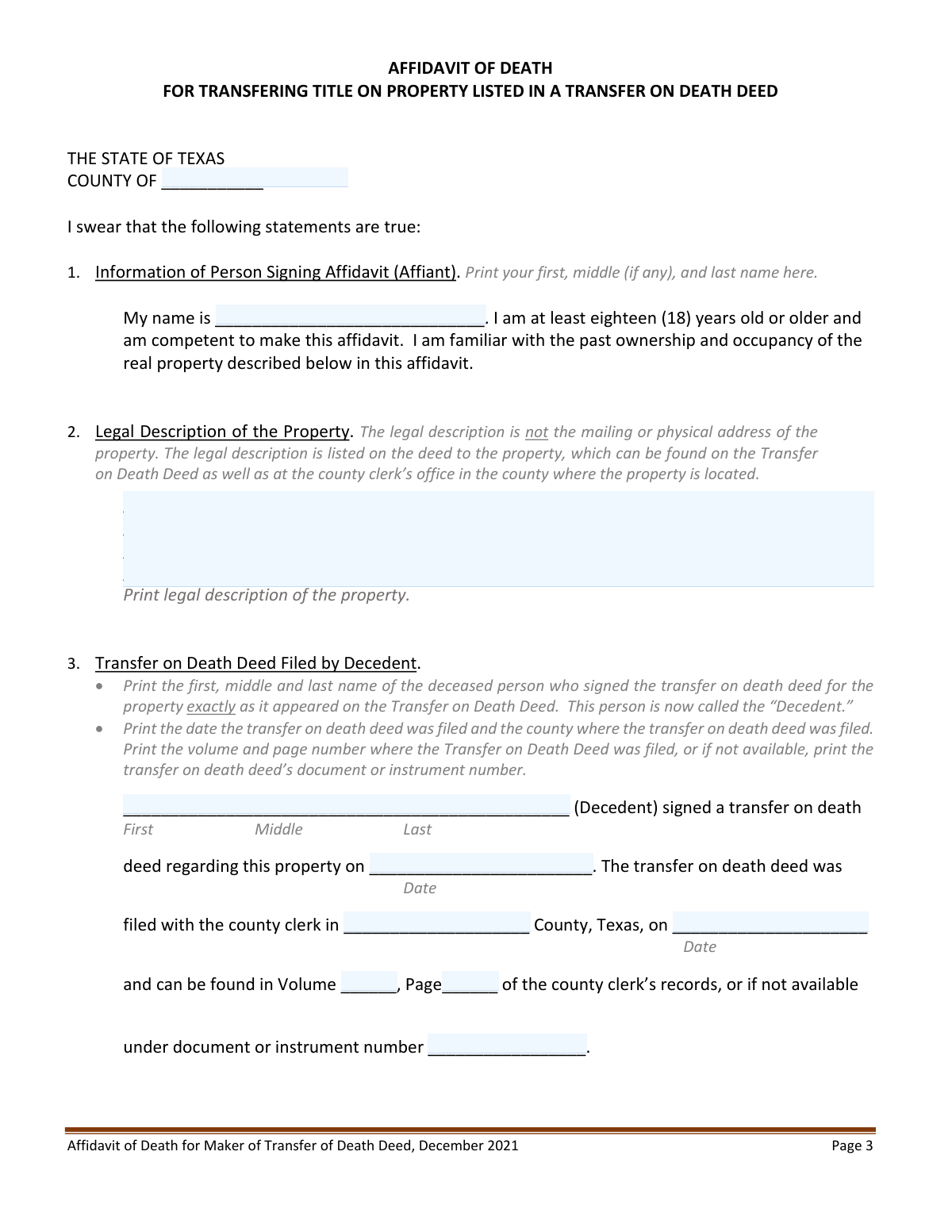
| 1. | Affidavit of Death for Transferring Title on Property Listed in a Transfer on Death Deed | 1 | Basic 36 |
| 2. | Form REG 227, Application for Replacement or Transfer of Title | 2 | Complex 75 |
| 3. | Form REG 227, Application for Replacement or Transfer of Title | - | – |
- Enterprise-grade security & data encryption
- 99%+ accuracy powered by AI
- 1,000+ forms from all industries
- Complete forms in under 60 seconds
How to Choose the Right Form
Navigating Department of Motor Vehicles (DMV) paperwork can be complex, especially when legal ownership of a vehicle is changing hands. Choosing the right title transfer form depends primarily on whether you possess the original title and the specific nature of the transaction.
When to Use Form REG 227
The primary document in this category is Form REG 227, Application for Replacement or Transfer of Title. This is a versatile California DMV form used in two specific scenarios:
- Lost or Damaged Titles: If your original Certificate of Title has been lost, stolen, mutilated, or was never received, you must use Form REG 227 to request a duplicate.
- Paperless Transfers: If you are selling or transferring a vehicle but do not have the physical title to sign over to the new owner, this form allows you to apply for a replacement and record the transfer of ownership simultaneously.
Supporting Documentation for Title Transfers
While Form REG 227 handles the legal title, other forms are often required to finalize the process and protect both parties:
- Bill of Sale (REG 262): Even with a title transfer application, you should use a DMV Bill of Sale template to document the purchase price and date. This is vital for tax purposes and establishing a clear paper trail.
- Notice of Transfer and Release of Liability: After completing the transfer, the seller must file this notice to ensure they are no longer legally responsible for the vehicle, including parking tickets or accidents.
- Statement of Facts (REG 256): If there are discrepancies in the vehicle’s history or specific exemptions being claimed (like a family transfer), you may need to include a REG 256 to clarify the situation.
Choosing by Jurisdiction
Ensure you are using the correct state-specific application. While REG 227 is the standard for California, users in other states like New York may need the MV-82 (Vehicle Registration/Title Application) for similar transactions. Always verify that the form matches the state where the vehicle is registered.
Form Comparison
| Form | Primary Function | Common Scenarios | Required Information |
|---|---|---|---|
| Form REG 227, Application for Replacement or Transfer of Title | Requests a duplicate title or facilitates ownership transfer without the original document. | Used when original title is lost, stolen, mutilated, or was never received. | Requires vehicle identification, license plate number, and signatures from all registered owners. |
| Form REG 227, Application for Replacement or Transfer of Title | Serves as an application for replacement title or documentation of ownership transfer. | Necessary for legal vehicle transfers when the physical title is currently unavailable. | Includes detailed vehicle description, owner information, and signatures from buyers and sellers. |
Tips for title transfer forms
Always double-check the VIN on your vehicle's dashboard or door jamb against the paperwork before submission. A single digit error can cause the DMV to reject your application, leading to significant delays in processing your title transfer.
Ensure you record the exact mileage at the time of transfer to avoid legal discrepancies and potential fraud flags. Most title transfer forms require an accurate odometer disclosure to maintain the vehicle's official history and value.
Check if the form requires signatures from both the buyer and the seller, and verify if notarization is necessary for your specific transaction. Missing or illegible signatures are one of the most common reasons for form rejection at the DMV.
After selling a vehicle, submit a Notice of Transfer and Release of Liability to protect yourself from future tickets or legal issues. This essential step informs the DMV that you are no longer responsible for the vehicle's operation or registration.
AI-powered tools like Instafill.ai can complete complex forms in under 30 seconds with high accuracy. Your data stays secure during the process, providing a fast and reliable way to handle multiple title transfer documents without manual errors.
Always maintain a copy of the Bill of Sale alongside your title transfer forms for your personal records. This document serves as a receipt and provides essential details about the purchase price and date, which are often needed for tax purposes.
Before attempting a transfer, ensure there are no outstanding loans or liens listed on the vehicle title. If a lienholder is present, you will likely need a formal lien release or a signature from the financial institution to complete the transfer.
Frequently Asked Questions
A title transfer form is a legal document used to officially change the ownership of a motor vehicle from one party to another. This process ensures that the Department of Motor Vehicles (DMV) has an accurate record of the current owner for registration, taxation, and liability purposes.
Form REG 227, the Application for Replacement or Transfer of Title, is specifically used when the original vehicle title has been lost, stolen, mutilated, or was never received. It allows the owner to simultaneously apply for a duplicate title and transfer ownership to a new buyer in a single step.
You will generally need the Vehicle Identification Number (VIN), the license plate number, and the current registered owner's information. Additionally, you must provide the new owner's details, the purchase price, and the odometer reading at the time of the sale.
Yes, you can use AI tools like Instafill.ai to complete these forms quickly and accurately. The AI can extract data from your source documents and automatically place it into the correct fields on the form, which helps prevent manual entry errors.
Using AI-powered services, you can often finish these forms in under 30 seconds. The technology streamlines the process by identifying relevant information and populating the PDF fields automatically, saving you the time of manual typing.
Both the buyer and the seller have responsibilities, but the seller should specifically file a Notice of Transfer and Release of Liability. This document informs the DMV that the seller is no longer responsible for the vehicle, protecting them from future tickets or legal issues involving the car.
In many cases, yes, a Bill of Sale is required to document the transaction details and the purchase price for tax purposes. While the title transfer form updates the legal ownership, the Bill of Sale acts as a formal receipt for both the buyer and the seller.
If the owners' names are joined by 'and,' both individuals must sign the transfer forms to legally sell the vehicle. If the names are joined by 'or,' usually only one of the owners is required to sign for the transfer to be valid.
Completed forms can typically be submitted in person at a local DMV field office or sent by mail to the address listed on the form instructions. Some states also provide authorized third-party registration services that can process title transfers for a fee.
Whether a form needs to be notarized depends on your specific state's laws and the type of transaction. While many standard transfers do not require a notary, certain situations like out-of-state transfers or specific affidavits may require a notarized signature to be accepted.
Glossary
- Form Complexity Index
- Instafill’s 0–100 measure of how much effort a form takes to complete, calculated deterministically from the form’s own structure rather than estimated. It combines the number of fillable fields (the largest factor), how difficult those fields are to complete based on their type, the number of pages that contain fields, the amount of conditional “fill-only-if” logic, and how many sections the form is divided into, then adds modifiers for tables and repeating lists, bundled instruction pages, and dense page layouts. A higher score means the form is harder to fill out by hand. The forms in this category have a median Form Complexity Index of 75/100 (Complex). See exactly how it is calculated.
- Lienholder
- An individual or financial institution that holds a security interest in a vehicle until the loan is fully paid. They are typically listed on the title as the legal owner until the debt is satisfied.
- Notice of Transfer and Release of Liability (NRL)
- A document filed with the DMV that informs the department a vehicle has been sold or transferred to a new owner. It protects the seller from being held responsible for future parking tickets, traffic violations, or accidents involving the vehicle.
- Odometer Disclosure Statement
- A mandatory declaration of the vehicle's current mileage at the time of sale or transfer. This helps prevent mileage fraud and ensures the buyer is aware of the vehicle's true usage history.
- Statement of Facts (REG 256)
- A versatile form used to provide additional information or explanations to the DMV regarding a vehicle's history or registration status. It is often required for tax exemptions, name changes, or when there are discrepancies in documentation.
- VIN (Vehicle Identification Number)
- A unique 17-character code assigned to every motor vehicle that serves as its fingerprint. It is used to track the vehicle’s history, including registrations, recalls, and title transfers.
- Legal Owner
- The party that holds the actual title to the vehicle, usually a bank or finance company, until the vehicle is paid in full. This is distinct from the registered owner, who is the person currently using and possessing the vehicle.
- Bill of Sale
- A legal document that records the sale of a vehicle between a buyer and a seller. It includes details such as the purchase price, date of sale, and vehicle information, serving as a receipt for the transaction.
- Power of Attorney (Vehicle)
- A legal authorization that allows one person to act on behalf of another in DMV-related matters, such as signing a title or registration application. This is often used when the registered owner cannot be physically present to sign documents.