Fill out judgment enforcement forms
with AI.
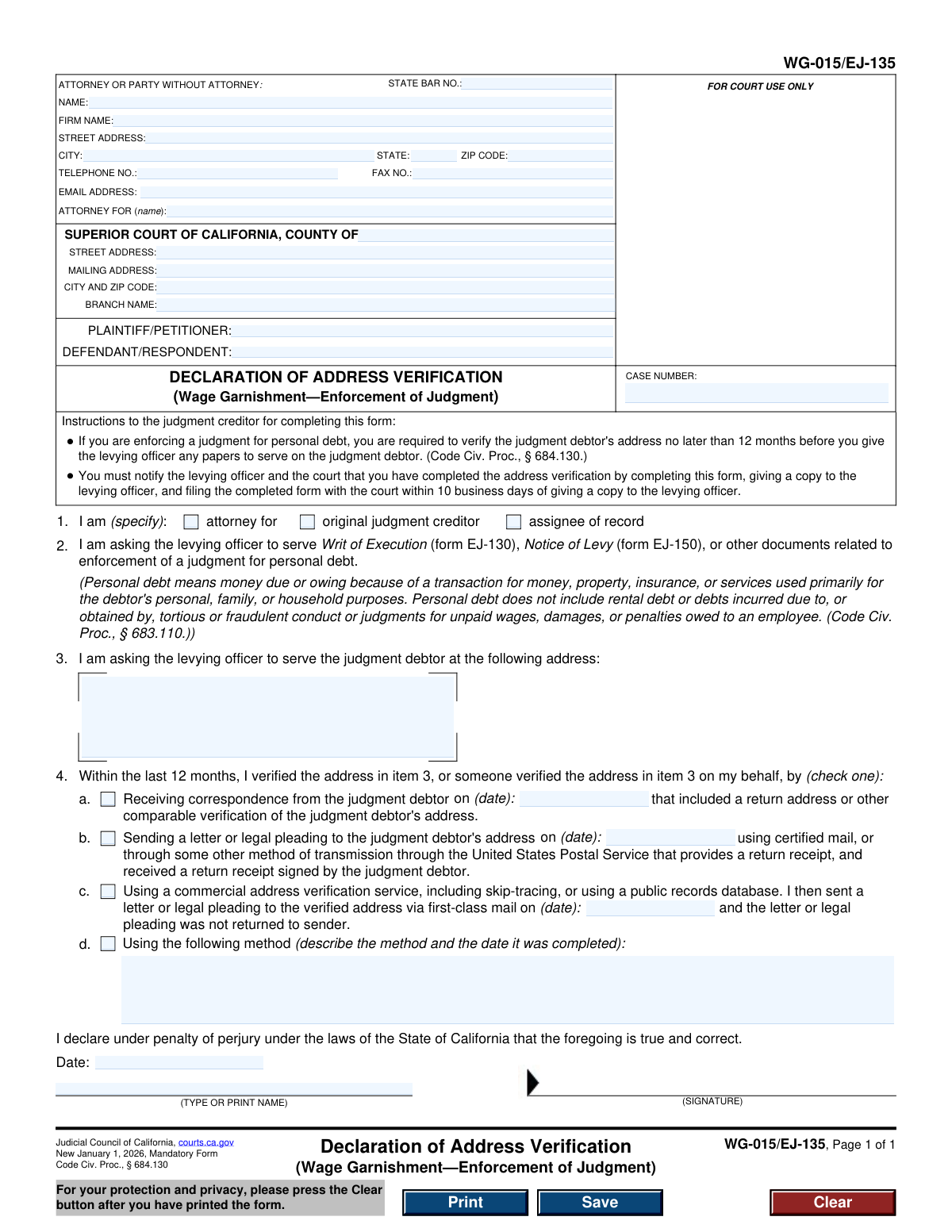
Judgment enforcement forms are used after a court has already ruled in a creditor's favor — when the challenge shifts from winning the case to actually recovering the money owed. These forms give creditors legal mechanisms to compel payment without depending on the debtor to act voluntarily. They cover a range of enforcement methods, from freezing bank accounts to directing third parties to release funds, and they must be completed accurately and submitted to the court to be effective.
By continuing, you acknowledge Instafill's Privacy Policy and agree to get occasional product update and promotional emails.
About judgment enforcement forms
Anyone who has obtained a county court judgment or similar court order and is struggling to collect what they're owed may need these forms. This includes individual claimants, small businesses, solicitors acting on behalf of clients, and debt recovery professionals. A common example in this category is Form N349, the Application for Third Party Debt Order, which allows a creditor to have funds held by a bank or building society paid directly to them rather than to the debtor. Getting the details right — account information, outstanding amounts, statement of truth — is essential, as errors can delay or invalidate the application.
Because these forms are often time-sensitive and require precise information, tools like Instafill.ai use AI to fill them out in under 30 seconds, helping creditors move through the enforcement process quickly and accurately without the usual paperwork burden.
Every form on this page can be completed without typing. Instafill is form filling software that reads a PDF and fills it for you — including flat and scanned documents that carry no fillable fields at all.
Forms in This Category
The forms in this category have a median Form Complexity Index of 38/100 (Basic), measured across 18 forms by field count, input difficulty, length, conditional logic and structure. See how it is calculated.
- Enterprise-grade security & data encryption
- 99%+ accuracy powered by AI
- 1,000+ forms from all industries
- Complete forms in under 60 seconds
How to Choose the Right Form
With only one form in this category, choosing is straightforward — but understanding when and why to use it will help you decide if it's the right enforcement tool for your situation.
Form N349 — Application for Third Party Debt Order
This form is designed for judgment creditors who already hold a court judgment or order and want to recover money held by a third party (such as a bank or building society) on the debtor's behalf.
Use Form N349 if:
- You have an existing county court or High Court judgment and the debtor has not paid voluntarily
- You have reason to believe the debtor holds funds in a bank or building society account
- You want the court to freeze and redirect those funds directly to you, without needing the debtor's cooperation
This form is NOT the right choice if:
- You do not yet have a court judgment — you must obtain one before applying
- You want to seize physical goods (consider a Writ or Warrant of Control instead)
- You are looking to recover money from the debtor's employer via wage deductions (an Attachment of Earnings Order would apply)
- The third party is not holding money on the debtor's behalf
What You'll Need to Complete It
Before filling out Form N349, have the following ready:
- Details of the original judgment (case number, amount, date)
- The outstanding balance still owed
- The third party's name, address, and the debtor's account details where possible
- Information on any other parties with an interest in the funds
The form must be verified with a Statement of Truth, so accuracy is essential. Using an AI-powered tool like Instafill.ai can help you complete Form N349 correctly and efficiently, reducing the risk of errors that could delay your application.
Form Comparison
| Form | Purpose | Who Files It | When to Use |
|---|---|---|---|
| Form N349, Application for Third Party Debt Order | Freeze and recover debtor's funds held by a third party | Judgment creditor owed money under a court order | When debtor has funds held by a bank or third party |
Tips for judgment enforcement forms
Before completing Form N349, confirm the exact outstanding balance owed under the judgment, including any interest or costs that have accrued. Using an incorrect figure can delay your application or result in the court rejecting it. Have your original judgment or order to hand as a reference.
The order can only be directed at a specific third party — such as a bank or building society — where the debtor actually holds funds. If you name the wrong institution or provide inaccurate account details, the application will fail. Try to confirm the debtor's banking details through any available correspondence or previous disclosure.
Form N349 must be verified by a Statement of Truth, which carries legal weight — signing it falsely is a contempt of court. Make sure every detail you provide is accurate and that you are authorised to sign on behalf of any company creditor. Do not leave this section incomplete or unsigned.
If there are other creditors or parties with an interest in the funds held by the third party, they must be identified on the form. Omitting relevant interested parties can complicate the interim order stage and lead to adjournments. Review any known financial obligations the debtor has before submitting.
AI-powered tools like Instafill.ai can complete Form N349 quickly and accurately, which is especially useful if you are managing multiple enforcement actions. Your data stays secure throughout the process, and the tool can even convert non-fillable PDF versions into interactive forms. It's a practical time-saver that reduces the risk of manual entry errors.
A Third Party Debt Order is typically granted in two stages: an interim order is issued first, which freezes the funds, followed by a final hearing where the order may be made permanent. Make sure your application is complete and accurate at the outset, as errors can affect the interim stage. Being prepared for both hearings will help you enforce the judgment efficiently.
Always retain a copy of the completed N349 form and any supporting documents before filing with the court. If the court requires additional information or there is a dispute at the final hearing, having your records organised will save significant time. Store copies securely in case you need to reference them later.
Frequently Asked Questions
Judgment enforcement forms are official court documents used by creditors who have already won a court judgment but need legal mechanisms to actually collect the money owed. They allow creditors to pursue assets, bank accounts, wages, or other funds held by or on behalf of the debtor without relying on the debtor to pay voluntarily.
A Third Party Debt Order (applied for using Form N349) is a court order that instructs a third party — most commonly a bank or building society — to pay money it holds on behalf of a judgment debtor directly to the creditor. You would need one when you have an existing court judgment in your favour but the debtor has not paid and you have reason to believe they hold funds with a third party.
A judgment creditor — meaning a person or organisation that has already obtained a court judgment or order against another party — can apply for a Third Party Debt Order. The applicant must be owed money under an existing court judgment and have grounds to believe the debtor holds funds with an identifiable third party.
Yes. Judgment enforcement forms like Form N349 are only available to those who already hold a valid court judgment or order. These forms are enforcement tools, not a means of obtaining a judgment in the first place — the legal process of proving the debt must be completed first.
Completed judgment enforcement forms are generally submitted to the court that issued the original judgment, or to a court with jurisdiction over the matter. It is advisable to check the specific court's guidance or consult a legal professional to confirm the correct filing location and any associated fees.
Before completing Form N349, you should have details of the original court judgment (including case number and amount owed), the judgment debtor's full name and address, information about the third party (such as the bank's name and branch), and any account details you hold for the debtor. You will also need to sign a Statement of Truth confirming the accuracy of the information provided.
No. Judgment enforcement forms are specifically for enforcing an existing court judgment or order. If you have not yet obtained a judgment, you would first need to pursue the appropriate legal proceedings to establish the debt before applying for enforcement measures.
After submission, the court will typically consider the application and, if satisfied, issue an interim order that freezes the funds held by the third party. A further hearing is usually scheduled to decide whether a final order should be made, giving the debtor and the third party an opportunity to respond.
Yes. AI-powered tools like Instafill.ai can fill out forms such as Form N349 in under 30 seconds by accurately extracting and placing relevant data from your source documents. This significantly reduces the risk of errors and saves time compared to completing the forms manually.
Using an AI-powered service like Instafill.ai, judgment enforcement forms can typically be completed in under 30 seconds, as the AI reads your documents and populates the required fields automatically. Manual completion can take considerably longer, especially if you are unfamiliar with legal terminology or the form's structure.
Form N349 is specifically designed to recover money held by a third party (such as funds in a bank account) on behalf of the judgment debtor. It may not be the appropriate enforcement tool if the debtor's assets are in a different form, such as property or wages, for which other enforcement mechanisms and forms would apply.
While it is not always a legal requirement to have a solicitor, judgment enforcement can be a complex area of law and the consequences of errors can be significant. Seeking advice from a qualified legal professional is generally recommended, particularly if the amounts involved are substantial or the circumstances are complicated.
Glossary
- Form Complexity Index
- Instafill’s 0–100 measure of how much effort a form takes to complete, calculated deterministically from the form’s own structure rather than estimated. It combines the number of fillable fields (the largest factor), how difficult those fields are to complete based on their type, the number of pages that contain fields, the amount of conditional “fill-only-if” logic, and how many sections the form is divided into, then adds modifiers for tables and repeating lists, bundled instruction pages, and dense page layouts. A higher score means the form is harder to fill out by hand. The forms in this category have a median Form Complexity Index of 38/100 (Basic). See exactly how it is calculated.
- Third Party Debt Order (TPDO)
- A court order that requires a third party (such as a bank) holding money on behalf of a judgment debtor to pay that money directly to the judgment creditor instead. It is one of the main tools used to enforce a court judgment without the debtor's cooperation.
- Judgment Creditor
- The person or organisation that has won a court judgment and is owed money by the other party. They are the applicant seeking enforcement of the debt.
- Judgment Debtor
- The person or organisation that has lost a court case and is legally required to pay the judgment creditor a specified sum of money.
- Interim Order
- A temporary court order issued at the first stage of the TPDO process that freezes the funds held by the third party (e.g., a bank account) until a final hearing determines whether the money should be paid to the creditor.
- Statement of Truth
- A declaration signed on a court form confirming that the information provided is true to the best of the applicant's knowledge. Signing a false Statement of Truth can result in contempt of court proceedings.
- Judgment Enforcement
- The legal process of compelling a judgment debtor to pay a court-ordered debt when they fail to do so voluntarily, using mechanisms such as third party debt orders, charging orders, or bailiff action.
- Garnishee
- An older legal term for the third party (typically a bank or building society) that holds funds belonging to the judgment debtor and is ordered by the court to redirect those funds to the creditor. Modern UK law refers to this process as a Third Party Debt Order.
- Outstanding Judgment Debt
- The remaining amount of money still owed under a court judgment, including any accrued interest and court costs, after accounting for any partial payments already made.
- Civil Litigation
- The legal process by which disputes between individuals or organisations are resolved in court, typically involving claims for money or other remedies rather than criminal charges.