Fill out outpatient authorization forms
with AI.
Outpatient authorization forms are required documents that healthcare providers must submit to insurance plans before delivering certain outpatient services. In the behavioral health space, these forms are particularly important — they initiate the medical necessity review process that determines whether a plan will cover a requested treatment. For services like Applied Behavior Analysis (ABA) therapy, which is commonly prescribed for individuals diagnosed with Autism Spectrum Disorder, precertification is typically mandatory before treatment can begin. Submitting the correct, fully completed form is essential to avoid delays or denials in care.
By continuing, you acknowledge Instafill's Privacy Policy and agree to get occasional product update and promotional emails.
About outpatient authorization forms
These forms are most often completed by attending providers, clinical supervisors, or their administrative staff on behalf of patients. A form like the Aetna GR-69017-4 — used for ABA treatment precertification across several Aetna-affiliated plans — requires detailed clinical and diagnostic information, CPT codes, treatment hours, and provider credentials, making accuracy critical. Errors or omissions can slow down the authorization process significantly, which directly impacts a patient's access to timely care.
Tools like Instafill.ai use AI to fill these complex, multi-section forms in under 30 seconds, helping providers handle the documentation accurately and securely so they can focus more on patient care.
Every form on this page can be completed without typing. Instafill is form filling software that reads a PDF and fills it for you — including flat and scanned documents that carry no fillable fields at all.
Forms in This Category
The forms in this category have a median Form Complexity Index of 51/100 (Moderate), measured across 1 forms by field count, input difficulty, length, conditional logic and structure. See how it is calculated.
| Form Name | Pages | FCI | |
|---|---|---|---|
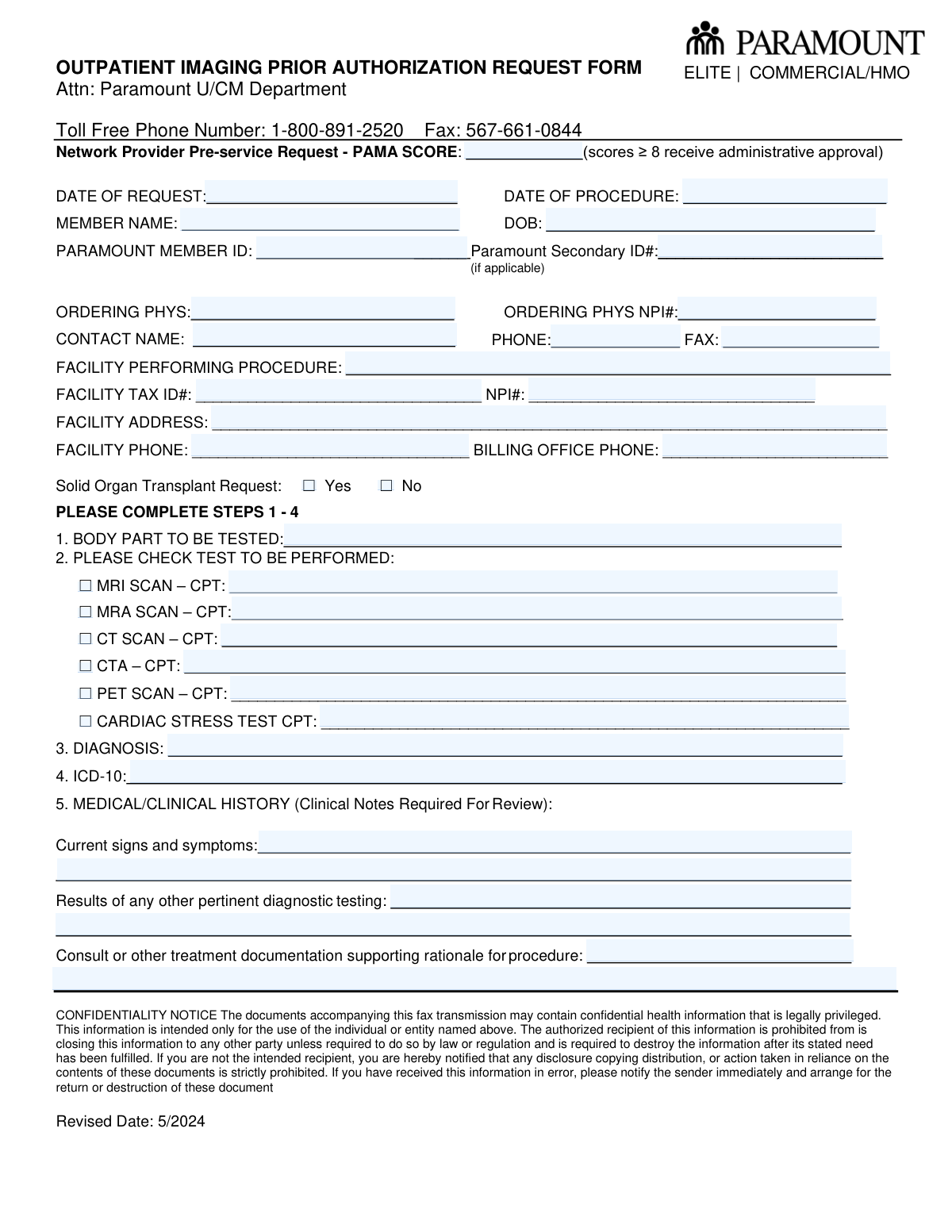
| 1. | Outpatient Imaging Prior Authorization Request Form | 1 | Moderate 51 |
- Enterprise-grade security & data encryption
- 99%+ accuracy powered by AI
- 1,000+ forms from all industries
- Complete forms in under 60 seconds
How to Choose the Right Form
With only one form in this category, the decision is straightforward — but knowing when and why to use it is essential to avoid delays in care.
Who This Form Is For
- Providers treating patients with Autism Spectrum Disorder (ASD) who need prior authorization for Applied Behavior Analysis (ABA) therapy
- Specifically required for members covered under Aetna, Innovation Health, Allina Health | Aetna, or Banner | Aetna plans
- Must be completed by the patient's attending provider — not the patient or caregiver
When to Use the GR-69017-4 Form
Use the Outpatient Behavioral Health (BH) – ABA Treatment Request (GR-69017-4) when:
- You are submitting a new or renewed precertification request for outpatient ABA therapy services
- Your patient has a confirmed ASD diagnosis and requires a medical necessity review
- You are submitting requests on or after January 1, 2026 — this form replaces all previous ABA precertification documents for the plans listed above
What You'll Need Before You Start
This is a detailed clinical form, so gather the following before filling it out:
- Member demographics and insurance information
- Relevant CPT codes and requested treatment hours
- Supervising provider credentials and contact details
- Diagnostic documentation and supporting clinical notes
Tips for Faster Completion
The GR-69017-4 is a multi-section document that can be time-consuming to complete manually. Using an AI-powered tool like Instafill.ai can help you fill it out accurately and efficiently — especially useful if you're working with a non-fillable PDF version, which Instafill can convert into an interactive form.
> Bottom line: If you're an ABA provider seeking Aetna-network precertification for ASD treatment, the GR-69017-4 is the only form you need here.
Form Comparison
| Form | Purpose | Who Files It | When to Use |
|---|---|---|---|
| Outpatient Behavioral Health (BH) – ABA Treatment Request: Required Information for Precertification (GR-69017-4) | Precertification for outpatient ABA therapy for Autism Spectrum Disorder | Attending/supervising provider treating the member | Before initiating or continuing ABA therapy services with Aetna plans |
Tips for outpatient authorization forms
ABA precertification requests are frequently delayed or denied due to missing supporting documentation. Make sure to attach the member's Autism Spectrum Disorder diagnosis, functional behavior assessments, and any prior treatment records before submitting. Incomplete packets are one of the most common reasons for authorization delays.
ABA therapy authorization forms require specific CPT codes that correspond to the exact services being requested — errors here can result in denials or mismatched coverage. Double-check that the codes listed match the treatment plan and the provider's intended service delivery. When in doubt, confirm codes with your billing department before submission.
Aetna and affiliated plans periodically update their precertification forms, and submitting an outdated version can cause delays or rejection. The GR-69017-4 form is effective January 1, 2026, and replaces all prior ABA precertification documents for applicable plans. Always download the latest version directly from the payer's portal or a trusted source.
These forms require detailed credential information for the supervising provider, including licensure and certification specific to ABA services. Missing or inaccurate credential details are a common sticking point during medical necessity reviews. Have the supervising BCBA or licensed provider's information ready before you begin filling out the form.
ABA precertification forms are multi-section and clinically detailed, making manual completion time-consuming and error-prone. AI-powered tools like Instafill.ai can complete these forms with high accuracy in under 30 seconds, and your data stays secure throughout the process. This is especially valuable for providers managing authorizations for multiple members at once.
Vague or estimated treatment hour requests can trigger additional review or partial approvals that don't reflect the member's actual needs. Document the weekly and monthly hours for each service type as specifically as the treatment plan supports. Precise hour requests backed by clinical justification are more likely to be approved as submitted.
Always save a copy of the completed form along with the date and method of submission, especially for precertification requests that may need to be referenced during appeals. If submitting by fax or mail, retain a confirmation or proof of delivery. Having a clear paper trail protects both the provider and the member if disputes arise.
Frequently Asked Questions
Outpatient behavioral health authorization forms are used by healthcare providers to request prior approval — known as precertification — from insurance plans before delivering certain outpatient mental health or behavioral health services. They ensure that the proposed treatment meets the insurer's medical necessity criteria before care begins. Without this authorization, claims for covered services may be denied.
The attending or supervising provider — typically a Board Certified Behavior Analyst (BCBA) or licensed clinician — is responsible for completing the ABA treatment authorization form on behalf of the patient. The form requires detailed clinical knowledge, including diagnosis codes, treatment goals, and provider credentials, so it must come from the treating provider rather than the patient or family. Parents or caregivers may need to supply some demographic information but are not the primary filers.
The GR-69017-4 form is required by Aetna, Innovation Health, Allina Health | Aetna, and Banner | Aetna plans when requesting authorization for Applied Behavior Analysis (ABA) therapy. Effective January 1, 2026, it replaces all previously used ABA precertification documents for these plans. Providers should verify with the specific plan whether this form applies to a given member's benefits.
Authorization requests for ABA therapy should generally be submitted before treatment begins, as most insurance plans require precertification prior to the delivery of services. Submitting well in advance allows time for the insurer's medical necessity review and any follow-up requests for additional documentation. Providers should check the specific plan's timelines, as requirements can vary.
These forms typically require member demographic details, the patient's diagnosis (such as an Autism Spectrum Disorder diagnosis), relevant CPT procedure codes, requested treatment hours, supervising provider credentials, and clinical documentation supporting medical necessity. The Aetna GR-69017-4 form also asks for essential quality care elements and supporting records. Incomplete submissions can delay or result in denial of authorization.
Completed outpatient authorization forms are generally submitted directly to the insurance plan — either through the insurer's online provider portal, by fax, or by mail, depending on the plan's preferred method. For Aetna and affiliated plans, providers should refer to the contact or submission instructions included with the specific form or on the insurer's provider website. Always retain a copy of the submitted form and any confirmation for your records.
Yes — AI-powered services like Instafill.ai can fill out complex outpatient authorization forms, including the Aetna GR-69017-4, in under 30 seconds by accurately extracting and placing data from source documents such as clinical records or prior authorization files. This significantly reduces manual data entry errors and saves time for busy provider offices. Instafill.ai can also convert non-fillable PDF versions of these forms into interactive, fillable formats.
Manually completing a multi-section authorization form like the GR-69017-4 can take providers 20–40 minutes or more, given the volume of clinical and administrative detail required. Using AI-assisted tools like Instafill.ai, the same form can be populated accurately in under 30 seconds by pulling data directly from existing clinical documentation. This allows providers to focus more time on patient care rather than paperwork.
Most insurance plans, including Aetna-affiliated plans, require reauthorization at regular intervals — such as every six months — to confirm that ABA therapy continues to be medically necessary and that the member is making progress. Providers should track authorization expiration dates and submit renewal requests with updated clinical information before the current authorization period ends. Failing to reauthorize in time can result in a gap in covered services.
If required fields or supporting documentation are missing, the insurer may place the request on hold, request additional information, or deny the authorization outright. Denials due to incomplete submissions can often be appealed, but this adds significant time and administrative burden. Ensuring all clinical, diagnostic, and provider credential fields are fully completed before submission helps avoid these delays.
The GR-69017-4 and similar precertification support forms are primarily provider-completed documents and typically do not require a patient signature, though a separate patient consent or release of information authorization may be needed as supporting documentation. Providers should review the specific form instructions and their plan's requirements to confirm what signatures or consents must accompany the submission.
No — authorization form requirements vary by insurance carrier, and sometimes by specific plan type within the same carrier. The Aetna GR-69017-4 is specific to Aetna and its affiliated plans, while other insurers have their own proprietary precertification forms or may accept standardized clinical documentation. Providers should always confirm which form and process applies to each patient's specific insurance plan before submitting.
Glossary
- Form Complexity Index
- Instafill’s 0–100 measure of how much effort a form takes to complete, calculated deterministically from the form’s own structure rather than estimated. It combines the number of fillable fields (the largest factor), how difficult those fields are to complete based on their type, the number of pages that contain fields, the amount of conditional “fill-only-if” logic, and how many sections the form is divided into, then adds modifiers for tables and repeating lists, bundled instruction pages, and dense page layouts. A higher score means the form is harder to fill out by hand. The forms in this category have a median Form Complexity Index of 51/100 (Moderate). See exactly how it is calculated.
- Precertification
- Advance approval required from an insurance plan before certain medical services are provided; without it, the insurer may deny payment for the treatment.
- Prior Authorization (PA)
- A requirement by health insurers that a provider obtain approval before delivering a specific service or medication to confirm it meets medical necessity criteria.
- Applied Behavior Analysis (ABA)
- A therapy based on behavioral science used primarily to improve social, communication, and learning skills in individuals diagnosed with Autism Spectrum Disorder (ASD).
- Autism Spectrum Disorder (ASD)
- A developmental condition affecting communication, behavior, and social interaction, and the primary diagnosis for which ABA therapy authorization is typically requested.
- Medical Necessity
- A standard insurers use to determine whether a requested treatment is appropriate, evidence-based, and clinically required for the patient's condition; failing this review can result in a denied authorization.
- CPT Code
- Current Procedural Terminology codes are standardized numeric codes used to identify and bill specific medical, surgical, or diagnostic services to insurance plans.
- Attending Provider
- The licensed clinician primarily responsible for a patient's care who is required to complete and submit the authorization request form on the patient's behalf.
- Board Certified Behavior Analyst (BCBA)
- A credentialed professional certified to design and oversee ABA therapy programs; insurer forms typically require the supervising BCBA's credentials as part of the authorization request.
- Behavioral Health (BH)
- A broad term covering mental health and substance use disorder services, including therapies like ABA that address behavioral and psychological conditions.
- Treatment Plan
- A documented clinical outline specifying a patient's diagnosis, therapy goals, recommended interventions, and projected number of treatment hours, which insurers require to evaluate authorization requests.