Fill out Texas real estate forms
with AI.
Texas real estate transactions are governed by a specific set of standardized forms promulgated by the Texas Real Estate Commission (TREC), designed to ensure that property sales are legally sound, transparent, and enforceable under state law. These forms cover the full lifecycle of a residential real estate transaction — from the initial purchase agreement through financing arrangements, title obligations, disclosures, and closing procedures. Because Texas law requires licensed agents to use TREC-approved forms in most transactions, getting the details right isn't optional.
By continuing, you acknowledge Instafill's Privacy Policy and agree to get occasional product update and promotional emails.
About Texas real estate forms
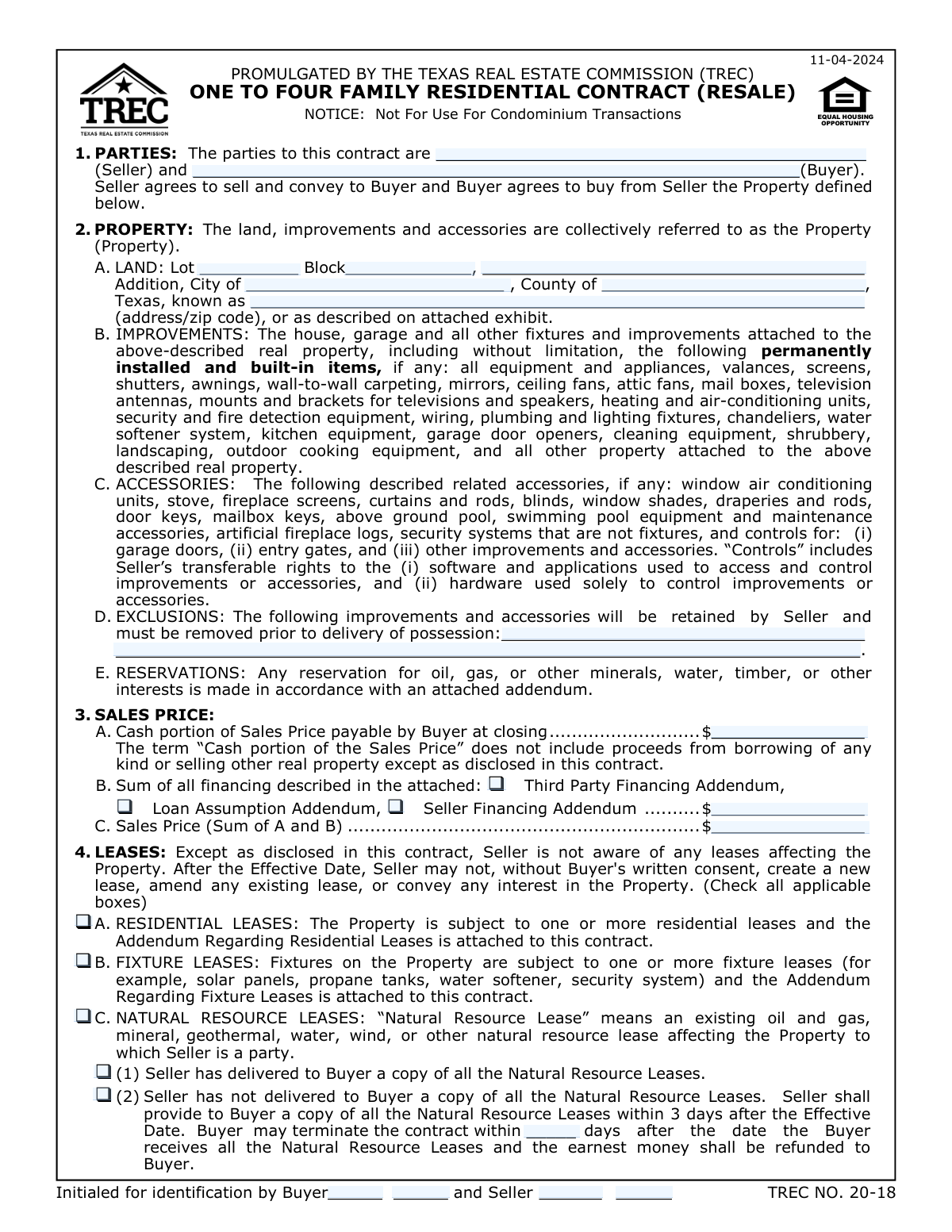
Anyone buying or selling a home in Texas will likely encounter one or more of these documents. The TREC One to Four Family Residential Contract (Resale), for example, is the cornerstone form for most single-family home purchases in the state. It establishes legally binding terms between buyer and seller, including the sales price, earnest money, option period, repair obligations, and default remedies. Errors or omissions on these forms can delay closings, void contracts, or expose parties to legal liability — which is why accuracy matters so much.
For buyers, sellers, and agents who want to move through paperwork quickly without sacrificing accuracy, tools like Instafill.ai use AI to fill these forms in under 30 seconds, handling the details securely so nothing important gets missed.
Every form on this page can be completed without typing. Instafill is form filling software that reads a PDF and fills it for you — including flat and scanned documents that carry no fillable fields at all.
Forms in This Category
The forms in this category have a median Form Complexity Index of 73/100 (Complex), measured across 1 forms by field count, input difficulty, length, conditional logic and structure. See how it is calculated.
| Form Name | Pages | FCI | |
|---|---|---|---|
| 1. | Texas Real Estate Commission (TREC) One to Four Family Residential Contract (Resale) (TREC No. 20-18) | 11 | Complex 73 |
- Enterprise-grade security & data encryption
- 99%+ accuracy powered by AI
- 1,000+ forms from all industries
- Complete forms in under 60 seconds
How to Choose the Right Form
Navigating Texas real estate forms can be straightforward once you understand the specific purpose of each promulgated document. In Texas, the Texas Real Estate Commission (TREC) provides standardized real estate contracts to ensure legal consistency across residential transactions.
The Standard for Residential Resale
The primary document used for most home sales in the state is the Texas Real Estate Commission (TREC) One to Four Family Residential Contract (Resale) (TREC No. 20-18). This is the most common of all TREC forms and should be your primary choice if:
- You are buying or selling a single-family home: This includes traditional houses, duplexes, triplexes, or four-plexes.
- The property is a "resale": This form is intended for existing structures rather than new construction directly from a builder.
- It is not a condominium: Condominiums require a specific separate TREC form due to different legal requirements regarding common areas and homeowner associations.
Key Components of the Contract
Choosing the One to Four Family Residential Contract (Resale) allows you to formally outline the most critical aspects of your transaction in a legally recognized format. It is designed to handle:
- Sales Price & Financing: Detail the down payment, loan amounts, and total purchase price.
- Earnest Money & Option Period: Secure the deal with a deposit and define the "Option Period" during which the buyer has the unrestricted right to terminate.
- Title and Survey: Specify which party pays for the title policy and how property survey requirements will be met.
- Repairs and Disclosures: Document agreed-upon repairs and ensure all required seller disclosures are acknowledged.
Why Accuracy Matters
Because residential contract forms are legally binding, using the correct document is essential for protecting your interests. This specific TREC form controls critical deadlines, termination rights, and default remedies. If your transaction involves a farm, ranch, or a brand-new home, you would typically use a different specialized contract; however, for the vast majority of standard Texas home sales, this is the definitive form to use.
Form Comparison
| Form | Property Type | Primary Purpose | Key Parties | Common Use Case |
|---|---|---|---|---|
| Texas Real Estate Commission (TREC) One to Four Family Residential Contract (Resale) (TREC No. 20-18) | Resale of single-family, duplex, triplex, or fourplex residential homes. | Establishes legally binding terms for purchase, financing, and property transfer. | Signed by the Buyer and Seller to formalize the transaction. | Standard resale transactions not involving new construction or condominiums. |
Tips for Texas real estate forms
Avoid using just the street address, as Texas real estate contracts require the full legal description including lot, block, and addition. Check the most recent deed or county tax records to ensure this information matches exactly to prevent title issues and closing delays.
The 'Option Period' in Section 5 is one of the most critical deadlines for buyers. Ensure the option fee is delivered within the three-day window and that the termination deadline is clearly calculated from the 'Effective Date' to preserve the unrestricted right to cancel.
A common mistake is failing to attach mandatory forms like the Seller's Disclosure Notice or the Lead-Based Paint Addendum for homes built before 1978. Review the 'Agreement of Parties' section to ensure every box for an attached addendum is checked and the corresponding form is physically included.
Managing complex Texas residential contracts can be overwhelming, but AI-powered tools like Instafill.ai can complete these forms in under 30 seconds with high accuracy. Your data stays secure during the process, making it a reliable way to handle high-stakes real estate paperwork quickly.
Most timelines in TREC forms depend on the 'Effective Date,' which is the date the last party signs and communicates acceptance. Mark this date clearly on your calendar to ensure you do not miss critical milestones for inspections, financing approvals, or title objections.
If the buyer is obtaining a loan, ensure the Third Party Financing Addendum is correctly filled out with specific interest rates and terms. This protects the buyer's earnest money if the property fails to appraise or if financing cannot be secured within the agreed timeframe.
TREC forms require initials at the bottom of every page by both the buyer and seller to be considered fully executed. Missing a single set of initials can lead to delays in escrow or questions regarding the validity of specific clauses during the transaction.
Frequently Asked Questions
TREC forms are standardized legal documents created and mandated by the Texas Real Estate Commission for use in property transactions. These forms are designed to protect both buyers and sellers by ensuring that all necessary legal disclosures and contractual obligations are clearly defined and consistently applied across the state.
This contract is used by buyers and sellers involved in the resale of existing residential properties, including single-family homes, duplexes, triplexes, and fourplexes. It is the most common contract for standard home sales in Texas, though it is not used for condominiums or new construction projects.
The One to Four Family Residential Contract is specifically for previously owned homes that are not part of a condominium association. If you are purchasing a brand-new home from a builder, a condominium, or a vacant lot, you will need to select a different form specifically designed for those property types.
Yes, AI tools like Instafill.ai can fill out these complex Texas real estate forms in under 30 seconds. The technology accurately extracts data from your source documents—such as prior agreements or property records—and places the information into the correct fields on the PDF automatically.
While manual entry can take a significant amount of time due to the length of the documents, using AI-powered software allows you to complete the forms almost instantly. This process ensures that data like legal descriptions and party names are transferred accurately without the risk of manual typing errors.
A standard Texas residential contract requires the sales price, financing terms, earnest money details, and a legal description of the property. It also includes critical sections regarding the title policy, property condition disclosures, and the timeline for the closing process.
While licensed real estate agents are legally required to use TREC-promulgated forms, private individuals are not strictly forced to use them. However, because these forms are the industry standard and are recognized by all Texas title companies and lenders, using them is highly recommended to ensure the transaction is legally sound.
The Option Period is a specific timeframe negotiated in the contract that gives the buyer the unrestricted right to terminate the agreement for a small fee. This period is typically used to conduct home inspections and negotiate repairs before the buyer fully commits to the purchase.
Once the contract is signed by both the buyer and the seller, it is usually delivered to a title company to open escrow. The title company will then hold the earnest money and begin the process of verifying the property's title and preparing for the final closing.
Most transactions require supplemental documents called addenda, such as the Third Party Financing Addendum or the Lead-Based Paint Addendum. These forms are attached to the main contract to provide more specific details about the mortgage or environmental disclosures required by law.
Glossary
- Form Complexity Index
- Instafill’s 0–100 measure of how much effort a form takes to complete, calculated deterministically from the form’s own structure rather than estimated. It combines the number of fillable fields (the largest factor), how difficult those fields are to complete based on their type, the number of pages that contain fields, the amount of conditional “fill-only-if” logic, and how many sections the form is divided into, then adds modifiers for tables and repeating lists, bundled instruction pages, and dense page layouts. A higher score means the form is harder to fill out by hand. The forms in this category have a median Form Complexity Index of 73/100 (Complex). See exactly how it is calculated.
- TREC
- The Texas Real Estate Commission, the state agency that governs real estate practices and issues standardized, legally compliant forms for property transactions.
- Promulgated Form
- A contract or document officially approved and required by TREC for use by real estate license holders to ensure legal consistency across Texas.
- Earnest Money
- A 'good faith' cash deposit paid by the buyer to show commitment to the transaction, typically held in escrow by a title company until closing.
- Option Period
- A specified timeframe during which a buyer pays a fee for the unrestricted right to terminate the contract for any reason, usually to conduct inspections.
- Seller’s Disclosure Notice
- A mandatory document where the seller lists known defects or conditions of the property to inform the buyer of its physical state before the sale.
- Title Policy
- An insurance policy that protects the buyer or lender against financial loss from legal disputes regarding the property's ownership or title defects.
- Survey
- A professional drawing that defines the property's boundaries and identifies structures, fences, and easements to ensure the buyer knows exactly what they are purchasing.
- Addendum
- An additional document attached to the main contract that adds specific terms or modifies existing ones, such as details regarding financing or lead-based paint.