Fill out trading forms
with AI.
Trading forms are essential components of the financial landscape, serving as the legal bridge between investors, brokers, and institutional platforms. These documents ensure that every transaction, authorization, and account modification is documented accurately to maintain regulatory compliance and protect assets. Whether you are managing individual brokerage accounts or institutional investments, having the correct paperwork is vital for establishing clear instructions and legal protections for all parties involved.
By continuing, you acknowledge Instafill's Privacy Policy and agree to get occasional product update and promotional emails.
About trading forms
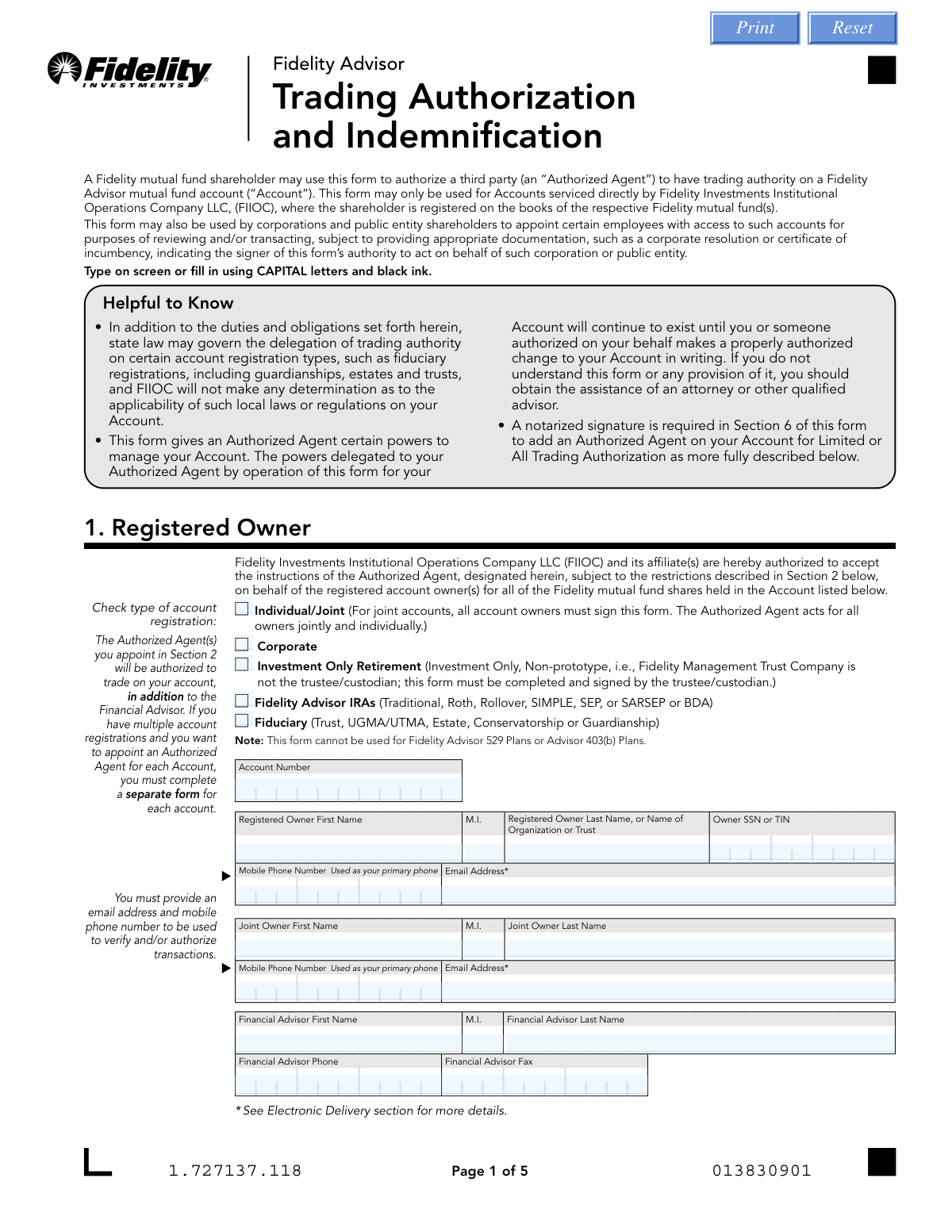
Typically, these forms are utilized by individual investors, financial advisors, and corporate officers who need to manage investment activities or delegate authority. Common scenarios include granting a financial advisor the power to execute trades on your behalf or setting up specific indemnification protocols for a brokerage account. Forms like the Fidelity Advisor Trading Authorization and Indemnification are standard requirements when establishing these relationships, ensuring that authorized agents have the appropriate level of access—ranging from simple inquiry to full trading capabilities—while safeguarding the account holder's interests.
Managing high-stakes investment forms can be time-consuming and requires meticulous attention to detail to avoid processing delays. Tools like Instafill.ai use AI to fill these forms in under 30 seconds, ensuring data is handled accurately and securely while saving significant administrative effort. This allows investors and professionals to focus on market strategy rather than the complexities of manual paperwork.
Every form on this page can be completed without typing. Instafill is form filling software that reads a PDF and fills it for you — including flat and scanned documents that carry no fillable fields at all.
Forms in This Category
The forms in this category have a median Form Complexity Index of 52/100 (Moderate), measured across 4 forms by field count, input difficulty, length, conditional logic and structure. See how it is calculated.
| Form Name | Pages | FCI | |
|---|---|---|---|
| 1. | Fidelity Advisor Trading Authorization and Indemnification | 1 | Moderate 52 |
| 2. | Medicaid of Minnesota (Administered by HealthPartners of Minnesota) EDI Trading Partner Enrollment Form | 1 | Simple 27 |
| 3. | Merrill Letter of authorization — Read Only and Trading or Ownership | 1 | Simple 25 |
| 4. | New Account Agreement - Trading Direct | 1 | Moderate 56 |
- Enterprise-grade security & data encryption
- 99%+ accuracy powered by AI
- 1,000+ forms from all industries
- Complete forms in under 60 seconds
How to Choose the Right Form
When managing mutual fund accounts, delegating authority to a financial advisor or a trusted third party is a common administrative step. On this page, you will find the primary documents required to establish these permissions for Fidelity accounts.
Choosing the Correct Level of Authority
The Fidelity Advisor Trading Authorization and Indemnification form allows you to customize exactly how much control your agent has. Before filling out the form, determine which of the following tiers your situation requires:
- Inquiry Only: Choose this if you want your agent to view account balances and history but do not want them to execute any transactions.
- Limited Trading: This is the right choice for delegating buy and sell authority while maintaining specific restrictions on fund movement.
- All Trading: Select this for full management authority, including the ability to execute redemptions and exchanges on your behalf.
Key Use Cases for Fidelity Advisor Forms
While the forms listed—the Fidelity Advisor Trading Authorization and Indemnification—serve the same primary legal function, they are essential for two specific scenarios:
- Professional Management: If you are a shareholder looking to delegate account management to a professional financial advisor, this form ensures they can act on your behalf while also authorizing the payment of advisory fees directly from the account.
- Corporate or Third-Party Delegation: If you are a corporate officer or a private investor delegating authority to a trusted third party, this form establishes the necessary legal indemnification for Fidelity Investments Institutional Operations Company LLC (FIIOC).
Important Requirements
When selecting and completing these investment forms, keep in mind that the level of authority impacts the signing requirements. Specifically, if you are granting Limited or All Trading authority, the document will typically require notarization to be valid. Using Instafill.ai can help you navigate these sections accurately, ensuring all mandatory fields for your specific level of authorization are completed before you head to the notary.
Form Comparison
| Form | Primary Purpose | Who Files It | Key Requirements |
|---|---|---|---|
| Fidelity Advisor Trading Authorization and Indemnification | Authorize agents to manage accounts and pay advisory service fees. | Shareholders designating financial advisors or corporate officers as agents. | Mandatory notarization for Limited and All trading authority levels. |
| Fidelity Advisor Trading Authorization and Indemnification | Designate a third party to manage and execute account trades. | Shareholders delegating specific levels of account access to third parties. | Establishes legal indemnification and outlines responsibilities for all parties. |
Tips for trading forms
Brokerage forms typically offer different access levels, such as Inquiry Only, Limited Trading, or All Trading. Carefully review the scope of each level to ensure your agent has the necessary access without granting more control over your assets than intended.
Many investment forms, especially those granting full trading authority or indemnification, require a notary public signature to be legally binding. Check the signature section before submission to see if you need to arrange a meeting with a notary to witness your signing.
AI-powered tools like Instafill.ai can complete these complex brokerage forms in under 30 seconds with high accuracy. Your sensitive financial data stays secure during the process, making it a major time-saver for investors managing multiple accounts.
Small errors in account numbers or the legal name of an Authorized Agent can lead to immediate rejection by the brokerage. Double-check all identification details against your latest Fidelity or investment statement before finalizing the document.
Trading authorization forms often include sections that permit the direct payment of advisory fees from your mutual fund account. Ensure you understand how these fees are calculated and deducted before authorizing the brokerage to process these payments automatically.
Once a form is processed, keep a digital copy for your records to track exactly who has access to your accounts. This makes it significantly easier to review or revoke permissions in the future if your relationship with an advisor or agent changes.
When filling out authorization forms, specify whether the Authorized Agent is an individual person or a corporate entity. Providing the correct tax identification or social security number for the agent is essential for the brokerage's compliance and security checks.
Frequently Asked Questions
Trading authorization forms allow a shareholder to legally designate another person or entity to manage their investment account. This is common when an investor wants a financial advisor or trusted third party to execute trades or view account details on their behalf.
These forms are used by individual investors, corporate officers, or mutual fund shareholders who want to delegate account management. If you are working with a financial advisor, they will often require this documentation to act as your agent.
Most forms offer three levels: Inquiry Only, Limited Trading, and All Trading authority. Inquiry Only allows the agent to view data, while Trading authority levels allow the agent to buy or sell securities and sometimes manage fee payments.
It depends on the level of access being granted. For more significant permissions, such as Limited or All Trading authority, financial institutions like Fidelity often require notarization to verify the identity of the account holder and prevent unauthorized access.
Yes, AI tools like Instafill.ai can process complex trading forms in under 30 seconds. The AI accurately extracts data from your source documents and places it into the correct fields, ensuring the form is completed precisely and professionally.
Using traditional methods, filling out detailed investment forms can take 15 to 20 minutes of manual entry. However, with AI-powered services, the process is streamlined to less than a minute by automatically mapping your existing information to the PDF fields.
Indemnification is a legal provision that protects the brokerage or fund company from liability for actions taken by your authorized agent. By signing, the account holder agrees not to hold the financial institution responsible for losses resulting from the agent's trades.
Completed forms are typically submitted directly to the financial institution, such as Fidelity Investments Institutional Operations Company (FIIOC). Submission methods often include secure online upload through their portal, fax, or standard mail to a specified processing center.
Yes, many trading authorization forms include a section specifically for the payment of financial advisory service fees. This allows the brokerage to deduct agreed-upon fees from the account balance and pay the advisor directly.
To change or remove an agent, you generally need to submit a new form or a written revocation notice to the brokerage. It is important to update these forms promptly if your relationship with an advisor ends to ensure account security.
While these forms are specific to certain mutual fund and brokerage accounts, most financial institutions have similar requirements for different account types. You should ensure the form you are using matches the specific institution and account class you hold.
Glossary
- Form Complexity Index
- Instafill’s 0–100 measure of how much effort a form takes to complete, calculated deterministically from the form’s own structure rather than estimated. It combines the number of fillable fields (the largest factor), how difficult those fields are to complete based on their type, the number of pages that contain fields, the amount of conditional “fill-only-if” logic, and how many sections the form is divided into, then adds modifiers for tables and repeating lists, bundled instruction pages, and dense page layouts. A higher score means the form is harder to fill out by hand. The forms in this category have a median Form Complexity Index of 52/100 (Moderate). See exactly how it is calculated.
- Trading Authorization
- A legal designation that allows a third party to manage or execute trades within a brokerage or mutual fund account on behalf of the owner.
- Authorized Agent
- An individual or organization, such as a financial advisor or corporate officer, who has been granted legal permission to act on behalf of the account holder.
- Indemnification
- A legal provision in which the account holder agrees to protect the financial institution from liability or losses resulting from the actions of their designated agent.
- Inquiry Only Authority
- The most restrictive level of access, allowing an agent to view account details and history without the ability to perform any transactions or move money.
- Limited Trading Authority
- A permission level that allows an agent to buy and sell securities within the account but prohibits them from withdrawing funds or changing account ownership.
- All Trading Authority
- The broadest level of permission, granting an agent the power to execute trades and authorize certain distributions or transfers from the account.
- FIIOC
- An abbreviation for Fidelity Investments Institutional Operations Company LLC, the entity responsible for processing and servicing advisor-led mutual fund accounts.
- Financial Advisory Service Fees
- Charges paid to a professional advisor for their management services, which the account holder can authorize to be deducted directly from the account's assets.