Fill out Treasury forms
with AI.
Treasury forms encompass a wide range of documents used to manage financial relationships with the United States government. These forms are critical for individuals and businesses to register, transfer, or redeem federal securities and fulfill specific tax-related obligations. Because they involve government-backed assets and sensitive financial data, completing these documents accurately is essential for ensuring that transfers of ownership or changes in account status are processed without legal or financial interruptions.
By continuing, you acknowledge Instafill's Privacy Policy and agree to get occasional product update and promotional emails.
About Treasury forms
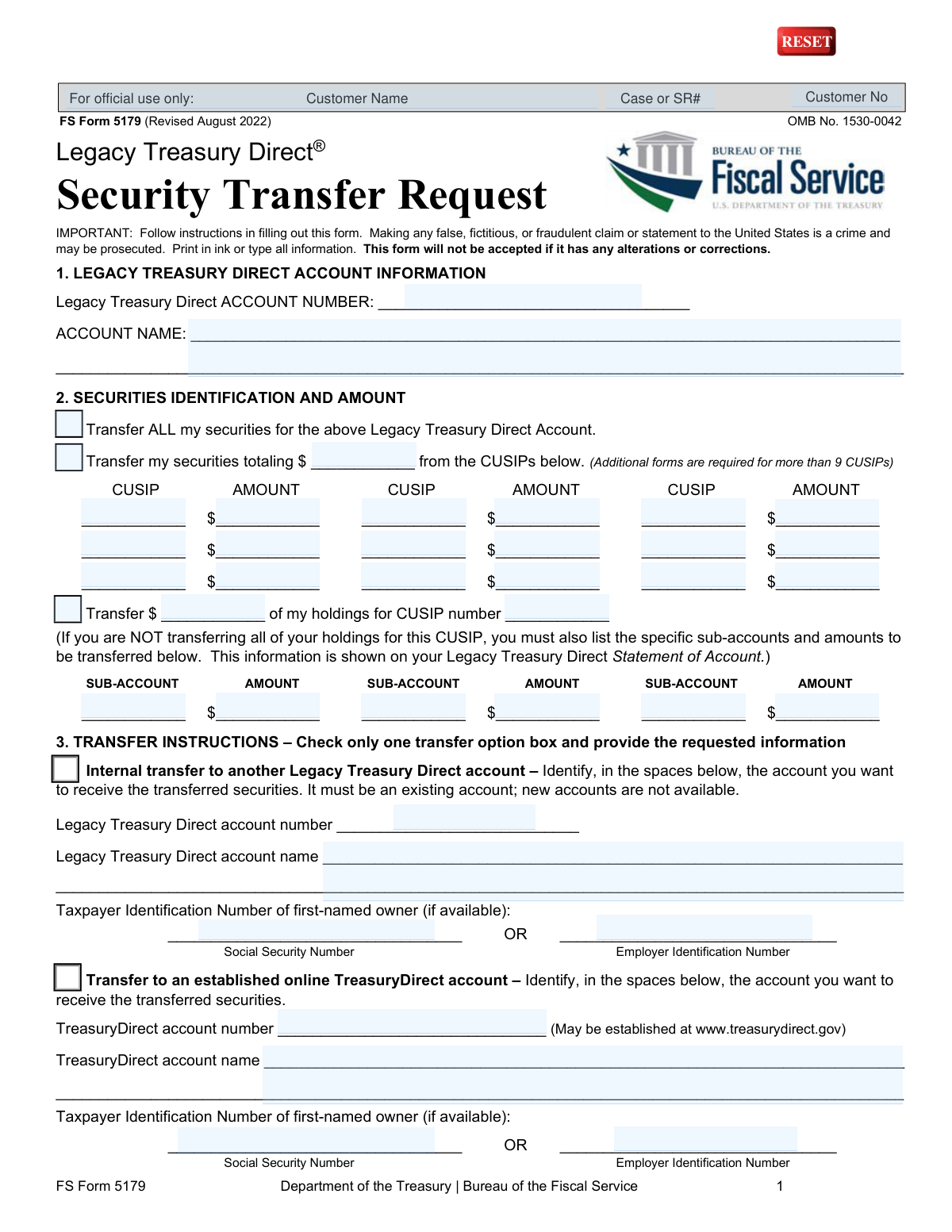
This category is most frequently accessed by individual investors, financial planners, and legal representatives managing estates or trusts. Whether you are transitioning securities from an older Legacy Treasury Direct account or moving savings bonds to a modern brokerage, these forms provide the necessary legal framework for the transaction. Common examples include the FS Form 5511 for transferring TreasuryDirect securities and the FS Form 5179 for security transfer requests. These documents are often required during major life events, such as estate settlements or long-term investment restructuring.
Managing federal paperwork often requires meticulous attention to detail to prevent errors that could delay the movement of your assets. Tools like Instafill.ai use AI to fill these Treasury forms in under 30 seconds, handling your data accurately and securely to simplify the administrative process. This allows you to complete necessary federal documentation quickly so you can focus on your broader financial goals.
Every form on this page can be completed without typing. Instafill is form filling software that reads a PDF and fills it for you — including flat and scanned documents that carry no fillable fields at all.
Forms in This Category
The forms in this category have a median Form Complexity Index of 47/100 (Moderate), measured across 2 forms by field count, input difficulty, length, conditional logic and structure. See how it is calculated.
| Form Name | Pages | FCI | |
|---|---|---|---|
| 1. | FS Form 5179, Legacy Treasury Direct Security Transfer Request | 1 | Moderate 46 |
| 2. | FS Form 5511, TreasuryDirect® Transfer Request | 1 | Moderate 47 |
- Enterprise-grade security & data encryption
- 99%+ accuracy powered by AI
- 1,000+ forms from all industries
- Complete forms in under 60 seconds
How to Choose the Right Form
Navigating Department of the Treasury documentation can be complex, especially when managing government securities like savings bonds, bills, and notes. To choose the correct form, you first need to identify which Treasury system currently holds your assets.
Modern Online Accounts
If you manage your investments through the current web-based portal at TreasuryDirect.gov, you will likely need the modern transfer document:
- FS Form 5511, TreasuryDirect® Transfer Request: Use this form if your securities are already in a modern online account. It is the required document for moving assets to another individual's online account, transferring holdings into a trust, or relocating your securities to a private brokerage firm or financial institution.
Older Legacy Accounts
Some investors still hold securities in the older, investor-file system that predates the modern web portal. If your account is part of this older system, you must use the legacy-specific paperwork:
- FS Form 5179, Legacy Treasury Direct Security Transfer Request: Select this form if you are an owner of a Legacy Treasury Direct account. This form is used for internal transfers between legacy accounts, external transfers to a commercial bank or broker, or for "upgrading" your holdings by moving them from the Legacy system into a modern online TreasuryDirect account.
Key Considerations for Your Transfer
When choosing between these two forms, keep the following in mind:
- Account Type: Check your recent statements. If they are from the online portal, use FS Form 5511. If they are from the older system, use FS Form 5179.
- Destination: Both forms allow for transfers to brokerages or other individuals, so the destination does not change the form you need—only the source of the funds does.
- Accuracy: Because these transfers involve legal changes in ownership and potential tax reporting, ensuring the forms are filled out precisely is vital. Using AI-powered tools like Instafill.ai can help you complete these PDF forms accurately before submission.
Form Comparison
| Form | Account Type | Primary Purpose | Common Destinations | Securities Covered |
|---|---|---|---|---|
| FS Form 5179, Legacy Treasury Direct Security Transfer Request | Specifically for holders of the older Legacy Treasury Direct system. | Requesting the transfer of securities out of a legacy account. | Modern TreasuryDirect accounts, other legacy accounts, or external financial brokerages. | Marketable Treasury securities including bills, notes, and bonds. |
| FS Form 5511, TreasuryDirect® Transfer Request | Owners of the modern, web-based TreasuryDirect online account system. | Moving assets to a different owner, trust, or external brokerage firm. | Other TreasuryDirect accounts, legal trusts, estates, or financial institutions. | Savings bonds (Series EE, I) and marketable Treasury bills or notes. |
Tips for Treasury forms
Ensure that your TreasuryDirect or Legacy Treasury Direct account numbers are entered exactly as they appear on your official statements. Even a single digit error in the security ID or account number can lead to rejected transfer requests or significant delays in asset movement.
Many Treasury transfer forms require a certified signature or a Medallion Signature Guarantee from a recognized financial institution. Review the specific instructions for FS Form 5179 or 5511 to determine if you must sign the document in the presence of a certifying officer before submission.
When transferring securities to an external brokerage firm, confirm the exact account title and routing instructions with the receiving institution. Providing incomplete destination data is a common mistake that can cause assets to be held in a suspense account or returned to the sender.
AI-powered tools like Instafill.ai can complete these forms in under 30 seconds with high accuracy, and the data stays secure during the process. Using automated tools is a practical time-saver for people dealing with multiple forms or complex security transfers.
Always save a digital or physical copy of your completed transfer request and any supporting documentation before mailing it to the Department of the Treasury. This provides an essential reference point if you need to follow up on the status of your transfer or if the form is lost in transit.
Be careful to use FS Form 5179 for Legacy Treasury Direct accounts and FS Form 5511 for modern TreasuryDirect accounts. Submitting the incorrect form for your specific account type will result in the Treasury Department returning the application unprocessed.
If you are moving multiple securities, check if they can be listed on a single form to reduce your administrative workload. Organizing your asset list beforehand allows you to fill out the forms more systematically and ensures no individual security is overlooked during the transfer process.
Frequently Asked Questions
These forms are primarily used for managing and transferring government-held securities, such as savings bonds, bills, and notes. They allow account holders to move assets between different Treasury systems or to external financial institutions and brokerage firms for easier management.
The choice depends on which Treasury system currently holds your securities. Use FS Form 5179 if you are dealing with a Legacy Treasury Direct account, whereas FS Form 5511 is designed for users of the modern online TreasuryDirect® system.
Yes, AI tools like Instafill.ai can fill these Treasury forms in under 30 seconds. The AI accurately extracts data from your source documents and places it into the correct fields, significantly reducing the risk of manual entry errors.
Most Treasury security transfer forms require a certified or guaranteed signature to prevent fraud. You typically need to sign the document in the presence of an authorized certifying officer at a bank, credit union, or other financial institution before mailing it.
Completed forms are generally mailed to the Bureau of the Fiscal Service. Because mailing addresses can change based on the specific type of security or account, you should always check the instructions section on the final page of the form for the most current destination.
While manual entry can take 15 to 20 minutes to ensure accuracy, using an AI-powered service like Instafill.ai allows you to complete the process in less than 30 seconds. The system handles the complex formatting and data placement for you instantly.
You will generally need your Treasury account number, the specific details of the securities being moved (such as CUSIP numbers or serial numbers), and the destination account information. If you are transferring to a brokerage, you will also need their specific routing and account details.
While both the Bureau of the Fiscal Service and the IRS fall under the Department of the Treasury, they serve different functions. Treasury forms like FS 5179 and FS 5511 manage debt securities and savings bonds, whereas IRS forms are used for reporting income and paying federal taxes.
Yes, FS Form 5511 is frequently used to transfer securities from an individual TreasuryDirect account into a trust. This is a common step for individuals performing estate planning or seeking to consolidate their financial assets under a legal entity.
Once received, the Bureau reviews the documentation for accuracy and proper certification. If approved, the securities are moved to the specified destination, and you will typically see the change reflected in your account balance or receive a confirmation notice.
The Department of the Treasury typically does not charge a fee to process these specific transfer requests. However, you should check with your receiving financial institution or the bank providing your signature guarantee, as they may have their own internal service fees.
No, these specific FS forms are for security transfers; to check on a refund or an amended return, you must use the IRS website or specific IRS tax forms. These Treasury forms are strictly for managing government-issued debt products and savings bonds.
Glossary
- Form Complexity Index
- Instafill’s 0–100 measure of how much effort a form takes to complete, calculated deterministically from the form’s own structure rather than estimated. It combines the number of fillable fields (the largest factor), how difficult those fields are to complete based on their type, the number of pages that contain fields, the amount of conditional “fill-only-if” logic, and how many sections the form is divided into, then adds modifiers for tables and repeating lists, bundled instruction pages, and dense page layouts. A higher score means the form is harder to fill out by hand. The forms in this category have a median Form Complexity Index of 47/100 (Moderate). See exactly how it is calculated.
- EIN (Employer Identification Number)
- A unique nine-digit number assigned by the IRS to identify business entities for tax reporting purposes, often required when filling out federal financial forms.
- TreasuryDirect
- The modern web-based system managed by the U.S. Department of the Treasury that allows individuals to purchase and hold savings bonds and other Treasury securities electronically.
- Legacy Treasury Direct
- An older, statement-based system for holding Treasury securities that is separate from the modern online TreasuryDirect platform.
- Medallion Signature Guarantee
- A certification stamp provided by a financial institution that confirms a signature is genuine and that the signer has the legal authority to transfer securities.
- Estimated Tax
- Quarterly tax payments made to the IRS by individuals, such as the self-employed, whose income is not subject to standard employer withholding.
- FEIN (Federal Employer Identification Number)
- Another term for an EIN, this number is used by the federal government to identify business taxpayers who are required to file various tax returns.
- CUSIP Number
- A unique nine-character identification code assigned to all North American stocks and bonds to facilitate the clearing and settlement of financial trades.
- Form 8332
- A document used by a custodial parent to release their claim to a child's tax exemption, allowing the noncustodial parent to claim the child as a dependent.