Yes! You can use AI to fill out Statement of Monies Received for Child(ren)

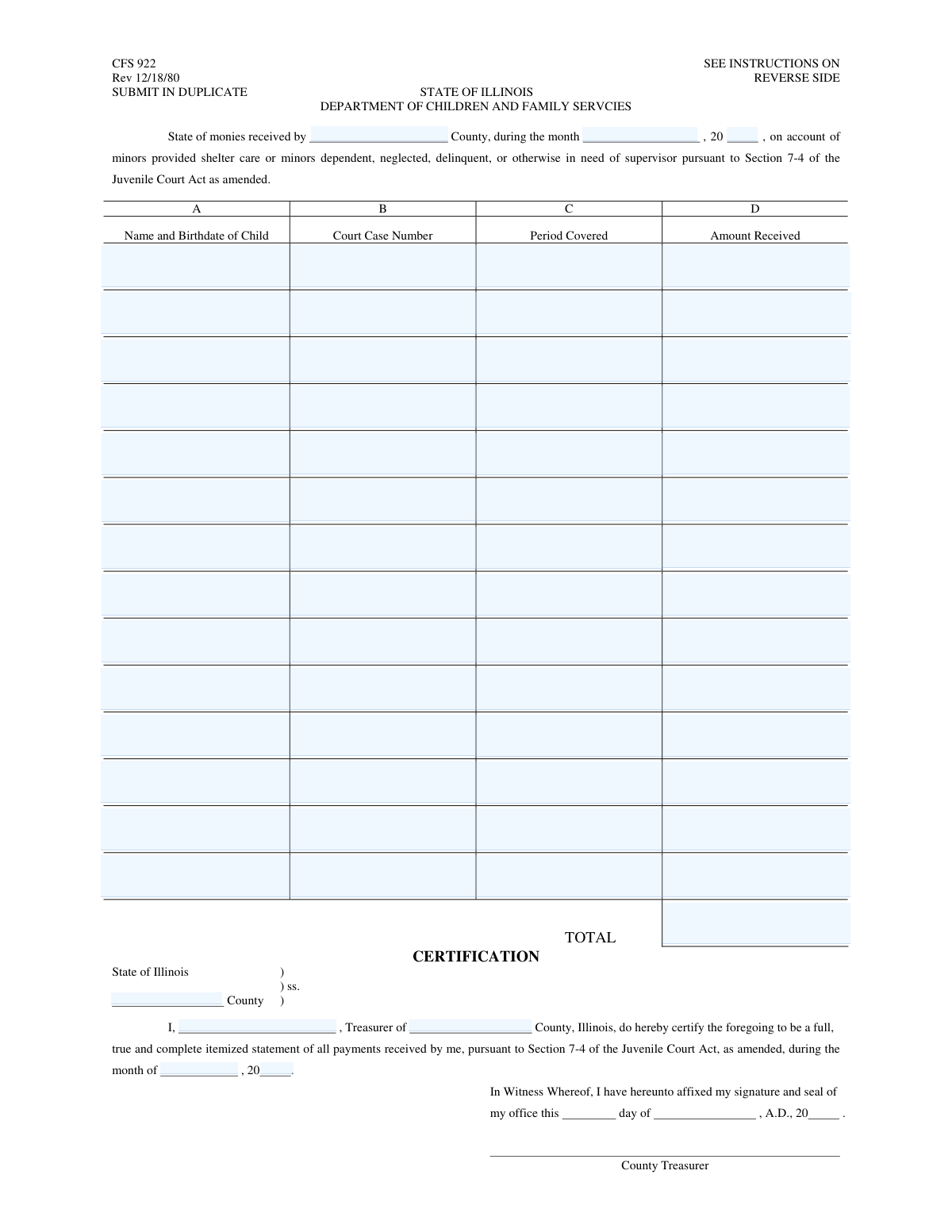
The Statement of Monies Received for Child(ren) is a document used to formally declare and certify payments received for the care of children. It is important because it provides a detailed, official record for courts or agencies, linking specific payment amounts to individual children, court case numbers, and time periods, ensuring transparency in child support or foster care arrangements. Today, this form can be filled out quickly and accurately using AI-powered services like Instafill.ai, which can also convert non-fillable PDF versions into interactive fillable forms.
Statement of Monies Received is part of the NJ state forms, PA state forms and state ID forms categories on Instafill.
Our AI automatically handles information lookup, data retrieval, formatting, and form filling.
It takes less than a minute to fill out Statement of Monies Received using our AI form filling.
Securely upload your data. Information is encrypted in transit and deleted immediately after the form is filled out.

Form specifications

Form name: Statement of Monies Received for Child(ren)
Number of fields: 66
Number of pages: 2
Filled form examples: Form Statement of Monies Received Examples
Language: English
main-image

Instafill Demo: How to fill out PDF forms in seconds with AI

How to Fill Out Statement of Monies Received Online for Free in 2026

Are you looking to fill out a STATEMENT OF MONIES RECEIVED form online quickly and accurately? Instafill.ai offers the #1 AI-powered PDF filling software of 2026, allowing you to complete your STATEMENT OF MONIES RECEIVED form in just 37 seconds or less.
Follow these steps to fill out your STATEMENT OF MONIES RECEIVED form online using Instafill.ai:
  1. 1 Navigate to Instafill.ai and upload your Statement of Monies Received for Child(ren) form or select it from a library of templates.
  2. 2 Enter the recipient's name and the details of when and where the payments were received, including the year, month, and state.
  3. 3 For the first child, fill in their full name, birthdate, court case number, the period the payment covers, and the specific amount received.
  4. 4 Repeat the previous step for each additional child, using the dedicated sections provided on the form.
  5. 5 Calculate the sum of all individual amounts received and enter this figure in the 'Total Received' field.
  6. 6 Complete the certification section by providing the certifier's name to attest to the accuracy of the information.
  7. 7 Review all the information you've entered with the AI assistant to ensure accuracy, then download, print, or securely share your completed statement.

Our AI-powered system ensures each field is filled out correctly, reducing errors and saving you time.

Why Choose Instafill.ai for Your Fillable Statement of Monies Received Form?

Speed

Complete your Statement of Monies Received in as little as 37 seconds.

Up-to-Date

Always use the latest 2026 Statement of Monies Received form version.

Cost-effective

No need to hire expensive lawyers.

Accuracy

Our AI performs 10 compliance checks to ensure your form is error-free.

Security

Your personal information is protected with bank-level encryption.

Frequently Asked Questions About Form Statement of Monies Received

This form is used to officially declare and itemize payments received for the care or services provided to one or more children, typically in connection with a court case or government agency.

The individual or organization ('Recipient') that received money for providing care or services to the children listed on the form must complete and certify it.

You will need the full name and birthdate for each child, the associated court case number, the specific period the payment covers, and the amount received for each child.

The 'Period Covered' is the specific date range (e.g., March 1, 2024 - March 31, 2024) for which you provided services and are reporting the received payment.

The Court Case Number is typically found on official documents from the court or placing agency, such as a court order or placement agreement. If you cannot locate it, contact the agency that requested this form.

This form accommodates up to fourteen children. If you need to report for more, you will need to complete and attach a second copy of the form for the additional children.

The 'Total Received' is the sum of all the individual 'Amount Received' entries for every child listed on the form. Double-check your math to ensure accuracy.

This section refers to when you physically received the payment. Enter the month, year, and state where you received the funds, not the dates the services were performed.

The 'Certifier' is the person filling out the form who can legally attest to its accuracy. This is usually the recipient of the funds or an authorized representative of the recipient organization.

Yes, services like Instafill.ai use AI to accurately auto-fill form fields with your information. This can save significant time and help prevent errors, especially with repetitive data entry.

You can use a service like Instafill.ai to fill out the form digitally. Simply upload the form to the platform to fill, sign, and download it from your web browser.

If your PDF is a flat, non-fillable image, you can use a tool like Instafill.ai. It can convert the document into an interactive, fillable form that you can complete online.

Compliance Statement of Monies Received
Validation Checks by Instafill.ai

1
Total Received Amount Consistency
This check verifies that the value in the 'Total Received' field is equal to the sum of all individual 'Amount Received' fields for each child. It is a critical cross-field validation to ensure the financial data is accurate and internally consistent. If the amounts do not match, the form submission should be flagged for review to correct the discrepancy.
2
Child Information Block Completeness
For each child section (First Child, Second Child, etc.), this validation ensures that if any one field is filled (e.g., Name and Birthdate), then all other fields in that same block (Court Case Number, Period Covered, Amount Received) must also be filled. This prevents incomplete or orphaned data for any given child record. A failure would prompt the user to complete all required information for the specified child.
3
Period Covered within Payment Year
This check ensures that the 'Period Covered' for each child falls within the calendar year specified in the 'Year of Payments Received' field. This maintains logical consistency between the payment year and the service period being reported. If the period is outside the specified year, it indicates a data entry error that needs correction.
4
Valid Birthdate Format and Plausibility
This validation checks that each 'Birthdate' entry is in a valid format (e.g., MM/DD/YYYY) and represents a date in the past. It prevents data entry errors such as invalid date structures, future dates, or nonsensical values. An invalid birthdate would prevent proper record-keeping and identification.
5
Required Recipient Name
Ensures the 'Recipient Name' field is not empty, as it is a primary identifier for the entire form. This field is essential for identifying the entity to which the payments are attributed. A submission without a recipient name would be considered incomplete and rejected.
6
Year of Payments Received Format
Validates that the 'Year of Payments Received' field contains a valid 4-digit year (YYYY). This ensures data consistency and is crucial for accurate temporal reporting and filtering. An invalid format would cause processing errors and data corruption.
7
Monetary Field Numeric Format
This check confirms that all fields related to monetary values ('Amount Received' for each child and 'Total Received') contain only valid numeric characters and a single decimal point. This is fundamental for performing calculations and ensuring financial data integrity. Non-numeric entries would be rejected.
8
Required Certifier Name
Verifies that the 'Certifier Name' field is filled out. The certifier's name is required for legal and accountability purposes, confirming who has attested to the accuracy of the information provided. A missing certifier name would render the submission invalid.
9
At Least One Child Record
This validation ensures that information for at least one child has been entered on the form. Since the form is structured to report payments on a per-child basis, a submission with no child data is likely erroneous or incomplete. The check prevents the submission of empty or purposeless forms.
10
Valid State of Monies Received
Checks that the 'State of Monies Received' field contains a valid US state name or a standard 2-letter abbreviation. This ensures the location data is standardized, accurate, and usable for reporting or jurisdictional purposes. An invalid entry would be flagged for correction.
11
Sequential Child Data Entry
This validation checks that child information is entered sequentially, without gaps. For example, data for the 'Third Child' cannot be entered if the 'Second Child' section is empty. This rule promotes organized data entry and prevents confusion or processing errors caused by sparse data.
12
Court Case Number Format
Performs a basic format validation on the 'Court Case Number' field to ensure it contains an expected pattern of characters, such as a mix of letters and numbers, and is not empty. While the exact format can vary, this check helps catch obvious errors, placeholder text, or omissions. This is important for correctly linking the payment to the legal case.

Common Mistakes in Completing Statement of Monies Received

Calculation Error in Total Amount

This mistake occurs when manually adding the 'Amount Received' for each child. A simple arithmetic error can cause the 'Total Received' field to not match the sum of the individual amounts, leading to the form being flagged for review or rejected. To avoid this, use a calculator and double-check your math before entering the final number. AI-powered form filling tools like Instafill.ai can automate these calculations to ensure perfect accuracy.

Inaccurate or Incomplete Court Case Number

Court case numbers often have specific formats including letters, numbers, and dashes. People may make typos, omit required prefixes or suffixes (e.g., 'CV-', '-DR'), or enter a number from an unrelated case. This is a critical error that can lead to the form being misfiled or rejected, causing significant processing delays. Always reference the official court document to copy the number exactly as it appears.

Data Entry Fatigue in Repetitive Sections

This form has identical sets of fields for up to fourteen children, which can lead to data entry fatigue and errors. Users may accidentally repeat information from a previous child, misalign data (e.g., put one child's court case number in another's row), or make more typos as they proceed. To prevent this, fill out the form in a quiet environment, take breaks, and review each child's section carefully before moving to the next.

Vague or Incorrect 'Period Covered' Range

The 'Period Covered' field requires a clear start and end date for the payments. Common mistakes include entering a single date, using vague terms like 'Summer 2023,' or reversing the start and end dates. This ambiguity can lead to disputes or incorrect allocation of funds. Always specify a clear range, such as 'MM/DD/YYYY - MM/DD/YYYY,' for each entry.

Using Nicknames Instead of Full Legal Names

The form asks for the 'Child's Name,' which must be the full legal name as it appears on official documents like birth certificates or court orders. Using nicknames, shortened names, or initials can cause a mismatch during verification, leading to rejection of the form. Always use the child's complete and official legal name to ensure proper identification.

Improper Formatting of Monetary Amounts

When entering the 'Amount Received,' users might include currency symbols ($) or commas when the system doesn't expect them, or misplace the decimal point (e.g., entering 1500.00 as 15.00). These mistakes can drastically alter the reported financials and require correction. Be sure to follow any formatting instructions and carefully review all dollar amounts for accuracy. Tools like Instafill.ai can automatically format these values correctly.

Omitting Information for Later Children

Due to the form's length and repetitive nature, it's common for applicants to accidentally skip fields, particularly for children listed further down the page. An incomplete form will almost certainly be returned, delaying the entire process. It's essential to methodically check that every required field for every listed child is completed before submission.

Inconsistent Date Formatting

The form requires multiple dates (birthdates, period covered, year/month of payment). Users often switch between formats like MM/DD/YY, MM/DD/YYYY, and Month DD, YYYY, which can confuse data entry systems and lead to misinterpretation. It is crucial to use a consistent, four-digit year format (YYYY) throughout the form to prevent ambiguity. AI form-fillers can enforce a single, correct format across the document.

Confusing Payment Year with Service Period

The form distinguishes between the 'Year of Payments Received' and the 'Period Covered' for services. A user might mistakenly enter the service year in the payment year field, or vice versa, especially if payments for a prior year's services were received in the current year. This can cause accounting discrepancies. Ensure the 'Year of Payments Received' reflects when the money was actually received, while 'Period Covered' reflects the timeframe of the service itself.

Incorrect 'Recipient Name' Entity

The 'Recipient Name' field requires the name of the entity that received the money, which could be an individual, a trust, or a government agency. A common error is entering an individual's name when the legal recipient is an organization, or vice-versa. This can create legal and financial tracking problems. Verify the exact legal name of the recipient entity from official payment records before filling out the form.
Saved over 80 hours a year

“I was never sure if my IRS forms like W-9 were filled correctly. Now, I can complete the forms accurately without any external help.”

Kevin Martin Green

Your data stays secure with advanced protection from Instafill and our subprocessors

Robust compliance program

Transparent business model

You’re not the product. You always know where your data is and what it is processed for.

ISO 27001, HIPAA, and GDPR

Our subprocesses adhere to multiple compliance standards, including but not limited to ISO 27001, HIPAA, and GDPR.

Security & privacy by design

We consider security and privacy from the initial design phase of any new service or functionality. It’s not an afterthought, it’s built-in, including support for two-factor authentication (2FA) to further protect your account.

Fill out Statement of Monies Received with Instafill.ai

Worried about filling PDFs wrong? Instafill securely fills statement-of-monies-received-for-children forms, ensuring each field is accurate.