Fill out advance directive forms
with AI.
Advance directive forms are legal documents that allow individuals to record their healthcare wishes and designate trusted decision-makers in the event they become incapacitated or unable to communicate. This category includes documents such as living wills, durable powers of attorney for health care, and related estate planning forms — all designed to ensure that your medical preferences are known and legally protected when it matters most. Each state has its own specific requirements for these documents, which is why using the correct, state-approved version is essential.
By continuing, you acknowledge Instafill's Privacy Policy and agree to get occasional product update and promotional emails.
About advance directive forms
Anyone who wants to have a say in their future medical care should consider completing an advance directive, but they are especially important for older adults, individuals with serious or chronic health conditions, and those undergoing surgery or major medical procedures. Family members and caregivers also benefit from having these documents in place, as they remove the burden of making difficult decisions without clear guidance. In Iowa, for example, the state's combined Advance Directive form covers both a Durable Power of Attorney for Health Care and a Declaration (Living Will), giving residents a comprehensive way to address their end-of-life care preferences in a single document.
Filling out these forms correctly is critical, since errors or missing information can affect their legal validity. Tools like Instafill.ai use AI to complete these forms accurately in under 30 seconds, making it easier to handle the paperwork without sacrificing precision or security.
Every form on this page can be completed without typing. Instafill is form filling software that reads a PDF and fills it for you — including flat and scanned documents that carry no fillable fields at all.
Forms in This Category
The forms in this category have a median Form Complexity Index of 65/100 (Complex), measured across 3 forms by field count, input difficulty, length, conditional logic and structure. See how it is calculated.
| Form Name | Pages | FCI | |
|---|---|---|---|
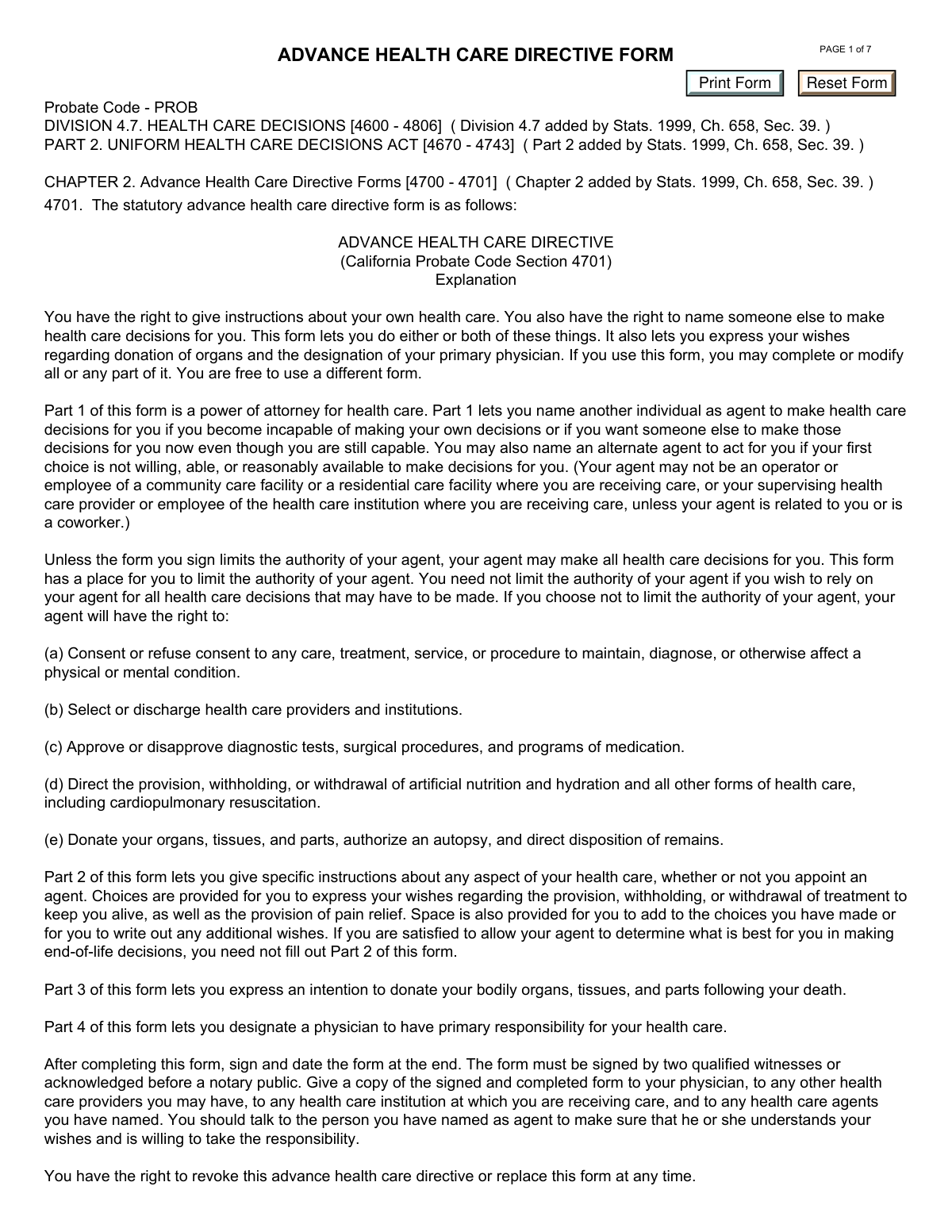
| 1. | Advance Health Care Directive (California Probate Code Section 4701) | 7 | Complex 65 |
| 2. | Iowa Advance Directive: Durable Power of Attorney for Health Care and Declaration (Living Will) | 10 | Moderate 62 |
| 3. | Texas Out-of-Hospital Do-Not-Resuscitate (OOH-DNR) Order | 1 | Complex 67 |
- Enterprise-grade security & data encryption
- 99%+ accuracy powered by AI
- 1,000+ forms from all industries
- Complete forms in under 60 seconds
How to Choose the Right Form
If you've landed on this page looking for an Iowa advance directive, you're in the right place. With only one form available in this category, the decision is straightforward — but it helps to understand exactly what this document covers and whether it meets your needs.
Who Should Use the Iowa Advance Directive?
The Iowa Advance Directive: Durable Power of Attorney for Health Care and Declaration (Living Will) is the right choice if you:
- Are an Iowa resident who wants to document your healthcare wishes in advance
- Want to name a trusted person (an "agent") to make medical decisions on your behalf if you become incapacitated
- Need to specify your preferences regarding life-sustaining treatment in the event of a terminal condition
- Want to address organ donation wishes in a single, consolidated package
What's Included in This Form?
This is an all-in-one Iowa-specific document, so you won't need multiple separate forms. It covers:
- Part One — Durable Power of Attorney for Health Care (naming your healthcare agent)
- Part Two — Declaration/Living Will (your wishes about life-sustaining procedures)
- Part Three — Signature, witness, and notarization requirements
- Optional — Iowa Organ Donation Form
When This Form May NOT Be Enough
- If you live outside Iowa, this form is state-specific and may not be legally valid in another state — look for your state's version instead.
- If you need a standalone financial power of attorney or a last will and testament, those are separate estate planning documents not covered here.
Quick Tip
Because this form requires proper signatures, witnesses, and notarization, using an AI-powered tool like Instafill.ai can help you complete it accurately before printing and signing — reducing the risk of errors that could make the document invalid.
Form Comparison
| Form | Purpose | Who Files It | When to Use |
|---|---|---|---|
| Iowa Advance Directive: Durable Power of Attorney for Health Care and Declaration (Living Will) | Appoint healthcare agent and document end-of-life treatment wishes | Iowa residents planning for future medical incapacity | Before becoming unable to make own medical decisions |
Tips for advance directive forms
When completing the Durable Power of Attorney for Health Care section, designate at least one alternate agent in case your primary agent is unavailable, unwilling, or unable to act. Life circumstances change, and having a backup ensures your healthcare decisions are never left without a designated decision-maker.
Vague language in the Declaration (Living Will) section can lead to confusion during a medical crisis. Clearly state your preferences for specific scenarios — such as terminal illness, permanent unconsciousness, or end-stage conditions — so your agent and medical team have unambiguous guidance.
Iowa law has specific rules about who can serve as a witness to your advance directive — for example, your named agent typically cannot be a witness. Failing to meet these requirements can invalidate the entire document, so review the Part Three provisions carefully before signing.
AI-powered tools like Instafill.ai can complete your Iowa Advance Directive accurately in under 30 seconds, pulling the right information into the correct fields without errors. Your data stays secure throughout the process, making it a practical time-saver — especially if you're preparing multiple estate planning documents at once.
Before finalizing the document, have a detailed conversation with the person you're naming as your healthcare agent. They should understand your values and specific wishes so they can advocate effectively on your behalf when the time comes.
Once signed and notarized, give copies to your named agent, your primary care physician, any specialists, and your hospital if you have a planned procedure. An advance directive only works if the people who need it can actually access it in a medical emergency.
The Iowa Advance Directive package includes an optional Organ Donation Form — don't overlook it. Completing it at the same time ensures your donation wishes are documented alongside your other end-of-life decisions, keeping all related paperwork organized together.
An advance directive is not a one-time task — your health situation, relationships, and wishes may change over time. Review the document after major life events such as a serious diagnosis, divorce, or the death of your named agent, and update it as needed.
Frequently Asked Questions
An advance directive is a legal document that records your healthcare wishes and designates someone to make medical decisions on your behalf if you become unable to do so. It typically combines a living will and a durable power of attorney for health care. Having one in place ensures that your preferences are followed during a medical crisis and reduces the burden on family members who might otherwise have to make difficult decisions without guidance.
This category currently features the Iowa Advance Directive, which is a state-specific package combining a Durable Power of Attorney for Health Care (Part One), a Declaration/Living Will (Part Two), signature and notarization provisions (Part Three), and an optional Iowa Organ Donation Form. It is designed specifically to meet Iowa's legal requirements for advance healthcare planning.
Any Iowa resident who is a competent adult and wants to ensure their medical wishes are honored should consider completing an Iowa Advance Directive. It is especially important for individuals with serious health conditions, those undergoing surgery, seniors, or anyone engaged in broader estate planning. You do not need to be elderly or ill to benefit from having this document in place.
A living will (also called a Declaration) allows you to specify in writing what life-sustaining treatments you do or do not want if you develop a terminal condition. A durable power of attorney for health care lets you name a trusted person (your agent) to make healthcare decisions on your behalf if you are incapacitated. The Iowa Advance Directive combines both into a single document for comprehensive coverage.
Yes, Iowa law requires that an advance directive be signed by the individual completing it and witnessed by the appropriate number of witnesses, and in some cases notarized, to be legally valid. The Iowa Advance Directive form is designed to meet these state-specific requirements. It is always advisable to review the completed document with an attorney or healthcare provider to ensure compliance.
There is no central government registry required for filing an Iowa Advance Directive, but you should provide copies to your healthcare agent, primary care physician, any specialists, and the hospital or care facility you use. Keep the original in a safe but accessible location, and inform your family members where it is stored. Some people also register their directive with Iowa's voluntary advance directive registry if one is available.
Yes, you can revoke or update your advance directive at any time as long as you are mentally competent to do so. To revoke it, you should notify your healthcare agent, physicians, and any facilities holding a copy, and ideally destroy the old document. If you make significant changes to your wishes or circumstances, it is best to complete a new advance directive and redistribute it to all relevant parties.
Yes, AI-powered tools like Instafill.ai can fill out advance directive forms in under 30 seconds by accurately extracting and placing your personal information from source documents. This is especially helpful for multi-part forms like the Iowa Advance Directive, which includes several sections requiring consistent personal details. Instafill.ai can also convert non-fillable PDF versions of these forms into interactive fillable formats.
Manually filling out an advance directive can take anywhere from 15 to 45 minutes depending on the complexity of your wishes and familiarity with the form. Using an AI-powered service like Instafill.ai, the data entry portion can be completed in under 30 seconds, leaving you more time to focus on reviewing your healthcare preferences and ensuring the document reflects your intentions accurately.
You are not legally required to hire an attorney to complete an Iowa Advance Directive, as the form is designed to be completed by individuals on their own. However, consulting a lawyer can be helpful if you have complex medical or family situations, or if you want to ensure the document integrates properly with your broader estate plan. At a minimum, make sure the form is properly signed, witnessed, and notarized as required by Iowa law.
The Iowa Advance Directive includes a Durable Power of Attorney for Health Care as one of its components, making it more comprehensive than a standalone healthcare power of attorney form. It also incorporates a living will and an optional organ donation form, all tailored to Iowa's legal standards. If you are an Iowa resident, using the state-specific advance directive package is generally preferable to a generic healthcare power of attorney form.
The Iowa Advance Directive is specifically designed to comply with Iowa state law and may not be legally valid in other states, which have their own requirements for advance directives. If you spend significant time in another state or relocate, you should complete that state's specific advance directive form. Some states may honor out-of-state directives, but it is safest to have a form that meets the legal standards of each state where you receive care.
Glossary
- Form Complexity Index
- Instafill’s 0–100 measure of how much effort a form takes to complete, calculated deterministically from the form’s own structure rather than estimated. It combines the number of fillable fields (the largest factor), how difficult those fields are to complete based on their type, the number of pages that contain fields, the amount of conditional “fill-only-if” logic, and how many sections the form is divided into, then adds modifiers for tables and repeating lists, bundled instruction pages, and dense page layouts. A higher score means the form is harder to fill out by hand. The forms in this category have a median Form Complexity Index of 65/100 (Complex). See exactly how it is calculated.
- Advance Directive
- A legal document that records your wishes about medical treatment in advance, so those wishes can be followed if you become unable to communicate or make decisions for yourself.
- Durable Power of Attorney for Health Care (DPOA-HC)
- A legal designation that grants a trusted person (your 'agent') the authority to make healthcare decisions on your behalf if you become incapacitated; 'durable' means it remains valid even if you lose mental capacity.
- Healthcare Agent
- The person you name in your Durable Power of Attorney for Health Care to make medical decisions for you; sometimes called a healthcare proxy or surrogate.
- Living Will (Declaration)
- The portion of an advance directive where you write out your specific wishes regarding life-sustaining treatment, such as whether you want to be kept on a ventilator or feeding tube if you have a terminal condition.
- Terminal Condition
- An incurable or irreversible medical condition that, according to reasonable medical judgment, will result in death within a relatively short time regardless of treatment.
- Life-Sustaining Procedures
- Medical interventions—such as mechanical ventilation, CPR, or artificial nutrition—that artificially prolong life when a patient has little or no chance of recovery.
- Incapacitated / Incapacity
- A legal determination that a person is unable to understand, make, or communicate their own healthcare decisions, which triggers the authority granted in an advance directive.
- Notarization
- The process by which a licensed notary public verifies your identity and witnesses your signature on a legal document, making it officially valid under Iowa law.
- Organ Donation Directive
- An optional form included with the Iowa Advance Directive that allows you to document your consent to donate organs or tissue after death for transplantation or medical research.