Fill out AML compliance forms
with AI.
Anti-Money Laundering (AML) compliance forms are essential components of the global effort to combat financial crime, terrorism financing, and tax evasion. These documents are designed to verify the identities of individuals and entities, ensuring that financial systems remain transparent and secure. By collecting detailed information on investors, beneficiaries, and business partners, organizations can perform necessary due diligence and fulfill their "Know Your Customer" (KYC) obligations. Compliance is not just a regulatory hurdle; it is a critical safeguard for the integrity of international finance.
By continuing, you acknowledge Instafill's Privacy Policy and agree to get occasional product update and promotional emails.
About AML compliance forms
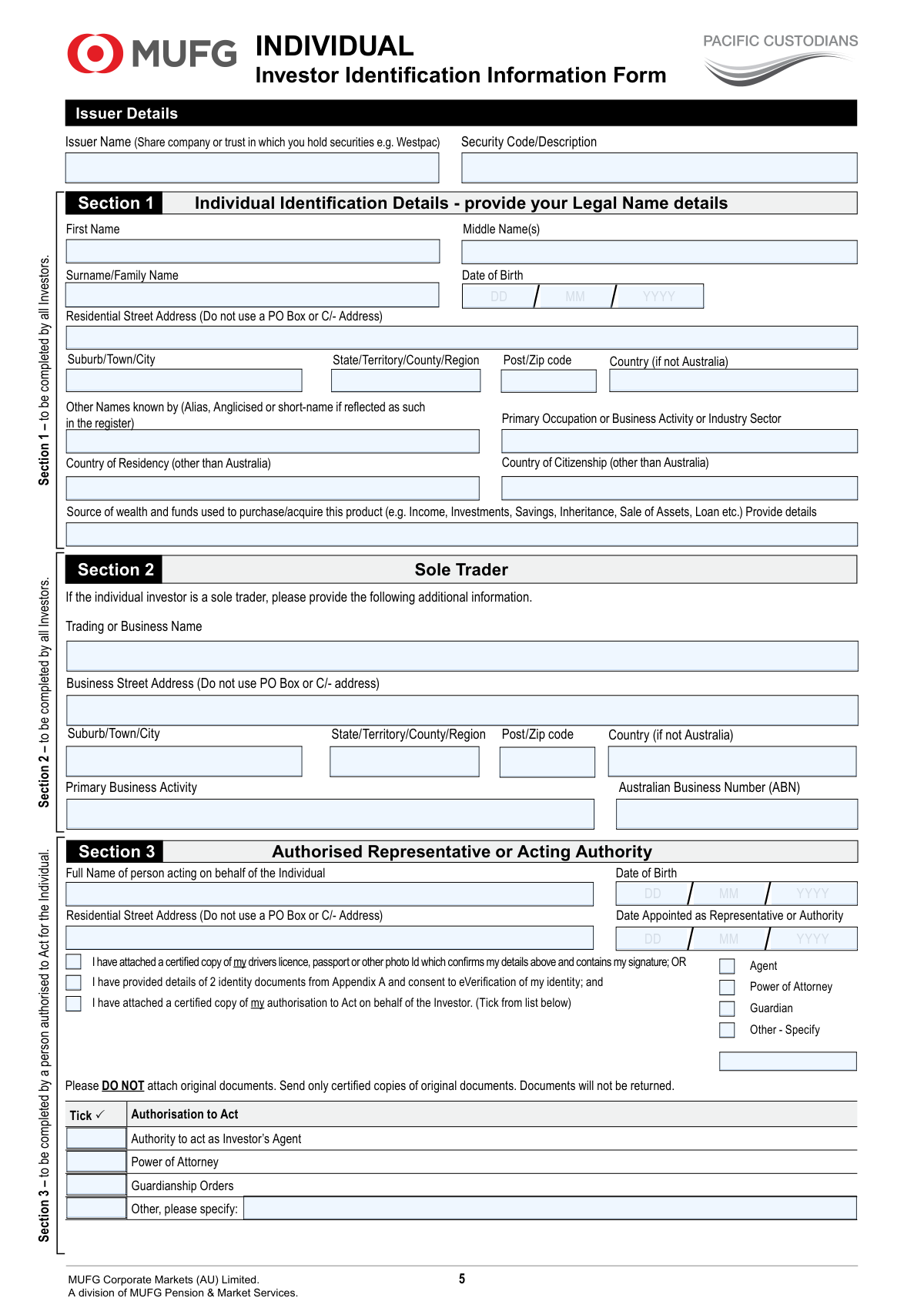
These forms are typically required by financial institutions, investment firms, and government-backed funding agencies when establishing new contractual relationships or onboarding clients. For instance, investors may need to provide identification information to satisfy local regulations, while organizations seeking funding often complete comprehensive due diligence questionnaires to prove their adherence to international anti-bribery and sanctions standards. Whether you are an individual investor or a corporate representative, completing these forms accurately is vital for maintaining legal eligibility and operational efficiency.
Navigating the complexity of AML documentation can be time-consuming, but modern tools like Instafill.ai use AI to fill these forms in under 30 seconds while maintaining high levels of data accuracy and security. This allows professionals to focus on higher-level compliance tasks rather than manual data entry.
Every form on this page can be completed without typing. Instafill is form filling software that reads a PDF and fills it for you — including flat and scanned documents that carry no fillable fields at all.
Forms in This Category
The forms in this category have a median Form Complexity Index of 62/100 (Moderate), measured across 2 forms by field count, input difficulty, length, conditional logic and structure. See how it is calculated.
| Form Name | Pages | FCI | |
|---|---|---|---|
| 1. | AML/CTF Investor Identification Information Form | 1 | – |
| 2. | Compliance & AML Due Diligence Form | 1 | Moderate 62 |
- Enterprise-grade security & data encryption
- 99%+ accuracy powered by AI
- 1,000+ forms from all industries
- Complete forms in under 60 seconds
How to Choose the Right Form
Navigating anti-money laundering (AML) and counter-terrorism financing (CTF) regulations requires specific documentation based on your jurisdiction and the nature of your financial relationship. To select the right document, identify whether you are an individual investor or a business entity seeking institutional funding.
For Australian Investors and KYC Compliance
If you are an individual, company, or trust operating within the Australian financial system, you will likely need the AML/CTF Investor Identification Information Form. This form is specifically designed to meet "Know Your Customer" (KYC) requirements under the Australian Anti-Money Laundering and Counter-Terrorism Financing Act. It is the standard choice for financial institutions needing to verify the identity of their investors to prevent illegal financial activities.
For Counterparties of Cassa Depositi e Prestiti (CDP)
If your organization is establishing a contractual relationship or seeking funding from the Italian promotional institution Cassa Depositi e Prestiti, you must complete a specialized due diligence questionnaire.
- Compliance & AML Due Diligence Form: Choose this form to provide detailed information regarding international sanctions, tax transparency, and anti-bribery (ABC) principles.
- COMPLIANCE & AML DUE DILIGENCE FORM - CDP: This is the mandatory requirement for counterparties and beneficiaries to demonstrate adherence to international standards before CDP funds can be released or contracts finalized.
Key Considerations for Selection
- Jurisdiction: Ensure the form matches the legal requirements of the country where the financial institution is based (e.g., Australia vs. Italy/EU).
- Entity Type: Identify if the form is for an individual investor or a corporate entity, as the required verification documents—such as trust deeds or company registrations—will differ.
- Purpose of Filing: Are you simply opening an investment account, or are you undergoing a deep-dive audit for institutional funding? Institutional forms like those from the CDP require more exhaustive data on internal company policies.
Using Instafill.ai, you can quickly complete these complex forms by letting AI guide you through the mandatory fields, ensuring your compliance data is accurate and professional.
Form Comparison
| Form | Primary Purpose | Target Audience | Key Compliance Focus |
|---|---|---|---|
| AML/CTF Investor Identification Information Form | Verifies identity to comply with Australian KYC and AML/CTF laws. | Individual, corporate, or trust investors based in Australia. | Identity verification and prevention of illegal financial activities. |
| Compliance & AML Due Diligence Form | Gathers questionnaire data for AML, tax transparency, and anti-bribery due diligence. | Counterparties and beneficiaries seeking funding from Cassa Depositi e Prestiti. | International AML/CFT standards and CDP institutional funding requirements. |
| COMPLIANCE & AML DUE DILIGENCE FORM - CDP | Ensures entities receiving funds adhere to international anti-money laundering standards. | Entities establishing a contractual relationship or receiving funding from CDP. | Prevention of money laundering, terrorism financing, and tax avoidance. |
Tips for AML compliance forms
AML forms frequently require identifying the ultimate beneficial owners (UBOs) of an entity. Ensure you have full names, residential addresses, and specific ownership percentages ready to avoid delays in the verification process.
Compliance forms usually require valid, non-expired identification such as passports or driver's licenses. Double-check that all provided identification documents are up to date before submitting to prevent the form from being rejected by financial institutions.
Discrepancies between your compliance form and supporting documents like utility bills or articles of incorporation can trigger red flags. Ensure that names, addresses, and registration numbers are formatted identically across every piece of paperwork in your submission.
Be transparent about any Politically Exposed Persons (PEPs) or potential sanctions related to your entity. Failing to disclose this information accurately can lead to severe compliance hurdles and extended due diligence reviews by the receiving organization.
Using AI-powered tools like Instafill.ai can help you complete these complex AML forms in under 30 seconds with high accuracy. The platform ensures your sensitive compliance data stays secure during the process, making it a reliable choice for managing multiple forms.
For complex entities or trusts, having a visual representation of your corporate hierarchy can simplify the process of filling out due diligence forms. This allows you to quickly reference which sections apply to parent companies versus subsidiaries without searching through legal files.
Frequently Asked Questions
AML compliance forms are designed to help financial institutions and organizations verify the identities of their clients and monitor financial transactions. They are a critical part of Anti-Money Laundering (AML) and Counter-Terrorism Financing (CTF) regulations, aimed at preventing illegal activities like money laundering, fraud, and tax evasion.
These forms are generally required for individuals, corporations, or trusts looking to invest, open bank accounts, or enter into significant contractual relationships. For instance, investors in Australia or entities seeking funding from organizations like Cassa Depositi e Prestiti (CDP) must complete specific due diligence questionnaires.
You should use the AML/CTF Investor Identification Information Form if you are an investor in Australia. This form helps financial institutions meet 'Know Your Customer' (KYC) requirements by verifying the identity of individuals, companies, and trusts.
This form is a comprehensive questionnaire used by Cassa Depositi e Prestiti to assess counterparties and beneficiaries. It covers several areas including anti-money laundering, counter-terrorism financing, tax transparency, international sanctions, and anti-bribery and corruption standards.
Yes, you can use AI tools like Instafill.ai to fill out complex AML compliance forms. These tools can accurately extract data from your source documents and place it into the correct fields in under 30 seconds, significantly reducing the risk of manual entry errors.
While manual completion can take 15 to 30 minutes due to the technical nature of the questions, AI-powered platforms like Instafill.ai can complete these forms in less than 30 seconds. This process automates the data entry while ensuring that specific identity and compliance details are correctly mapped.
Common requirements include government-issued identification, such as a passport or driver's license, and proof of address. For more complex due diligence forms, you may also need to provide corporate registration documents and details regarding your organization's beneficial ownership and tax residency status.
Yes, completing these forms is a mandatory legal requirement for most financial transactions and institutional partnerships. Failure to provide the requested information can result in the rejection of your investment application, the freezing of accounts, or the denial of funding.
Generally, these forms must be updated whenever there is a significant change in your circumstances, such as a change in address, business structure, or beneficial ownership. Many institutions also require periodic reviews every few years to ensure their records remain accurate and up to date.
Completed forms should be submitted directly to the institution requesting them, such as your bank, investment firm, or a funding body like the CDP. Many organizations now accept digital submissions or scanned copies of signed documents through secure portals.
Glossary
- Form Complexity Index
- Instafill’s 0–100 measure of how much effort a form takes to complete, calculated deterministically from the form’s own structure rather than estimated. It combines the number of fillable fields (the largest factor), how difficult those fields are to complete based on their type, the number of pages that contain fields, the amount of conditional “fill-only-if” logic, and how many sections the form is divided into, then adds modifiers for tables and repeating lists, bundled instruction pages, and dense page layouts. A higher score means the form is harder to fill out by hand. The forms in this category have a median Form Complexity Index of 62/100 (Moderate). See exactly how it is calculated.
- AML (Anti-Money Laundering)
- A set of laws and regulations designed to prevent criminals from disguising illegally obtained funds as legitimate income.
- KYC (Know Your Customer)
- The standard process used by financial institutions to verify the identity of their clients and assess potential risks of illegal activity.
- CTF (Counter-Terrorism Financing)
- Specific regulations and procedures used to identify, track, and stop the flow of funds to terrorist individuals or organizations.
- Due Diligence
- The process of collecting and evaluating detailed information about a person or company to ensure they are compliant with legal and financial standards.
- UBO (Ultimate Beneficial Owner)
- The individual who ultimately owns or controls a legal entity, such as a company or trust, often defined as anyone holding more than 25% ownership.
- PEP (Politically Exposed Person)
- An individual who holds a prominent public position, or their close family members, who may be at higher risk for potential involvement in bribery or corruption.
- Sanctions List
- Official records maintained by governments and international bodies that list individuals or entities restricted from certain financial transactions.
- ABC Principles (Anti-Bribery and Corruption)
- Legal standards and internal policies intended to prevent the use of bribes or unethical incentives to influence business or government decisions.