Fill out HUD forms
with AI.
HUD forms are official documents issued or required by the U.S. Department of Housing and Urban Development, covering a wide range of housing assistance programs, tenant protections, and rental subsidy processes. This category includes forms used in connection with programs like the Housing Choice Voucher (Section 8) program, as well as certifications that protect applicants under federal law. For example, HUD Form 5382 allows individuals to document eligibility for protections under the Violence Against Women Act (VAWA), which can be critical when a housing denial is connected to domestic violence, dating violence, sexual assault, or stalking.
By continuing, you acknowledge Instafill's Privacy Policy and agree to get occasional product update and promotional emails.
About HUD forms
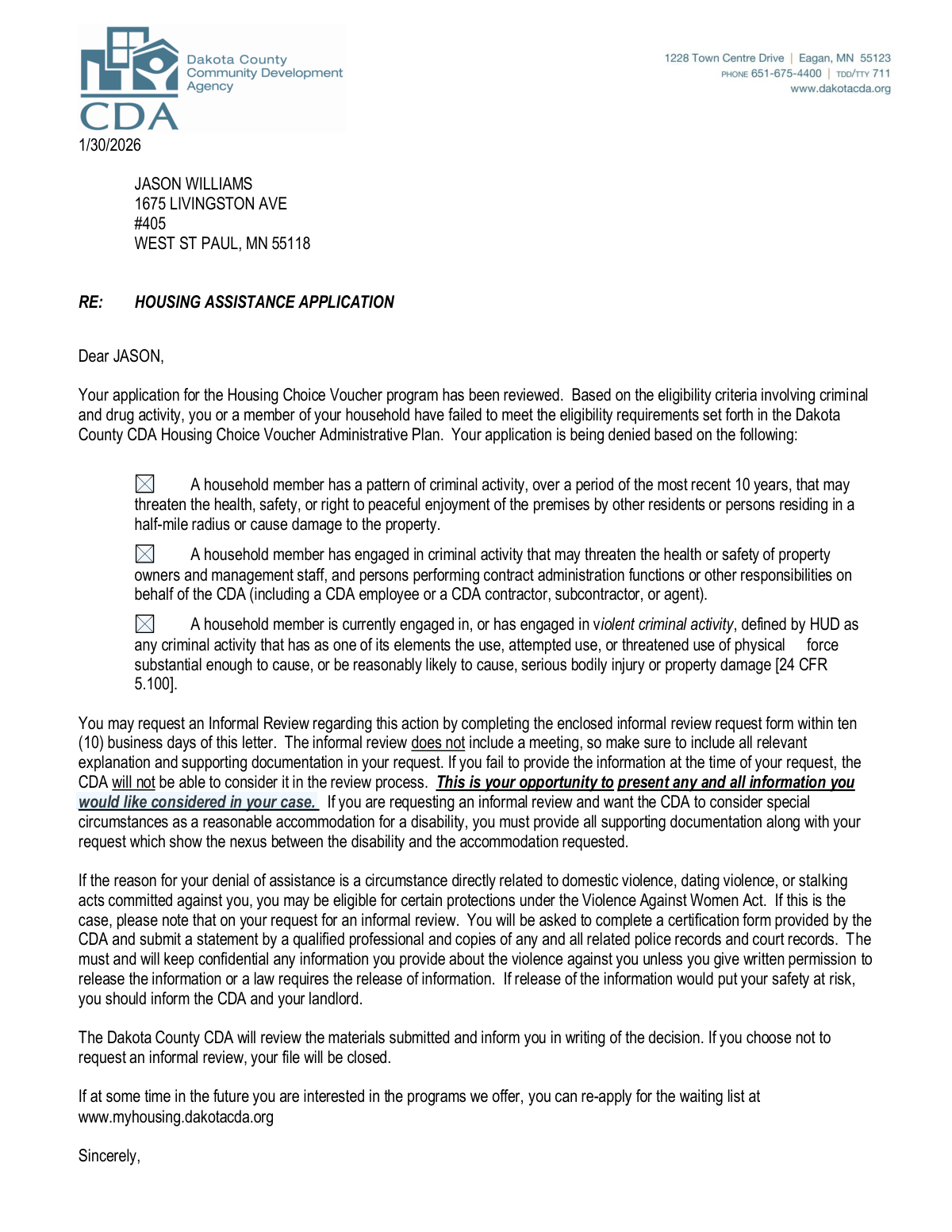
These forms are typically needed by housing applicants, current voucher holders, and individuals navigating the appeals process after a denial of rental assistance. In situations like a Dakota County CDA Housing Choice Voucher denial, applicants may need to submit an informal review request alongside supporting documentation — often within a tight 10-business-day window — making accuracy and speed essential. VAWA-related certifications add another layer of importance, as they carry strict confidentiality requirements and can directly affect whether assistance is granted or maintained.
Because these forms are time-sensitive and involve sensitive personal information, getting them right the first time matters. Tools like Instafill.ai use AI to help users fill out these forms accurately and securely in under 30 seconds, reducing the stress of navigating complex housing paperwork on a deadline.
Every form on this page can be completed without typing. Instafill is form filling software that reads a PDF and fills it for you — including flat and scanned documents that carry no fillable fields at all.
Forms in This Category
The forms in this category have a median Form Complexity Index of 79/100 (Complex), measured across 3 forms by field count, input difficulty, length, conditional logic and structure. See how it is calculated.
| Form Name | Pages | FCI | |
|---|---|---|---|
| 1. | Dakota County CDA New Admissions Informal Review Request Form (Housing Choice Voucher Program) and HUD Form 5382, Certification of Domestic Violence, Dating Violence, Sexual Assault, or Stalking, and Alternate Documentation | 11 | Moderate 56 |
| 2. | Form HUD-9834, Tenant File Review Worksheet | 5 | Very Complex 82 |
| 3. | HUD-1 Settlement Statement | 3 | Complex 79 |
- Enterprise-grade security & data encryption
- 99%+ accuracy powered by AI
- 1,000+ forms from all industries
- Complete forms in under 60 seconds
How to Choose the Right Form
With only one packet in this category, the decision is straightforward — but understanding which part of the packet applies to your situation is essential before you begin filling it out.
If You Were Denied a Housing Choice Voucher by Dakota County CDA
The Dakota County CDA New Admissions Informal Review Request Form is for you if:
- You received a written denial letter from the Dakota County Community Development Agency
- You believe the denial was made in error or that your circumstances have changed
- You have supporting documentation (e.g., court records, proof of completed probation, treatment certificates) to submit
⚠️ Act quickly — this form is typically due within 10 business days of the denial letter date. Missing the deadline may forfeit your right to an informal review.
If the Denial Involved Criminal Activity Related to Violence Against You
Also included in this packet is HUD Form 5382 (Certification of Domestic Violence, Dating Violence, Sexual Assault, or Stalking). Use this form if:
- The criminal activity cited in your denial was committed against you (not by you) and is related to domestic violence, dating violence, sexual assault, or stalking
- You want to claim protections under the Violence Against Women Act (VAWA), which may prohibit denial of assistance on that basis
- You prefer to use alternate documentation instead of the HUD-5382 certification form
HUD Form 5382 is optional but can be a critical tool if VAWA protections apply to your case. Information submitted on this form is kept confidential.
Bottom Line
- Everyone appealing a denial → complete the Informal Review Request Form
- Denial tied to violence committed against you → also complete HUD Form 5382
- Both forms may apply to your situation and can be submitted together
Form Comparison
| Form | Purpose | Who Files It | When to Use |
|---|---|---|---|
| Dakota County CDA New Admissions Informal Review Request Form (Housing Choice Voucher Program) and HUD Form 5382, Certification of Domestic Violence, Dating Violence, Sexual Assault, or Stalking, and Alternate Documentation | Appeal HCV denial; certify VAWA-related domestic violence protections | Applicants denied Housing Choice Voucher assistance | Within 10 business days of receiving a denial letter |
Tips for HUD forms
The informal review request is typically due within 10 business days of receiving your denial letter, so don't wait. Missing this deadline may forfeit your right to appeal, so read your denial letter carefully and note the exact due date as soon as it arrives.
Your informal review is strongest when backed by evidence — think court records, proof of completed probation or treatment programs, letters of support, or other relevant documentation. Collecting these materials before filling out the form ensures your written explanation is complete and consistent with what you're submitting.
HUD Form 5382 is specifically for applicants whose denial is connected to criminal activity that was committed against them as a victim of domestic violence, dating violence, sexual assault, or stalking. If this applies to your situation, submitting this form may invoke VAWA protections that could prevent the denial from standing — don't overlook it.
Information submitted on HUD Form 5382 is protected under VAWA and must be kept confidential by the housing agency. Only share this form when it is directly relevant to your case, and be aware that you are not required to submit it — it is optional and used at your discretion.
When describing the circumstances of your denial in the informal review request, stick to factual, chronological details and avoid emotional language. Reviewers are looking for evidence that the disqualifying issue has been addressed or does not apply — a calm, organized narrative paired with documentation is more persuasive than a general appeal.
AI-powered tools like Instafill.ai can help you complete HUD forms and the informal review request in under 30 seconds with high accuracy — a real time-saver when you're working against a tight 10-business-day deadline. Your data stays secure throughout the process, so you can focus on gathering your supporting documents rather than wrestling with form fields.
Before sending your completed forms and supporting documents, make copies or save digital versions of every page you submit. If there is a dispute about what was received or when, having a complete record protects you and helps you track your case status.
If submitting by mail, use certified mail with return receipt so you have proof of the submission date and delivery. When submitting in person or electronically, ask for a confirmation receipt — this is critical given the time-sensitive nature of the informal review deadline.
Frequently Asked Questions
This category includes the Dakota County CDA New Admissions Informal Review Request Form and HUD Form 5382 (Certification of Domestic Violence, Dating Violence, Sexual Assault, or Stalking, and Alternate Documentation). Together, these forms help Housing Choice Voucher (Section 8) applicants appeal a denial decision and, where applicable, assert protections under the Violence Against Women Act (VAWA).
This form is for applicants who have received a written denial of their Housing Choice Voucher (Section 8) application from the Dakota County Community Development Agency (CDA). If you believe the denial was made in error or you have evidence that addresses the disqualifying issue, you can use this form to request an informal review and present your case.
The informal review request is typically time-sensitive and must be submitted within 10 business days of the date on your denial letter. Missing this deadline may forfeit your right to appeal, so it is important to act quickly upon receiving a denial notice.
HUD Form 5382 is an optional federal certification form used to document that an applicant is a victim of domestic violence, dating violence, sexual assault, or stalking. It is especially relevant when the reason cited for a Housing Choice Voucher denial involves criminal activity that was actually committed against the applicant, as VAWA protections may prevent denial of assistance on that basis.
HUD Form 5382 is optional, not mandatory, but it can be a critical piece of documentation if your denial is related to violence-related criminal activity that was perpetrated against you rather than by you. Submitting it alongside your informal review request can strengthen your case and trigger confidentiality protections under VAWA.
Helpful supporting documentation may include court records, proof of completed probation or treatment programs, letters from counselors or case managers, police reports, or any other evidence that addresses the specific reason for denial. The stronger and more relevant your documentation, the better your chances of a successful informal review.
Yes. Under the Violence Against Women Act (VAWA), information submitted on HUD Form 5382 must be kept confidential by the housing agency. It cannot be entered into any shared database or disclosed to outside parties except in very limited circumstances permitted by law.
Completed forms should be submitted directly to the Dakota County Community Development Agency (CDA) according to the instructions provided in your denial letter. The letter will typically specify the submission method (mail, fax, or in-person drop-off) and the address or contact information for the CDA.
Yes. AI-powered tools like Instafill.ai allow you to fill out forms like the Dakota County CDA Informal Review Request and HUD Form 5382 online in under 30 seconds, accurately extracting and placing your information from source documents. This can be especially helpful when you are working against a tight 10-business-day deadline.
With AI tools like Instafill.ai, these forms can be completed in under 30 seconds by automatically pulling and placing your data into the correct fields. Manual completion typically takes longer, especially if you need to gather supporting documentation at the same time.
No, filing an informal review request does not guarantee approval — it gives you the opportunity to present additional evidence or clarification to the housing agency for reconsideration. The outcome depends on the specific circumstances of your case and the documentation you provide.
The Dakota County CDA Informal Review Request Form is specific to applicants who applied through the Dakota County Community Development Agency in Minnesota. However, HUD Form 5382 is a federal form used by housing agencies across the United States, so residents in other areas may encounter it through their local housing authority.
Glossary
- Form Complexity Index
- Instafill’s 0–100 measure of how much effort a form takes to complete, calculated deterministically from the form’s own structure rather than estimated. It combines the number of fillable fields (the largest factor), how difficult those fields are to complete based on their type, the number of pages that contain fields, the amount of conditional “fill-only-if” logic, and how many sections the form is divided into, then adds modifiers for tables and repeating lists, bundled instruction pages, and dense page layouts. A higher score means the form is harder to fill out by hand. The forms in this category have a median Form Complexity Index of 79/100 (Complex). See exactly how it is calculated.
- Housing Choice Voucher (HCV) Program
- A federal rental assistance program (commonly called Section 8) administered by local housing agencies that helps low-income families pay for housing in the private market by subsidizing a portion of their rent.
- CDA (Community Development Agency)
- A local government agency, such as the Dakota County CDA, that administers federal housing programs including the Housing Choice Voucher Program on behalf of HUD in their jurisdiction.
- VAWA (Violence Against Women Act)
- A federal law that protects applicants and tenants in HUD-assisted housing from being denied, evicted, or losing assistance solely because they are victims of domestic violence, dating violence, sexual assault, or stalking.
- Informal Review
- A process that allows an applicant who was denied housing assistance to present their case and supporting evidence to the housing agency before a final decision is made, typically requested within 10 business days of receiving a denial letter.
- HUD Form 5382
- An optional federal certification form used to document that an applicant or tenant qualifies for VAWA protections, allowing them to explain how a criminal incident cited in a denial was related to violence committed against them rather than by them.
- Alternate Documentation
- Evidence other than HUD Form 5382 that can be submitted to prove VAWA-protected status, such as a police report, court order, or a signed statement from a victim advocate, counselor, or other professional.
- HUD (Department of Housing and Urban Development)
- The U.S. federal agency that oversees national housing policy, administers rental assistance programs, and creates standardized forms used by local housing agencies across the country.
- Disqualifying Issue
- A specific factor in an applicant's background—such as a criminal record, prior eviction, or unpaid debt to a housing authority—that caused the housing agency to deny their application for assistance.