Fill out instructor liability forms
with AI.
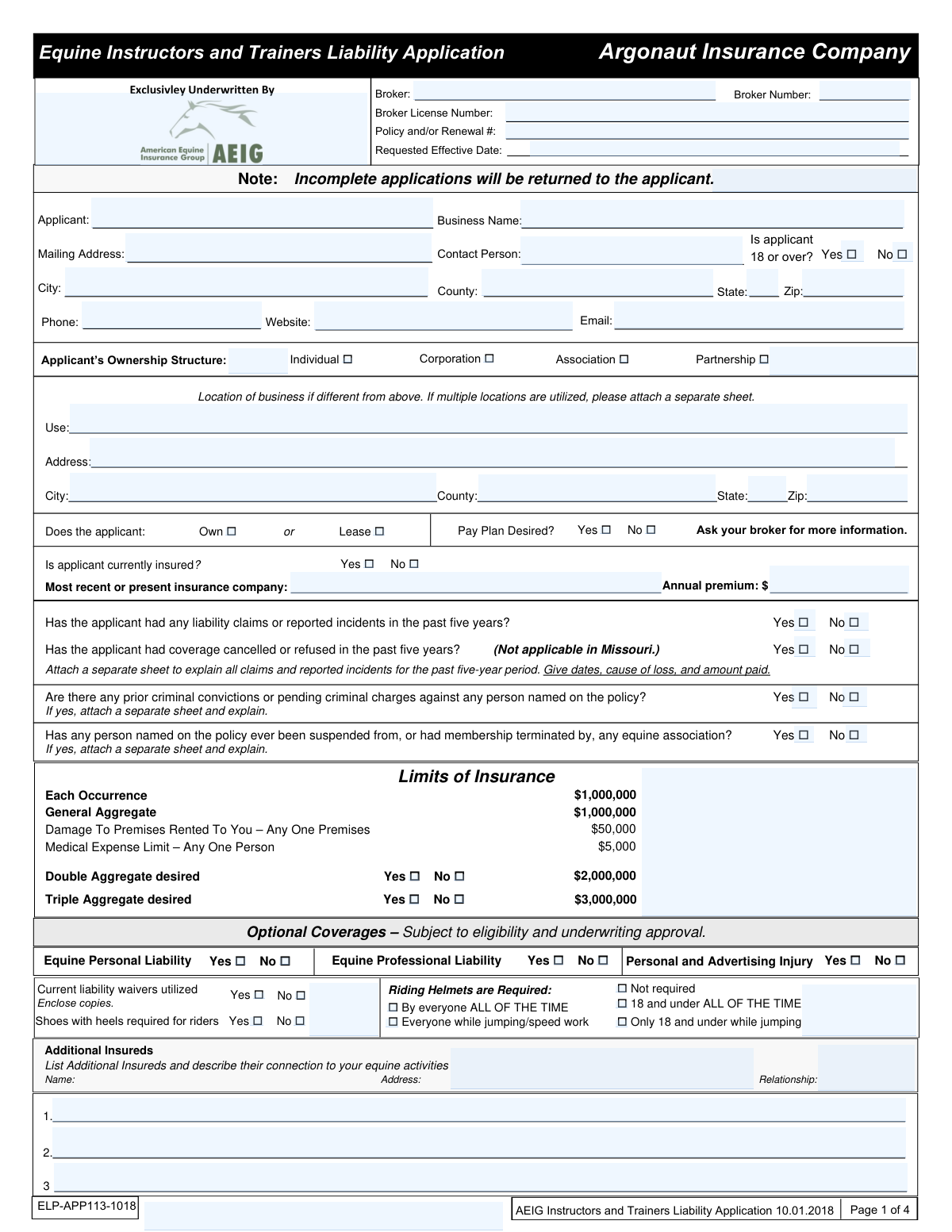
Instructor liability forms are essential legal and insurance documents designed to protect professionals who provide specialized training or instruction. In high-risk industries, such as equine sports, fitness, or technical skills training, these forms serve as the foundation for securing professional liability insurance. They allow insurers to assess the scope of a business, the experience level of the trainer, and the specific activities involved—such as clinics or one-on-one sessions—to ensure the professional is adequately covered against potential legal claims or financial loss.
By continuing, you acknowledge Instafill's Privacy Policy and agree to get occasional product update and promotional emails.
About instructor liability forms
These forms are typically required by independent contractors, business owners, and specialized trainers who need to document their operations for underwriting purposes. For example, equine instructors and trainers seeking coverage through providers like Argonaut Insurance Company must provide detailed data regarding their revenue, safety protocols, and claims history. Whether you are managing a large facility or providing freelance instruction, completing these applications accurately is a critical step in professional risk management. These documents help mitigate the financial impact of accidents or injuries that may occur during the course of instruction.
Filling out these comprehensive applications manually can be a tedious process prone to clerical errors. Tools like Instafill.ai use AI to fill these forms in under 30 seconds, handling your data accurately and securely to streamline the insurance application process.
Every form on this page can be completed without typing. Instafill is form filling software that reads a PDF and fills it for you — including flat and scanned documents that carry no fillable fields at all.
Forms in This Category
The forms in this category have a median Form Complexity Index of 72/100 (Complex), measured across 3 forms by field count, input difficulty, length, conditional logic and structure. See how it is calculated.
| Form Name | Pages | FCI | |
|---|---|---|---|
| 1. | AEIG Instructors and Trainers Liability Application | 4 | Complex 72 |
| 2. | Argonaut Insurance Company, AEIG Instructors and Trainers Liability Application | 4 | Complex 72 |
| 3. | Argonaut Insurance Company, Equine Instructors and Trainers Liability Application | 4 | Complex 75 |
- Enterprise-grade security & data encryption
- 99%+ accuracy powered by AI
- 1,000+ forms from all industries
- Complete forms in under 60 seconds
How to Choose the Right Form
Selecting the Right Equine Liability Form
Choosing the correct application is essential for securing professional and personal liability insurance for your horse-related business. While all forms in this category serve equine professionals, you should select the one that matches your specific insurance provider's requirements.
Standard AEIG Applications
If you are applying for coverage through the American Equine Insurance Group (AEIG), the AEIG Instructors and Trainers Liability Application is the standard document. It is designed for:
- Horse Trainers: Professionals focused on training animals for competition or leisure.
- Riding Instructors: Those providing lessons to individuals or groups.
- Clinic Organizers: Professionals hosting short-term intensive training events.
If your insurance broker has requested a specific version from Argonaut, use the Argonaut Insurance Company, AEIG Instructors and Trainers Liability Application. This version ensures you are using the specific underwriting document required by their internal system to assess risk and determine coverage limits.
Comprehensive Business Assessment
For those with more complex business operations, the Argonaut Insurance Company, Equine Instructors and Trainers Liability Application is a robust choice. Select this form if you need to provide detailed disclosures regarding:
- Revenue Streams: Detailed breakdowns of income from different equine activities (e.g., training vs. instruction).
- Experience Levels: A full history of your professional background and certifications within the equine industry.
- Claims History: A thorough record of any prior claims or incidents that may affect your policy underwriting.
Which Form Should You Use?
Since these forms collect similar data—such as your annual revenue, the number of horses under your care, and your specific instructional activities—the choice often comes down to the preference of your insurance agent. If you are starting a new policy with Argonaut, the Argonaut Insurance Company, Equine Instructors and Trainers Liability Application is typically the most comprehensive starting point for independent professionals seeking to protect their financial assets from potential claims.
Form Comparison
| Form | Primary Focus | Key Information Required | Target Professional |
|---|---|---|---|
| AEIG Instructors and Trainers Liability Application | Applying for professional and personal equine liability insurance coverage. | Business operations, equine experience, revenue, and specific activity types. | Equine instructors and trainers managing horse-related activities. |
| Argonaut Insurance Company, AEIG Instructors and Trainers Liability Application | Securing Argonaut insurance (ELP-APP113-1018) for equine professional liability. | Detailed business operations, revenue, and specific equine training activities. | Equine professionals requiring underwriting through Argonaut Insurance Company. |
| Argonaut Insurance Company, AEIG Instructors and Trainers Liability Application | Assessing risk for equine instructor and trainer liability policies. | Experience, revenue, and details regarding training and clinic operations. | Instructors and trainers needing risk-based liability insurance assessment. |
| Argonaut Insurance Company, Equine Instructors and Trainers Liability Application | Underwriting equine professional liability with specific coverage limits. | Prior claims history, desired coverage limits, and business revenue data. | Equine professionals seeking specific liability limits and coverage history. |
Tips for instructor liability forms
AI-powered tools like Instafill.ai can complete these complex liability forms in under 30 seconds with high accuracy. The data stays secure during the process, making it a highly efficient way to handle multiple applications or renewals without manual data entry.
Underwriters use your projected income to determine risk levels and premium costs for equine insurance. Underreporting can lead to coverage gaps, while overreporting may result in unnecessarily high premiums for your training business.
Clearly outline your years of experience, certifications, and specific training history within the application. The more detail you provide about your background with horses, the better an insurer can assess your professional competency and risk level.
Be sure to list every activity you conduct, including clinics, boarding, or specific training styles like jumping or dressage. Failing to disclose a particular service might mean you are not covered if an incident occurs during that specific activity.
Keep a record of any past incidents or insurance claims ready before you start the application process. Having this information organized prevents delays and ensures you provide a consistent and honest narrative to the insurance company.
Carefully choose your desired coverage limits based on the value of the horses you handle and the scale of your operations. Consult with an insurance professional if you are unsure whether the standard limits are sufficient for your specific training environment.
Leaving sections blank can cause the underwriter to flag your application as incomplete, significantly delaying your coverage start date. If a section does not apply to your business, enter 'N/A' to show that you have reviewed the question.
Frequently Asked Questions
These forms serve as detailed applications for equine professionals to obtain professional and personal liability insurance. They allow insurers to evaluate the risks associated with your specific training or instruction business to determine appropriate coverage limits and premiums.
Any professional providing horse-related services, such as riding lessons, horse training, or specialized clinics, should complete these forms. This applies to independent contractors, freelance instructors, and those operating within established stables or facilities.
You will generally need to provide your business's annual revenue, a detailed history of your professional experience, the types of equine activities you oversee, and any past insurance claims history. Accurate data regarding the number of students and horses under your care is also essential.
Yes, AI tools like Instafill.ai can fill these forms in under 30 seconds by accurately extracting and placing data from your existing source documents. This technology streamlines the application process and helps ensure that complex fields are populated correctly.
While manual entry for these detailed applications can be time-consuming, using an AI-powered service like Instafill.ai allows you to complete the process in less than 30 seconds. The AI automatically maps your information to the correct fields on the PDF.
Insurers use your gross revenue and the volume of instruction or training sessions as indicators of your business's total exposure to risk. This data is a critical component of the underwriting process used to calculate your insurance premium.
Yes, the applications are designed to accommodate various business scales, from individual freelance trainers to large-scale operations. The forms include sections to specify whether you are applying as an individual or a business entity.
While most of these forms collect similar data for underwriting, they may be updated versions or tailored for specific types of equine professionals. It is best to use the most current version provided by your agent or the one that specifically matches your primary business activity, such as instruction or clinic management.
Yes, providing a complete and accurate claims history is a standard requirement for liability insurance. Failure to disclose prior incidents could lead to a denial of coverage or the cancellation of your policy later on.
After filling out and signing the application, you typically submit it to your insurance broker or directly to the underwriting department of the insurance company. If you are using an online tool, you can usually download the completed PDF and email it to the necessary parties immediately.
Glossary
- Form Complexity Index
- Instafill’s 0–100 measure of how much effort a form takes to complete, calculated deterministically from the form’s own structure rather than estimated. It combines the number of fillable fields (the largest factor), how difficult those fields are to complete based on their type, the number of pages that contain fields, the amount of conditional “fill-only-if” logic, and how many sections the form is divided into, then adds modifiers for tables and repeating lists, bundled instruction pages, and dense page layouts. A higher score means the form is harder to fill out by hand. The forms in this category have a median Form Complexity Index of 72/100 (Complex). See exactly how it is calculated.
- Professional Liability
- A type of insurance coverage that protects instructors and trainers against claims of negligence or errors in the performance of their professional duties.
- Underwriting
- The process an insurance company uses to evaluate the risks of a potential client to decide whether to provide coverage and to determine the appropriate premium cost.
- Care, Custody, or Control (CCC)
- An essential coverage extension for equine professionals that protects them against financial loss if a horse they do not own is injured or dies while in their care.
- Gross Receipts
- The total annual income generated from all business operations, such as training fees and lesson costs, used by insurers to calculate the scale of the risk.
- Coverage Limits
- The maximum amount an insurance provider is obligated to pay for a covered loss under the terms of the liability policy.
- Prior Claims History
- A record of any past insurance claims or legal actions brought against the instructor, which helps the insurer predict the likelihood of future claims.
- Equine Liability Act
- State-specific laws that provide certain legal protections to horse professionals by limiting their liability for injuries resulting from the inherent risks of equine activities.
- Clinics
- Short-term, specialized training events or workshops that must be disclosed on liability forms as they may fall outside the scope of standard daily instruction.