Fill out trust and estate forms
with AI.
Trust and estate forms are essential legal and financial documents used to manage the assets and liabilities of a trust or a deceased person's estate. These forms serve as the primary mechanism for fiduciaries to report income, claim deductions, and ensure that tax obligations are met at both the federal and local levels. Whether you are handling a domestic trust or navigating international requirements, these documents provide the necessary structure to protect assets and fulfill the legal and financial obligations of a grantor or decedent.
By continuing, you acknowledge Instafill's Privacy Policy and agree to get occasional product update and promotional emails.
About trust and estate forms
Typically, these forms are required by executors, trustees, and legal administrators who have been entrusted with the responsibility of managing another party's financial affairs. Common situations include filing annual tax returns, such as IRS Form 1041, to report income and distributions to beneficiaries, or registering an estate with tax authorities using documents like BIR Form 1901. Additionally, these forms are necessary when establishing specialized investment accounts to facilitate the trading of securities and the growth of the estate's holdings. Tools like Instafill.ai use AI to fill these forms in under 30 seconds, ensuring that data is handled accurately and securely while saving significant administrative effort.
Completing these detailed documents manually can be a time-consuming and error-prone process, often requiring the cross-referencing of complex financial records. By utilizing automated solutions to handle data entry, fiduciaries can focus more on their core legal responsibilities and less on the repetitive paperwork involved in estate management.
Every form on this page can be completed without typing. Instafill is form filling software that reads a PDF and fills it for you — including flat and scanned documents that carry no fillable fields at all.
Forms in This Category
The forms in this category have a median Form Complexity Index of 66/100 (Complex), measured across 4 forms by field count, input difficulty, length, conditional logic and structure. See how it is calculated.
- Enterprise-grade security & data encryption
- 99%+ accuracy powered by AI
- 1,000+ forms from all industries
- Complete forms in under 60 seconds
How to Choose the Right Form
Managing a trust or estate involves several distinct legal and financial stages, from initial registration to annual tax reporting and active asset management. To find the right document, identify which administrative goal you are currently pursuing.
Annual Income Tax Reporting (U.S.)
If you are a fiduciary—such as an executor, trustee, or personal representative—responsible for a domestic estate or trust, you will likely need Form 1041, U.S. Income Tax Return for Estates and Trusts. This IRS form is essential for:
- Reporting annual income, deductions, and capital gains.
- Calculating the specific tax liability of the entity.
- Reporting distributions made to beneficiaries so they can accurately file their own taxes via Schedule K-1.
Entity Registration (Philippines)
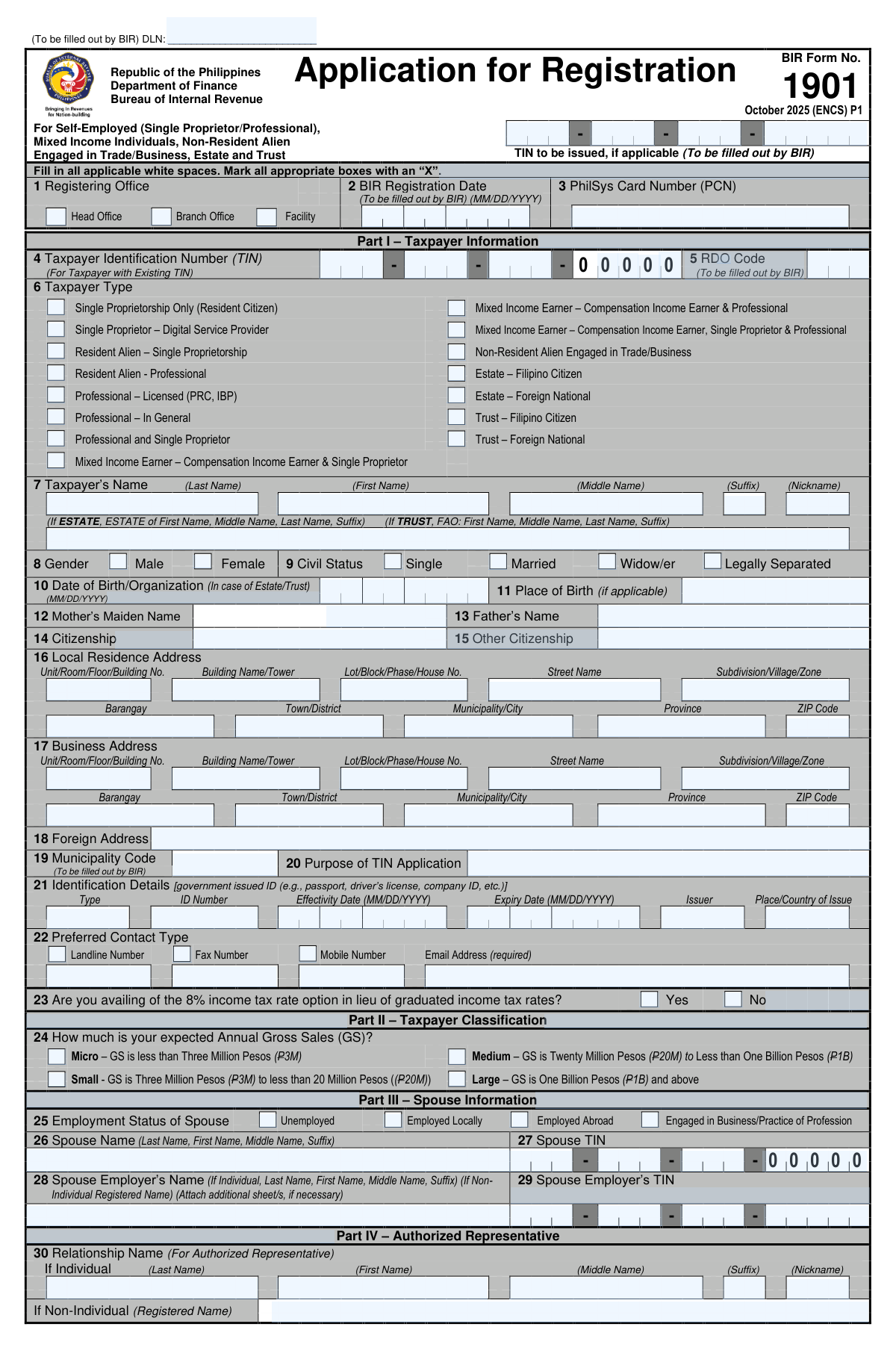
For those managing estates or trusts within the Philippines, the requirements differ. You should use BIR Form No. 1901, Application for Registration if you are an administrator or trustee who needs to:
- Register a new estate or trust with the Bureau of Internal Revenue (BIR).
- Obtain a Taxpayer Identification Number (TIN) for the entity.
- Ensure the estate or trust is legally authorized to engage in trade or business.
Investment and Asset Management
Once the trust or estate is registered and compliant with tax authorities, you may need to establish a financial framework for managing its liquidity and investments.
- Merrill Edge Self-Directed Trust and Estate Cash Management Account (CMA Account) Application: Select this booklet if you are a trustee or executor looking to open a specialized brokerage account. This application allows the entity to trade and research securities like stocks and mutual funds while providing a central location for asset management.
By selecting the form that matches your specific jurisdiction and administrative phase, you can ensure the estate or trust remains compliant while meeting its long-term financial objectives.
Form Comparison
| Form | Purpose | Who Files It | Primary Function |
|---|---|---|---|
| Form 1041, U.S. Income Tax Return for Estates and Trusts | Report annual income, deductions, and tax liability for domestic estates and trusts. | Fiduciaries, such as executors, trustees, or personal representatives. | Calculates taxable income and reports distributions to beneficiaries via Schedule K-1. |
| BIR Form No. 1901, Application for Registration For Self-Employed (Single Proprietor/Professional), Mixed Income Individuals, Non-Resident Alien Engaged in Trade/Business, Estate and Trust | Register with the Philippine BIR to obtain a Taxpayer Identification Number (TIN). | Self-employed individuals, professionals, and administrators of estates or trusts. | Establishes legal tax status and registration for operating businesses or professions. |
| Form 1041, U.S. Income Tax Return for Estates and Trusts | Federal tax return used to report financial activities of trusts and estates. | Executors or trustees responsible for the entity's financial management. | Ensures federal tax compliance and accurate reporting of annual capital gains. |
| Merrill Edge Self-Directed Trust and Estate Cash Management Account (CMA Account) Account Application Booklet and Agreements | Open a self-directed investment and cash management account for an entity. | Trustees and executors managing U.S.-based trust or estate assets. | Enables the entity to trade securities like stocks, mutual funds, and bonds. |
Tips for trust and estate forms
Before filling out tax returns or account applications, ensure you have the trust agreement or will, plus the entity's EIN. Having these legal documents on hand prevents errors when entering the legal name of the trust or identifying the specific powers granted to the fiduciary.
Many estate forms require you to separate principal assets from the income those assets generate. Mistakenly reporting principal as taxable income can lead to overpayment of taxes or legal disputes with beneficiaries who are entitled to specific distributions.
Ensure the name of the trust or estate matches exactly across tax filings, bank applications, and registration documents. Discrepancies between a 'Family Trust' and a 'Revocable Living Trust' on different forms can trigger administrative delays or verification issues with financial institutions.
If the trust or estate distributes income to beneficiaries, you must report this accurately to ensure the tax burden shifts from the entity to the individual. Keep detailed ledgers of all payments made throughout the year to simplify the completion of Form 1041 and its associated schedules.
Double-check that you are using the estate’s unique EIN rather than the deceased individual’s Social Security Number. Using the wrong identifier is a common mistake that leads to rejected filings and complicates the registration process with tax authorities.
Managing complex fiduciary paperwork is significantly easier with AI-powered tools like Instafill.ai, which can complete these forms in under 30 seconds with high accuracy. Your sensitive estate data stays secure throughout the process, allowing you to focus on asset management rather than manual data entry.
Frequently Asked Questions
These forms are used to manage the financial, legal, and tax obligations of entities created after a person's death or through a legal trust agreement. They include documents for reporting annual income, registering the entity with tax authorities, and opening specialized investment accounts to manage assets.
The fiduciary, which may be an executor, administrator, or trustee, is legally responsible for completing and filing these forms. Their role is to ensure the estate or trust complies with government regulations and fulfills its duties to the beneficiaries.
Form 1041 is typically required if a domestic trust or estate has gross income for the tax year that meets specific government thresholds or has a beneficiary who is a non-resident alien. It is used to report the entity's income, deductions, and any distributions made to beneficiaries.
Yes, in many jurisdictions, you must register the entity to obtain a specific Taxpayer Identification Number. For instance, BIR Form 1901 is used in the Philippines for this purpose, while in the United States, fiduciaries usually obtain an Employer Identification Number (EIN) from the IRS.
Yes, AI tools like Instafill.ai can fill out complex trust and estate forms in under 30 seconds. The technology accurately extracts data from your source documents and places it directly into the correct fields, reducing the risk of manual entry errors.
While manual entry for financial forms can take hours, using an AI-powered service like Instafill.ai allows you to complete these documents in less than 30 seconds. This is particularly helpful for fiduciaries who need to process multiple schedules or high volumes of financial data.
A CMA is a specialized investment account designed for trusts and estates to hold and manage liquid assets. These accounts, such as those offered by Merrill Edge, allow fiduciaries to trade securities and manage the entity's cash flow within a single financial framework.
Submission locations vary by form type: federal tax returns like Form 1041 are sent to the IRS, while registration forms like BIR 1901 are filed with local tax offices. Financial applications for accounts like a CMA should be submitted directly to the bank or brokerage firm handling the account.
You will generally need the legal name of the trust or estate, the Taxpayer Identification Number, the fiduciary's contact information, and detailed financial records. This includes documentation of income, capital gains, losses, and records of any distributions made to beneficiaries.
Yes, modern AI services like Instafill.ai can convert static or non-fillable PDF versions of trust and estate forms into interactive, fillable documents. This allows you to type information directly into the form on your computer rather than filling it out by hand.
When a trust or estate distributes income to beneficiaries, those amounts are often reported on specific schedules, such as Schedule K-1. This ensures that the tax liability is correctly shared between the entity and the individuals receiving the funds.
Accurate reporting is critical to avoid legal penalties, ensure proper tax compliance, and maintain transparency with the beneficiaries. Errors in these forms can lead to government audits or delays in the final distribution of the estate's assets.
Glossary
- Form Complexity Index
- Instafill’s 0–100 measure of how much effort a form takes to complete, calculated deterministically from the form’s own structure rather than estimated. It combines the number of fillable fields (the largest factor), how difficult those fields are to complete based on their type, the number of pages that contain fields, the amount of conditional “fill-only-if” logic, and how many sections the form is divided into, then adds modifiers for tables and repeating lists, bundled instruction pages, and dense page layouts. A higher score means the form is harder to fill out by hand. The forms in this category have a median Form Complexity Index of 66/100 (Complex). See exactly how it is calculated.
- Fiduciary
- A person or institution, such as a trustee or executor, who has the legal authority and duty to manage assets and make decisions in the best interest of another party.
- Beneficiary
- An individual or entity designated to receive assets, income, or other benefits from a trust or a deceased person's estate.
- Schedule K-1
- An IRS tax document issued with Form 1041 that reports a beneficiary's specific share of the trust or estate's income, deductions, and credits.
- Trustee
- The person or entity appointed to hold legal title to property and manage it for the benefit of the beneficiaries according to the trust's terms.
- Executor
- The person named in a will or appointed by a court to manage the affairs of a deceased person, including paying debts and distributing remaining assets.
- Taxpayer Identification Number (TIN)
- A unique identification number used by tax authorities, such as the IRS or BIR, to track the tax obligations of individuals, businesses, estates, and trusts.
- Grantor
- The individual who creates a trust and transfers their assets into it; also commonly referred to as a settlor or trustor.
- Cash Management Account (CMA)
- A specialized investment account that combines features of checking and brokerage accounts, often used by trustees to manage an estate's liquid assets and trades.