Yes! You can use AI to fill out Special Service Fee and Payment Extension Request
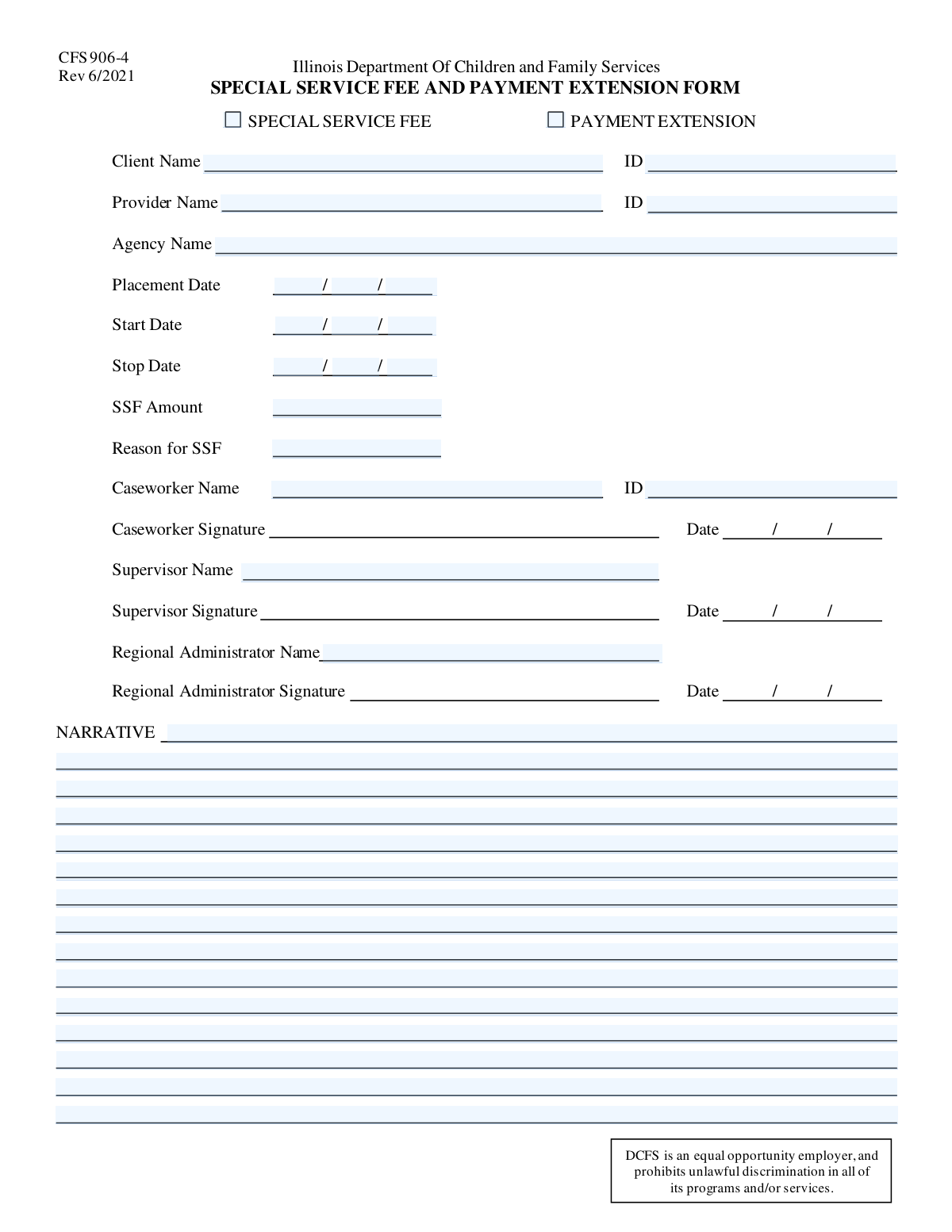
The Special Service Fee and Payment Extension Request form is a formal application used to request either a Special Service Fee (SSF) for services rendered beyond a standard agreement or an extension on a payment due date. It is a critical document for maintaining financial transparency and ensuring proper authorization from supervisors and administrators for non-standard payments. Today, this form can be filled out quickly and accurately using AI-powered services like Instafill.ai, which can also convert non-fillable PDF versions into interactive fillable forms.
SSF/PE Request is part of the
payment forms category on Instafill.
Our AI automatically handles information lookup, data retrieval, formatting, and form filling.
It takes less than a minute to fill out SSF/PE Request using our AI form filling.
Securely upload your data. Information is encrypted in transit and deleted immediately after the form is filled out.
Form specifications
| Form name: | Special Service Fee and Payment Extension Request |
| Number of fields: | 38 |
| Number of pages: | 1 |
| Filled form examples: | Form SSF/PE Request Examples |
| Language: | English |
Instafill Demo: How to fill out PDF forms in seconds with AI
How to Fill Out SSF/PE Request Online for Free in 2026
Are you looking to fill out a SSF/PE REQUEST form online quickly and accurately? Instafill.ai offers the #1 AI-powered PDF filling software of 2026, allowing you to complete your SSF/PE REQUEST form in just 37 seconds or less.
Follow these steps to fill out your SSF/PE REQUEST form online using Instafill.ai:
- 1 Navigate to Instafill.ai and upload your Special Service Fee and Payment Extension Request form, or select it from their template library.
- 2 Indicate the form type by checking the box for either 'Special Service Fee' or 'Payment Extension' at the top of the form.
- 3 Use the AI assistant to automatically fill in the Client, Provider, and Agency information, including full names and identification numbers.
- 4 Enter the relevant dates for placement, start, and stop of service. If requesting a Special Service Fee, provide the specific amount and a detailed reason.
- 5 Complete the narrative section to provide a comprehensive justification for your request, and fill in the names and IDs for the Caseworker, Supervisor, and Regional Administrator.
- 6 Review all the auto-filled information for accuracy, make any necessary corrections, and then e-sign the document directly on the platform before submitting.
Our AI-powered system ensures each field is filled out correctly, reducing errors and saving you time.
Why Choose Instafill.ai for Your Fillable SSF/PE Request Form?
Speed
Complete your SSF/PE Request in as little as 37 seconds.
Up-to-Date
Always use the latest 2026 SSF/PE Request form version.
Cost-effective
No need to hire expensive lawyers.
Accuracy
Our AI performs 10 compliance checks to ensure your form is error-free.
Security
Your personal information is protected with bank-level encryption.
Frequently Asked Questions About Form SSF/PE Request
This form is used to request either a Special Service Fee (SSF) for services beyond a standard agreement or an extension on a payment due date for a client.
This form should be completed by the service provider, agency, or caseworker who is managing the client's case and needs to request the special fee or payment extension.
A 'Special Service Fee' is a request for additional funds for a specific service, while a 'Payment Extension' is a request to move a payment deadline. You must check the correct box at the top of the form to indicate which you are requesting.
You will need the full names and ID numbers for the client, provider, and caseworker. You will also need the placement, start, and stop dates for the service period.
These fields should only be completed if you are requesting a Special Service Fee. If you are requesting a payment extension, you can leave these fields blank.
Use the 'Narrative' section to provide a detailed justification for your request. Clearly explain why the Special Service Fee is necessary or why a Payment Extension is needed for the client.
These identification numbers are typically assigned by your agency or organization. Please check your internal records or contact your administrator if you cannot locate them.
The 'Placement Date' is when the client was first placed with the provider. The 'Start Date' and 'Stop Date' define the specific service period for which you are making this request.
The form requires the names of the Caseworker, Supervisor, and Regional Administrator, which indicates an approval workflow. Your request will likely need to be reviewed by the individuals listed.
These appear to be generic or placeholder fields that may be for office use, additional notes, or signatures. If you are unsure, please leave them blank or ask your supervisor for guidance.
Yes, services like Instafill.ai use AI to accurately auto-fill form fields from your saved profiles, which can save you significant time and reduce errors on recurring information.
Simply upload the form to the Instafill.ai platform. The AI will make all the fields interactive, allowing you to click to auto-fill your saved information or type directly into the form.
If you have a flat, non-fillable PDF, you can use a service like Instafill.ai to instantly convert it into an interactive, fillable form. This lets you type your information easily instead of printing it.
Compliance SSF/PE Request
Validation Checks by Instafill.ai
1
Exclusive Form Type Selection
This validation ensures that exactly one of the form type checkboxes ('Special Service Fee' or 'Payment Extension') is selected. It prevents ambiguity by forcing a clear purpose for the submission, which is critical for routing the form to the correct processing workflow. If both or neither are selected, the submission should be blocked with an error message prompting the user to choose one option.
2
Conditional SSF Field Requirement
This check verifies that if the 'Special Service Fee' checkbox is selected, the 'SSF Amount' and 'Reason for SSF' fields are mandatory and populated. These details are essential for evaluating and approving financial requests. A failure would prevent submission and highlight the required SSF fields to the user, ensuring complete information is captured.
3
Conditional SSF Field Prohibition
Ensures that the 'SSF Amount' and 'Reason for SSF' fields are empty if the form is not for a 'Special Service Fee' request. This prevents irrelevant or confusing financial data from being submitted with a payment extension request. If data is present in these fields without the corresponding checkbox selected, the system should alert the user to either clear the fields or correct the form type selection.
4
Valid Start Date Composition
Validates that the 'Start Date Month', 'Day', and 'Year' fields combine to form a valid calendar date (e.g., not April 31). This check is fundamental to preventing data corruption and ensuring the integrity of service period records. An invalid date combination would trigger an error and require the user to correct the input before proceeding.
5
Valid Stop Date Composition
Verifies that the 'Stop Date Month', 'Day', and 'Year' fields form a legitimate calendar date. Accurate stop dates are crucial for correct billing, service duration tracking, and reporting. If the date is invalid, the form submission should be blocked until the user provides a correct and real calendar date.
6
Chronological Date Sequence
Confirms that the dates are in a logical order: Placement Date must be on or before the Start Date, and the Start Date must be before the Stop Date. This validation is critical for maintaining data integrity and preventing nonsensical service periods. A failure would result in an error explaining the required date order (e.g., 'Stop Date must be after Start Date').
7
Required Narrative Field
Ensures that the 'Narrative' field is not empty, as it provides the essential context and justification for the request. Without this information, reviewers cannot make an informed decision on the special fee or payment extension. The form should not be submittable without a completed narrative, prompting the user to provide the necessary details.
8
Client ID Format and Existence
Validates that the 'Client ID' matches the expected format (e.g., a 7-digit number) and corresponds to an active client in the system database. This check is fundamental to linking the request to the correct client record and preventing processing errors. If the ID is malformed or not found, the user should be notified to correct the entry.
9
Provider ID Format and Existence
Checks that the 'Provider ID' adheres to the system's format and matches an existing, active provider. This ensures that services and payments are attributed to the correct entity, which is vital for billing and compliance. An invalid or non-existent ID would block submission and require user correction.
10
SSF Amount Numeric Format
Verifies that the value entered in the 'SSF Amount' field is a valid positive number, potentially with a currency format (e.g., 123.45). This is essential for financial processing, preventing non-numeric characters from causing calculation errors downstream. The validation should reject any input that is not a valid monetary value and ask the user to enter a number.
11
Core Information Completeness
This check ensures that all universally required fields, such as 'Client Name', 'Provider Name', 'Agency Name', and 'Caseworker Name', are filled out. Missing this core information would make the form incomplete and un-processable. The system should prevent submission and highlight all empty required fields for the user to complete.
12
Valid Placement Date Composition
Verifies that the 'Placement Date Month', 'Day', and 'Year' fields combine to form a valid calendar date. The placement date is often a foundational data point for service eligibility and timelines. An invalid date entry would corrupt records, so the system must reject it and prompt for correction.
Common Mistakes in Completing SSF/PE Request
Users often overlook the checkboxes at the top, failing to select either 'Special Service Fee' or 'Payment Extension'. This fundamental error leaves the form's purpose ambiguous, causing immediate rejection or processing delays as the receiving agency doesn't know how to route the request. Always make it the first step to check the single box that accurately describes your request.
Mistakes in the 'Client ID', 'Provider ID', or 'Caseworker ID' fields are frequent, often involving transposed digits or using an outdated number. An incorrect ID prevents the system from matching the form to the correct records, leading to processing failures, payment delays, or misapplication of services. Always double-check these numbers against official source documents before submission.
Applicants may enter nicknames, abbreviations, or incomplete legal names for the client, provider, or agency (e.g., 'Jim' instead of 'James' or 'ABC Corp' instead of 'ABC Corporation, Inc.'). This causes data mismatches with official records, complicating verification and delaying the request. Always use the full, official name as it appears in the system to ensure seamless processing.
A common error is mishandling the 'Special Service Fee' (SSF) section. Users either check the 'Special Service Fee' box but forget to enter the 'SSF Amount' and 'Reason', rendering the request incomplete, or they fill in these details without checking the box, causing confusion. Pay close attention to instructions; AI-powered tools like Instafill.ai can help by showing or hiding these fields based on your selection, preventing this error.
A frequent logical error is entering a 'Stop Date' that occurs chronologically before the 'Start Date'. This invalidates the service period and guarantees the form will be rejected by automated systems or flagged for manual correction. Carefully review all dates to ensure they make logical sense before submitting. An AI form filler can automatically validate date sequences to prevent this type of mistake.
Because the form separates dates into 'Month', 'Day', and 'Year' fields, it's easy to accidentally enter the values in the wrong boxes (e.g., putting '12' in the Day field and '01' in the Month field for December 1st). This results in an incorrect date being recorded, which can impact billing and service eligibility. To avoid this, pause and verify you are entering the correct number into each corresponding field.
The 'Narrative' section is often filled with brief or unclear information that fails to adequately justify the request. A weak narrative, such as 'Client needs extra help,' is insufficient for a reviewer to approve a special fee or payment extension, leading to denial. To avoid this, be specific and detailed, clearly explaining the circumstances, the necessity of the request, and the expected outcome.
When entering the 'SSF Amount', users may misplace the decimal point, omit it entirely, or add currency symbols when only numbers are expected. An amount like $150.00 entered as '15000' or '1.50' is a critical error that will lead to incorrect billing or outright rejection of the fee request. Always double-check the numerical value and decimal placement for accuracy.
Applicants sometimes enter the wrong name for the 'Supervisor' or 'Regional Administrator', or they misspell the name, breaking the required chain of command. This can cause the form to be routed incorrectly or rejected because the listed approver is not the correct one or is unaware of the request. Always verify the correct personnel and the spelling of their names before completing these fields.
Fields labeled with generic names like 'Text32' or 'Text43' are often the result of a poor PDF-to-form conversion and have no clear purpose. Users may waste time trying to figure out what to enter or incorrectly place information in them, leading to confusion for the processor. If a form is only available as a non-fillable PDF, a tool like Instafill.ai can convert it into a properly labeled, fillable version, eliminating these confusing artifacts.
Saved over 80 hours a year
“I was never sure if my IRS forms like W-9 were filled correctly. Now, I can complete the forms accurately without any external help.”
Kevin Martin Green
Your data stays secure with advanced protection from Instafill and our subprocessors

Robust compliance program
Transparent business model
You’re not the product. You always know where your data is and what it is processed for.
ISO 27001, HIPAA, and GDPR
Our subprocesses adhere to multiple compliance standards, including but not limited to ISO 27001, HIPAA, and GDPR.
Security & privacy by design
We consider security and privacy from the initial design phase of any new service or functionality. It’s not an afterthought, it’s built-in, including support for two-factor authentication (2FA) to further protect your account.
Fill out SSF/PE Request with Instafill.ai
Worried about filling PDFs wrong? Instafill securely fills special-service-fee-and-payment-extension-request forms, ensuring each field is accurate.



