Fill out California medical forms
with AI.
California medical forms cover a wide range of administrative and regulatory documents that healthcare practitioners and organizations must complete to operate within the state's complex healthcare system. Among the most important are credentialing forms, which health plans and provider networks use to verify that practitioners meet the qualifications required to treat patients and receive reimbursement. The California Participating Practitioner Application (CPPA), for example, is a standardized credentialing form accepted across multiple California health plans, capturing everything from education and training history to professional liability coverage and hospital affiliations.
By continuing, you acknowledge Instafill's Privacy Policy and agree to get occasional product update and promotional emails.
About California medical forms
These forms are typically needed by physicians, nurse practitioners, physician assistants, and other licensed healthcare providers who are joining a new health plan network, renewing their credentials, or expanding their practice to new facilities. Completing them accurately is critical — even minor omissions or inconsistencies can delay credentialing approvals, disrupt patient care, and affect a provider's ability to bill insurance.
Because these forms are often lengthy and detail-intensive, tools like Instafill.ai use AI to fill them out in under 30 seconds, reducing the risk of errors and saving practitioners significant administrative time.
Every form on this page can be completed without typing. Instafill is form filling software that reads a PDF and fills it for you — including flat and scanned documents that carry no fillable fields at all.
Forms in This Category
The forms in this category have a median Form Complexity Index of 85/100 (Very Complex), measured across 4 forms by field count, input difficulty, length, conditional logic and structure. See how it is calculated.
| Form Name | Pages | FCI | |
|---|---|---|---|
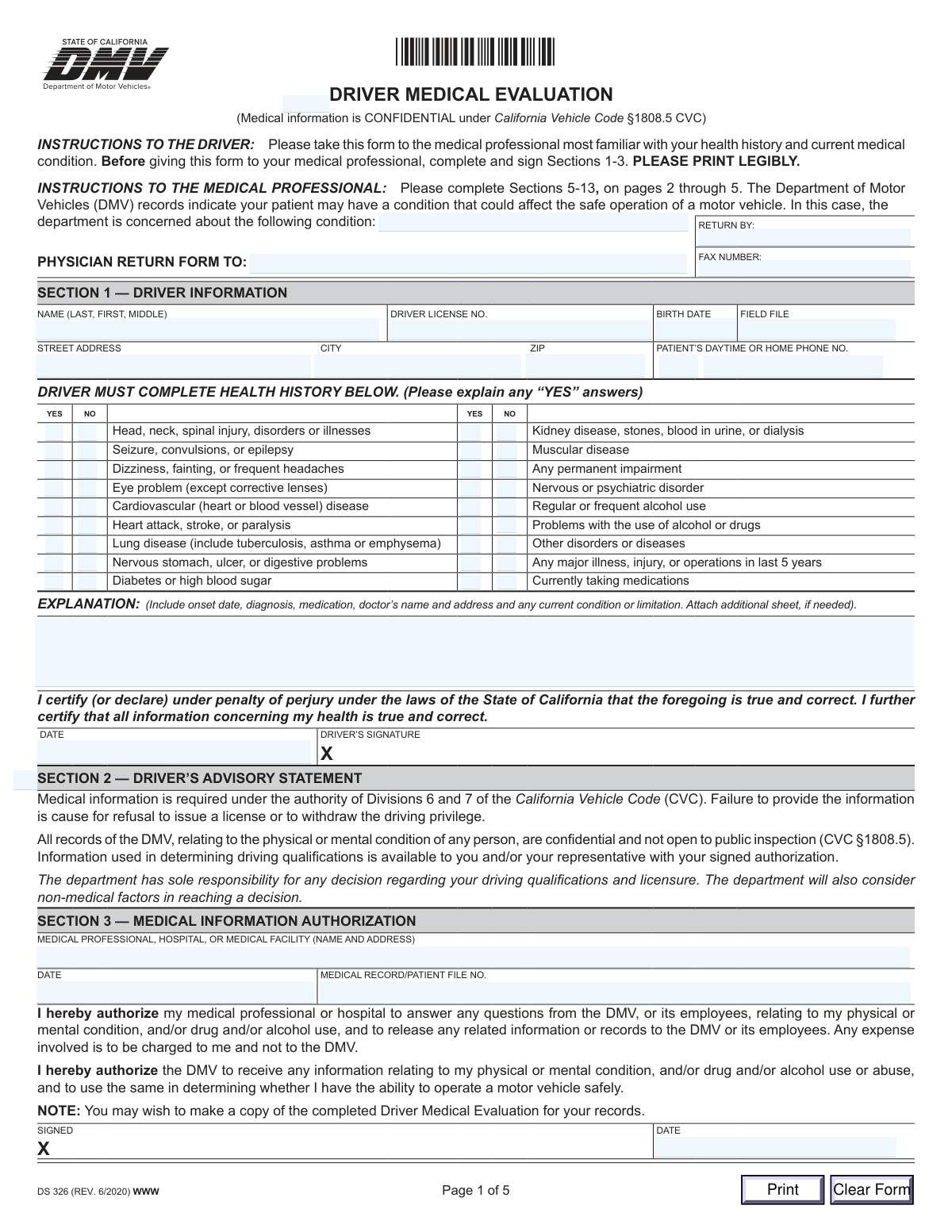
| 1. | California Form DS 326, Driver Medical Evaluation | 5 | Complex 72 |
| 2. | California Participating Physician Application | 10 | Very Complex 85 |
| 3. | California Participating Practitioner Application | 15 | Very Complex 85 |
| 4. | State of California Form SOC 321, Request for Order and Consent - Paramedical Services | 2 | Moderate 57 |
- Enterprise-grade security & data encryption
- 99%+ accuracy powered by AI
- 1,000+ forms from all industries
- Complete forms in under 60 seconds
How to Choose the Right Form
With only one form in this category, choosing is straightforward — but understanding when and how to use it is what matters most.
Who Should Use the California Participating Practitioner Application (CPPA)?
The California Participating Practitioner Application (CPPA) is designed for licensed healthcare practitioners who need to credential or recredential with California health plans and provider organizations. It's the right form if you are:
- A new practitioner applying to join a California health plan network for the first time (initial credentialing)
- An existing participating practitioner whose credentialing period is expiring and needs to reapply (recredentialing)
- A provider working with multiple California health plans, since the CPPA is a standardized HICE form accepted across many organizations — meaning you typically only need to complete one application
What You'll Need Before You Start
The CPPA is comprehensive, so gathering the following ahead of time will save you significant effort:
- Personal demographics and practice/billing details
- Education, training, and residency records
- State licensure numbers and certifications
- Hospital privileges and affiliation history
- Professional liability (malpractice) insurance details
- Peer references and work history
If you have any professional liability actions to disclose, be prepared to complete Addendum B. All practitioners should review Addendum A (Practitioner Rights).
Tips for Completing This Form
- Accuracy is critical — omissions or inconsistencies can delay or derail your credentialing approval
- If you received a non-fillable PDF version, tools like Instafill.ai can convert it into an interactive form and use AI to help you fill it out quickly and correctly
Bottom line: if you're a California practitioner seeking health plan participation, the CPPA is your form.
Form Comparison
| Form | Purpose | Who Files It | When to Use |
|---|---|---|---|
| California Participating Practitioner Application (CPPA) | Standardized credentialing and recredentialing across CA health plans | Licensed practitioners seeking network participation in California | Initial credentialing or periodic recredentialing with CA health plans |
Tips for California medical forms
The CPPA requests detailed information across many sections — including license numbers, DEA certificates, malpractice coverage dates, and training program details. Having all your documents in one place before you begin will prevent incomplete submissions and reduce back-and-forth with health plans.
Credentialing organizations cross-check your application against primary sources, so any inconsistency — such as mismatched dates between your work history and training history — can trigger delays or denials. Double-check that names, dates, and license numbers appear exactly the same way throughout the entire form.
The CPPA typically requires a complete, uninterrupted work and training history. Any gap of 30 days or more may need to be explained, so account for all periods including leaves of absence, locum tenens work, or time between positions to avoid credentialing holds.
If you have any professional liability actions, malpractice claims, or settlements in your history, Addendum B must be completed with full and accurate details. Incomplete or vague explanations are a common reason credentialing is delayed, so provide clear timelines and outcomes for each incident.
AI-powered tools like Instafill.ai can complete the California Participating Practitioner Application quickly and accurately, saving you significant time especially if you're credentialing with multiple health plans. Your data stays secure throughout the process, making it a practical solution for busy practitioners managing complex paperwork.
Since the CPPA is accepted by multiple California health plans, a completed and up-to-date master copy allows you to reuse or adapt it for different organizations without starting from scratch. Store it securely and update it whenever your license, address, or coverage information changes.
The CPPA includes extensive attestation and release statements that carry legal weight — signing without reading them carefully can create liability. Take time to understand what you are certifying, particularly regarding malpractice history, license sanctions, and hospital privilege actions.
Credentialing and recredentialing cycles can take weeks to process, and a lapse in your participation status can affect your ability to see patients and receive reimbursement. Start the recredentialing process early and confirm receipt with the health plan to avoid any gap in your provider status.
Frequently Asked Questions
The CPPA is a standardized credentialing application developed through the Health Industry Collaboration Effort (HICE) that is accepted by multiple California health plans and provider organizations. It consolidates the credentialing process so practitioners can submit one application to be evaluated by several participating payers and networks.
Healthcare practitioners seeking to join or renew participation with California health plans, medical groups, or provider networks typically need to complete the CPPA. This includes physicians, surgeons, and other licensed practitioners applying for initial credentialing or going through the recredentialing process.
The CPPA requires comprehensive information including personal demographics, practice and billing details, education and training history, state licensure and certifications, hospital privileges and affiliations, peer references, work history, and professional liability coverage. Applicants may also need to complete Addendum A (Practitioner Rights) and Addendum B (Professional Liability Action Explanation) depending on their circumstances.
Unlike health plan-specific credentialing applications, the CPPA is a unified, standardized form accepted across multiple California health plans and provider organizations. This means practitioners can potentially use a single completed application when applying to participate with several different networks, reducing redundant paperwork.
Practitioners should submit the CPPA when applying for initial participation with a California health plan or provider network, or when they are due for recredentialing with an existing network. It is important to submit well in advance of any deadlines, as the credentialing review process can take several weeks.
The completed CPPA is submitted directly to the specific health plan, medical group, or provider organization you are seeking to join or renew participation with. Each organization may have its own submission instructions, so it is best to confirm the preferred delivery method — whether electronic or by mail — with the credentialing department of the receiving organization.
Omissions or inconsistencies on the CPPA can delay the credentialing review process or result in denial or termination of participation. It is critical to review all sections carefully before submission and ensure that all information is accurate, complete, and consistent with your supporting documentation.
Yes — AI-powered tools like Instafill.ai can fill out the CPPA and similar California medical forms in under 30 seconds by accurately extracting and placing data from your source documents. This significantly reduces the time spent on manual data entry and helps minimize errors that could delay the credentialing process.
Manually completing the CPPA can take considerable time due to the volume of detailed information required across multiple sections. However, using AI-assisted tools like Instafill.ai, the form can be populated in under 30 seconds by automatically pulling relevant data from your existing documents, leaving you to review and finalize rather than type everything from scratch.
The CPPA may be distributed as a non-fillable PDF in some cases, which can make completion more cumbersome. Services like Instafill.ai can convert non-fillable PDF versions of the CPPA into interactive fillable forms, making the process more efficient for practitioners completing the application digitally.
Submitting the CPPA initiates the credentialing review process, but approval is not guaranteed and is determined by each individual health plan or provider organization based on their own criteria. Practitioners should ensure all submitted information is accurate and complete to give their application the best chance of approval.
Glossary
- Form Complexity Index
- Instafill’s 0–100 measure of how much effort a form takes to complete, calculated deterministically from the form’s own structure rather than estimated. It combines the number of fillable fields (the largest factor), how difficult those fields are to complete based on their type, the number of pages that contain fields, the amount of conditional “fill-only-if” logic, and how many sections the form is divided into, then adds modifiers for tables and repeating lists, bundled instruction pages, and dense page layouts. A higher score means the form is harder to fill out by hand. The forms in this category have a median Form Complexity Index of 85/100 (Very Complex). See exactly how it is calculated.
- Credentialing
- The process by which health plans and organizations verify a healthcare practitioner's qualifications, training, licensure, and professional history before allowing them to provide care within their network.
- Recredentialing
- A periodic re-evaluation (typically every two to three years) of a practitioner's credentials to confirm they remain qualified and in good standing with a health plan or provider organization.
- CPPA (California Participating Practitioner Application)
- A standardized credentialing application used by multiple California health plans and provider organizations to streamline the process of evaluating practitioners for network participation.
- HICE (Health Industry Collaboration Effort)
- A California initiative that created a unified, standardized application form to reduce the administrative burden on practitioners who would otherwise need to complete separate credentialing applications for each health plan.
- Hospital Privileges
- Formal authorization granted by a hospital or medical facility that allows a practitioner to admit patients, perform specific procedures, or provide care within that facility.
- Professional Liability Coverage
- Malpractice insurance that protects a healthcare practitioner against claims of negligence or harm caused to patients; health plans typically require proof of active coverage during credentialing.
- Attestation
- A signed declaration within a credentialing application where the practitioner certifies that all provided information is accurate, complete, and truthful, and acknowledges the consequences of misrepresentation.
- NPI (National Provider Identifier)
- A unique 10-digit identification number issued by the federal government to healthcare providers, required on credentialing applications and insurance billing documents.
- DEA Number
- A registration number issued by the Drug Enforcement Administration that authorizes a practitioner to prescribe controlled substances; typically required on credentialing applications.
- Peer References
- Licensed healthcare professionals who can vouch for a practitioner's clinical competence and professional conduct, typically required as part of the credentialing application process.