Fill out child custody forms
with AI.
Child custody forms are the fundamental legal documents used to establish parental rights, visitation schedules, and the overall well-being of children during family court proceedings. These forms provide a structured way for parents and guardians to present their requests to the court, ensuring that there is a clear plan for where a child will live and how major decisions regarding their upbringing will be made. Whether you are initiating a new custody case or seeking to modify an existing arrangement, these documents are essential for protecting your legal interests and providing stability for your family.
By continuing, you acknowledge Instafill's Privacy Policy and agree to get occasional product update and promotional emails.
About child custody forms
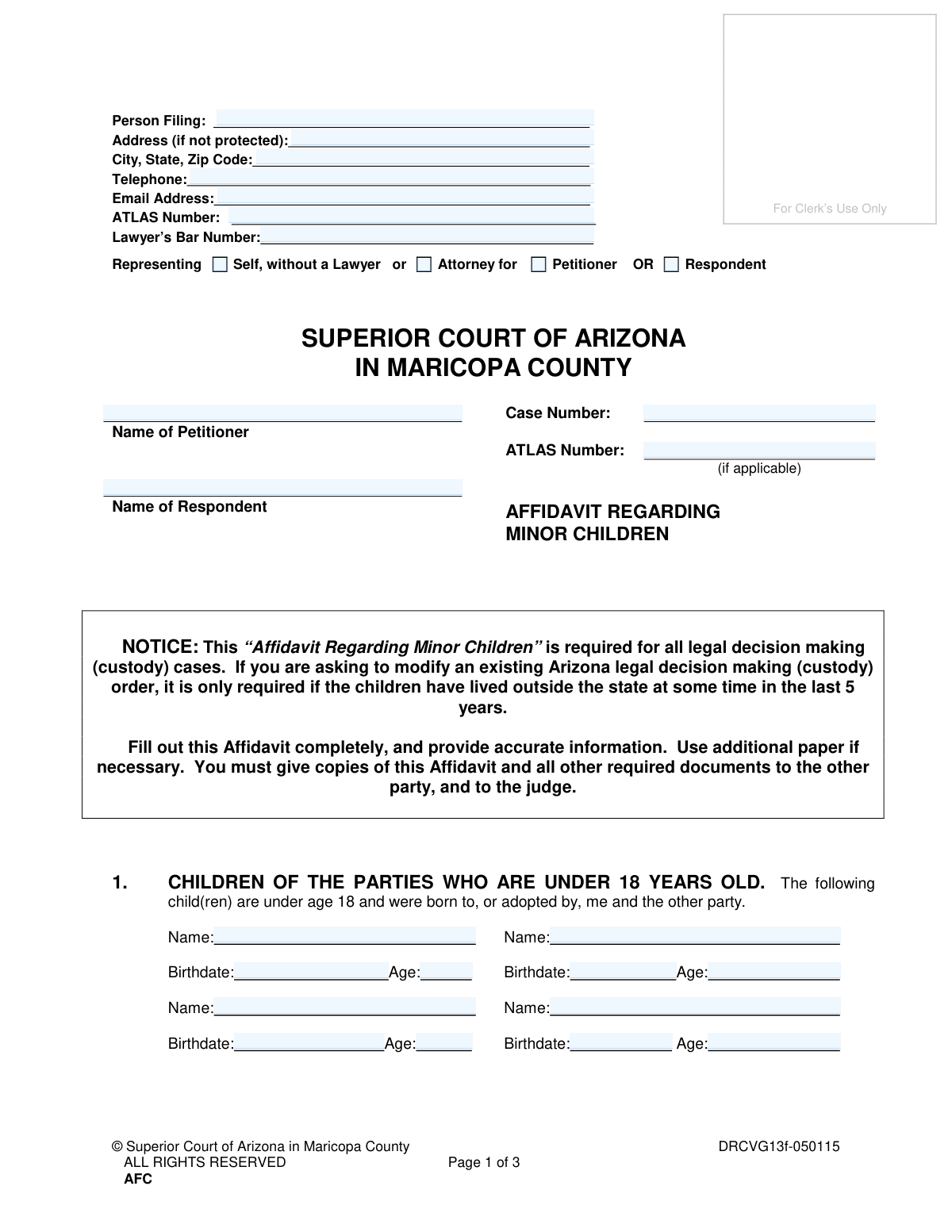
Typically, these forms are required by parents navigating divorce, legal separation, or paternity actions. For instance, the UCCJEA Affidavit is often mandatory to verify a child's residential history and determine court jurisdiction, while a Safety-Focused Parenting Plan is used when specific protections are needed to ensure a child's security. Other documents, such as the Child Custody and Visitation Application Attachment (FL-341(E)), allow parents to propose specific, detailed parenting time schedules. Because these forms require precise information, accuracy is paramount to avoid delays in the legal process. Tools like Instafill.ai use AI to fill these forms in under 30 seconds, handling sensitive data accurately and securely to save you time during a challenging period.
Every form on this page can be completed without typing. Instafill is form filling software that reads a PDF and fills it for you — including flat and scanned documents that carry no fillable fields at all.
Forms in This Category
The forms in this category have a median Form Complexity Index of 51/100 (Moderate), measured across 24 forms by field count, input difficulty, length, conditional logic and structure. See how it is calculated.
- Enterprise-grade security & data encryption
- 99%+ accuracy powered by AI
- 1,000+ forms from all industries
- Complete forms in under 60 seconds
How to Choose the Right Form
Navigating child custody can be complex, and selecting the correct legal document depends heavily on your location and the specific safety needs of your family. Use this guide to identify which form applies to your current situation.
Florida Custody Requirements
If your legal proceedings are taking place in Florida, you will likely need one or more of the following documents based on your case status:
- Standard Mandatory Filing: In almost every Florida case involving parental responsibility or time-sharing, you must file the Florida Supreme Court Approved Family Law Form 12.902(d), Uniform Child Custody Jurisdiction and Enforcement Act (UCCJEA) Affidavit. This form establishes the child's residency history and confirms the court's jurisdiction.
- Enforcing Out-of-State Orders: If you have an existing custody order from a different state and need Florida authorities to recognize and enforce it—particularly in emergency situations where a child must be recovered—use Florida Supreme Court Approved Family Law Form 12.941(a), Petition for Enforcement of Out-of-State Custody Decree.
- Safety Concerns: If the case involves risks such as domestic violence, child abuse, or substance abuse, choose Form 12.995(c), Safety-Focused Parenting Plan. This form is specifically designed to create restricted or supervised visitation schedules to protect the minor children.
California Custody Applications
If you are filing for custody or visitation within the California court system, the requirements differ from Florida:
- Detailed Visitation Proposals: Use Form FL-341(E), Child Custody and Visitation (Parenting Time) Application Attachment to propose specific legal and physical custody arrangements. This form is essential for detailing a comprehensive schedule and addressing unique circumstances like travel restrictions or holiday rotations.
By selecting the form that matches your state and specific safety requirements, you can ensure your custody requests are clearly communicated to the court.
Form Comparison
| Form | Primary Purpose | State Jurisdiction | Key Feature |
|---|---|---|---|
| Florida Supreme Court Approved Family Law Form 12.902(d), Uniform Child Custody Jurisdiction and Enforcement Act (UCCJEA) Affidavit | Establishes court jurisdiction for custody cases | Florida | Details child's 5-year residency history |
| Florida Supreme Court Approved Family Law Form 12.941(a), Petition for Enforcement of Out-of-State Custody Decree and for Order to Pick Up Minor Child(ren) | Enforces custody orders from other states | Florida | Requests immediate enforcement or child pickup |
| Form 12.995(c), Safety-Focused Parenting Plan | Creates a plan for high-risk safety situations | Florida | Focuses on supervised visits and safety rules |
| Form FL-341(E), Child Custody and Visitation (Parenting Time) Application Attachment | Proposes specific custody and visitation orders | California | Detailed schedule for parenting time and visits |
Tips for child custody forms
When completing the UCCJEA Affidavit, you must list every address where the child has lived for the past five years, including the names of the people they lived with. Incomplete histories are a common reason for court delays, as the judge needs this data to confirm they have the legal authority to rule on your case.
Avoid using vague language like 'as agreed upon' in your parenting plans. Instead, specify exact start and end times, transition locations, and how holidays will rotate each year to prevent future misunderstandings and ensure the order is enforceable by local authorities.
Managing multiple legal documents can be overwhelming, but AI-powered tools like Instafill.ai can complete these forms in under 30 seconds with high accuracy. These tools handle the complex formatting for you while ensuring your data stays secure throughout the entire process.
If you are filing a petition to enforce a custody decree from another state, always attach a certified copy of the original order. Florida and California courts require this official documentation to verify the existing ruling before they can issue an order to pick up a minor child.
When using safety-focused forms, clearly define the parameters for supervised visitation, including the specific supervisor's name and the designated exchange location. Explicitly stating these boundaries helps the court provide the necessary protections for children in high-conflict or high-risk situations.
Double-check that the spelling of names, dates of birth, and case numbers are identical on every form in your packet. Discrepancies between a UCCJEA Affidavit and a Parenting Plan can cause administrative errors that may require you to refile and pay additional fees.
Keep digital copies of every form you submit, along with proof of service for the other party. Having an organized folder of your filed documents allows you to quickly reference specific clauses during hearings or when discussing the case with legal professionals.
Frequently Asked Questions
Child custody forms are legal documents used to establish or modify the living arrangements, visitation schedules, and decision-making responsibilities for minor children. They provide the court with the necessary information to make decisions based on the best interests of the child.
The correct form depends on your specific goal, such as starting a new custody case, enforcing an existing order from another state, or creating a safety-oriented parenting plan. For example, if you need to document where a child has lived for the last five years to establish jurisdiction, you would typically use a UCCJEA affidavit.
The Uniform Child Custody Jurisdiction and Enforcement Act (UCCJEA) Affidavit tracks a child's residential history and any other ongoing custody proceedings. It is mandatory because it helps the court determine if it has the legal authority to hear the case and ensures that no other court is currently making conflicting orders regarding the same child.
A safety-focused parenting plan is used when there are concerns about a child's well-being due to issues like domestic violence, substance abuse, or neglect. These forms include specific provisions for supervised visitation or restricted contact to ensure the child remains protected during time-sharing.
Yes, you can use AI tools like Instafill.ai to complete child custody forms efficiently. These tools can extract relevant data from your source documents and place it accurately into the required fields in under 30 seconds, significantly reducing the time spent on manual data entry.
While manual completion can take several hours due to the detailed information required, using an AI-powered service like Instafill.ai allows you to fill these forms in less than 30 seconds. This ensures high accuracy and helps you prepare your legal documents much faster.
If you have a custody order from one state but the child or the other parent is now in a different state, you must file a petition to have the new state recognize and enforce that order. This process ensures that the original custody terms are upheld and legally binding across state lines.
Generally, child custody forms must be filed with the clerk of the circuit court in the county where the child resides or where the original custody order was issued. Many jurisdictions now allow for electronic filing, but you should check with your local court clerk for specific submission requirements.
You are permitted to fill out and file these forms yourself as a self-represented litigant. However, because child custody matters are legally complex, many people choose to have a legal professional review their completed forms to ensure they comply with local laws and accurately reflect the desired parenting arrangements.
These applications usually require details about legal custody, physical custody, and a specific schedule for holidays, weekends, and school breaks. Forms like the FL-341(E) also allow you to add specific attachments for unique travel restrictions or supervised visitation requirements.
No, child custody forms are usually specific to the state or county where the case is being heard. For instance, Florida Supreme Court forms are designed for Florida courts, while FL-series forms are specific to California; you must ensure you are using the version approved by the jurisdiction where you are filing.
Many child custody documents, particularly affidavits like the UCCJEA, require a signature in the presence of a notary public or a deputy clerk. You should check the signature block of each specific form to see if notarization is mandatory before you attempt to file it with the court.
Glossary
- Form Complexity Index
- Instafill’s 0–100 measure of how much effort a form takes to complete, calculated deterministically from the form’s own structure rather than estimated. It combines the number of fillable fields (the largest factor), how difficult those fields are to complete based on their type, the number of pages that contain fields, the amount of conditional “fill-only-if” logic, and how many sections the form is divided into, then adds modifiers for tables and repeating lists, bundled instruction pages, and dense page layouts. A higher score means the form is harder to fill out by hand. The forms in this category have a median Form Complexity Index of 51/100 (Moderate). See exactly how it is calculated.
- UCCJEA
- The Uniform Child Custody Jurisdiction and Enforcement Act is a law used across most states to determine which court has the legal authority to make decisions about a child's custody, especially when parents live in different states.
- Parenting Plan
- A formal document that outlines how parents will share responsibilities for their child, including schedules for daily care, holidays, and how major decisions regarding education or health will be made.
- Legal Custody
- The right and responsibility of a parent to make significant decisions about a child's welfare, such as where they go to school, what medical treatments they receive, and their religious upbringing.
- Physical Custody
- A term describing which parent the child lives with on a day-to-day basis and who is responsible for the child's immediate physical needs.
- Time-sharing
- A modern legal term used to describe the specific schedule and duration of time a child spends with each parent, replacing the older concept of 'visitation.'
- Supervised Visitation
- A custody arrangement where a parent is only allowed to see their child in the presence of a neutral third party to ensure the child's safety and well-being.
- Affidavit
- A written statement of facts confirmed by an oath or affirmation, used as evidence in court to verify information like a child’s residence history over the last five years.
- Jurisdiction
- The specific power or authority of a court to hear a case and make legal judgments, which in custody cases is usually determined by where the child has lived recently.