Fill out court response forms
with AI.
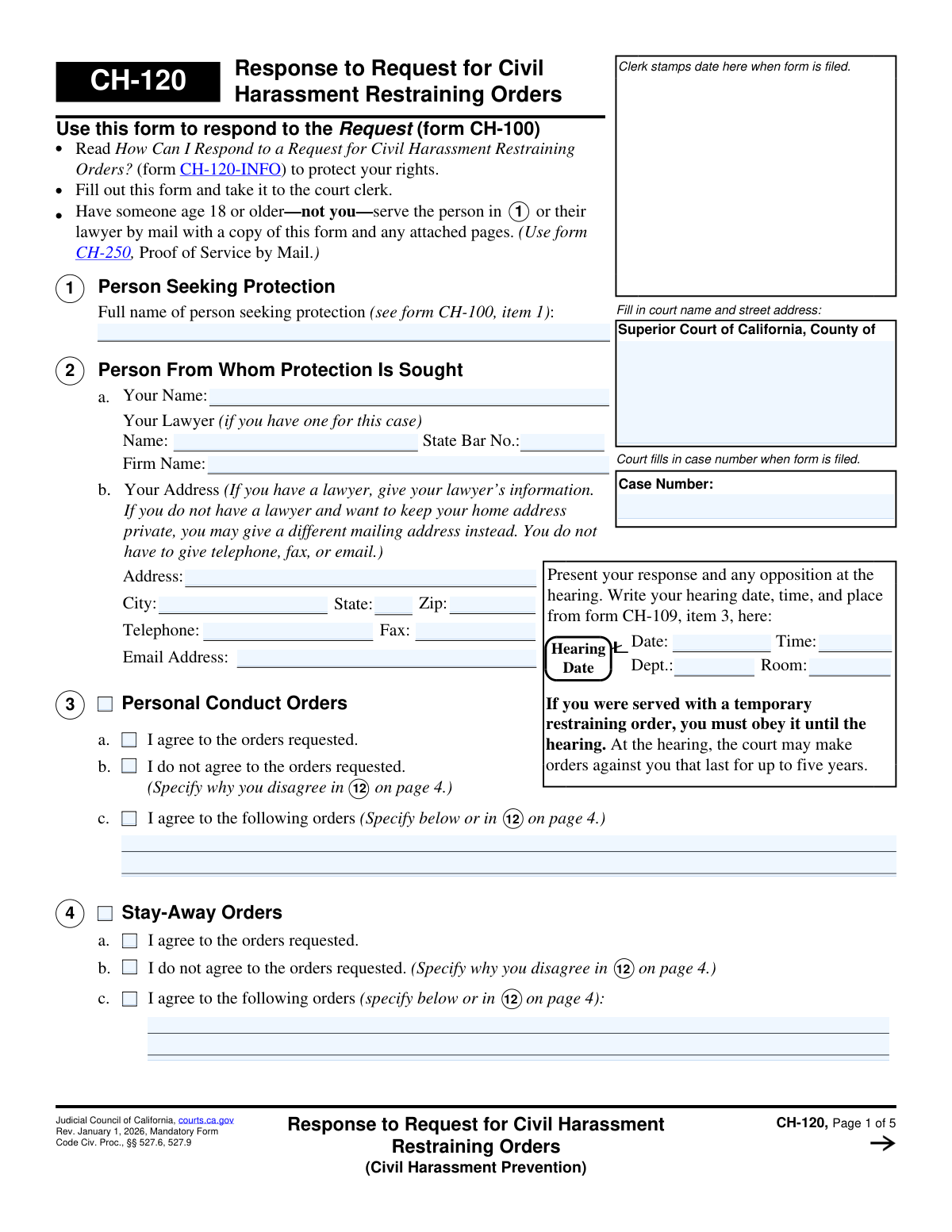
Court response forms are the formal documents used to reply to a legal complaint or summons. In the context of civil litigation, failing to respond within the court's strict deadlines can lead to a default judgment, meaning the other party wins by default. These forms allow a defendant to address specific allegations, provide their side of the story, and assert affirmative defenses that might protect them from liability. This ensures that the judicial process remains fair and that all parties have their positions officially recorded.
By continuing, you acknowledge Instafill's Privacy Policy and agree to get occasional product update and promotional emails.
About court response forms
This category is essential for individuals or business owners who have been served with a lawsuit and must respond to the court. For example, Michigan court forms like the MC 03 Answer are used to systematically admit or deny each claim made by a plaintiff. Navigating the legal system is often stressful, and these standardized civil court forms provide a structured way to ensure your legal rights are preserved and that the court has a clear record of your defense before a case proceeds to trial or settlement.
Completing these documents accurately is critical, as technical errors can have significant legal consequences. To simplify the process, tools like Instafill.ai use AI to fill these forms in under 30 seconds, ensuring data is handled securely and precisely. This automated approach serves as a practical time-saver, helping you meet tight filing deadlines without the manual effort of drafting every response from scratch.
Every form on this page can be completed without typing. Instafill is form filling software that reads a PDF and fills it for you — including flat and scanned documents that carry no fillable fields at all.
Forms in This Category
The forms in this category have a median Form Complexity Index of 37/100 (Basic), measured across 29 forms by field count, input difficulty, length, conditional logic and structure. See how it is calculated.
- Enterprise-grade security & data encryption
- 99%+ accuracy powered by AI
- 1,000+ forms from all industries
- Complete forms in under 60 seconds
How to Choose the Right Form
Responding to a Civil Lawsuit in Michigan
When you are served with a summons and complaint in a Michigan court, the clock starts ticking. Failing to file a formal response can result in a default judgment, which means the plaintiff wins automatically. To protect your legal rights, you must provide a written response that addresses every allegation made against you.
When to Use Form MC 03, Answer (Civil)
Form MC 03, Answer (Civil) is the standard, official document used by defendants in Michigan District and Circuit Courts to respond to general civil lawsuits. This includes common legal disputes such as contract disagreements, property damage, or personal injury cases.
You should choose this form if:
- You have been named as a defendant in a civil case.
- You need to respond to a complaint paragraph by paragraph.
- You want to assert affirmative defenses to defeat the plaintiff's claims.
Key Components of Your Response
Using Form MC 03 allows you to respond to the plaintiff's claims in three specific ways for each numbered paragraph in their complaint:
- Admit: You agree that the specific statement is true.
- Deny: You disagree with the statement and intend to contest it in court.
- Lack of Knowledge: You do not have enough information to know if the statement is true or false, which has the legal effect of a denial.
Important Considerations
- Deadlines: In Michigan, you generally have 21 days to file your answer if you were served in person, or 28 days if you were served by mail or outside the state.
- Affirmative Defenses: Form MC 03 includes a dedicated section for affirmative defenses. These are critical legal arguments—such as the statute of limitations or prior payment—that can result in the case being dismissed even if the plaintiff's initial allegations are true.
- Accuracy: Ensure all case numbers and party names match the summons exactly. Using Instafill.ai helps you generate a clean, professional PDF that meets court standards and is ready for filing with the court clerk.
Form Comparison
| Form | Purpose | Who Files It | Key Actions | Jurisdiction |
|---|---|---|---|---|
| Form MC 03, Answer (Civil) | To provide a formal legal response to allegations in a civil complaint. | The defendant or their legal representative in a civil lawsuit. | Admitting, denying, or claiming lack of knowledge for each specific allegation. | Used within Michigan District or Circuit Courts for civil proceedings. |
Tips for court response forms
When filling out Michigan civil response forms like MC 03, you must respond to every numbered paragraph in the plaintiff's complaint. Failing to specifically admit, deny, or state a lack of knowledge for an allegation may be legally interpreted by the court as an admission of that fact.
Don't just deny the claims against you; use the response form to list affirmative defenses such as the statute of limitations or prior payment. If you do not raise these defenses in your initial answer, you may be barred from using them later in your defense.
AI-powered tools like Instafill.ai can complete these complex court forms in under 30 seconds with high accuracy. This is a practical time-saver for those dealing with multiple legal documents, and your sensitive data stays secure and private during the entire process.
While Michigan uses standardized forms, individual district and circuit courts may have different requirements for electronic filing versus physical submission. Check the specific court's website where the case is pending to ensure you follow their preferred delivery and signature methods.
Filing your response with the court clerk is only the first step; you must also provide a copy to the plaintiff or their attorney. Ensure you complete the proof of service section to document that the other party was properly notified, which prevents a default judgment against you.
Always keep a copy of your completed and signed response for your own files. If filing in person, ask the clerk to 'date-stamp' your copy so you have physical evidence that the form was submitted before the legal deadline.
Frequently Asked Questions
A court response form, such as an Answer, is a legal document used by a defendant to address the allegations made in a lawsuit. It allows you to admit or deny specific claims and present your side of the story to the court to prevent a default judgment.
You need to file a response form if you have been served with a summons and a complaint in a civil case. This form is your primary way to tell the court that you intend to defend yourself against the claims being made.
Deadlines vary depending on how you were served, but defendants in Michigan typically have 21 to 28 days to file a response. It is critical to check the specific date on your summons to ensure you do not miss the filing window.
Yes, AI tools like Instafill.ai can fill out court response forms in under 30 seconds. These tools accurately extract data from your source documents and place it into the correct fields, reducing the risk of manual entry errors.
Using automated platforms, you can complete complex court documents almost instantly. AI-powered services like Instafill.ai can process and populate form fields in less than 30 seconds by reading the relevant data from your case files.
Completed forms must generally be filed with the clerk of the court where the lawsuit was initiated. Many Michigan courts now offer electronic filing options, though some may still require physical copies to be mailed or delivered in person.
You will need the case number, the names of the parties involved, and the specific court location. Most importantly, you must provide a response to every numbered allegation in the plaintiff's complaint, stating whether you agree, disagree, or lack sufficient information.
While you are not required to have an attorney, many people choose to represent themselves 'pro se' using standard forms. However, if the case involves complex legal issues or significant financial risk, consulting with a legal professional is highly recommended.
If you do not file a response by the deadline, the plaintiff can request a default judgment. This means the court may grant the plaintiff everything they asked for in the complaint because you did not provide a legal defense.
While there is usually a fee for the person starting the lawsuit, some courts may charge a motion fee or a filing fee for certain types of responses. You should check the local court's fee schedule or ask the court clerk for current costs.
The correct form depends on the type of case and the court level. For general civil lawsuits in Michigan, Form MC 03 is the standard document used to answer a complaint and assert any affirmative defenses.
Affirmative defenses are facts or legal arguments that, if proven, can defeat the plaintiff's claim even if the allegations in the complaint are true. Common examples include the statute of limitations, payment of the debt, or lack of proper service.
Glossary
- Form Complexity Index
- Instafill’s 0–100 measure of how much effort a form takes to complete, calculated deterministically from the form’s own structure rather than estimated. It combines the number of fillable fields (the largest factor), how difficult those fields are to complete based on their type, the number of pages that contain fields, the amount of conditional “fill-only-if” logic, and how many sections the form is divided into, then adds modifiers for tables and repeating lists, bundled instruction pages, and dense page layouts. A higher score means the form is harder to fill out by hand. The forms in this category have a median Form Complexity Index of 37/100 (Basic). See exactly how it is calculated.
- Answer
- The formal written response filed by a defendant to address the allegations made in a plaintiff's complaint.
- Defendant
- The person, business, or entity that is being sued in a civil lawsuit.
- Plaintiff
- The person or entity who starts a lawsuit by filing a complaint against another party.
- Affirmative Defense
- A legal reason or set of facts that, if proven by the defendant, defeats or mitigates the plaintiff's claim even if the allegations are true.
- Allegation
- A formal statement of fact in a legal document that one party intends to prove in court.
- Service of Process
- The official delivery of legal documents, such as a summons and complaint, to the party being sued to notify them of the legal action.
- Counterclaim
- A claim made by the defendant against the plaintiff, essentially a separate lawsuit filed within the existing case.
- Proof of Service
- A formal document filed with the court that provides evidence that the legal papers were delivered to the opposing party in compliance with court rules.