Fill out investment fund forms
with AI.
Investment fund forms are essential documents used to manage the lifecycle of an investment, from initial onboarding to ongoing account maintenance. These forms, which include subscription agreements, application forms, and due diligence questionnaires, ensure that both the investor and the fund manager comply with strict financial regulations such as AML (Anti-Money Laundering), FATCA, and CRS. By standardizing the collection of personal data, tax residency, and source of wealth, these documents provide the legal framework necessary for participating in various financial vehicles across global markets.
By continuing, you acknowledge Instafill's Privacy Policy and agree to get occasional product update and promotional emails.
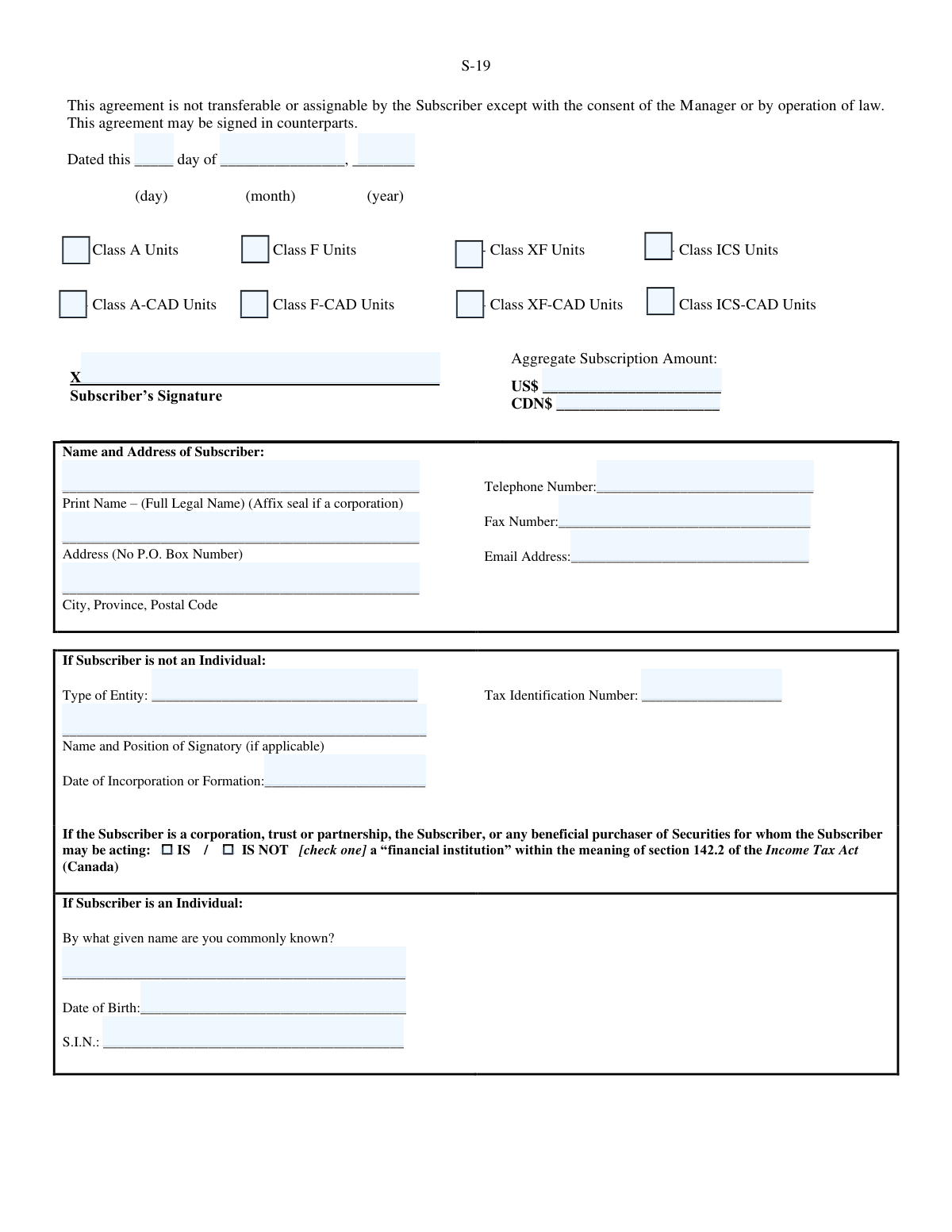
About investment fund forms
This category is primarily utilized by individual investors, financial advisors, and legal entities like trusts or corporate firms. You will often encounter these forms when opening a new account with a major provider like BlackRock or Fidelity, or when applying for specialized positions in a Qualified Investor Hedge Fund. Whether you are authorizing an electronic funds transfer or completing a complex investor profile, these documents are the gateway to managing your capital effectively and meeting the suitability standards required by law.
Navigating the dense fields of a multi-page investment application can be tedious and prone to errors. Tools like Instafill.ai use AI to fill these forms in under 30 seconds, handling sensitive financial data accurately and securely to streamline the administrative process. This allows you to spend less time on manual data entry and more time focusing on your investment strategy.
Every form on this page can be completed without typing. Instafill is form filling software that reads a PDF and fills it for you — including flat and scanned documents that carry no fillable fields at all.
Forms in This Category
The forms in this category have a median Form Complexity Index of 63/100 (Complex), measured across 17 forms by field count, input difficulty, length, conditional logic and structure. See how it is calculated.
- Enterprise-grade security & data encryption
- 99%+ accuracy powered by AI
- 1,000+ forms from all industries
- Complete forms in under 60 seconds
How to Choose the Right Form
Initial Fund Subscriptions and Applications
If you are a new investor looking to enter a private market or common stock fund, you will typically need a "Subscription Agreement" or "Initial Application." These documents establish your identity and investor status. For example, the Alpine SPRIM™ Private Markets Fund Subscription Agreement and the Oxford Park Income Fund Investor Application are legally binding documents for first-time purchases. For general mutual funds, the Application Form Franklin Templeton Investment Funds or the Pomona Investment Fund Investor Initial Application are the standard starting points for opening an account.
Specialized Hedge Fund Applications
Hedge fund forms are highly specific, categorized by the type of investor and the liquidity terms. When selecting a Fundrock form, pay close attention to the following:
- Individual vs. Legal Entity: If you are investing as a person, select the Application Form: Individual Investor | Qualified Investor Hedge Fund. If you are investing through a company or trust, use the Application Form: Legal Entities | Retail Hedge Fund - Fundrock.
- Qualified vs. Retail: Ensure you choose the "Qualified" version (like the Fundrock Qualified Investor Hedge Fund Application Form) only if you meet high-net-worth regulatory thresholds.
- Liquidity: If the fund has specific withdrawal windows, select the version that matches, such as the Fundrock Application Form: Monthly Liquidity.
Managing Existing Accounts and Retirement
If you already have an account and need to make changes, look for maintenance or subsequent investment forms:
- Additional Deposits: Use the Pomona Investment Fund Investor Subsequent Application or the Hedge Fund Portfolios Additional Investment Form to add capital to an existing position.
- Account Maintenance: To change who owns the account, use the Fidelity Investments Change of Account Ownership. To link a bank account for transfers, use the Fidelity Investments Electronic Funds Transfer (EFT) Authorization Form.
- Retirement Accounts: Use the New York Life Investments Funds Individual Retirement Account Application specifically for establishing or managing IRAs.
Professional Due Diligence
For fund sponsors or manufacturers evaluating potential distribution partners, the Investment Funds Distributor Due Diligence Questionnaire is the appropriate tool to assess a distributor's legal structure, AML procedures, and operational capabilities.
Tips for investment fund forms
Many investment forms require detailed tax residency information to comply with international regulations like FATCA and CRS. Providing incorrect or incomplete tax identification numbers can lead to significant delays in account opening or unexpected tax withholdings.
Investment fund applications often require supplemental documents such as government IDs, proof of address, or entity registration papers. Having digital copies of these ready beforehand ensures you can complete the entire submission process without interruption when the form asks for them.
AI-powered tools like Instafill.ai can complete these multi-page investment forms in under 30 seconds with high accuracy while keeping your financial data secure. This is a significant time-saver for investors managing multiple fund applications or complex subscription agreements.
Fund managers often provide separate forms for individuals and legal entities like trusts or corporations. Double-check that you are using the correct version, as the regulatory requirements and beneficial ownership sections differ significantly between the two.
Some investment forms, particularly those involving fund transfers or ownership changes, may require a Medallion Signature Guarantee rather than a standard signature. Check the instructions early to see if you need to visit a financial institution in person to obtain this specialized stamp.
Errors in routing or account numbers are a common cause of failed investment subscriptions. Always verify your bank's specific instructions for wire transfers or EFTs, as these may differ from your standard checking account deposit details.
Private market and hedge fund forms often include sections to certify you as an Accredited Investor or Qualified Purchaser. Carefully review these criteria to ensure you meet the legal thresholds before signing, as these certifications are legally binding.
Frequently Asked Questions
Investment fund forms are legal documents used to establish a relationship between an investor and a fund manager. They are used to open new accounts, subscribe to specific share classes, authorize electronic fund transfers, or update ownership details for existing holdings.
These forms are required for any individual or legal entity, such as a trust, corporation, or partnership, looking to invest in mutual funds, hedge funds, or private equity. The specific form required depends on whether the investor is a retail client or a qualified institutional investor.
Yes, AI tools like Instafill.ai can fill out complex investment fund forms in under 30 seconds. The AI accurately extracts and places data from your source documents directly into the PDF, ensuring that legal names, tax IDs, and financial figures are entered correctly.
While manual entry for multi-page subscription agreements can take significant time, using an AI-powered service can complete the process in less than 30 seconds. This is particularly helpful for hedge fund and private market forms that require extensive personal and financial disclosures.
Individual application forms focus on personal data, tax residency, and employment information. Legal entity forms require details about the company or trust, its registration status, and information regarding the ultimate beneficial owners to comply with transparency regulations.
Most investment fund forms include sections for FICA, FATCA, and CRS compliance. These sections help the fund manager verify the identity of the investor and report tax residency information to the relevant authorities to prevent money laundering and tax evasion.
Qualified Investor forms are specifically for hedge funds or private placements that have higher entry requirements. You typically need these forms if you meet specific net worth or income thresholds defined by the fund's jurisdiction, indicating a higher level of financial sophistication.
A Subscription Agreement is a legally binding contract where an investor agrees to purchase a specific number of shares or units in a private fund at a set price. It includes detailed representations and warranties that the investor must sign to confirm they understand the risks and terms of the investment.
Subsequent application forms are used by existing investors who wish to increase their position in a fund they already own. Because the fund manager already has the investor's primary details on file, these forms are generally shorter and focus on the new investment amount and any updated financial information.
An EFT Authorization form allows you to link your external bank account to your investment account for seamless transfers. This is used to set up one-time or recurring deposits and withdrawals, often requiring your bank's routing and account numbers.
A Medallion Signature Guarantee is often required for high-value transactions or changes in account ownership, such as transferring shares to a new owner. It is a special certification stamp that guarantees the signature on the form is genuine and the signer has the legal capacity to execute the transaction.
Glossary
- Form Complexity Index
- Instafill’s 0–100 measure of how much effort a form takes to complete, calculated deterministically from the form’s own structure rather than estimated. It combines the number of fillable fields (the largest factor), how difficult those fields are to complete based on their type, the number of pages that contain fields, the amount of conditional “fill-only-if” logic, and how many sections the form is divided into, then adds modifiers for tables and repeating lists, bundled instruction pages, and dense page layouts. A higher score means the form is harder to fill out by hand. The forms in this category have a median Form Complexity Index of 63/100 (Complex). See exactly how it is calculated.
- Subscription Agreement
- A legally binding contract between a fund and an investor that outlines the terms of the investment and the number of shares or units being purchased.
- FATCA/CRS
- International tax reporting standards (Foreign Account Tax Compliance Act and Common Reporting Standard) used to identify and report the tax residency of account holders to prevent tax evasion.
- FICA/KYC
- Regulatory protocols (Financial Intelligence Centre Act and Know Your Customer) that require investment firms to verify the identity and source of funds of their clients to prevent money laundering.
- Qualified Investor
- An individual or entity that meets specific financial thresholds or professional experience, permitting them to invest in complex or higher-risk vehicles like hedge funds.
- Beneficial Owner
- The individual who ultimately owns or controls a legal entity, such as a company or trust, and who benefits from the assets held in that entity's name.
- Medallion Signature Guarantee
- A certification stamp provided by a financial institution that confirms the authenticity of a signature and the signer's legal authority to transfer securities.
- Electronic Funds Transfer (EFT)
- The digital movement of money from one bank account to another, commonly used to automate recurring investments or fund withdrawals.
- Power of Attorney
- A legal authorization included in some fund documents that grants the fund manager the right to act on the investor's behalf for specific administrative tasks.