Fill out reporting forms
with AI.
Reporting forms serve as the primary bridge between organizational activities and the regulatory bodies that oversee them. Whether it is a state health department monitoring patient safety or the IRS tracking foreign tax status, these documents ensure that critical information is standardized and recorded accurately. Compliance with these reporting mandates is essential for maintaining legal standing, avoiding financial penalties, and ensuring that public systems—from healthcare registries to tax withholding frameworks—operate with integrity and transparency.
By continuing, you acknowledge Instafill's Privacy Policy and agree to get occasional product update and promotional emails.
About reporting forms
These forms are typically utilized by professionals in highly regulated industries, including healthcare administrators, tax compliance officers, and financial auditors. For instance, entities frequently use the IRS Form W-8 series to establish tax status for international transactions, while clinics use Central Registry forms to coordinate patient care and prevent dual enrollment in treatment programs. Property owners and business managers also encounter these documents when reporting energy consumption or preparing for annual plan year audits. Because these situations often involve strict deadlines and complex data, precision is paramount to avoid processing delays or regulatory audits.
Managing a high volume of government and compliance requirements can be a significant administrative burden for any organization. Tools like Instafill.ai use AI to fill these forms in under 30 seconds, handling complex data accurately and securely to streamline your reporting workflow.
Every form on this page can be completed without typing. Instafill is form filling software that reads a PDF and fills it for you — including flat and scanned documents that carry no fillable fields at all.
Forms in This Category
The forms in this category have a median Form Complexity Index of 51/100 (Moderate), measured across 8 forms by field count, input difficulty, length, conditional logic and structure. See how it is calculated.
- Enterprise-grade security & data encryption
- 99%+ accuracy powered by AI
- 1,000+ forms from all industries
- Complete forms in under 60 seconds
How to Choose the Right Form
Navigating reporting requirements can be complex, as forms vary significantly based on industry, geographic location, and the regulatory body involved. To find the correct document, identify whether your reporting is for tax compliance, healthcare monitoring, or utility benchmarking.
International Tax and FATCA Compliance
If you are a foreign entity dealing with U.S.-sourced income or international banking regulations, you will likely need a tax certification form:
- Form W-8BEN-E (and the October 2021 Revision): Choose this if you are a foreign entity (not an individual) establishing your status as a beneficial owner to claim tax treaty benefits or comply with FATCA.
- Form W-8IMY (Rev. October 2021): Use this if you are acting as an intermediary, a flow-through entity, or a foreign branch, rather than the beneficial owner of the income.
- Selbstauskunft für Unternehmen und Organisationen: This self-certification is required for entities working with European financial institutions (like Deutsche Bank) to comply with both FATCA and the OECD’s Common Reporting Standard (CRS).
Healthcare and Registry Reporting
Healthcare providers and clinics must use specific forms to report patient data or adverse events to state agencies:
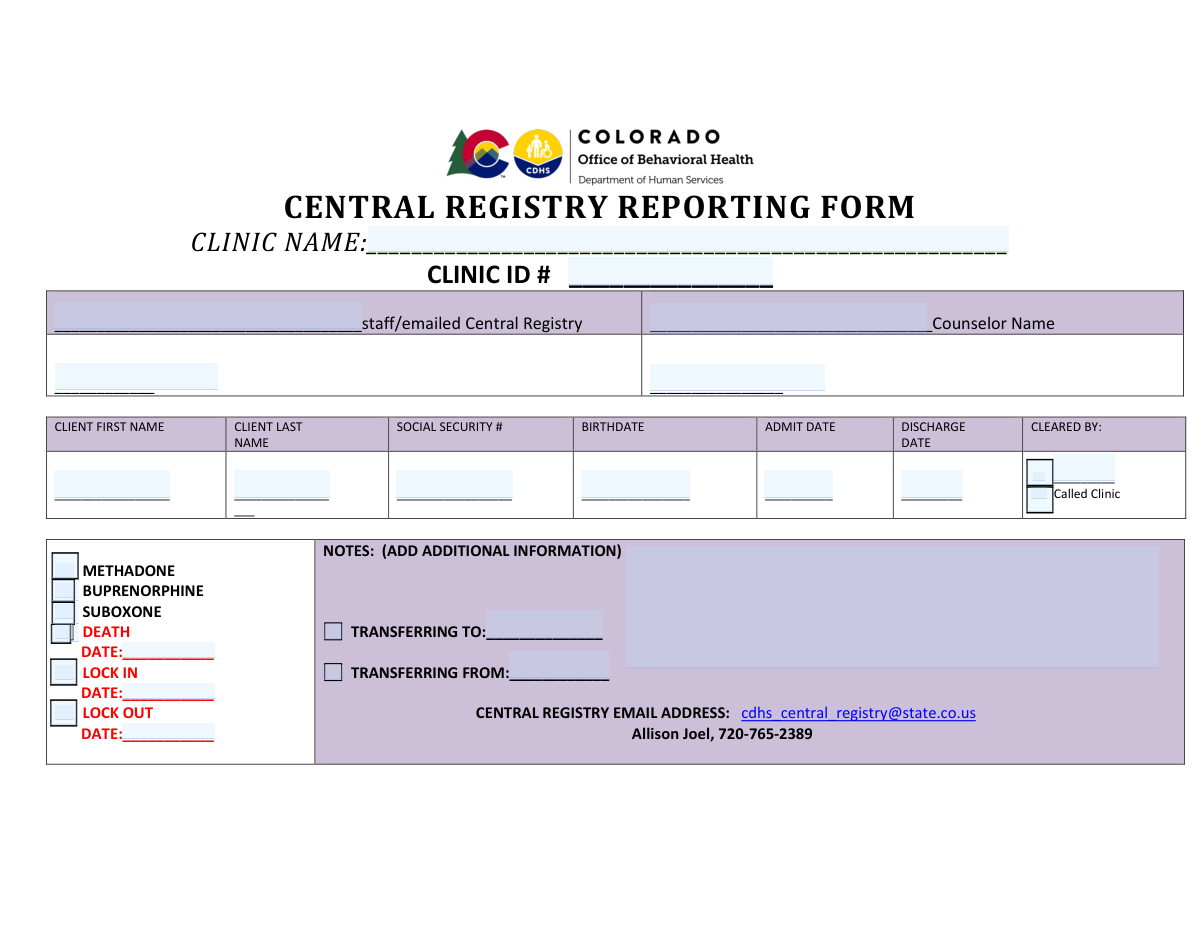
- Central Registry Reporting Form: Essential for substance abuse treatment clinics to report client admissions, discharges, and transfers to a state registry.
- DHCS 7107 (Provider Preventable Conditions): Required for California healthcare providers to report adverse medical events involving Medi-Cal patients for safety monitoring.
Financial Audits and Energy Data
Other reporting forms focus on corporate compliance and environmental benchmarking:
- Fidelity NetBenefits Auditor's Guide: Refer to this if you are an auditor or plan sponsor preparing for a Form 5500 retirement plan audit.
- Toronto Hydro Data Request Form: Use this if you are a property owner or agent in Ontario needing electricity usage data to comply with the Energy and Water Reporting and Benchmarking (EWRB) initiative.
Whether you are filing for the IRS or a local utility, Instafill.ai can help you complete these PDF forms accurately using AI, even if the original file is not interactive.
Form Comparison
| Form | Primary Purpose | Reporting Entity | Regulatory Context |
|---|---|---|---|
| Central Registry Reporting Form | Tracks client admission and discharge for substance abuse treatment programs. | Substance abuse treatment clinics and healthcare facilities. | State-level public health and treatment registry compliance. |
| DHCS 7107, Provider Preventable Conditions (PPC) Reporting Form | Reports adverse medical events involving Medi-Cal patients for safety monitoring. | California healthcare providers and medical facilities. | State Medicaid regulations and patient safety quality improvement. |
| Fidelity NetBenefits Auditor's Guide: An Overview of Fidelity's 2024 Plan Year Reporting Package | Provides instructions for auditing retirement plans and Form 5500 filings. | Independent auditors and retirement plan sponsors. | ERISA retirement plan auditing and financial reporting compliance. |
| Form W-8BEN-E, Certificate of Status of Beneficial Owner for United States Tax Withholding and Reporting (Entities) | Documents foreign entity status to determine U.S. tax withholding rates. | Non-U.S. corporations, partnerships, and other legal entities. | U.S. federal tax (IRS) and FATCA reporting requirements. |
| Form W-8BEN-E (Rev. October 2021), Certificate of Status of Beneficial Owner for United States Tax Withholding and Reporting (Entities) | Certifies beneficial ownership and FATCA status for foreign entities. | Non-U.S. entities receiving income from U.S. sources. | IRS tax withholding and international compliance standards. |
| Form W-8IMY (Rev. October 2021), Certificate of Foreign Intermediary, Foreign Flow-Through Entity, or Certain U.S. Branches for United States Tax Withholding and Reporting | Certifies status for foreign intermediaries receiving U.S. source income. | Foreign intermediaries, flow-through entities, or qualifying U.S. branches. | IRS Chapter 3 and Chapter 4 tax withholding regulations. |
| Selbstauskunft für Unternehmen und Organisationen U.S. Foreign Account Tax Compliance Act (FATCA) und Common Reporting Standard (CRS) der OECD | Self-certifies tax residency for international financial account reporting. | Companies and organizations with international financial accounts. | Global FATCA and OECD Common Reporting Standard (CRS). |
| Toronto Hydro Data Request Form: Reporting Energy Consumption | Requests electricity consumption data for building energy benchmarking. | Large building property owners or authorized agents. | Ontario Ministry of Energy benchmarking and reporting (EWRB). |
Tips for reporting forms
Many reporting forms, especially tax-related ones like the W-8BEN-E, require you to select a specific entity status from a complex list. Choosing the wrong category can lead to incorrect tax withholding or rejected filings, so consult your organizational documents or tax advisor before starting.
Ensure that the legal name, address, and identification numbers you provide match exactly with previously filed government or registry documents. Inconsistencies in basic data can trigger manual reviews or compliance audits that delay your processing time significantly.
AI-powered tools like Instafill.ai can complete these complex reporting forms in under 30 seconds with high accuracy. The data stays secure during the process, and the tool can even convert non-fillable PDF versions of registry forms into interactive, easy-to-complete formats.
Always save a time-stamped copy of your completed reporting forms and any supporting documentation, such as energy usage data or withholding statements. Having a centralized digital folder for these records makes responding to future inquiries or annual audits much simpler.
Many forms in this category, such as energy consumption reports or provider preventable conditions forms, are tied to specific calendar years or incident dates. Verify that you are using the correct version of the form for the specific reporting period to avoid compliance gaps.
Reporting forms often require a signature from an authorized representative or beneficial owner to be legally valid. Before submitting, ensure the person signing has the documented authority to bind the entity, preventing the need for time-consuming re-submissions.
Frequently Asked Questions
Reporting forms are standardized documents used to collect data for regulatory, tax, or monitoring purposes. They ensure that organizations and individuals comply with local and international laws by providing a clear record of specific activities, such as financial transactions, medical events, or resource usage.
These forms are generally used by businesses, healthcare providers, financial institutions, and foreign entities. Requirements depend on the industry and the specific regulation, such as clinics reporting to a state registry or foreign corporations documenting their tax status for U.S. withholding purposes.
Forms like the W-8BEN-E and W-8IMY are used by non-U.S. entities to certify their foreign status and claim tax treaty benefits. Filing these forms correctly is essential to establish eligibility for reduced withholding rates on U.S.-sourced income and to comply with FATCA requirements.
Clinical reporting forms, such as the DHCS 7107 or Central Registry forms, track patient safety events and treatment data. These documents help state agencies monitor the quality of care, prevent dual enrollment in treatment programs, and ensure compliance with healthcare payment regulations.
FATCA and CRS forms are required by financial institutions to determine the tax residency of their account holders. This data is used to identify and report financial accounts held by foreign tax residents to prevent offshore tax evasion and maintain global financial transparency.
Most reporting forms are submitted directly to the requesting entity, such as a state health department, a utility provider, or a financial institution. In the case of IRS W-8 forms, they are typically provided to the withholding agent or payer rather than being filed directly with the IRS.
Yes, you can use AI tools to complete various reporting and compliance forms efficiently. Platforms like Instafill.ai can accurately extract data from your source documents and place it into the correct fields in under 30 seconds, ensuring the information is formatted correctly.
While manual entry for complex reporting forms can be time-consuming, AI-powered services significantly speed up the process. Using Instafill.ai, most reporting forms can be completed in less than 30 seconds, which minimizes the risk of manual entry errors.
Property owners or authorized agents request energy consumption data to comply with government benchmarking initiatives, such as the EWRB in Ontario. This data allows for the annual reporting of electricity usage, which is necessary for monitoring environmental impact and building efficiency.
Incorrectly filing reporting forms can lead to financial penalties, delays in payments, or regulatory audits. For example, failing to provide a valid tax status form could result in a 30% withholding tax, while healthcare reporting errors might impact a provider's compliance status with state regulations.
Glossary
- Form Complexity Index
- Instafill’s 0–100 measure of how much effort a form takes to complete, calculated deterministically from the form’s own structure rather than estimated. It combines the number of fillable fields (the largest factor), how difficult those fields are to complete based on their type, the number of pages that contain fields, the amount of conditional “fill-only-if” logic, and how many sections the form is divided into, then adds modifiers for tables and repeating lists, bundled instruction pages, and dense page layouts. A higher score means the form is harder to fill out by hand. The forms in this category have a median Form Complexity Index of 51/100 (Moderate). See exactly how it is calculated.
- FATCA (Foreign Account Tax Compliance Act)
- A United States federal law that requires foreign financial institutions and other entities to report the assets and identities of U.S. persons to the IRS.
- Beneficial Owner
- The individual or entity that ultimately owns or controls an asset and is entitled to the income or benefits from it, regardless of whose name is on the legal title.
- Withholding Agent
- Any person or entity responsible for deducting and withholding taxes from payments made to a foreign person or entity and remitting those funds to the government.
- CRS (Common Reporting Standard)
- An international standard for the automatic exchange of financial account information between different countries to help prevent global tax evasion.
- Form 5500
- An annual report required by the Department of Labor and the IRS that provides details about the financial condition, investments, and operations of employee benefit plans.
- Chapter 3 and Chapter 4 Status
- Specific tax classifications used on IRS forms to determine the correct withholding rates for non-resident aliens (Chapter 3) and for compliance with FATCA (Chapter 4).
- Intermediary
- An entity, such as a bank or brokerage, that receives income on behalf of another person rather than for its own account.
- PPC (Provider Preventable Conditions)
- Specific medical errors or adverse events occurring in a healthcare facility that are considered reasonably preventable and must be reported to state health departments.
- Central Registry
- A centralized database used by government agencies to track specific information, such as patient enrollment in treatment programs, to prevent duplicate services or fraud.