Fill out residential property forms
with AI.
Residential property forms are the backbone of real estate transactions, ensuring that every detail of a home sale, rental, or appraisal is documented according to local and federal regulations. This category encompasses a wide range of essential documents, from purchase agreements that establish the legal terms of a sale to detailed property condition disclosures that protect both buyers and sellers by documenting known defects. These forms are critical for maintaining transparency and legal compliance throughout the lifecycle of a residential property.
By continuing, you acknowledge Instafill's Privacy Policy and agree to get occasional product update and promotional emails.
About residential property forms
These forms are typically needed by homeowners, real estate agents, property managers, and professional appraisers during key milestones in a property’s history. For instance, a seller in Oklahoma might use a Residential Property Condition Disclosure Statement to meet legal requirements, while a landlord or builder might utilize tax rebate forms, such as Form GST524, to recover costs on new rental properties. Whether you are navigating a complex mortgage underwriting process with a Small Residential Income Property Appraisal Report or finalizing a private sale, having the correct documentation ensures that the interests of all parties are legally protected.
Managing these extensive documents can be time-consuming, but tools like Instafill.ai use AI to fill these forms in under 30 seconds with high accuracy and security. By automating the data entry process, users can focus on the nuances of their real estate transactions rather than the administrative burden of paperwork.
Every form on this page can be completed without typing. Instafill is form filling software that reads a PDF and fills it for you — including flat and scanned documents that carry no fillable fields at all.
Forms in This Category
The forms in this category have a median Form Complexity Index of 75/100 (Complex), measured across 8 forms by field count, input difficulty, length, conditional logic and structure. See how it is calculated.
| Form Name | Pages | FCI | |
|---|---|---|---|
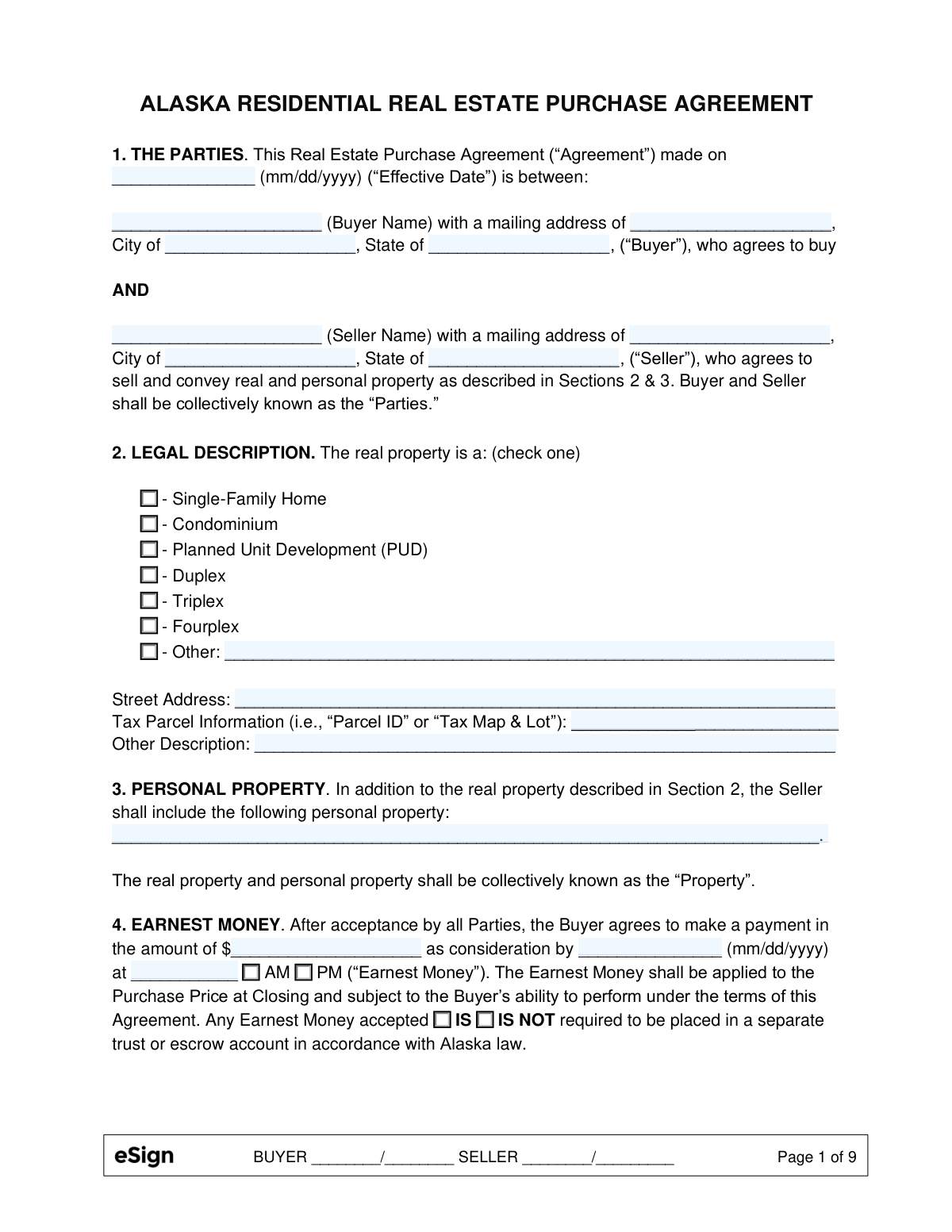
| 1. | Alaska Residential Real Estate Purchase Agreement | 9 | Complex 64 |
| 2. | Form 1025 / Form 72, Small Residential Income Property Appraisal Report | 8 | Very Complex 89 |
| 3. | Form GST524, GST/HST New Residential Rental Property Rebate | 12 | – |
| 4. | Oklahoma Appendix A, Residential Property Condition Disclosure Statement | 5 | Complex 76 |
| 5. | Oklahoma Real Estate Commission Property Data Form (Residential) | 3 | Moderate 60 |
| 6. | Oklahoma Real Estate Commission Residential Property Condition Disclosure Exemption Form (RPCD EXEMPTION FORM) | 1 | Basic 38 |
| 7. | Oklahoma Residential Property Condition Disclosure Statement (Appendix A) | 4 | Complex 75 |
| 8. | Oklahoma Residential Property Condition Disclosure Statement (APPENDIX A RPCD STATEMENT) | 4 | Complex 75 |
- Enterprise-grade security & data encryption
- 99%+ accuracy powered by AI
- 1,000+ forms from all industries
- Complete forms in under 60 seconds
How to Choose the Right Form
Buying and Selling Agreements
If you are initiating a home sale, the form you need depends on your location and role in the transaction. For those in the Pacific Northwest, the Alaska Residential Real Estate Purchase Agreement is the primary legally binding contract used to outline price, financing, and contingencies. If you are a seller in Oklahoma preparing to list a home, the Oklahoma Real Estate Commission Property Data Form (Residential) is used to provide your broker with the comprehensive structural and legal details required for marketing the property.
Seller Disclosures and Exemptions
In Oklahoma, transparency is legally mandated. Most sellers must complete the Oklahoma Residential Property Condition Disclosure Statement (Appendix A) to inform buyers of any known defects. However, if the transfer involves a court order, foreclosure, or a newly constructed home, you may instead need the Oklahoma Real Estate Commission Residential Property Condition Disclosure Exemption Form (RPCD EXEMPTION FORM) to certify that you are not required to provide a full disclosure statement.
Appraisals for Multi-Unit Properties
Lenders and professional appraisers dealing with small-scale investment properties (two to four units) should look for Form 1024 / Form 72, Small Residential Income Property Appraisal Report. This standardized document is required by Fannie Mae and Freddie Mac to evaluate the market value and income potential of multi-unit residential buildings.
Tax Rebates for Rental Properties
For landlords and builders of new or substantially renovated housing, Form GST524, GST/HST New Residential Rental Property Rebate is the essential document for recovering taxes paid. This is particularly relevant for those managing purpose-built rental housing who need to ensure compliance with tax regulations while maintaining affordability.
Whether you are disclosing property defects or finalizing a purchase, using Instafill.ai allows you to convert these PDF forms into interactive documents that can be completed accurately with AI assistance.
Form Comparison
| Form | Purpose | Who Files It | Key Information Included |
|---|---|---|---|
| Alaska Residential Real Estate Purchase Agreement | Establishes legal terms and conditions for a residential sale. | Buyers and sellers of residential property in Alaska. | Purchase price, financing details, contingencies, and closing dates. |
| Form 1025 / Form 72, Small Residential Income Property Appraisal Report | Determines market value for properties with 2-4 housing units. | Professional real estate appraisers for mortgage lenders. | Property condition, income potential, and comparable market data. |
| Form GST524, GST/HST New Residential Rental Property Rebate | Claims rebates for taxes paid on new rental properties. | Landlords and builders of residential rental housing. | GST/HST amounts paid and construction or purchase details. |
| Oklahoma Appendix A, Residential Property Condition Disclosure Statement | Discloses known property defects to potential home buyers. | Sellers of one or two residential dwelling units. | Structural integrity, appliance status, and known environmental hazards. |
| Oklahoma Real Estate Commission Property Data Form (Residential) | Provides comprehensive property data for marketing and listing. | Sellers and their licensed real estate brokers. | Legal descriptions, structural details, and specific listing terms. |
| Oklahoma Real Estate Commission Residential Property Condition Disclosure Exemption Form (RPCD EXEMPTION FORM) | Certifies that a property transfer is exempt from disclosure. | Sellers involved in foreclosures, court orders, or family transfers. | Legal justification for the exemption from standard disclosure requirements. |
| Oklahoma Residential Property Condition Disclosure Statement (Appendix A) | Informs buyers about material facts regarding the property's condition. | Residential sellers in Oklahoma real estate transactions. | Mechanical systems, plumbing, electrical status, and structural defects. |
| Oklahoma Residential Property Condition Disclosure Statement (APPENDIX A RPCD STATEMENT) | Documents the seller's knowledge of the home's current state. | Homeowners listing their residential property for sale. | Transparency regarding environmental hazards, safety, and legal encumbrances. |
Tips for residential property forms
Ensure that the legal description of the property, including lot and block numbers or tax IDs, matches exactly across all documents. Even a small typo in these identifiers can cause significant delays in closing or processing tax rebates.
When filling out property condition disclosures and listing data sheets, ensure all facts about the home's features and repairs are identical. Discrepancies between these forms can raise red flags for buyers or lenders and may lead to legal complications.
For forms like the GST/HST New Residential Rental Property Rebate, have all invoices and closing statements ready before you start. Having these figures organized ensures you claim the maximum eligible amount and simplifies the filing process.
When completing residential property condition disclosures, it is better to over-disclose than to omit a known issue. Providing a clear history of repairs helps protect sellers from post-sale legal disputes regarding the property's condition.
AI-powered tools like Instafill.ai can complete these forms in under 30 seconds with high accuracy, saving significant time for real estate professionals and homeowners alike. Your data stays secure during the process, providing a safe and efficient way to handle high-volume residential documentation.
For income-producing property forms like the Small Residential Income Property Appraisal Report, double-check the zoning and unit counts. Accurate income data is essential for lenders to determine the property's true market value and loan eligibility.
Frequently Asked Questions
Residential property forms are used to document legal agreements, disclose property conditions, and facilitate financial transactions like appraisals or tax rebates. They ensure that all parties—including buyers, sellers, lenders, and government agencies—have a standardized record of the property's status and the terms of the transaction.
The correct form depends on your specific role in the real estate process and the location of the property. For instance, if you are selling a home in Oklahoma, you will likely need a Disclosure Statement or an Exemption Form, whereas a landlord in Canada would look for GST/HST rebate forms for new rental properties.
These statements protect sellers by documenting known defects and the current state of the property at the time of sale. By providing this information upfront, sellers fulfill their legal obligations to be transparent, which helps prevent future disputes or legal claims regarding the property's condition.
Yes, you can use AI tools like Instafill.ai to fill out residential property forms quickly and accurately. These tools can intelligently extract data from your source documents and place it into the correct fields, ensuring that complex forms like purchase agreements or appraisal reports are completed without manual entry errors.
Using AI-powered services like Instafill.ai, most residential property forms can be completed in under 30 seconds. The system automatically identifies the required fields and populates them with relevant data, significantly reducing the time spent on paperwork compared to traditional methods.
Lenders typically require this specific report (often referred to as Form 1025) when you are financing a property that contains two to four separate housing units. It allows the lender to evaluate the property's market value and its potential to generate rental income, which is a key factor in the loan approval process.
Yes, certain transactions are exempt from disclosure requirements, such as those involving court-ordered transfers, foreclosures, or transfers between co-owners and certain family members. In these instances, the seller usually files an exemption form to legally certify that a standard disclosure statement is not required.
This form is intended for landlords and builders who have paid GST or HST on the purchase or substantial renovation of a residential complex used for long-term rentals. It allows them to recover a portion of the taxes paid, helping to manage the overall cost of providing rental housing.
Submission depends on the form type: purchase agreements and disclosures are usually exchanged between the parties and their real estate agents, while appraisal reports are sent to mortgage lenders. Tax-related forms, such as rental rebates, must be submitted to the appropriate government revenue agency according to their specific filing deadlines.
Yes, once a residential purchase agreement is signed by both the buyer and the seller, it becomes a legally binding contract. It outlines the purchase price, financing terms, and any contingencies that must be met before the property title can be officially transferred.
Glossary
- Form Complexity Index
- Instafill’s 0–100 measure of how much effort a form takes to complete, calculated deterministically from the form’s own structure rather than estimated. It combines the number of fillable fields (the largest factor), how difficult those fields are to complete based on their type, the number of pages that contain fields, the amount of conditional “fill-only-if” logic, and how many sections the form is divided into, then adds modifiers for tables and repeating lists, bundled instruction pages, and dense page layouts. A higher score means the form is harder to fill out by hand. The forms in this category have a median Form Complexity Index of 75/100 (Complex). See exactly how it is calculated.
- Contingency
- A condition or action that must be met for a real estate contract to become legally binding. Common examples include the buyer securing financing or the home passing a professional inspection.
- Material Fact
- Information about a property's condition that could significantly affect its value or a buyer's decision to purchase. Sellers are typically legally required to disclose these facts to avoid future liability.
- Legal Description
- A formal and highly specific way of identifying a piece of real estate that is recognized by a court of law. It usually includes lot numbers, block numbers, or metes and bounds rather than just a street address.
- RPCD (Residential Property Condition Disclosure)
- A mandatory statement used in many states where a seller documents their knowledge of the home's condition, including any known defects in the plumbing, roof, or foundation.
- GST/HST Rebate
- A partial refund of the Goods and Services Tax (GST) or Harmonized Sales Tax (HST) paid on the purchase or construction of new residential rental properties, commonly used by builders and landlords.
- Encumbrance
- Any claim, lien, or liability attached to a property, such as a mortgage, unpaid taxes, or an easement, that may affect the owner's ability to transfer the title.
- Underwriting
- The process a lender uses to evaluate the risk of a loan. This involves reviewing the property's appraisal and the borrower's financial history to determine if the mortgage should be approved.
- Small Residential Income Property
- A residential building that contains two to four separate housing units. These properties require specific appraisal forms because they generate rental income while still being classified as residential rather than commercial.