Fill out securities forms
with AI.
Securities forms are essential documents used to manage, transfer, and regulate financial assets such as stocks, bonds, and mutual funds. These forms ensure that ownership changes are legally documented and that financial institutions remain in compliance with strict regulatory standards. Whether you are facilitating a charitable donation or managing institutional assets, accurate documentation is the backbone of the financial industry, protecting both the investor and the brokerage.
By continuing, you acknowledge Instafill's Privacy Policy and agree to get occasional product update and promotional emails.
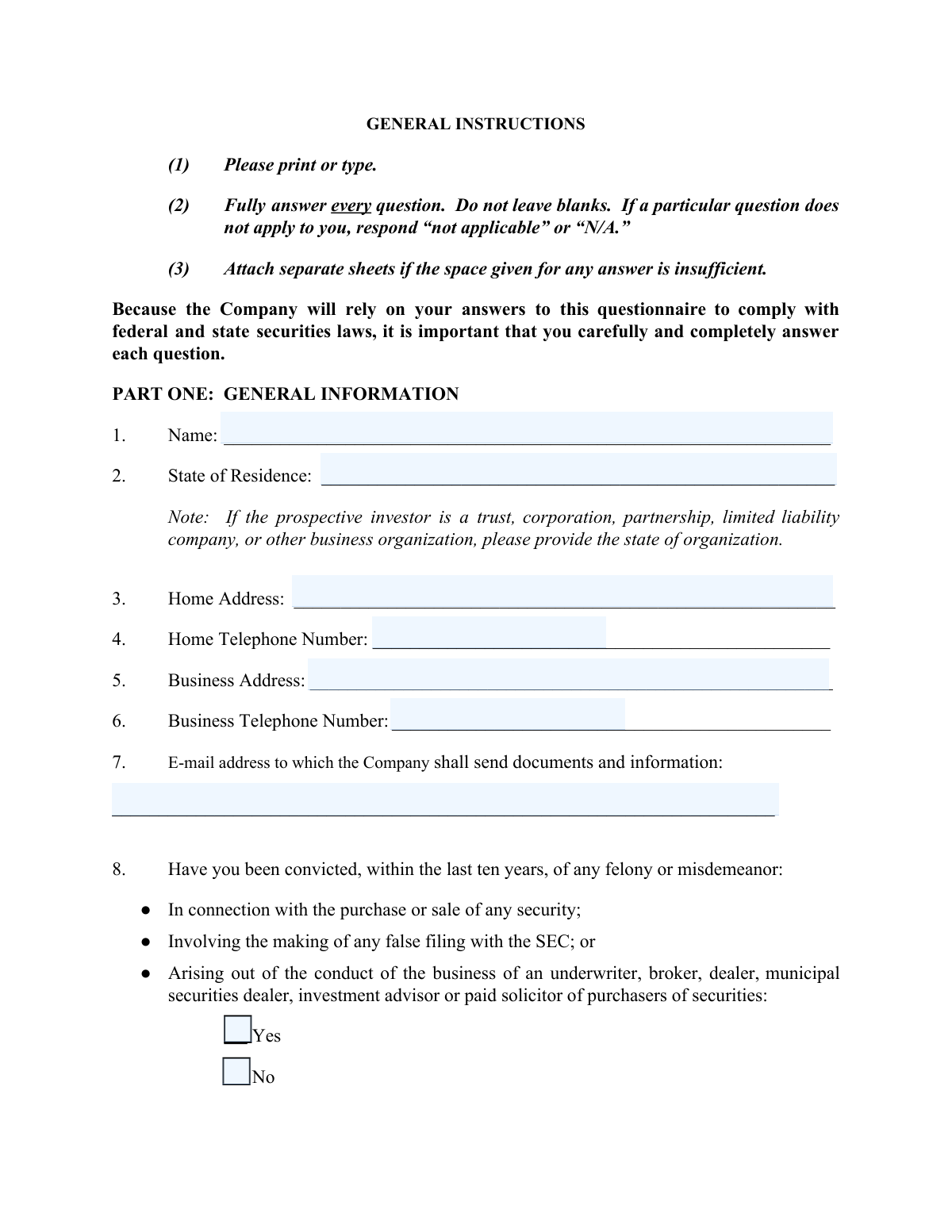
About securities forms
These documents are frequently used by individual investors, financial advisors, and compliance officers. Common scenarios include gifting securities to non-profit organizations via a Brokerage Authorization or initiating an Intra-Brokerage Securities Transfer to move assets between accounts. Additionally, regulatory bodies like the SEC use specific orders and filings to maintain market integrity. Because these forms often involve sensitive financial data and specific legal language, precision is paramount to avoid processing delays or regulatory scrutiny.
Handling complex brokerage and investment paperwork can be time-consuming, but modern technology simplifies the process. Tools like Instafill.ai use AI to fill these forms in under 30 seconds, ensuring that data is handled accurately and securely while saving significant administrative effort. By automating the data entry process, investors and professionals can focus on their financial strategies rather than the logistics of paperwork.
Every form on this page can be completed without typing. Instafill is form filling software that reads a PDF and fills it for you — including flat and scanned documents that carry no fillable fields at all.
Forms in This Category
The forms in this category have a median Form Complexity Index of 52/100 (Moderate), measured across 11 forms by field count, input difficulty, length, conditional logic and structure. See how it is calculated.
- Enterprise-grade security & data encryption
- 99%+ accuracy powered by AI
- 1,000+ forms from all industries
- Complete forms in under 60 seconds
How to Choose the Right Form
Navigating investment and brokerage documentation requires identifying whether your goal is a personal transfer, a charitable gift, or a review of regulatory compliance. Use the categories below to find the correct document for your needs.
Charitable and Non-Cash Donations
If you are a donor intending to contribute stocks or other securities to the Christian Community Foundation (WaterStone), you should use the Intra-Brokerage Securities Transfer form. This document is specifically designed to provide Charles Schwab with the necessary instructions, including donor information and DTC transfer codes, to ensure your donation is processed and credited correctly for tax purposes.
Gifting from a Private Brokerage Account
For individuals who hold a taxable brokerage account with TIAA and wish to transfer ownership of securities to a specific person or organization, the TIAA Brokerage Authorization To Gift Securities (Form F11514) is the appropriate choice. This Letter of Authorization (LOA) provides the formal legal instruction required by TIAA to move stocks or bonds out of your account as a gift. It is vital for ensuring the legal transfer of ownership is documented correctly.
Regulatory Compliance and SEC Filings
The Order Instituting Administrative and Cease-and-Desist Proceedings is an official SEC document. While it is primarily a record of findings and remedial sanctions against specific entities, it serves as an essential reference for financial professionals and compliance officers. Use this document to understand SEC expectations regarding disclosure of conflicts of interest or to guide the preparation of related compliance filings like the Form ADV or Form CRS.
By using Instafill.ai, you can quickly navigate these complex financial documents, ensuring that every field—from brokerage account numbers to specific security details—is completed accurately to prevent delays in processing or legal discrepancies.
Form Comparison
| Form | Primary Purpose | Issued/Filed By | Transaction Type |
|---|---|---|---|
| Intra-Brokerage Securities Transfer | Facilitates the donation of securities from a donor account to WaterStone at Charles Schwab. | Individual donors initiating a non-cash charitable contribution. | Charitable asset transfer instructions. |
| Order Instituting Administrative and Cease-and-Desist Proceedings, Pursuant to Sections 15(b) and 21C of the Securities Exchange Act of 1934 and Sections 203(e) and 203(k) of the Investment Advisers Act of 1940, Making Findings, and Imposing Remedial Sanctions and a Cease-and-Desist Order | Outlines SEC findings regarding disclosure failures and imposes remedial sanctions or orders. | The U.S. Securities and Exchange Commission (SEC). | Regulatory enforcement and legal disciplinary action. |
| TIAA Brokerage Authorization To Gift Securities | Provides formal authorization to gift securities from a TIAA account to a third party. | TIAA brokerage account holders gifting stocks, bonds, or other securities. | Letter of Authorization (LOA) for asset gifting. |
Tips for securities forms
Incorrect Depository Trust Company (DTC) numbers are a leading cause of delayed or rejected securities transfers. Always verify the specific transfer codes provided by the receiving institution before finalizing your paperwork to ensure assets reach the correct brokerage.
Many brokerage forms require a Medallion Signature Guarantee rather than a standard notary stamp to authorize high-value transfers. Check with your financial institution early to see if this specialized verification is necessary to avoid significant processing delays.
Managing complex financial disclosures and transfer letters can be time-consuming and error-prone. AI-powered tools like Instafill.ai can complete these forms in under 30 seconds with high accuracy while ensuring your sensitive financial data stays secure throughout the process.
When authorizing a gift of securities, clearly identify the specific ticker symbols, CUSIP numbers, and the exact number of shares to be moved. Providing granular asset information prevents ambiguity and ensures the correct portion of your portfolio is transferred.
For regulatory documents like Form ADV or CRS, ensure that all conflict-of-interest disclosures match your firm’s internal policies and actual practices. Inconsistent information between your filings and your operational procedures can lead to avoidable compliance issues.
Always retain a digital or physical copy of completed transfer forms for your personal tax records. These documents serve as vital proof of the transfer date and help in accurately calculating the cost basis for future capital gains or charitable deduction reporting.
Frequently Asked Questions
Securities forms are formal documents used to manage the transfer, gifting, or regulatory compliance of financial assets like stocks, bonds, and mutual funds. They provide the legal and administrative instructions required by brokerage firms and government agencies to ensure ownership changes are recorded correctly.
These forms are used by account holders who wish to transfer ownership of their taxable securities to another individual or a charitable organization. It serves as a formal Letter of Authorization (LOA) that tells the financial institution exactly which assets to move and where they should be sent.
To transfer stocks, you typically need to complete an Intra-Brokerage Securities Transfer form or a similar Letter of Authorization. This document captures essential details such as the donor's information, the specific security details, and the Depository Trust Company (DTC) number of the receiving account.
Most forms require the account holder's name and account number, the name or ticker symbol of the security, the number of shares being moved, and the recipient's brokerage details. For charitable donations, you will also need the specific account transfer codes and the name of the receiving foundation.
Completed forms are generally submitted to the financial institution or brokerage firm that currently holds the assets. Some regulatory documents, such as those related to SEC proceedings or administrative orders, may need to be filed directly with government agencies or legal counsel.
Even minor errors in account numbers or security symbols can result in failed transfers, tax reporting issues, or significant delays in processing. Ensuring that every field is filled out precisely helps maintain compliance with financial regulations and protects the assets of the parties involved.
Yes, AI tools can be used to fill out complex securities and brokerage forms by accurately extracting data from your records and placing it into the correct fields. Tools like Instafill.ai specialize in this process, ensuring that even dense financial documents are completed without manual entry errors.
Using AI-powered services like Instafill.ai, most securities forms can be filled in under 30 seconds. The AI quickly maps information from your source documents to the PDF, significantly reducing the time spent on manual paperwork and verification.
If you receive a static or scanned PDF, you can use an AI service to convert it into an interactive, fillable form. This allows you to type directly into the document and use automated data placement, which is much more efficient than printing and filling it out by hand.
Yes, many foundations provide specific transfer forms to ensure that non-cash donations are credited to the correct account and categorized properly for tax purposes. These forms often include pre-filled information regarding the foundation's brokerage account and DTC instructions to simplify the process for the donor.
Glossary
- Form Complexity Index
- Instafill’s 0–100 measure of how much effort a form takes to complete, calculated deterministically from the form’s own structure rather than estimated. It combines the number of fillable fields (the largest factor), how difficult those fields are to complete based on their type, the number of pages that contain fields, the amount of conditional “fill-only-if” logic, and how many sections the form is divided into, then adds modifiers for tables and repeating lists, bundled instruction pages, and dense page layouts. A higher score means the form is harder to fill out by hand. The forms in this category have a median Form Complexity Index of 52/100 (Moderate). See exactly how it is calculated.
- Securities
- Financial instruments that represent an ownership position in a company (stocks), a creditor relationship with a government or corporation (bonds), or rights to ownership (options).
- DTC (Depository Trust Company)
- A central system used by brokerage firms to transfer securities electronically; forms often require a 'DTC Number' to identify the specific institution receiving the assets.
- Letter of Authorization (LOA)
- A legal document signed by an account holder that provides formal instructions and permission for a financial institution to perform a specific action, such as gifting or transferring shares.
- SEC (Securities and Exchange Commission)
- The primary federal agency responsible for regulating the U.S. securities markets, protecting investors, and overseeing corporate disclosures and compliance.
- Form ADV
- The uniform form used by investment advisers to register with both the SEC and state securities authorities, providing details about their business practices and potential conflicts of interest.
- Form CRS (Customer Relationship Summary)
- A brief, plain-language document that brokerage firms and investment advisers must provide to retail investors to explain the types of services offered and the costs involved.
- Cease-and-Desist Order
- A formal legal injunction issued by a regulatory body that requires an individual or entity to immediately stop a specific illegal or non-compliant activity.
- Administrative Proceedings
- Legal hearings conducted by a government agency rather than a court of law to resolve regulatory disputes or impose sanctions for violations of securities laws.