Fill out tax credit forms
with AI.
Tax credit forms are essential documents used by individuals and businesses to claim financial incentives provided by state and federal governments. These forms cover a broad spectrum of tax-saving opportunities, ranging from earned income credits for families to specialized workforce incentives for employers. By properly filing these documents, taxpayers can significantly reduce their total tax liability or even secure substantial refunds. Whether you are managing personal health coverage credits or navigating complex interstate business exemptions, these forms ensure you receive the financial benefits you are entitled to.
By continuing, you acknowledge Instafill's Privacy Policy and agree to get occasional product update and promotional emails.
About tax credit forms
This category typically serves a diverse group of users, including individual filers, human resources departments, and tax professionals. For instance, employers often utilize workforce and employment forms from the Department of Labor (DOL), such as ETA forms for the Work Opportunity Tax Credit. Meanwhile, individuals may need to file documents like the Premium Tax Credit (PTC) or state-specific EITC schedules to manage their healthcare costs and household income adjustments. Accurate completion is vital, as errors can lead to delayed refunds or the loss of valuable credits.
To streamline this process, tools like Instafill.ai use AI to fill these forms in under 30 seconds, ensuring data is handled accurately and securely. This technology removes the manual burden of repetitive data entry, allowing users to focus on their core responsibilities while remaining compliant with tax regulations.
Every form on this page can be completed without typing. Instafill is form filling software that reads a PDF and fills it for you — including flat and scanned documents that carry no fillable fields at all.
Forms in This Category
The forms in this category have a median Form Complexity Index of 54/100 (Moderate), measured across 11 forms by field count, input difficulty, length, conditional logic and structure. See how it is calculated.
| Form Name | Pages | FCI | |
|---|---|---|---|
| 1. | 2023 Schedule IL-E/EIC, Illinois Exemption and Earned Income Tax Credit (Illinois Department of Revenue) | 3 | Complex 72 |
| 2. | Form FTB 3514, California Earned Income Tax Credit | 4 | Moderate 54 |
| 3. | Form 8801, Credit for Prior Year Minimum Tax | 4 | Moderate 49 |
| 4. | Form 8885, Health Coverage Tax Credit | 1 | Simple 26 |
| 5. | Form 8962, Premium Tax Credit (PTC) | 2 | Complex 67 |
| 6. | ETA Form 9061, Work Opportunity Tax Credit Individual Characteristics Form (ICF) | 4 | Basic 45 |
| 7. | Form APL-505, Taxpayer’s Earned Income Tax Credit Protest | 1 | Basic 39 |
| 8. | Form T2201, Disability Tax Credit Certificate | 16 | Very Complex 80 |
| 9. | Ohio Form IT K-1, Investor's Share of Ohio Taxable Income and Tax Credits | 2 | Moderate 59 |
| 10. | State of Michigan, Form MC 52, Request and Writ for Garnishment (Income Tax Refund/Credit) | 1 | Basic 45 |
| 11. | WestRock Credit Application and Uniform Sales & Use Tax Exemption/Resale Certificate — Multijurisdiction | 8 | Moderate 61 |
- Enterprise-grade security & data encryption
- 99%+ accuracy powered by AI
- 1,000+ forms from all industries
- Complete forms in under 60 seconds
How to Choose the Right Form
Navigating tax credits can be complex, as forms vary significantly by state, country, and specific financial situation. To find the right document, identify whether you are claiming a personal credit, a business-related incentive, or responding to a tax agency.
Earned Income Tax Credits (EITC)
If you are a low-to-moderate-income earner looking to reduce your state tax liability, choose the form specific to your filing location:
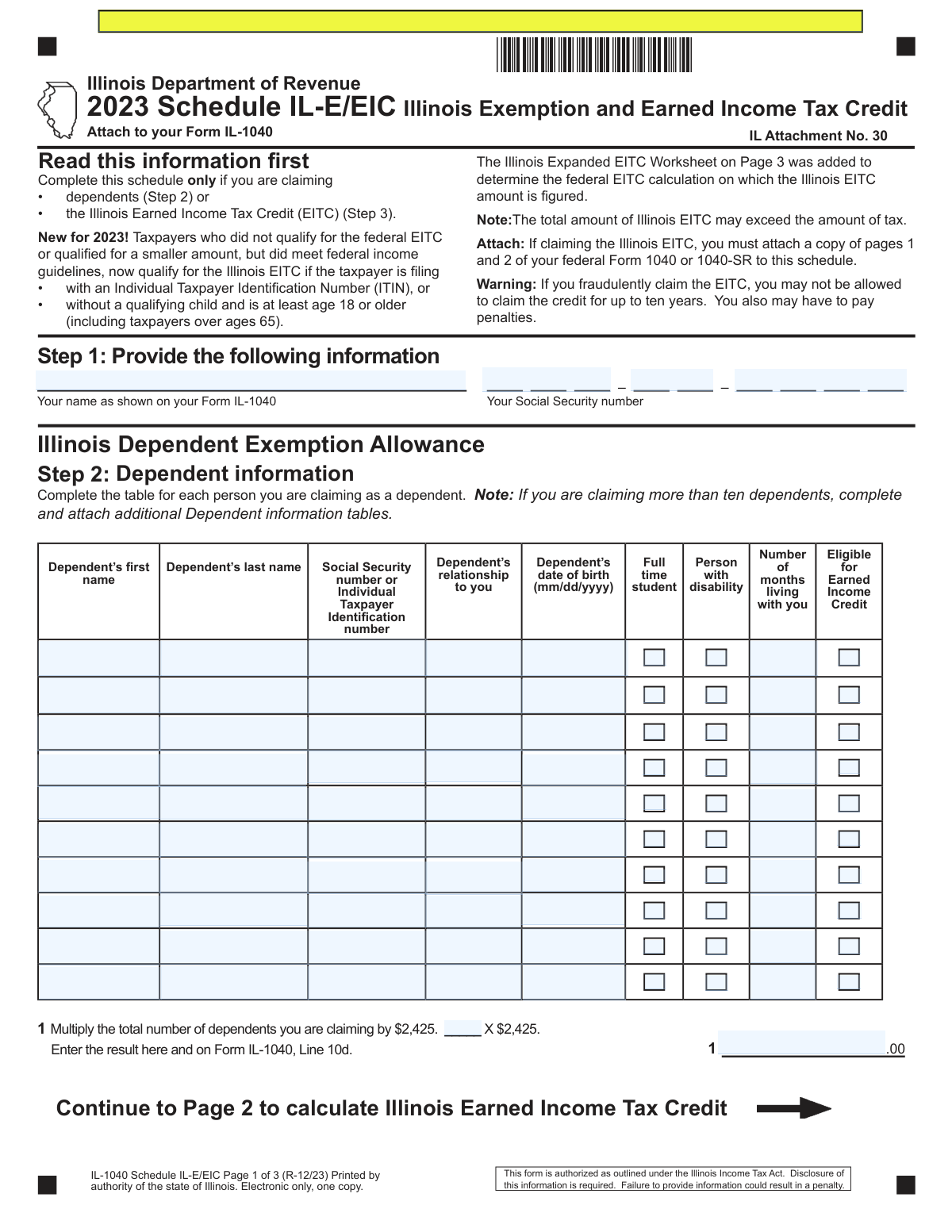
- 2023 Schedule IL-E/EIC: Use this if you are filing an Illinois return (Form IL-1040) and claiming dependents or the state EITC.
- Form FTB 3514: Select this for California state returns to claim the CalEITC.
- Form APL-505: Use this specifically if the Connecticut DRS has denied your EITC claim and you need to formally protest the decision.
Health and Disability Credits
These forms help offset the costs of medical care, insurance premiums, or living with a disability:
- Form 8962 (Premium Tax Credit): Essential if you purchased health insurance through the Marketplace and need to reconcile advance premium tax credits.
- Form 8885: Use this to claim the Health Coverage Tax Credit for specific qualified health insurance payments.
- Form T2201 (Disability Tax Credit Certificate): This is a Canadian form required for individuals with severe impairments to qualify for tax relief through the CRA.
Employment and Business Incentives
For employers, investors, or business entities handling specialized tax situations:
- ETA Form 9061: Employers use this "Individual Characteristics Form" to pre-screen and certify new hires for the federal Work Opportunity Tax Credit (WOTC).
- Ohio Form IT K-1: Used by investors in pass-through entities (like S-Corps or Partnerships) to report their share of Ohio-sourced income and credits.
- WestRock Credit Application and Uniform Sales & Use Tax Exemption: Choose this if you are a business customer establishing trade credit and seeking sales tax exemptions for resale purposes.
Prior Year Adjustments
- Form 8801: Use this if you paid the Alternative Minimum Tax (AMT) in a prior year and are eligible to claim a credit against your current year’s tax liability.
Form Comparison
| Form | Purpose | Jurisdiction | Key Benefit |
|---|---|---|---|
| 2023 Schedule IL-E/EIC, Illinois Exemption and Earned Income Tax Credit | Claims dependent exemptions and the Earned Income Tax Credit on state returns. | Illinois (State) | Reduces Illinois taxable income and provides a refundable credit for eligible families. |
| Form FTB 3514, California Earned Income Tax Credit | Used by residents to claim the California Earned Income Tax Credit (CalEITC). | California (State) | Significantly reduces state tax liability and increases potential tax refunds for workers. |
| Form 8801, Credit for Prior Year Minimum Tax | Calculates the credit for alternative minimum tax paid in previous years. | Federal (IRS) | Allows taxpayers to recover a portion of previously paid minimum taxes. |
| Form 8885, Health Coverage Tax Credit | Claims a credit for payments made toward qualified health insurance premiums. | Federal (IRS) | Reduces the financial burden of health insurance for specific eligible individuals. |
| Form 8962, Premium Tax Credit (PTC) | Reconciles advance Marketplace premium payments with the actual eligible credit amount. | Federal (IRS) | Ensures taxpayers receive the correct subsidy for health insurance based on income. |
| ETA Form 9061, Work Opportunity Tax Credit Individual Characteristics Form (ICF) | Pre-screens job applicants to determine eligibility for the Work Opportunity Tax Credit. | Federal (DOL) | Provides employers with federal tax incentives for hiring from targeted groups. |
| Form APL-505, Taxpayer’s Earned Income Tax Credit Protest | Appeals a notice of assessment or disallowance of an EITC claim. | Connecticut (State) | Provides a formal legal path to challenge denied tax credits or refunds. |
| Form T2201, Disability Tax Credit Certificate | Certifies a person with a severe impairment for the disability tax credit. | Canada (CRA) | Reduces the amount of income tax payable for disabled persons or caregivers. |
| Ohio Form IT K-1, Investor's Share of Ohio Taxable Income and Tax Credits | Reports an investor's share of income and credits from pass-through entities. | Ohio (State) | Allows individuals to accurately claim entity-level tax credits on personal returns. |
| WestRock Credit Application and Uniform Sales & Use Tax Exemption/Resale Certificate | Combines a trade credit application with a sales tax exemption certificate. | Multijurisdictional | Prevents improper sales tax charges and establishes credit terms for business purchases. |
Tips for tax credit forms
Many state tax credit forms, such as those for Illinois or California, require figures directly from your federal 1040. Always cross-check that your income and dependent information match exactly across both forms to avoid processing delays or automated audits.
Forms like the Disability Tax Credit Certificate (T2201) or the Work Opportunity Tax Credit (ETA 9061) require specific medical or background certifications. Collecting these documents in advance ensures you can complete the application in one sitting without hunting for missing data.
AI-powered tools like Instafill.ai can complete these tax credit forms in under 30 seconds with high accuracy, saving significant time for those managing multiple filings. Your sensitive financial data stays secure during the process, providing a safe and efficient way to handle complex paperwork.
A single digit error in a Social Security Number or ITIN can lead to an immediate rejection of Earned Income Tax Credit (EITC) claims. Carefully verify the identification numbers for every dependent and qualifying child listed on your schedules to ensure your credit is approved.
When filing Form 8962 for the Premium Tax Credit, ensure you have your Form 1095-A from the Marketplace ready. Reconciling the advance payments you received during the year against your actual income is vital for calculating the correct credit and preventing unexpected tax bills.
If you are filing a protest form like the APL-505, you must provide a specific dollar amount and a clear legal or factual basis for your challenge. Vague explanations often result in the denial of the protest, so include all relevant supporting documentation from the start.
Frequently Asked Questions
Tax credit forms are used to claim specific amounts that provide a dollar-for-dollar reduction in the total tax you owe. Unlike deductions, which lower your taxable income, these credits are applied directly to your tax liability, and in some cases, they can result in a refund even if you owe no tax.
You generally need these forms if you are a resident of a state that offers its own Earned Income Tax Credit and you meet their specific income and eligibility criteria. Forms like Illinois Schedule IL-E/EIC or California FTB 3514 must be attached to your state income tax return to ensure the credit is applied correctly to your state balance.
Yes, you can fill out various tax credit forms using AI-powered tools like Instafill.ai. These tools can accurately extract information from your source documents and place it into the correct fields on the form in under 30 seconds, reducing the risk of manual entry errors.
These forms are typically a joint effort between job applicants and employers. The applicant provides background information regarding their eligibility for targeted groups, such as veteran status or receipt of public assistance, which the employer then uses to apply for the Work Opportunity Tax Credit (WOTC) through the Department of Labor.
If your credit is disallowed, you may need to file a formal protest form, such as Connecticut’s Form APL-505. This document allows you to officially challenge the tax agency's decision by providing a detailed basis for your protest along with the necessary supporting documentation to prove your eligibility.
While manually researching and typing in data can take quite a while, using an AI service like Instafill.ai allows you to complete these forms in under 30 seconds. The system automates the process by identifying where data belongs and filling the PDF fields for you.
Form 8962 is used by individuals who purchased insurance through the Health Insurance Marketplace to reconcile advance credit payments with their actual eligibility. Form 8885 is a more specialized credit for specific groups, such as those receiving certain trade adjustment assistance or pension benefit guarantees, who paid for qualified health insurance.
Investors in partnerships or S corporations often receive state-specific forms, such as the Ohio IT K-1, which detail their proportionate share of the entity’s tax credits. The investor then uses this information to claim those credits on their individual state income tax return.
Most tax credit forms are attached to your federal or state income tax return and submitted to the IRS or the relevant state Department of Revenue. However, some forms, like the Work Opportunity Tax Credit forms, may be submitted to state workforce agencies or the Department of Labor depending on the specific program requirements.
Yes, many jurisdictions require a certification form to prove eligibility for disability-related tax benefits. For example, the T2201 in Canada requires both the applicant and a qualified medical practitioner to certify a severe and prolonged impairment before the tax credit can be granted.
Yes, if you paid alternative minimum tax (AMT) in a previous year, you may be eligible to recover some of that tax in a later year. Form 8801 is specifically designed for individuals, estates, and trusts to calculate and claim this credit against their current year's tax liability.
Glossary
- Form Complexity Index
- Instafill’s 0–100 measure of how much effort a form takes to complete, calculated deterministically from the form’s own structure rather than estimated. It combines the number of fillable fields (the largest factor), how difficult those fields are to complete based on their type, the number of pages that contain fields, the amount of conditional “fill-only-if” logic, and how many sections the form is divided into, then adds modifiers for tables and repeating lists, bundled instruction pages, and dense page layouts. A higher score means the form is harder to fill out by hand. The forms in this category have a median Form Complexity Index of 54/100 (Moderate). See exactly how it is calculated.
- Earned Income Tax Credit (EITC)
- A refundable tax credit for low-to-moderate-income working individuals and families, which varies based on income and the number of qualifying children.
- Refundable Credit
- A type of tax credit that can reduce your tax bill to zero and result in a refund for any remaining amount.
- Work Opportunity Tax Credit (WOTC)
- A federal tax credit available to employers who hire individuals from specific groups that have consistently faced significant barriers to employment.
- Premium Tax Credit (PTC)
- A refundable credit designed to help eligible individuals and families afford health insurance premiums for plans purchased through the Health Insurance Marketplace.
- Pass-through Entity (PTE)
- A business structure, such as a partnership or S corporation, where income and tax credits are passed directly to the owners or investors to report on their individual tax returns.
- ITIN (Individual Taxpayer Identification Number)
- A tax processing number issued by the IRS for people who are required to have a U.S. taxpayer identification number but are not eligible for a Social Security number.
- Targeted Group
- Specific categories of employees, such as veterans or recipients of public assistance, whose hiring allows an employer to claim the Work Opportunity Tax Credit.
- Resale Certificate
- A document provided by a buyer to a seller to allow for the purchase of goods without paying sales tax, provided the items are intended for resale.