Fill out beneficiary change forms
with AI.
Beneficiary change forms are essential legal tools used to manage how your assets are distributed after your passing. Whether you are updating a life insurance policy or a retirement account like a 403(b) or 457(b), these documents ensure that your financial legacy reaches the intended recipients. Keeping these designations current is vital because life events—such as marriage, divorce, the birth of a child, or the death of a previously named beneficiary—can quickly make older documents obsolete. Without an updated form, assets may be subject to lengthy probate processes or distributed according to outdated instructions.
By continuing, you acknowledge Instafill's Privacy Policy and agree to get occasional product update and promotional emails.
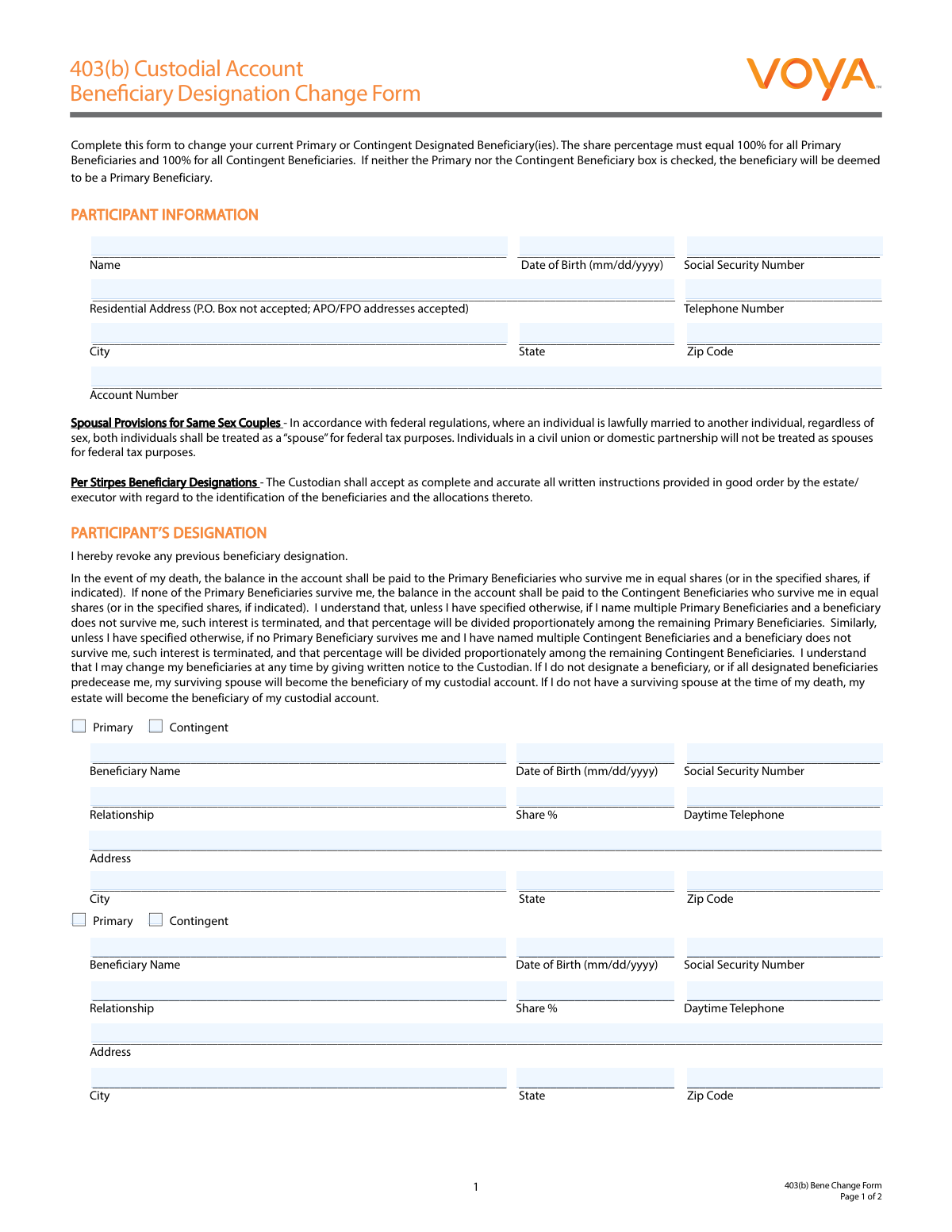
About beneficiary change forms
These forms are commonly required by individuals managing diverse financial instruments, including 529 plan forms and private insurance policies. For instance, an account holder might use a beneficiary change form to transfer educational funds from one child to another or to a different eligible family member to avoid tax implications. Similarly, policyholders with providers like Transamerica or Principal Life Insurance need these forms to specify both primary and contingent beneficiaries. Because these updates involve sensitive financial and legal data, accuracy is paramount to avoid future tax penalties or disputes among heirs.
Managing these updates can often feel like a bureaucratic hurdle, but modern tools have simplified the process significantly. Tools like Instafill.ai use AI to fill these forms in under 30 seconds, handling the data accurately and securely to save you time. By automating the data entry process, you can maintain your financial records with minimal effort, ensuring your estate planning remains as current as your life circumstances.
Every form on this page can be completed without typing. Instafill is form filling software that reads a PDF and fills it for you — including flat and scanned documents that carry no fillable fields at all.
Forms in This Category
The forms in this category have a median Form Complexity Index of 47/100 (Moderate), measured across 12 forms by field count, input difficulty, length, conditional logic and structure. See how it is calculated.
| Form Name | Pages | FCI | |
|---|---|---|---|
| 1. | 403(b) Custodial Account Beneficiary Designation Change Form | 1 | Basic 40 |
| 2. | 529 College Savings Plan Beneficiary Change Form | 1 | Basic 40 |
| 3. | American Fidelity Change of Beneficiary Form | 1 | – |
| 4. | Beneficiary Designation/Change - Principal Life Insurance Company | 1 | Moderate 61 |
| 5. | Bright Directions 529 Beneficiary Change Form | 1 | Moderate 47 |
| 6. | Change of Beneficiary Form | 1 | – |
| 7. | CollegeAdvantage Direct 529 Savings Plan Beneficiary Change Form | 1 | Moderate 52 |
| 8. | Fidelity Institutional 529 College Savings Plan Beneficiary Change | 1 | – |
| 9. | Form DD 638-28, Beneficiary Change | 1 | – |
| 10. | Nest 529 Beneficiary Change Form | 1 | Basic 40 |
| 11. | The Housing Agency Retirement Trust 457b Deferred Compensation Plan Change of Beneficiary Designation Form | 1 | Moderate 56 |
| 12. | Transamerica Beneficiary Change Form | 1 | – |
- Enterprise-grade security & data encryption
- 99%+ accuracy powered by AI
- 1,000+ forms from all industries
- Complete forms in under 60 seconds
How to Choose the Right Form
Selecting the correct beneficiary change form depends primarily on the type of account you hold and the specific financial institution managing your assets. Using the wrong form can lead to administrative delays or unintended tax consequences during asset distribution.
Education and 529 College Savings Plans
If you are updating the student beneficiary for a college savings account, you must use the form specific to your plan provider to ensure the transfer is recognized as a qualified family change.
- State-Specific Plans: Choose the Bright Directions 529 Beneficiary Change Form, the Nest 529 Beneficiary Change Form, or the CollegeAdvantage Direct 529 Savings Plan Beneficiary Change Form if you hold an account with those specific state programs.
- Institutional Plans: If your plan is managed through an investment firm, use the Fidelity Institutional 529 College Savings Plan Beneficiary Change or the general 529 College Savings Plan Beneficiary Change Form.
Retirement and Deferred Compensation
Retirement accounts are governed by specific IRS regulations regarding inheritance. Ensure you select the form that matches your employer-sponsored plan type:
- 403(b) Accounts: Use the 403(b) Custodial Account Beneficiary Designation Change Form for non-profit or educational employer-sponsored plans.
- 457(b) Plans: Use The Housing Agency Retirement Trust 457b Deferred Compensation Plan Change of Beneficiary Designation Form specifically if you are a participant in that trust.
Life Insurance Policies
When updating life insurance, the form must match the carrier to be legally binding. Most carriers provide specific forms for different types of coverage:
- Principal Life Insurance: Use Form DD 638-28, the Beneficiary Designation/Change - Principal Life Insurance Company form, or the specific GP34795-14 version for group term policies.
- American Fidelity & Transamerica: Select the American Fidelity Change of Beneficiary Form or the Transamerica Beneficiary Change Form based on your policy provider.
- General Updates: If your specific carrier is not listed, the generic Change of Beneficiary Form can serve as a standard template, though we recommend verifying with your insurer if they require a proprietary document.
Form Comparison
| Form | Asset Type | Primary Purpose | Who Files It |
|---|---|---|---|
| 403(b) Custodial Account Beneficiary Designation Change Form | 403(b) Retirement Account | Formally update who inherits account assets upon the holder's death. | Retirement account holder |
| 529 College Savings Plan Beneficiary Change Form | 529 College Savings Plan | Transfer account balance and change the designated student beneficiary. | 529 account owner |
| American Fidelity Change of Beneficiary Form | Insurance Policy | Update policy details to ensure assets follow the owner's latest wishes. | Insurance policy owner |
| Beneficiary Designation/Change - Principal Life Insurance Company | Group Term Life/Accident Insurance | Designate primary and contingent beneficiaries for group insurance coverages. | Insured employee |
| Bright Directions 529 Beneficiary Change Form | Bright Directions 529 Plan | Officially update beneficiary details to avoid potential tax consequences. | Account owner |
| CollegeAdvantage Direct 529 Savings Plan Beneficiary Change Form | Ohio CollegeAdvantage 529 Plan | Transfer funds to a new eligible family member for education. | Account owner |
| Fidelity Institutional 529 College Savings Plan Beneficiary Change | Fidelity Institutional 529 Plan | Redirect savings to reflect changes in family circumstances and beneficiaries. | Plan participant |
| Form DD 638-28, Beneficiary Change | Principal Life Insurance | Designate individuals, trusts, or entities to receive policy death benefits. | Policy owner |
| Nest 529 Beneficiary Change Form | NEST 529 Savings Plan | Update beneficiary to ensure funds remain qualified for tax purposes. | NEST plan owner |
| Principal Life Insurance Company Beneficiary Designation/Change Form (GP34795-14) | Group Term Life Insurance | Name beneficiaries and appoint custodians for minor children under UTMA. | Employee or policyholder |
| The Housing Agency Retirement Trust 457b Deferred Compensation Plan Change of Beneficiary Designation Form | 457(b) Retirement Plan | Ensure retirement assets are distributed according to specific employee wishes. | Participating employee |
| Transamerica Beneficiary Change Form | Life Insurance Policy | Revoke prior designations and name new primary and contingent beneficiaries. | Transamerica policyholder |
Tips for beneficiary change forms
A common error is misspelling a beneficiary's name or providing an incorrect Social Security Number. Double-check these details against official documents to ensure the financial institution can correctly identify your heirs without legal delays or identity confusion.
Don't stop at naming a primary beneficiary; always include a contingent (backup) choice. This ensures your assets are distributed according to your wishes even if your first choice is unable to receive the funds, preventing the account from entering probate.
When changing beneficiaries on a 529 plan, ensure the new individual is considered a 'member of the family' under IRS rules. Transferring funds to a non-family member can trigger unnecessary tax penalties and gift taxes that are easily avoidable with proper planning.
Many retirement accounts, like 403(b) or 457(b) plans, require a spouse's notarized signature if you designate someone else as the primary beneficiary. Review the form instructions early to see if you need a witness or notary to complete the submission.
If you need to update beneficiaries across several different accounts, AI-powered tools like Instafill.ai can complete these forms in under 30 seconds with high accuracy. Your data stays secure during the process, making it a reliable way to handle high-volume paperwork efficiently.
Be as specific as possible by using legal names rather than broad categories like 'my children' or 'my estate.' Vague designations can lead to confusion and lengthy disputes among family members during the claims process.
After submitting your change of beneficiary form, always save a copy for your personal records and confirm with the provider that the update was processed. This documentation is vital for your estate planning and helps your beneficiaries prove their status later on.
Frequently Asked Questions
A beneficiary change form is a legal document used to update the person or entity designated to receive assets from an account or policy upon the owner's death. It is commonly used for life insurance, retirement accounts like 403(b) or 457(b) plans, and 529 college savings plans to ensure assets are distributed according to your most current wishes.
You should file a change of beneficiary form whenever you experience a major life event, such as marriage, divorce, the birth of a child, or the death of a previously named beneficiary. Keeping these designations current is vital because beneficiary instructions usually override instructions left in a will.
You must select the form specific to your plan provider, such as Bright Directions, Nest, Fidelity, or CollegeAdvantage. Since each state-sponsored plan has its own administrative requirements and tax disclosures, using the provider-specific form ensures your request is processed correctly.
A primary beneficiary is the first person or entity in line to receive the assets. A contingent, or secondary, beneficiary only receives the benefits if all primary beneficiaries have passed away before the account owner.
Yes, most beneficiary change forms allow you to name multiple primary and contingent beneficiaries. You will generally need to specify the exact percentage of the total benefit that each individual should receive, ensuring the total for each category equals 100%.
Changing a 529 beneficiary to another 'member of the family' of the original beneficiary is typically a tax-free event. However, if the new beneficiary is not a qualified family member, the change may be treated as a non-qualified withdrawal, which could trigger federal income taxes and penalties.
Yes, AI tools like Instafill.ai can help you complete these forms by accurately extracting data from your source documents and placing it into the correct fields. This technology simplifies the process of updating your records across multiple financial institutions or insurance providers.
Using AI-powered services, you can often fill out a beneficiary change form in under 30 seconds. These tools eliminate the need for manual data entry and significantly reduce the risk of clerical errors, making the update process much more efficient.
You will usually need the beneficiary's full legal name, date of birth, Social Security number, and their relationship to you. Some forms, particularly for life insurance, may also require their current residential address and phone number.
Requirements vary by provider; while many insurance forms only require the owner's signature, some retirement plan changes may require a witness or a notary public. Specifically, if you are married and naming someone other than your spouse as a beneficiary for a retirement plan, spousal consent is often legally required.
Completed forms should be submitted directly to the insurance company or financial institution managing the account, such as Fidelity, Transamerica, or Principal. Most providers accept these forms via their secure online portal, mail, or fax, but you should check the specific instructions on the form for the correct submission method.
Glossary
- Form Complexity Index
- Instafill’s 0–100 measure of how much effort a form takes to complete, calculated deterministically from the form’s own structure rather than estimated. It combines the number of fillable fields (the largest factor), how difficult those fields are to complete based on their type, the number of pages that contain fields, the amount of conditional “fill-only-if” logic, and how many sections the form is divided into, then adds modifiers for tables and repeating lists, bundled instruction pages, and dense page layouts. A higher score means the form is harder to fill out by hand. The forms in this category have a median Form Complexity Index of 47/100 (Moderate). See exactly how it is calculated.
- Primary Beneficiary
- The first person or entity designated to receive the assets or death benefits from an account or insurance policy upon the owner's death.
- Contingent Beneficiary
- A secondary beneficiary who receives the assets only if the primary beneficiary is deceased at the time the benefit is paid.
- Member of the Family (529 Plan)
- An IRS-defined list of eligible relatives, such as siblings, children, or cousins, used to determine if changing a 529 beneficiary can be done without incurring taxes or penalties.
- Irrevocable Beneficiary
- A beneficiary whose rights to the policy proceeds are guaranteed and cannot be changed by the owner without the beneficiary's formal written consent.
- UTMA (Uniform Transfers to Minors Act)
- A law that allows an adult to manage assets for a minor in a custodial account until the minor reaches the legal age of majority in their state.
- 403(b) and 457(b) Plans
- Tax-advantaged retirement savings plans specifically for employees of public schools, non-profits, and certain government agencies.
- Qualified Withdrawal
- A distribution from a 529 plan used for approved educational expenses that is exempt from federal income tax.
- Custodial Account
- An account managed by an adult (the custodian) on behalf of a minor, who is the legal owner of the assets.