Fill out unlawful detainer forms
with AI.
Unlawful detainer forms are the official California Judicial Council documents used to handle eviction proceedings in court. Whether a landlord is filing to reclaim a property or a tenant is responding to an eviction lawsuit, these forms govern the legal process from start to finish. They cover every stage of an unlawful detainer case — from the initial complaint (Form UD-100) that kicks off the lawsuit, to the tenant's formal response (Form UD-105), to scheduling the matter for trial (Form UD-150). Because California eviction law moves quickly and involves strict deadlines, filling out these forms correctly and completely is essential to protecting your legal rights.
By continuing, you acknowledge Instafill's Privacy Policy and agree to get occasional product update and promotional emails.
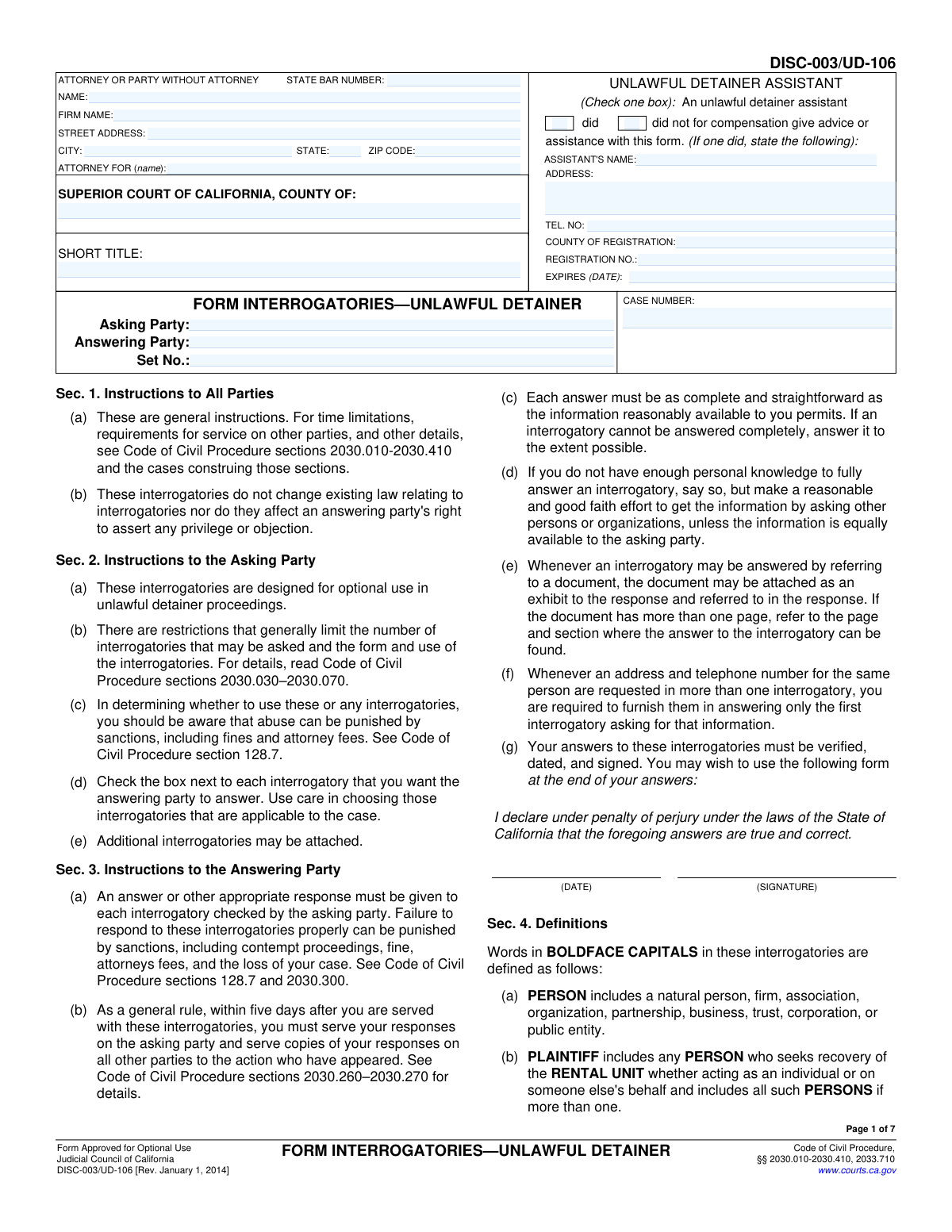
About unlawful detainer forms
Landlords typically need these forms when a tenant refuses to vacate after a lease has ended, rent has gone unpaid, or another lease violation has occurred. Tenants and their advocates use them to formally contest an eviction, assert defenses such as habitability issues or retaliation, and request relief from the court. Attorneys, property managers, and self-represented parties alike rely on these standardized Judicial Council forms to ensure their filings meet California court requirements.
Tools like Instafill.ai use AI to fill these forms in under 30 seconds, handling the data accurately and securely — a practical option for anyone who needs to complete court paperwork quickly without risking errors on time-sensitive legal documents.
Every form on this page can be completed without typing. Instafill is form filling software that reads a PDF and fills it for you — including flat and scanned documents that carry no fillable fields at all.
Forms in This Category
The forms in this category have a median Form Complexity Index of 53/100 (Moderate), measured across 17 forms by field count, input difficulty, length, conditional logic and structure. See how it is calculated.
- Enterprise-grade security & data encryption
- 99%+ accuracy powered by AI
- 1,000+ forms from all industries
- Complete forms in under 60 seconds
How to Choose the Right Form
Navigating California’s eviction process requires specific Judicial Council forms depending on whether you are the landlord (plaintiff) or the tenant (defendant). Choosing the correct document ensures your legal rights are preserved and the court process moves forward without procedural delays.
If You Are Starting an Eviction (Landlords)
If you are a property owner seeking to legally reclaim possession of a property from a tenant who has not vacated after a notice period, you must start the litigation process with:
- Form UD-100, Complaint—Unlawful Detainer: This is the primary document used to initiate the lawsuit. It outlines the reasons for the eviction and allows you to request unpaid rent, damages, and possession of the premises.
If You Have Been Served with an Eviction Notice (Tenants)
If you have received a summons and a complaint, you have a very limited window to respond—usually just five days. To contest the eviction, you must file:
- Form UD-105, Answer—Unlawful Detainer: This form is your primary defense. It allows you to deny the landlord's claims and assert legal defenses such as breach of habitability, retaliation, or non-compliance with the Tenant Protection Act. Filing this form prevents a default judgment and ensures you get your day in court.
If You Are Ready to Schedule a Trial
Once the tenant has filed an answer, the case does not automatically move to a hearing. Either party can request a specific court date using:
- Form UD-150, Request/Counter-Request to Set Case for Trial—Unlawful Detainer: Use this form to ask the court to put your case on the trial calendar. It captures essential logistics such as whether you want a jury trial, how long you expect the trial to last, and any dates you are unavailable. This form also includes the mandatory Proof of Service by Mail to show the other party was properly notified of the trial request.
Form Comparison
| Form | Purpose | Who Files It | Key Information | Timing |
|---|---|---|---|---|
| Form UD-100, Complaint—Unlawful Detainer | Initiates a legal lawsuit to evict a tenant and reclaim property possession. | Landlord (Plaintiff) | Property address, basis for eviction, and request for unpaid rent. | After the notice period expires and the tenant remains in possession. |
| Judicial Council of California Form UD-105, Answer—Unlawful Detainer | Responds to an eviction complaint and asserts legal defenses. | Tenant (Defendant) | Denials, habitability issues, retaliation claims, and requests for rent reduction. | Usually within five days after being served with the summons and complaint. |
| Judicial Council of California Form UD-150, Request/Counter-Request to Set Case for Trial—Unlawful Detainer | Requests the court to schedule a trial date for the eviction case. | Landlord or Tenant | Jury trial requests, estimated trial length, and dates of unavailability. | After the tenant has filed a formal Answer to the complaint. |
Tips for unlawful detainer forms
When filling out Form UD-100 or UD-105, ensure all names and addresses match the original rental agreement and the notice to quit exactly. Discrepancies between these legal documents can cause significant procedural delays or lead to the court rejecting your filing.
When completing the Answer (Form UD-105), be sure to check every box that applies to your situation, such as habitability issues or retaliation. If you fail to list a specific defense on this form, you may be legally barred from presenting evidence for it later during the trial.
Many forms in this category, including the Request to Set Case for Trial (UD-150), require a completed Proof of Service to be legally valid. Always verify that the service details are accurate and that the person serving the documents meets the legal requirements to ensure the court accepts the filing.
AI-powered tools like Instafill.ai can complete these complex legal forms in under 30 seconds with high accuracy. Your data stays secure during the process, providing a practical and fast way to manage multiple forms while meeting strict court deadlines.
When filing Form UD-150, clearly indicate whether the tenant has already moved out or if possession of the property is still at issue. This critical detail helps the court clerk determine the priority of your case and ensures it is placed on the correct trial calendar.
Every form filed after the initial complaint must include the correct case number and the specific branch address of the court where the case is pending. Incorrect case numbers can lead to documents being misfiled or rejected, which can be costly in fast-moving eviction proceedings.
Frequently Asked Questions
Unlawful detainer forms are the official legal documents used in California to handle eviction cases. They allow landlords to legally regain possession of a property and permit tenants to respond to claims and present their defenses in court.
These forms are used by both landlords and tenants involved in a rental dispute. Landlords file forms like the UD-100 to start an eviction, while tenants use forms like the UD-105 to contest the eviction and protect their rights.
The primary document used to initiate an eviction lawsuit is Form UD-100, the Complaint—Unlawful Detainer. This form outlines the landlord's reasons for seeking possession of the property and any unpaid rent or damages they are claiming.
A tenant must file Form UD-105, Answer—Unlawful Detainer, to respond to a complaint. This document allows the tenant to deny the landlord's claims and assert legal defenses, such as issues with the property's habitability or violations of rent control laws.
Form UD-150 is used when either the landlord or the tenant is ready to have the court schedule a trial date. It provides the court with necessary scheduling information, such as whether a jury is requested and the estimated length of the trial.
Unlawful detainer forms must be filed with the clerk of the Superior Court in the county where the rental property is located. Most courts require a filing fee or a fee waiver application to be submitted alongside the forms.
Yes, you can use AI tools to complete these complex legal documents. AI platforms like Instafill.ai can accurately extract data from your source documents and place it into the correct fields on Judicial Council forms in under 30 seconds.
While manual entry can take a significant amount of time and is prone to errors, using an AI-powered service allows you to generate ready-to-print forms almost instantly. This ensures that the fast-moving timelines of an eviction case are met without procedural delays.
The forms in this category are specific Judicial Council of California forms and are intended for use within the California court system. If your property is located in another state, you will likely need to use that state's specific eviction documents.
Proof of Service is a legal requirement that confirms the other party was properly notified of the court proceedings. Many unlawful detainer forms, such as the UD-150, include a section to document that the papers were mailed or delivered to the opposing party.
If a tenant fails to file Form UD-105 within the strict legal deadline, the landlord can request a default judgment. This usually results in the landlord winning the case automatically, allowing them to proceed with the eviction without a trial.
Glossary
- Form Complexity Index
- Instafill’s 0–100 measure of how much effort a form takes to complete, calculated deterministically from the form’s own structure rather than estimated. It combines the number of fillable fields (the largest factor), how difficult those fields are to complete based on their type, the number of pages that contain fields, the amount of conditional “fill-only-if” logic, and how many sections the form is divided into, then adds modifiers for tables and repeating lists, bundled instruction pages, and dense page layouts. A higher score means the form is harder to fill out by hand. The forms in this category have a median Form Complexity Index of 53/100 (Moderate). See exactly how it is calculated.
- Unlawful Detainer
- The legal term for an eviction lawsuit where a landlord seeks to regain possession of property from a tenant who remains on the premises without permission.
- Judicial Council Forms
- Standardized legal documents adopted by the California court system that are required to be used in all state courts for specific legal procedures like evictions.
- Proof of Service
- A formal declaration filed with the court that provides evidence that legal documents were properly delivered to the other party in the case.
- Possession
- The legal right to occupy a property; in an unlawful detainer case, the court's primary decision is whether the landlord or the tenant has the right to possession.
- Habitability
- A common legal defense where a tenant argues that an eviction is invalid because the landlord failed to keep the property in a safe and livable condition.
- Pleading
- Formal written statements filed with a court, such as a Complaint or an Answer, that outline a party's legal claims or defenses.
- Summary Proceeding
- A fast-tracked legal process used for evictions that has much shorter response times and trial dates than standard civil lawsuits.
- Statutory Timeline
- Strict legal deadlines set by California law that dictate how many days a party has to respond to a summons or request a trial.