Fill out health information forms
with AI.
Health information forms serve as the essential legal bridge between patient privacy and the necessary sharing of medical data. These documents ensure compliance with the Health Insurance Portability and Accountability Act (HIPAA) as well as specific state regulations, such as California’s CMIA or the Minnesota Health Records Act. By using standardized HIPAA forms and patient release forms, individuals can authorize healthcare providers to share sensitive information with insurers, legal representatives, or other medical specialists while maintaining control over who sees their personal data.
By continuing, you acknowledge Instafill's Privacy Policy and agree to get occasional product update and promotional emails.
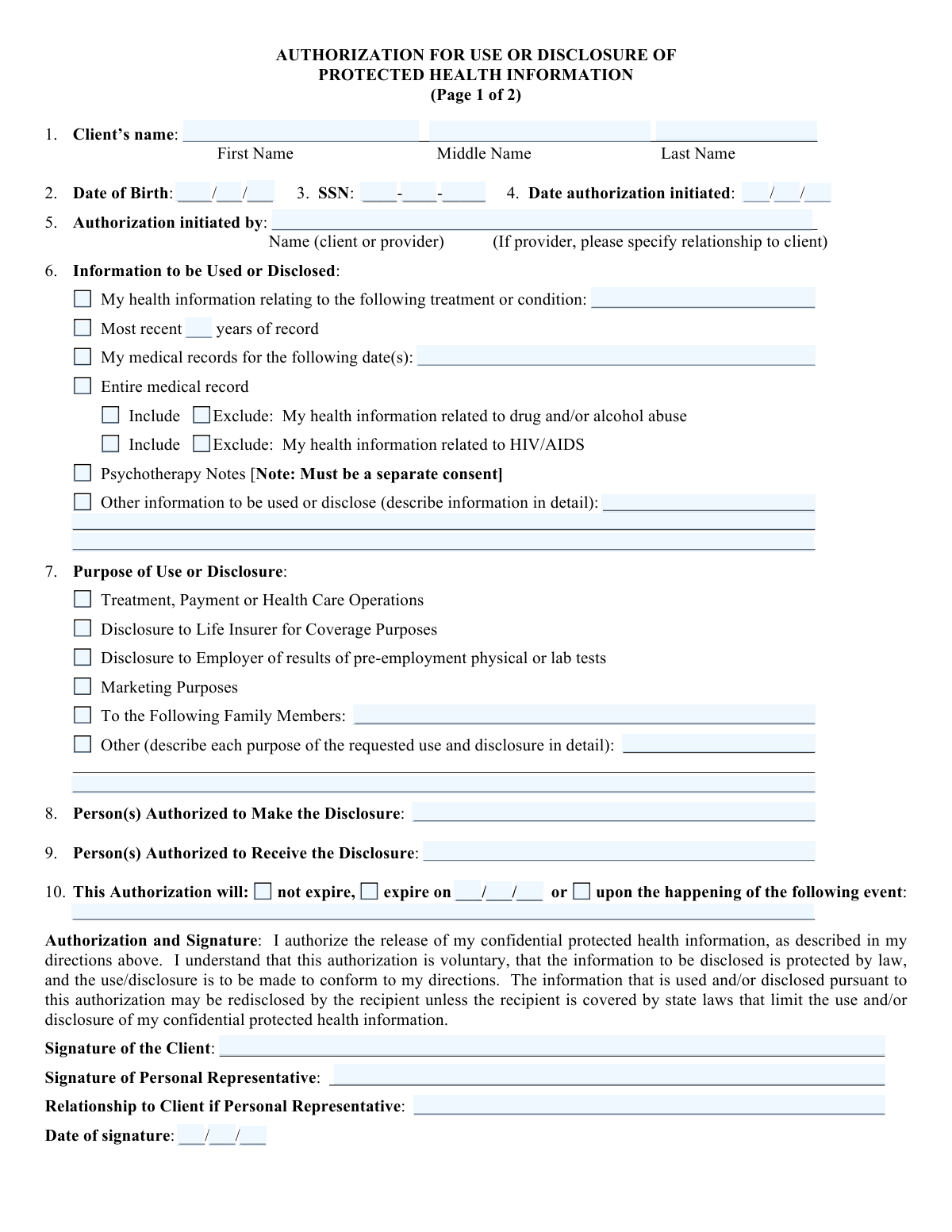
About health information forms
Patients, family caregivers, and legal professionals typically encounter these forms during major life transitions or administrative tasks. You may need to complete a medical consent form when switching to a new primary care doctor, filing a complex insurance claim, or managing a loved one’s Medicare benefits using Form CMS-10106. Similarly, specialized forms like the OCA Form 960 are frequently required in legal settings to allow attorneys access to medical records for a case. Because these documents are legally binding, accuracy is paramount to ensure that the request is not rejected by a hospital or insurance carrier.
Navigating these dense, multi-page PDFs can be an administrative burden, especially when multiple disclosures are required. Tools like Instafill.ai use AI to fill these health information forms in under 30 seconds, handling sensitive data accurately and securely to save you time and reduce the risk of manual errors.
Every form on this page can be completed without typing. Instafill is form filling software that reads a PDF and fills it for you — including flat and scanned documents that carry no fillable fields at all.
Forms in This Category
The forms in this category have a median Form Complexity Index of 50/100 (Moderate), measured across 14 forms by field count, input difficulty, length, conditional logic and structure. See how it is calculated.
- Enterprise-grade security & data encryption
- 99%+ accuracy powered by AI
- 1,000+ forms from all industries
- Complete forms in under 60 seconds
How to Choose the Right Form
Navigating medical privacy laws can be complex, but choosing the right form ensures your health information is shared securely and legally. Depending on your location, your healthcare provider, or your specific insurance needs, you will need to select a form that complies with both federal HIPAA regulations and local statutes.
Forms for Specific States
Privacy laws vary by state, and some jurisdictions require specific language to be legally binding.
- California: Use the California HIPAA Authorization Form to comply with the state’s Confidentiality of Medical Information Act (CMIA).
- Minnesota: The Minnesota Standard Consent Form to Release Health Information is required under the Minnesota Health Records Act.
- New York: Use the OCA Official Form No.: 960 for legal proceedings or government agency requests within New York state.
Provider-Specific Authorizations
Large health systems often prefer their own internal documentation to streamline the records-release process. If you are a patient at these institutions, use their dedicated forms:
- Kaiser Permanente Authorization for Use or Disclosure of Patient Health Information
- UCLA Form #30910, Authorization for Release of Health Information
Government and Insurance Use Cases
If you are managing benefits or applying for new coverage, specific forms are required to bridge the gap between providers and payers:
- Medicare: Beneficiaries must use Form CMS-10106, Medicare Authorization to Disclose Personal Health Information to allow caregivers or family members to assist with claims.
- Insurance Underwriting: Use the HIPAA Authorization for Release of Health-Related Information when sharing data with carriers like Transamerica for policy applications.
- Treatment Precertification: Providers requesting ABA therapy for Aetna members should use the Outpatient Behavioral Health (BH) – ABA Treatment Request (GR-69017-4).
General HIPAA Compliance
If none of the specific categories above apply, a standard HIPAA Authorization Form or the HIPAA Authorization Form for Release of Protected Health Information is typically sufficient for most general requests to share medical records between providers or with a third party.
Form Comparison
| Form | Primary Purpose | Scope/Jurisdiction | Who Files It | Key Information |
|---|---|---|---|---|
| California HIPAA Authorization Form, Authorization for the Release of Protected Health Information | Authorizes disclosure of PHI under CA privacy and federal laws. | State of California | Patient or plan member | Sensitive health data and general medical records. |
| Form CMS-10106, Medicare Authorization to Disclose Personal Health Information | Allows Medicare to share personal health information with a representative. | Federal (Medicare) | Medicare beneficiary | Medicare claims, benefits, and payment information. |
| HIPAA Authorization for Release of Health-Related Information | Releases health data to insurance for underwriting and claim evaluation. | Transamerica Insurance | Insurance applicant | Medical history required for policy underwriting. |
| HIPAA Authorization Form, Authorization for the Release of Protected Health Information | Standard consent for providers to disclose PHI to third parties. | General / Federal HIPAA | Patient | Specific records, expiration dates, and disclosure purposes. |
| HIPAA Authorization Form for Release of Protected Health Information | Grants permission for providers to share medical records with others. | General / Federal HIPAA | Patient | Detailed medical records and specific health history. |
| Kaiser Permanente Authorization for Use or Disclosure of Patient Health Information | Authorizes Kaiser Permanente to release records to outside third parties. | Kaiser Permanente | Kaiser patient | Provider-specific medical records for legal or personal use. |
| Minnesota Standard Consent Form to Release Health Information | Official state-approved form for releasing health records in Minnesota. | State of Minnesota | Patient or representative | Records protected under the MN Health Records Act. |
| OCA Official Form No.: 960, Authorization for Release of Health Information Pursuant to HIPAA | Official NY state form for legal or government PHI disclosure. | State of New York | Patient or attorney | Mental health, substance abuse, and HIV status details. |
| Outpatient Behavioral Health (BH) – ABA Treatment Request: Required Information for Precertification (GR-69017-4) | Requests precertification for outpatient Applied Behavior Analysis therapy services. | Aetna Health Plans | Healthcare provider | Clinical diagnosis, treatment hours, and medical necessity data. |
| UCLA Form #30910, Authorization for Release of Health Information | Authorizes UCLA Health to release confidential records to recipients. | UCLA Health System | UCLA patient | Clinical records for continuing care or personal use. |
Tips for health information forms
Instead of requesting all records, specify the exact dates of service needed for your request. This helps healthcare providers process your paperwork faster and prevents the unnecessary sharing of unrelated medical history.
Records involving mental health, substance abuse, or HIV/AIDS often require separate initials or checkboxes to be released. Ensure these sections are completed if you need those specific details included, or the provider will be legally required to withhold them.
Most health information forms require an expiration date or a specific event, such as completion of an insurance claim. Leaving this field blank can result in the form being returned as invalid or remaining active longer than you intended.
AI-powered tools like Instafill.ai can complete these forms in under 30 seconds with high accuracy, while keeping your sensitive data secure. This is a practical time-saver for patients and providers managing multiple authorizations across different medical systems.
Double-check that the name, address, and fax number of the person or entity receiving the records are accurate. Incomplete or vague recipient information is one of the most common reasons for delays in medical record transfers.
Always save a copy of the completed and signed form for your own records before submitting it. This allows you to track exactly what you authorized and serves as a reference if you ever need to revoke the authorization.
Stating a clear purpose, such as 'Continuity of Care' or 'Legal Proceeding,' helps the provider understand the context of the request. This clarity can speed up the review process by the facility's privacy or compliance department.
Frequently Asked Questions
A HIPAA authorization form is a legal requirement under federal law that ensures your protected health information (PHI) is not shared without your explicit consent. It protects your privacy by specifying exactly what information can be disclosed, who is authorized to share it, and who is allowed to receive it. Without this signed document, healthcare providers are generally prohibited from releasing your records to third parties like lawyers, insurance companies, or family members.
The form you need depends on your specific healthcare provider or the state where you receive care. For example, large systems like Kaiser Permanente or UCLA Health often require their own branded authorization forms, while states like California, Minnesota, and New York have specific forms that comply with local privacy laws. If you are a Medicare beneficiary, you should use the official CMS-10106 form to authorize the disclosure of your personal health data.
Yes, you can use AI-powered tools to complete these documents efficiently. Services like Instafill.ai can fill out complex health information forms in under 30 seconds by accurately extracting data from your existing documents and placing it into the correct fields. This helps ensure that sensitive information is transcribed correctly without the risk of manual entry errors.
While often used interchangeably, a medical consent form typically refers to a patient giving permission for a specific treatment or procedure. A patient release form, or HIPAA authorization, specifically focuses on the movement of medical records from one entity to another. Both are essential for maintaining legal compliance and ensuring that your healthcare preferences and privacy are respected.
In addition to the patient themselves, a legally authorized representative can sign these forms. This typically includes a parent or legal guardian for a minor, or an individual with a durable power of attorney for healthcare if the patient is unable to sign for themselves. The form usually requires the signer to indicate their relationship to the patient and provide supporting documentation if they are not the individual named in the records.
Filling out health forms manually can be time-consuming, but modern digital tools significantly speed up the process. Using AI-driven platforms like Instafill.ai, you can complete these forms in less than 30 seconds. The AI handles the heavy lifting by identifying the required fields and populating them with high accuracy from your source files.
Yes, certain types of care require more detailed information than a standard release form. For instance, providers requesting precertification for Applied Behavior Analysis (ABA) therapy for autism often need to submit specific clinical forms, such as Aetna’s GR-69017-4. These documents capture detailed treatment plans, diagnostic information, and provider credentials that are necessary for medical necessity reviews.
To be legally valid under HIPAA, the form must include a specific description of the information to be used or disclosed, the name of the person authorized to make the disclosure, and the name of the recipient. It must also include an expiration date or event, a statement regarding the patient's right to revoke the authorization, and the signature of the patient or their representative. Incomplete forms are often rejected by healthcare facilities to avoid privacy violations.
Completed forms should generally be submitted directly to the Health Information Management (HIM) department or the medical records office of the facility holding your records. Some providers allow for digital submission through a patient portal, while others may require the form to be mailed, faxed, or delivered in person. Always check with the specific provider or insurance company to confirm their preferred delivery method.
Yes, you have the right to revoke your authorization at any time, provided the information has not already been released. To do so, you typically need to submit a written request to the same office where you originally filed the authorization. Once the revocation is processed, the healthcare provider can no longer disclose your information based on that specific prior consent.
Glossary
- Form Complexity Index
- Instafill’s 0–100 measure of how much effort a form takes to complete, calculated deterministically from the form’s own structure rather than estimated. It combines the number of fillable fields (the largest factor), how difficult those fields are to complete based on their type, the number of pages that contain fields, the amount of conditional “fill-only-if” logic, and how many sections the form is divided into, then adds modifiers for tables and repeating lists, bundled instruction pages, and dense page layouts. A higher score means the form is harder to fill out by hand. The forms in this category have a median Form Complexity Index of 50/100 (Moderate). See exactly how it is calculated.
- PHI (Protected Health Information)
- Any individually identifiable health information, such as medical history, test results, or insurance details, that is protected under federal privacy laws.
- HIPAA (Health Insurance Portability and Accountability Act)
- A federal law that sets national standards for protecting sensitive patient health information from being disclosed without the patient's consent or knowledge.
- Covered Entity
- A healthcare provider, health plan, or healthcare clearinghouse that is legally required to follow HIPAA rules regarding the privacy and security of your health data.
- Precertification
- Also known as prior authorization, this is a process where an insurance company reviews a treatment plan in advance to determine if it is medically necessary and covered by the plan.
- Revocation
- The legal act of canceling a previously signed authorization, which prevents any future release of your health records to the specified party.
- CMS (Centers for Medicare & Medicaid Services)
- The federal agency that administers Medicare and works with state governments to manage Medicaid and health insurance portability standards.
- CMIA (Confidentiality of Medical Information Act)
- A California state law that provides additional privacy protections for medical information beyond the requirements of federal HIPAA regulations.
- CPT Codes (Current Procedural Terminology)
- A standardized set of codes used by healthcare providers to identify and bill for specific medical, surgical, and diagnostic services.