Fill out business forms
with AI.
Business forms are the backbone of corporate compliance and operational organization, covering everything from federal tax obligations to state licensing requirements. Properly managing these documents is crucial for maintaining legal standing, securing tax benefits, and ensuring that a company’s financial records remain accurate. Whether you are establishing a new entity or managing daily operations, these forms provide the necessary structure for reporting income, claiming deductions, and communicating with regulatory bodies like the IRS.
By continuing, you acknowledge Instafill's Privacy Policy and agree to get occasional product update and promotional emails.
About business forms
This collection is designed for a diverse range of users, including sole proprietors, small business owners, and corporate administrators. For instance, a freelancer might use Schedule C to report annual profit and loss, while a growing corporation might file Form 2553 to elect S-corp status for specific tax advantages. Additionally, specialized professionals like contractors or HR managers handling corporate travel accounts will find the specific applications and setup forms they need to move their projects forward. These forms are typically required during tax season, when changing business locations, or when applying for professional certifications.
Navigating dense, multi-page PDFs can be a significant administrative burden that takes away from high-level work. Tools like Instafill.ai use AI to fill these business forms in under 30 seconds, handling complex data accurately and securely to save you valuable time. By automating the data entry process, you can ensure your filings are precise while significantly reducing the time spent on manual paperwork.
Every form on this page can be completed without typing. Instafill is form filling software that reads a PDF and fills it for you — including flat and scanned documents that carry no fillable fields at all.
Forms in This Category
The forms in this category have a median Form Complexity Index of 66/100 (Complex), measured across 32 forms by field count, input difficulty, length, conditional logic and structure. See how it is calculated.
- Enterprise-grade security & data encryption
- 99%+ accuracy powered by AI
- 1,000+ forms from all industries
- Complete forms in under 60 seconds
How to Choose the Right Form
Small Business & Individual Tax Reporting
Choosing the right tax form depends heavily on your business structure and specific expenses.
- Sole Proprietors & LLCs: Use Schedule C (Form 1040) to report your annual profit or loss. If you work from home, you should also complete Form 8829 to calculate deductible home office expenses.
- Employees: Most employees can no longer deduct business expenses, but if you are an Armed Forces reservist, a qualified performing artist, or a fee-basis government official, use Form 2106 to claim these costs.
- Administrative Changes: If your business has moved or changed its "responsible party," you must notify the IRS using Form 8822-B to ensure you receive critical notices.
Corporate Structure & Foreign Ownership
These forms are essential for maintaining your entity's tax status and reporting cross-border activity.
- S-Corp Election: If your corporation (or eligible LLC) wants to be taxed as a pass-through entity to avoid double taxation, file Form 2553.
- Foreign-Owned Entities: Use Form 5472 if your U.S. corporation is at least 25% foreign-owned or if you are a foreign corporation engaged in a U.S. trade or business with reportable transactions.
- Tax-Exempt Organizations: If your non-profit earns income from activities unrelated to its exempt purpose, use Form 990-T to report that income.
Professional Licensing & Government Reporting
- Florida Contractors: Use DBPR CILB 6-A if you are a Certified General Contractor qualifying a business, or DBPR CILB 6-B for Certified Building Contractors.
- VA Subcontracting: Use Form 0896A to report subcontracts awarded to small and veteran-owned businesses for Department of Veterans Affairs compliance.
Travel, Finance & Insurance
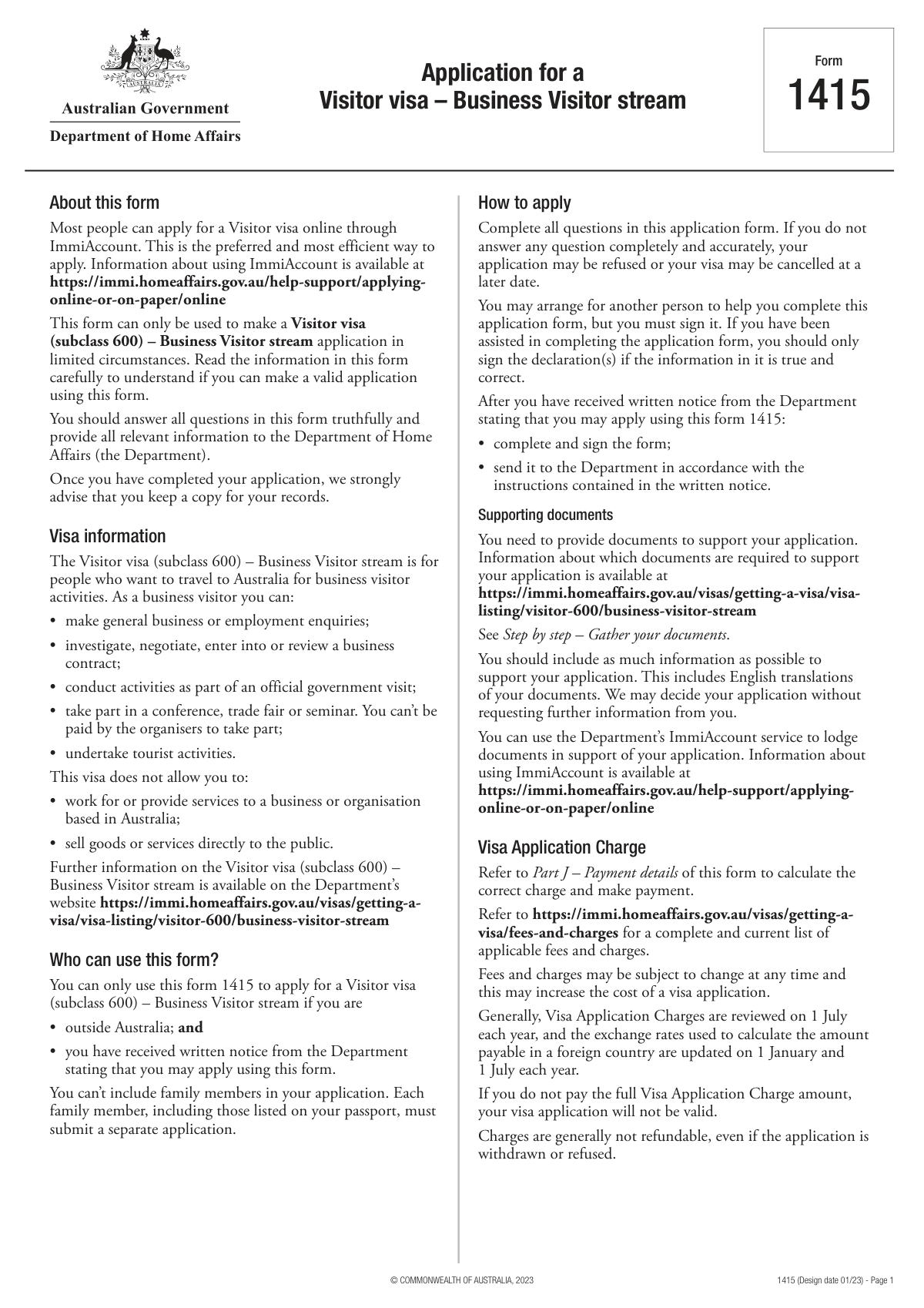
- International Business: Use Form 1415 for Australian Business Visitor visa applications. For corporate expense management in Hong Kong, use the American Express Business Travel Account Set-Up Form.
- Insurance Providers: Use the Transamerica New Business Cover Sheet as a submission checklist, or the Lifestyle Protector (LPMLA) form for risk policies involving multiple lives.
Form Comparison
| Form | Purpose | Who Files It | When to Use |
|---|---|---|---|
| Form 2106, Employee Business Expenses | Deduct unreimbursed employee business expenses | Qualified employees with eligible work-related expenses | Annually at tax filing time |
| Form 8829, Expenses for Business Use of Your Home | Calculate home office deduction for business use | Self-employed individuals with a home office | Annually when claiming home office deductions |
| Form 990-T, Exempt Org Business Income Tax Return | Report unrelated business income tax for exempt orgs | Tax-exempt organizations with unrelated business income | Annually when unrelated business income exists |
| Form 2553, Election by a Small Business Corporation | Elect S corporation tax status to avoid double taxation | Eligible small corporations seeking S corp status | Before or at start of desired tax year |
| Form 2553 (Rev. December 2017), Election by a Small Business Corporation | Elect S corporation status; pass income to shareholders | Corporations or eligible entities electing S corp treatment | Before deadline for desired S corp effective date |
| Form 5472 (Rev. December 2023), Information Return of a 25% Foreign-Owned U.S. Corporation or a Foreign Corporation Engaged in a U.S. Trade or Business | Report related-party transactions with foreign ownership | 25% foreign-owned U.S. corps or foreign U.S. trade corps | Annually with corporate tax return when transactions occur |
| Schedule C (Form 1040), Profit or Loss From Business (Sole Proprietorship) (2017) | Report business income, expenses, and net profit or loss | Sole proprietors and single-member LLC owners | Annually at individual tax filing time |
| Form 8822-B, Change of Address or Responsible Party — Business | Notify IRS of business address or responsible party change | Businesses and entities with an EIN | Within 60 days of address or responsible party change |
| Form 0896A, Report of Subcontracts to Small and Veteran-Owned Business | Report subcontracts awarded to small/veteran-owned businesses | VA contractors with subcontracting plans | When subcontracts are awarded under VA contracts |
| DBPR CILB 6-B, Application for Certified Building Contractor Who is Qualifying a Business | Apply for Florida certified building contractor license | Individuals seeking FL building contractor certification | When initially applying for contractor certification in Florida |
| Form 1415, Visitor Visa - Business Stream | Apply for Australian business visitor visa | Individuals traveling to Australia for business purposes | Before traveling to Australia for business activities |
| Lifestyle Protector – Risk New Business for Multiple Lives Assured (LPMLA 04/2024) | Apply for Liberty risk insurance policy covering multiple lives | Individuals applying for Lifestyle Protector insurance | When setting up new multi-life risk insurance policy |
Tips for business forms
Small errors on forms like Schedule C or Form 2106 can lead to incorrect tax liabilities or audit triggers. Always reconcile your reported income and expenses against your bank statements and receipts before finalizing the document.
Forms like the 2553 for S-Corp status have strict filing windows, usually within two months and 15 days of the start of the tax year. Missing these deadlines can result in the IRS rejecting your preferred tax treatment, which may lead to higher corporate taxes.
Use Form 8822-B to notify the IRS of address changes or a new responsible party within 60 days of the change. This ensures you receive critical tax notices and avoids potential penalties for failing to maintain accurate entity records.
Many business forms, such as Florida licensing applications or insurance cover sheets, require attachments like credit reports or HIPAA authorizations. Review the instructions early to collect these documents, preventing significant delays in processing your application.
AI-powered tools like Instafill.ai can complete complex business forms in under 30 seconds with high accuracy. Your data stays secure during the process, making it a reliable and massive time-saver for entrepreneurs managing multiple filings.
Business forms are often updated annually or for specific jurisdictions, such as regional travel account forms or different tax years for Schedule C. Always check the revision date or the specific state code to ensure you are submitting the current and valid document.
Frequently Asked Questions
This category includes a variety of documents ranging from IRS tax forms for sole proprietors and corporations to state-level licensing applications and corporate travel setup forms. You will find forms for reporting business income, electing specific tax statuses, updating company contact information, and applying for professional certifications.
Sole proprietors and single-member LLCs generally use Schedule C (Form 1040) to report their business income and deductible expenses. This form helps calculate the net profit or loss that will be used to determine your overall federal income tax and self-employment tax liability.
You should use Form 8822-B, Change of Address or Responsible Party — Business, to inform the IRS of any changes to your business mailing address, physical location, or the individual who controls the entity. It is important to file this within 60 days of the change to ensure you continue receiving critical tax notices.
Form 2553 is used by eligible small business corporations to elect S Corporation status, which allows corporate income and losses to pass through directly to shareholders. This election is often chosen to avoid double taxation on corporate earnings, but it must be filed by specific deadlines to be valid for the current tax year.
Yes, you can use AI tools like Instafill.ai to complete complex business forms by automatically extracting data from your source documents. These tools can accurately place your information into the correct fields, reducing the risk of manual entry errors and ensuring the form is ready for submission.
Using AI-powered platforms like Instafill.ai, most business forms can be filled out in under 30 seconds. The technology quickly identifies required fields and populates them with data from your uploaded files, significantly speeding up the administrative process compared to manual typing.
Form 5472 is an information return required for U.S. corporations that are at least 25% foreign-owned, or foreign corporations engaged in a U.S. trade or business. It is used to report transactions with related parties, providing the IRS with visibility into cross-border dealings and transfer pricing activities.
Yes, if you use a portion of your home exclusively and regularly for business, you may need Form 8829, Expenses for Business Use of Your Home. This form helps you calculate the deductible portion of your home-related expenses, such as mortgage interest, insurance, and utilities.
For those seeking to qualify a business in the Florida construction industry, forms like DBPR CILB 6-A (General Contractor) or 6-B (Building Contractor) are required. These applications document your professional experience, financial responsibility, and insurance coverage for review by the Construction Industry Licensing Board.
Submission locations vary depending on the form's purpose; federal tax forms are typically mailed to specific IRS service centers or filed electronically. State licensing forms are sent to the relevant state department, while corporate account forms are submitted directly to the issuing financial institution.
Qualified employees, such as Armed Forces reservists or fee-basis government officials, can use Form 2106 to report ordinary and necessary business expenses. This form helps calculate deductions for travel, meals, and vehicle use that were not reimbursed by their employer.
Many business forms, especially those for insurance or professional licensing, require supplemental documents such as credit reports, proof of insurance, or identity verification. It is common to use a cover sheet to ensure all necessary attachments are included before submission to prevent processing delays.
Glossary
- Form Complexity Index
- Instafill’s 0–100 measure of how much effort a form takes to complete, calculated deterministically from the form’s own structure rather than estimated. It combines the number of fillable fields (the largest factor), how difficult those fields are to complete based on their type, the number of pages that contain fields, the amount of conditional “fill-only-if” logic, and how many sections the form is divided into, then adds modifiers for tables and repeating lists, bundled instruction pages, and dense page layouts. A higher score means the form is harder to fill out by hand. The forms in this category have a median Form Complexity Index of 66/100 (Complex). See exactly how it is calculated.
- EIN (Employer Identification Number)
- A unique nine-digit number assigned by the IRS to identify a business entity for tax and filing purposes, similar to a Social Security number for individuals.
- S Corporation
- A business structure that meets specific IRS requirements to pass corporate income, losses, and credits through to shareholders to avoid double taxation.
- Sole Proprietorship
- An unincorporated business owned and run by one individual with no legal distinction between the owner and the business entity.
- Responsible Party
- The individual who ultimately owns or controls an entity or exercises ultimate effective control over its daily operations.
- Pass-Through Taxation
- A tax arrangement where the business itself does not pay income tax; instead, profits and losses are reported on the owners' personal tax returns.
- Qualifying a Business
- The process where a licensed professional, such as a contractor, links their individual license to a business entity to allow that company to legally perform regulated work.
- Related Party
- A person or company that has a controlling interest or significant influence over another business, often requiring special disclosure for cross-border transactions.
- UBTI (Unrelated Business Taxable Income)
- Income earned by a tax-exempt organization from activities not related to its primary exempt purpose, which may be subject to federal income tax.
- Underwriting
- The process used by insurance companies to assess risk and determine the terms, coverage, and premiums for a new policy application.