Fill out distribution forms
with AI.
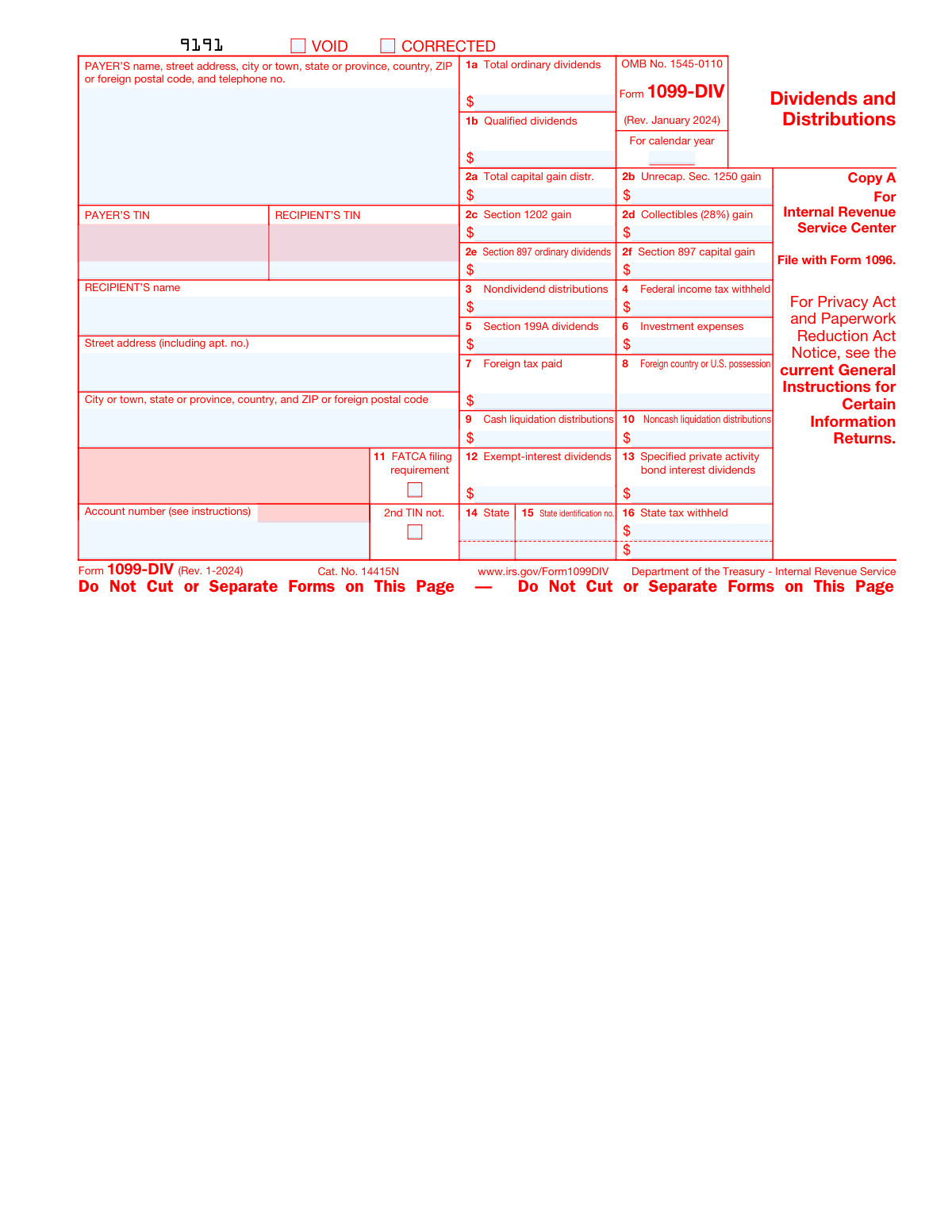
Distribution forms are the essential paperwork required to move money out of tax-advantaged accounts or report income from investments. This category covers a broad spectrum of documents, from IRS reporting forms like the 1099-R and 1099-DIV to specific provider request forms from major financial institutions such as Fidelity, Vanguard, and Charles Schwab. These documents are critical because they dictate how funds are taxed, where rollovers are sent, and ensure that both the account holder and the government have an accurate record of the financial transaction.
By continuing, you acknowledge Instafill's Privacy Policy and agree to get occasional product update and promotional emails.
About distribution forms
Typically, these forms are needed by individuals reaching retirement age, employees changing jobs, or beneficiaries managing inherited assets. Whether you are initiating a Required Minimum Distribution (RMD), requesting a hardship withdrawal from a 401(k), or moving a 403(b) into a Roth IRA, accuracy is paramount. Missing signatures or incorrect tax withholding elections can lead to significant processing delays or unintended tax penalties. Business owners and plan administrators also utilize this category of employee benefit forms to authorize "force-outs" or corrective distributions to keep their plans in compliance with IRS regulations.
Because these documents often require precise data from multiple sources, tools like Instafill.ai use AI to fill these forms in under 30 seconds while handling the information accurately and securely.
Every form on this page can be completed without typing. Instafill is form filling software that reads a PDF and fills it for you — including flat and scanned documents that carry no fillable fields at all.
Forms in This Category
The forms in this category have a median Form Complexity Index of 52/100 (Moderate), measured across 78 forms by field count, input difficulty, length, conditional logic and structure. See how it is calculated.
- Enterprise-grade security & data encryption
- 99%+ accuracy powered by AI
- 1,000+ forms from all industries
- Complete forms in under 60 seconds
Tips for distribution forms
A simple typo in a Social Security number or a bank routing number can cause significant delays or even result in funds being sent to the wrong account. Double-check all numerical entries and account names before submitting to ensure your distribution is processed smoothly.
Choosing the wrong distribution method can trigger immediate tax liabilities and early withdrawal penalties. If you intend to move funds to another retirement account, ensure you select the 'Direct Rollover' option to maintain the tax-advantaged status of your savings.
Many employer-sponsored benefit plans require spousal consent for distributions, which often must be witnessed by a notary public. Review the signature section of your form early to see if you need to arrange for a notary, as missing these authorizations is a common reason for rejection.
Distribution forms often include default withholding rates that may not align with your actual tax bracket. Take a moment to review your specific tax situation to decide if you should increase or decrease these elections to avoid a surprise bill during tax season.
Filling out complex distribution paperwork can be tedious, but AI-powered tools like Instafill.ai can complete these forms in under 30 seconds with high accuracy. Your data stays secure during the process, providing a practical and fast solution for managing multiple retirement or benefit documents.
If you are requesting a distribution due to a job change, disability, or financial hardship, have your supporting documents organized beforehand. Most plan administrators will require evidence, such as a termination letter or medical bills, to be attached alongside the primary distribution form.
Frequently Asked Questions
Distribution forms are legal documents used to request or report the withdrawal of funds from retirement plans, insurance contracts, or investment accounts. These forms ensure that the movement of money is authorized by the account owner and properly documented for tax reporting purposes by the IRS and the financial institution.
A distribution request form, such as those provided by Fidelity or Vanguard, is what you fill out to start the process of moving money out of your account. Conversely, tax reporting forms like the 1099-R or 1099-DIV are typically issued to you by the financial institution after the distribution has occurred so that you can report that income on your tax return.
Yes, AI tools can significantly simplify the process of completing complex financial documents. AI-powered services like Instafill.ai can fill out distribution forms in under 30 seconds by accurately extracting your personal and financial data from source documents and placing it into the correct fields.
A direct rollover form is used to move funds from one tax-advantaged retirement account directly to another, which generally avoids immediate taxation. A cash distribution form is used when you want the funds paid directly to you, a process that often triggers mandatory federal tax withholding and potential early withdrawal penalties.
Most financial institutions are required to send out 1099-R, 1099-DIV, and 1099-SA forms by January 31st of the year following the distribution. If you have not received your forms by early February, it is recommended to check your online account or contact your plan administrator for a digital copy.
Manually filling out retirement distribution forms can be time-consuming, often taking 20 minutes or more to ensure all account numbers and tax elections are correct. Using an AI tool like Instafill.ai can reduce this time to less than 30 seconds by automating the data entry process with high precision.
The primary account holder must always sign the form, but employer-sponsored plans often require additional authorizations. Depending on the plan rules and the amount being withdrawn, you may also need a signature from your Plan Sponsor, a Third Party Administrator, or even a notarized signature from a spouse.
When you take a distribution from an HSA or MSA, the event is reported on Form 1099-SA. This form is used by the taxpayer to show the IRS how much was withdrawn, which helps determine if the funds were used for qualified medical expenses and if any portion is taxable.
Yes, many plans allow for 'In-Service Distributions' or 'Hardship Distributions' while you are still working for the company. You will need to look for forms specifically labeled for these purposes, as they often require documentation of a financial emergency or proof that you have reached a specific age milestone defined by the plan.
Beneficiaries should use a 'Beneficiary Distribution Form' or an 'Inherited IRA Distribution' form provided by the financial institution. These forms allow you to choose how to receive the assets, such as through a lump-sum payment, established installment payments, or by moving the funds into a new inherited account in your name.
Glossary
- Form Complexity Index
- Instafill’s 0–100 measure of how much effort a form takes to complete, calculated deterministically from the form’s own structure rather than estimated. It combines the number of fillable fields (the largest factor), how difficult those fields are to complete based on their type, the number of pages that contain fields, the amount of conditional “fill-only-if” logic, and how many sections the form is divided into, then adds modifiers for tables and repeating lists, bundled instruction pages, and dense page layouts. A higher score means the form is harder to fill out by hand. The forms in this category have a median Form Complexity Index of 52/100 (Moderate). See exactly how it is calculated.
- Form 1099-R
- An IRS tax form used to report the distribution of retirement benefits, such as those from a 401(k), IRA, or pension. It details the total amount of the payout and how much was withheld for federal and state taxes.
- Rollover
- The process of moving retirement savings from one eligible account to another without paying immediate taxes. A 'direct' rollover sends funds straight to the new financial institution, while an 'indirect' rollover involves the funds being paid to the individual first.
- RMD (Required Minimum Distribution)
- The minimum amount the IRS requires account holders to withdraw from most retirement accounts annually once they reach a specific age. Failing to take the full RMD can result in a significant tax penalty on the amount not withdrawn.
- QDRO (Qualified Domestic Relations Order)
- A legal judgment or decree that grants a former spouse or other dependent the right to receive a portion of a participant's retirement plan assets. This is typically issued during divorce or legal separation proceedings.
- In-Service Distribution
- A withdrawal of funds from an employer-sponsored retirement plan while the participant is still actively employed by that company. These distributions are usually only allowed if the participant has reached a certain age or met specific plan milestones.
- Hardship Distribution
- An emergency withdrawal from a retirement plan to meet an 'immediate and heavy financial need,' such as medical expenses or preventing eviction. These distributions are generally taxable and may be subject to an additional early withdrawal penalty.
- Separation from Service
- A technical term indicating that an employee has left their employer due to resignation, termination, or retirement. This status change is often a requirement to become eligible for a full distribution of retirement plan assets.
- TPA (Third Party Administrator)
- An external organization hired by an employer to manage the day-to-day administrative tasks of a retirement plan. They often review and approve distribution forms before funds are released by the financial custodian.
- QCD (Qualified Charitable Distribution)
- A direct transfer of funds from an IRA to a qualified charity, available to individuals aged 70½ or older. This distribution can count toward an RMD but is excluded from the individual's taxable income.