Fill out income tax forms
with AI.
Income tax forms are the primary documents used by individuals and businesses to report annual earnings, calculate tax liabilities, and ensure compliance with the Internal Revenue Service (IRS) and state revenue departments. These forms are critical because they determine whether a taxpayer is eligible for a refund or owes additional payments. Beyond standard annual filings, this category covers specialized documents for reporting net investment income, social security tax on unreported tips, and business income for tax-exempt organizations.
By continuing, you acknowledge Instafill's Privacy Policy and agree to get occasional product update and promotional emails.
About income tax forms
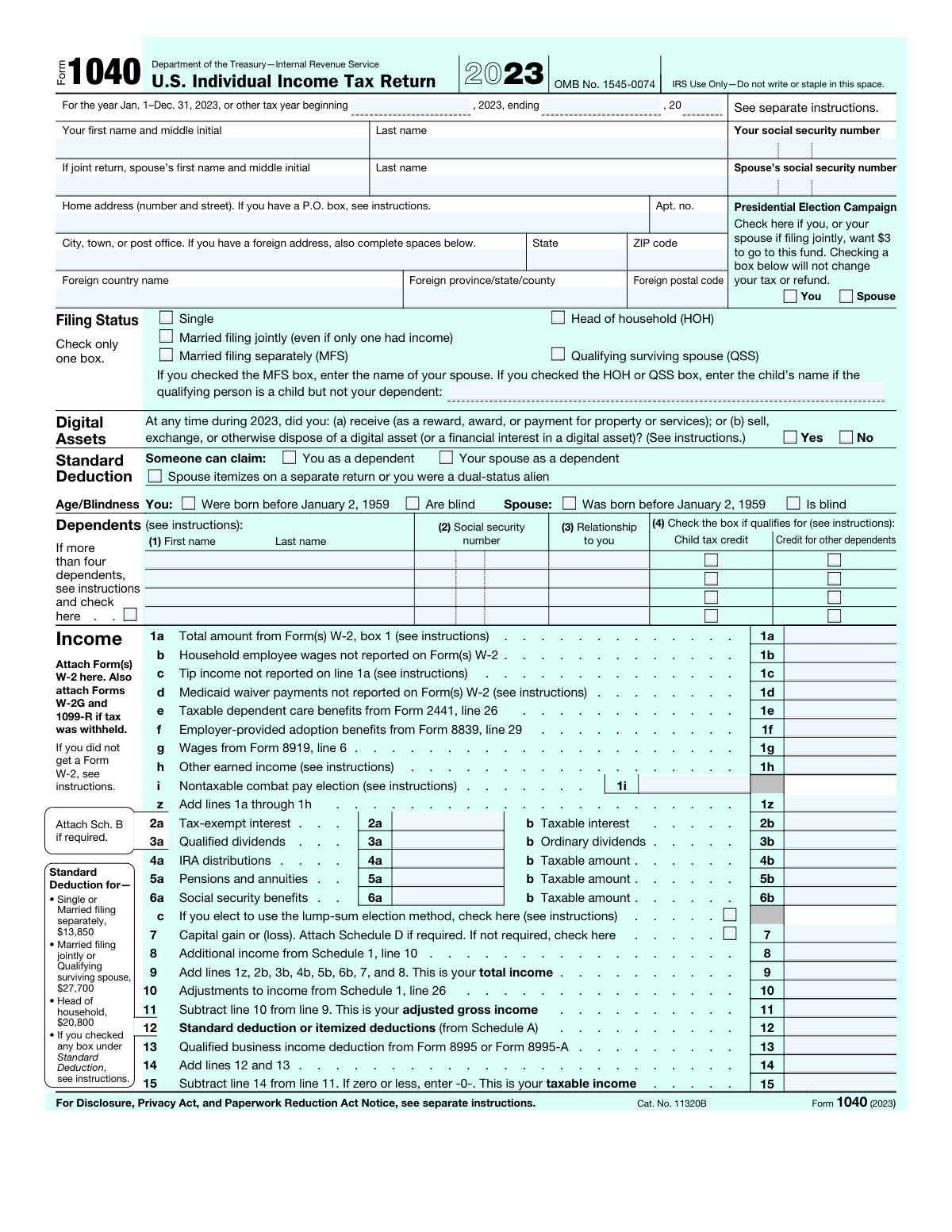
A wide range of taxpayers requires these forms depending on their specific financial situation. For instance, individuals use Form 1040 for their main returns, while business owners might need Form 1120-S for an S Corporation or Form 1120 for a C Corporation. If you discover an error after filing, an amended return like Form 1040-X is necessary to correct your records. These forms are also vital for nonresidents, estates, and trusts to fulfill their legal obligations and avoid penalties for underreporting or late filing.
Managing complex tax paperwork can be overwhelming, but tools like Instafill.ai use AI to fill these forms in under 30 seconds while ensuring data is handled accurately and securely. This technology helps streamline the process of gathering financial data and placing it into the correct fields, making tax season significantly more manageable for both professional preparers and individual filers.
Every form on this page can be completed without typing. Instafill is form filling software that reads a PDF and fills it for you — including flat and scanned documents that carry no fillable fields at all.
Forms in This Category
The forms in this category have a median Form Complexity Index of 70/100 (Complex), measured across 45 forms by field count, input difficulty, length, conditional logic and structure. See how it is calculated.
- Enterprise-grade security & data encryption
- 99%+ accuracy powered by AI
- 1,000+ forms from all industries
- Complete forms in under 60 seconds
How to Choose the Right Form
Not sure which income tax form you need? Here's a quick breakdown by situation:
Filing Your Individual Federal Return
- Form 1040 (2024 or 2025 version) is the starting point for most U.S. citizens and resident aliens reporting annual income.
- Form 1040-NR is for nonresident aliens earning U.S.-sourced income.
- Form 1040-C is specifically for nonresident aliens who are leaving the U.S. and must settle tax obligations before departing.
- Need more time? Form 4868 grants an automatic 6-month filing extension — but remember, it doesn't extend your payment deadline.
Correcting a Previously Filed Return
- Use Form 1040-X (also available as the Rev. February 2024 version) to amend a federal individual return — whether to claim a missed refund or correct underreported income.
- Illinois filers correcting a state return should use Form IL-1040-X.
Business, Corporate & Organizational Returns
- Form 1120 is for standard C corporations reporting taxable income.
- Form 1120-S (standard or 2025 version) is for S corporations passing income through to shareholders.
- Form 1120-H is exclusively for qualifying homeowners associations (HOAs).
- Form 1041 covers estates and trusts — fiduciaries file this to report income and issue Schedule K-1s to beneficiaries.
- Form 990 and Form 990-T are for tax-exempt nonprofits — 990 for general annual reporting, 990-T for unrelated business income.
State-Specific Forms
- California residents: Use Form 540 for your state return; add Form FTB 3514 if claiming the California Earned Income Tax Credit.
- Illinois filers: Attach Schedule IL-E/EIC to your IL-1040 to claim dependents or the Illinois EITC.
- Arizona taxpayers: Use Arizona Form 285-I to authorize a representative to access your state tax information.
- Connecticut filers: Use Form APL-505 to protest a disallowed EITC claim.
Specialized Situations
- Form 4137 — Report unreported tip income for Social Security and Medicare purposes.
- Form 8960 — Calculate Net Investment Income Tax if your investment income exceeds IRS thresholds.
- Form 945 — Report withheld federal tax from pensions, IRAs, or gambling winnings.
- Form SS-8 — Ask the IRS to determine whether a worker is an employee or independent contractor.
- Form 1041 — Required if you're managing an estate or trust with taxable income.
> Quick tip: If you're an individual U.S. resident filing for the current tax year, start with Form 1040. Everything else branches from there based on your specific income sources, entity type, or state.
Form Comparison
| Form | Purpose | Who Files It | When to Use |
|---|---|---|---|
| Form 1040, U.S. Individual Income Tax Return | Report annual income, calculate federal tax liability | U.S. citizens and resident aliens | Annually for each tax year |
| Form 1040, U.S. Individual Income Tax Return (2025) | Report 2025 income, claim deductions and credits | U.S. citizens and resident aliens | Filing 2025 federal individual tax return |
| Form 1040-X, Amended U.S. Individual Income Tax Return | Correct errors on a previously filed tax return | Individual taxpayers amending prior returns | After discovering errors on original return |
| Form 1040-X (Rev. February 2024), Amended U.S. Individual Income Tax Return | Correct or change a previously filed 1040-series return | Individual taxpayers correcting prior filings | When original return had errors or omissions |
| Form 1040-NR, U.S. Nonresident Alien Income Tax Return | Report U.S.-sourced income for nonresident aliens | Nonresident aliens with U.S. income | Annually if earning U.S. income as nonresident |
| Form 1040-C, U.S. Departing Alien Income Tax Return | Report income and settle tax before leaving the U.S. | Nonresident aliens departing the United States | Before leaving the U.S. as a nonresident alien |
| Form 1041, U.S. Income Tax Return for Estates and Trusts | Report income, deductions, and gains of estates/trusts | Fiduciaries of estates and trusts | Annually for estates or trusts with taxable income |
| Form 1120-S, U.S. Income Tax Return for an S Corporation | Report income, losses, and deductions for S corporations | S corporations filing federal tax returns | Annually for each S corporation tax year |
| Form 1120-S (2025), U.S. Income Tax Return for an S Corporation | Report 2025 S corporation income and pass-through items | S corporations for the 2025 tax year | Filing 2025 S corporation federal tax return |
| Form 1120 (2025), U.S. Corporation Income Tax Return | Calculate and report C corporation taxable income and tax | U.S. C corporations | Annually for each corporate tax year |
| Form 1120-H, U.S. Income Tax Return for Homeowners Associations | Report taxable non-exempt income for qualifying HOAs | Qualifying homeowners associations | Annually when electing Section 528 tax treatment |
| Form 990, Return of Organization Exempt From Income Tax | Report financial activities and governance of nonprofits | Tax-exempt organizations (nonprofits) | Annually to maintain tax-exempt status |
| Form 990-T, Exempt Org Business Income Tax Return | Report unrelated business income of exempt organizations | Tax-exempt organizations with unrelated business income | When organization earns unrelated business income |
| Form 4868, Application for Automatic Extension of Time To File U.S. Individual Income Tax Return | Request 6-month extension to file individual tax return | Individual taxpayers needing more filing time | Before the original tax filing deadline |
| Form 8960, Net Investment Income Tax | Calculate net investment income tax owed | Individuals, estates, and trusts with investment income | When net investment income exceeds threshold |
| Form 4137, Social Security and Medicare Tax on Unreported Tip Income | Report unreported tip income for SS and Medicare taxes | Employees with tips not reported to employer | When tip income was not fully reported to employer |
| Form 945, Annual Return of Withheld Federal Income Tax | Report federal income tax withheld from non-payroll payments | Employers withholding tax on pensions, IRAs, gambling | Annually to report non-payroll withholding to IRS |
| Form 540, California Resident Income Tax Return | Report income and calculate California state tax liability | California full-year residents | Annually for California state income taxes |
| Form FTB 3514, California Earned Income Tax Credit | Claim California Earned Income Tax Credit | Low-to-moderate income California taxpayers | When eligible for California EITC |
| Arizona Form 285-I, Individual Income Tax Disclosure/Representation Authorization Form | Authorize a representative to access Arizona tax info | Arizona individual taxpayers naming a tax representative | When authorizing third-party access to AZ tax records |
| Form SS-8 (Rev. December 2023), Determination of Worker Status for Purposes of Federal Employment Taxes and Income Tax Withholding | Request IRS determination of employee vs. contractor status | Workers or firms with worker classification disputes | When worker classification for tax purposes is unclear |
| 2023 Schedule IL-E/EIC, Illinois Exemption and Earned Income Tax Credit (Illinois Department of Revenue) | Claim Illinois dependent exemptions and EITC | Illinois taxpayers with dependents or qualifying for EITC | When filing IL-1040 with dependents or EITC claim |
| 2023 Form IL-1040-X, Amended Individual Income Tax Return (Illinois Department of Revenue) | Correct a previously filed Illinois individual tax return | Illinois taxpayers amending state income tax return | After errors found or federal return was adjusted |
| Form APL-505, Taxpayer's Earned Income Tax Credit Protest | Protest Connecticut EITC disallowance or tax assessment | Connecticut taxpayers disputing an EITC-related notice | After receiving CT DRS EITC disallowance or assessment |
| Form 1041, U.S. Income Tax Return for Estates and Trusts | Report estate or trust income and distributions to beneficiaries | Executors, trustees, or personal representatives | Annually for estates or trusts with reportable income |
Tips for income tax forms
One of the most common errors on income tax forms is entering an incorrect Social Security Number or EIN. A mismatched number can delay processing, trigger IRS notices, or cause your refund to be held — so verify these digits carefully before submitting any form.
Filing Form 4868 gives you extra time to submit your return, but it does not extend the deadline to pay taxes owed. If you expect to owe, estimate and pay as much as possible by the original due date to avoid interest and penalties.
Using the wrong form is a surprisingly common mistake — for example, nonresident aliens must use Form 1040-NR instead of the standard Form 1040, and S corporations file Form 1120-S rather than Form 1120. Take a moment to confirm you've selected the correct form for your specific tax situation before you start filling it out.
Many income tax forms — especially amended returns like Form 1040-X or state forms like IL-1040-X — require attachments such as W-2s, 1099s, schedules, or federal adjustment notices. Gather all supporting documents before you begin to avoid incomplete submissions that can delay processing or trigger follow-up requests.
AI-powered tools like Instafill.ai can complete income tax forms quickly and with high accuracy, saving you significant time — especially when you're dealing with multiple forms across federal and state filings. Your data stays secure throughout the process, making it a practical and reliable option whether you're filing a Form 1040, an amended return, or a specialized form like Form 1041 or 1120-S.
When filing an amended return such as Form 1040-X or Illinois Form IL-1040-X, the explanation section is not optional — clearly describe what changed and why. Vague or missing explanations are a leading reason amended returns get flagged for review or delayed.
If you have income not subject to withholding — such as self-employment income, investment income, or trust distributions — you may need to make quarterly estimated tax payments to avoid underpayment penalties. Use IRS Direct Pay online to make payments quickly without mailing a check.
Credits like the California Earned Income Tax Credit (FTB 3514) and the Illinois EITC have specific eligibility rules around income limits, filing status, and qualifying children. Claiming a credit you don't qualify for can result in a disallowance notice, a required protest filing, or a penalty — so review the eligibility criteria for each credit carefully.
Frequently Asked Questions
Most U.S. residents use Form 1040 to report their annual income, claim deductions, and calculate their tax liability. This primary form is used to determine whether you owe the Internal Revenue Service or are entitled to a refund for the tax year.
You should use Form 1040-X, the Amended U.S. Individual Income Tax Return, to correct errors or update information like income, deductions, or credits. Filing an amended return ensures your tax records are accurate and can help you claim additional refunds you may have missed.
Nonresident aliens typically use Form 1040-NR to report U.S.-sourced income and calculate their specific tax obligations. If you are a nonresident alien departing the country, you may also need to file Form 1040-C to fulfill tax responsibilities before you leave.
Yes, AI tools like Instafill.ai can help you complete various income tax forms by accurately extracting data from your source documents and placing it into the correct fields. This technology simplifies the process of handling complex IRS and state-level paperwork by automating the most tedious parts of the form.
Using AI-powered platforms like Instafill.ai, many users can complete their tax forms in under 30 seconds. The system extracts data from your uploads and populates the PDF automatically, which significantly reduces the time and effort required compared to manual entry.
Form 1120 is used by standard C corporations to report taxable income and calculate corporate tax liability. Form 1120-S is specifically for S corporations, which are pass-through entities where income and losses are generally allocated to shareholders rather than taxed at the corporate level.
You can file Form 4868 to request an automatic six-month extension of time to file your U.S. individual income tax return. It is important to remember that while this extends the filing deadline, it does not extend the deadline for paying any taxes you might owe.
Most states that collect income tax require their own specific forms, such as Form 540 for California or Form TC-40 for Utah. These state returns are filed in addition to your federal return to report income and claim state-specific credits like the state-level Earned Income Tax Credit.
Fiduciaries use Form 1041 to report the income, deductions, and losses of estates and trusts. This form ensures that the entity's financial activities are properly documented and that beneficiaries receive accurate information for their own tax reporting via Schedule K-1.
If you received tips that were not reported to your employer, you should use Form 4137 to calculate the Social Security and Medicare taxes due on that income. Reporting this ensures your earnings records are accurate, which can impact your future social security benefits and eligibility.
After determining your tax liability through your forms, you can pay the IRS online through services like IRS Direct Pay or other electronic payment systems. These platforms allow you to pay estimated taxes or balance-due amounts directly from your bank account for faster processing.
Tax-exempt organizations generally file Form 990 to provide the IRS with details about their mission, programs, and finances to maintain transparency. If the organization has income from business activities unrelated to its exempt purpose, it may also need to file Form 990-T.
Glossary
- Form Complexity Index
- Instafill’s 0–100 measure of how much effort a form takes to complete, calculated deterministically from the form’s own structure rather than estimated. It combines the number of fillable fields (the largest factor), how difficult those fields are to complete based on their type, the number of pages that contain fields, the amount of conditional “fill-only-if” logic, and how many sections the form is divided into, then adds modifiers for tables and repeating lists, bundled instruction pages, and dense page layouts. A higher score means the form is harder to fill out by hand. The forms in this category have a median Form Complexity Index of 70/100 (Complex). See exactly how it is calculated.
- Adjusted Gross Income (AGI)
- Your total gross income minus specific deductions (such as student loan interest or retirement contributions) before standard or itemized deductions are applied. AGI is a key figure on Form 1040 that determines eligibility for many credits and deductions.
- Earned Income Tax Credit (EITC)
- A refundable federal (and sometimes state) tax credit for low-to-moderate income workers that can reduce the amount of tax owed and may result in a refund even if no tax is owed. Eligibility depends on income, filing status, and number of qualifying children.
- Estimated Taxes
- Quarterly tax payments made to the IRS by individuals who have income not subject to withholding, such as self-employment, investment, or rental income. Failure to pay enough estimated tax throughout the year can result in an underpayment penalty.
- Pass-Through Taxation
- A tax structure used by S corporations, partnerships, and similar entities where business income, deductions, and credits flow through to individual owners' tax returns rather than being taxed at the entity level. Shareholders report their share of income on their personal Form 1040.
- Fiduciary
- A person or institution legally responsible for managing assets on behalf of another party, such as an executor of an estate or a trustee of a trust. Fiduciaries are required to file Form 1041 to report the income and tax obligations of the estate or trust they manage.
- Net Investment Income Tax (NIIT)
- A 3.8% federal surtax imposed on certain investment income (such as dividends, capital gains, and rental income) for individuals, estates, and trusts whose income exceeds specific thresholds. It is calculated and reported on Form 8960.
- Unrelated Business Income (UBI)
- Income earned by a tax-exempt organization from activities that are not substantially related to its exempt purpose. Tax-exempt organizations must report and pay tax on UBI using Form 990-T.
- IRS Tax Transcript
- An official IRS summary of your tax return information or account history, available through the IRS's online 'Get Transcript' tool. Transcripts are commonly used to verify income for loan applications, resolve discrepancies, or confirm prior-year filing details.
- Employer Identification Number (EIN)
- A unique nine-digit number assigned by the IRS to identify a business entity for tax purposes, similar to a Social Security Number for individuals. It is required for filing business tax returns, opening business bank accounts, and hiring employees.
- Sailing Permit (Departing Alien)
- A certificate issued by the IRS (sometimes called a 'certificate of compliance') that nonresident or resident aliens typically must obtain before leaving the United States to confirm their U.S. tax obligations are settled. Form 1040-C is used as part of the process to obtain this permit.