Fill out prior authorization forms
with AI.
Prior authorization forms are essential clinical documents used to secure insurance approval before a patient receives specific medical treatments, specialized medications, or diagnostic procedures. These forms serve as a critical bridge between healthcare providers and insurance carriers, ensuring that the proposed care meets medical necessity guidelines and is covered under a patient’s specific health plan. By completing these requests accurately, providers help prevent unexpected out-of-pocket costs for patients and reduce the risk of claim denials after services are rendered.
By continuing, you acknowledge Instafill's Privacy Policy and agree to get occasional product update and promotional emails.
About prior authorization forms
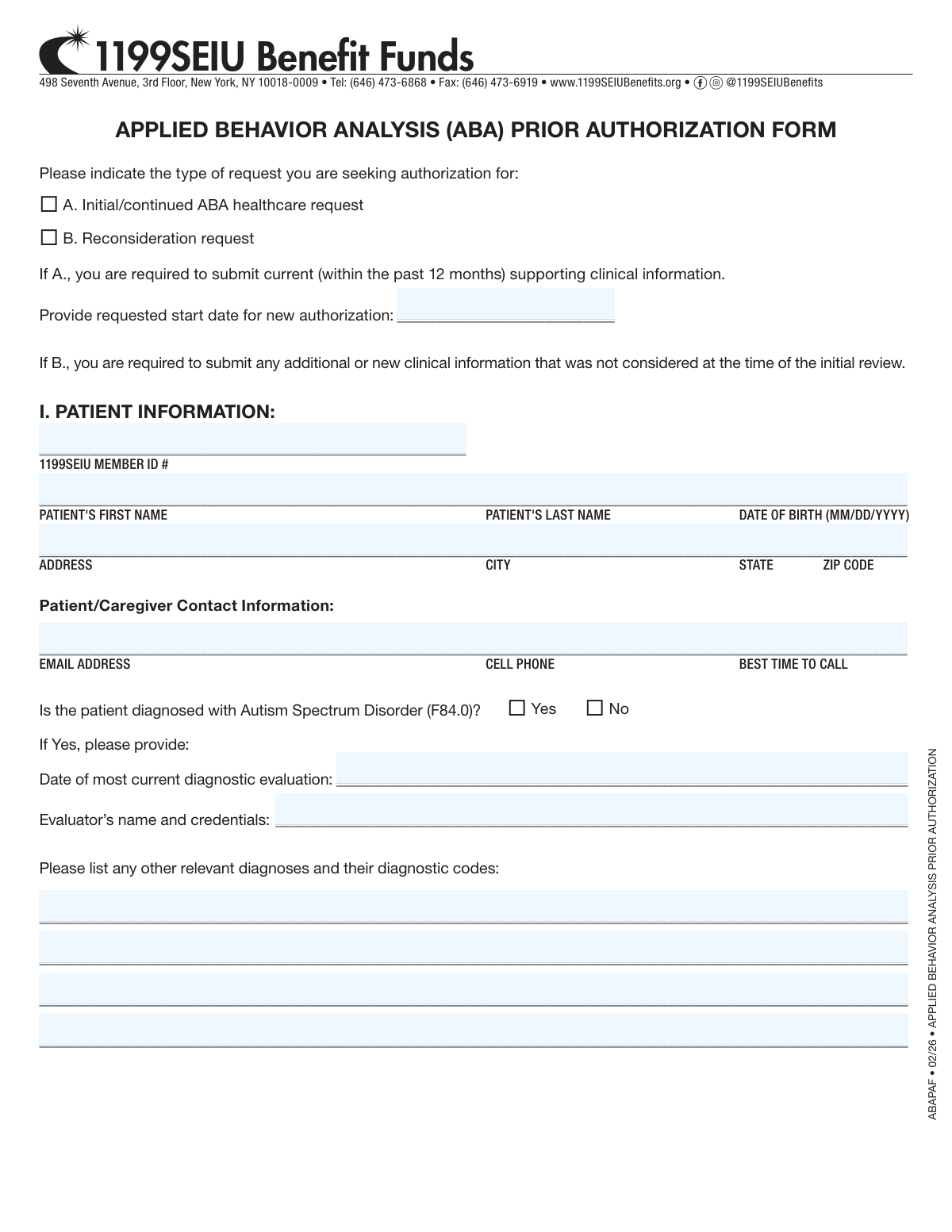
This category includes a wide range of healthcare forms required by major insurers and state health programs, such as Alameda Alliance for Health, Blue Shield of California, and various Medicaid administrators. Typical scenarios requiring these documents include requests for specialty prescription drugs like Ozempic or Mounjaro, advanced imaging services like MRIs and CT scans, and specialized behavioral treatments such as Applied Behavioral Analysis (ABA) therapy. Medical office staff, prescribing physicians, and clinical supervisors typically handle these forms to maintain continuity of care for their patients and ensure compliance with utilization management protocols.
Managing the high volume of paperwork required for insurance approvals can be a significant administrative burden for busy medical practices. Tools like Instafill.ai use AI to fill these forms in under 30 seconds, handling complex medical data accurately and securely to streamline the approval process. This practical time-saver allows healthcare teams to reduce manual data entry and focus more on direct patient care.
Every form on this page can be completed without typing. Instafill is form filling software that reads a PDF and fills it for you — including flat and scanned documents that carry no fillable fields at all.
Forms in This Category
The forms in this category have a median Form Complexity Index of 55/100 (Moderate), measured across 40 forms by field count, input difficulty, length, conditional logic and structure. See how it is calculated.
- Enterprise-grade security & data encryption
- 99%+ accuracy powered by AI
- 1,000+ forms from all industries
- Complete forms in under 60 seconds
How to Choose the Right Form
Prior authorization (PA) is a critical step to ensure medical necessity and insurance coverage before treatment begins. With over 30 forms available in this category, selecting the right one depends on the specific medical service, the insurance carrier, and your geographic location.
Applied Behavioral Analysis (ABA)
If you are a Board Certified Behavior Analyst (BCBA) or a healthcare provider requesting autism-related services, look for carrier-specific ABA forms.
- For Commercial Plans: Use the *Blue Shield of California Prior Authorization Request Form for ABA* or the *Evernorth Behavioral Health Applied Behavior Analysis Prior Authorization Form*.
- For Medicaid/Managed Care: Select the form matching your specific network, such as the *WellCare Applied Behavior Analysis Prior Authorization Request Form* or the *CareSource PASSE ABA Form*.
Prescription Drugs & Specialty Medications
Pharmacy PAs are often drug-specific or governed by state standards.
- Specific Medications: If prescribing for weight management or diabetes, use dedicated forms like the *Manulife Group Benefits Drug Prior Authorization Form – Mounjaro* or the *Ozempic/Semaglutide* version.
- General Pharmacy Requests: Use the *Uniform Pharmacy Prior Authorization Request Form* or the *Express Scripts Prior Authorization Form* for general medication coverage.
- State-Mandated Forms: In certain regions, you must use a standard document like the *Texas Standard Prior Authorization Request Form for Prescription Drug Benefits*.
Radiology and Advanced Imaging
Requests for CT, MRI, or PET scans require specialized imaging forms to document clinical justification.
- State-Specific: Use the *Massachusetts Collaborative — CT/CTA/MRI/MRA Form* or the Texas-specific *Radiology Prior Authorization Request Form (F00078)*.
- Advanced Imaging: For HUSKY program members or similar plans, use the *Advanced Imaging Prior Authorization Request Form*.
General Medical and Palliative Care
For surgeries, equipment, or specialized care not covered by pharmacy or imaging categories:
- Urgent Requests: Use the *Blue Shield of California Urgent Request for Prior Authorization* if a delay in care could jeopardize the patient’s health.
- Palliative Care: Providers working with the Alameda Alliance should use the *Prior Authorization (PA) Request Form – Adult Palliative Care*.
- General Carrier Forms: Standard forms for *Cigna*, *Molina Healthcare*, and *UnitedHealthcare* are available for routine medical services.
Form Comparison
| Form | Service Type | Primary Purpose | Key Required Details |
|---|---|---|---|
| Prior Authorization (PA) Request Form – Adult Palliative Care (Alameda Alliance for Health) | Medical Care | Requests approval for adult palliative care services before rendering treatment. | Clinical eligibility criteria, ICD diagnosis codes, and CPT/HCPCS service codes. |
| Manulife Group Benefits Drug Prior Authorization Form – Mounjaro (Tirzepatide) (GL5197E) | Prescription Drug | Assesses eligibility for Mounjaro coverage under specific group benefit plans. | Prescribing physician medical criteria, diagnosis, and prior medication history. |
| Applied Behavioral Analysis (ABA) Prior Authorization Request Form (Health Net Behavioral Health Autism Center) | Behavioral Health | Requests utilization review approval for ABA services for autism treatment. | HCPCS/CPT codes, requested service units, and provider NPI/TIN details. |
| Radiology Prior Authorization Request Form | Advanced Imaging | Obtains pre-approval for CT, MRI, and PET scans under Texas Medicaid. | Medical necessity documentation and specific imaging procedure codes. |
| Prior Authorization Request Form for Prescription Drugs | Prescription Drug | Requests coverage for medications not on the insurer's preferred drug list. | Clinical justification for non-formulary drugs and patient treatment history. |
| Blue Shield of California Prior Authorization Request Form | General Medical | Seeks approval for specific medical services or prescriptions before treatment. | Proposed treatment details, medical necessity evidence, and patient plan identifiers. |
| Molina Healthcare Prior Authorization Request Form | Medical/Medication | Standard request for medical procedures or medications to ensure coverage. | Clinical documentation to prevent billing denials and justify medical necessity. |
| Cigna Prior Authorization Form | General Medical | Obtains pre-approval from Cigna before rendering specific medical services. | Physician documentation confirming the proposed treatment is medically necessary. |
| UnitedHealthcare Prior Authorization Request Form | Prescription Drug | Justifies coverage for non-formulary medications or those requiring clinical review. | Detailed clinical information, diagnosis, treatment history, and laboratory results. |
| Texas Standard Prior Authorization Request Form for Prescription Drug Benefits | Prescription Drug | Standardized Texas form for drug, device, or formulary exception requests. | Comprehensive clinical data required by Texas health benefit plan issuers. |
| Texas Standard Prior Authorization Request Form for Health Care Services | General Medical | Official Texas form for requesting various medical and healthcare services. | Standardized clinical review data for Medicaid, CHIP, and commercial plans. |
| Massachusetts Collaborative — CT/CTA/MRI/MRA Prior Authorization Form | Advanced Imaging | Demonstrates medical necessity for advanced imaging studies in Massachusetts. | Clinical justification for CT/MRI scans to avoid claim denials. |
Tips for prior authorization forms
Most prior authorization requests require proof of medical necessity, such as lab results, progress notes, or records of failed previous treatments. Ensure all required clinical records are attached to your submission to avoid immediate denials or requests for more information.
Only mark a request as "Urgent" if a delay would seriously jeopardize the patient’s life, health, or ability to regain function. Misusing the urgent status for routine procedures can lead to unnecessary administrative friction and potential processing delays.
Incorrect or mismatched diagnosis and procedure codes are a leading cause of authorization rejections. Double-check that the codes on your form exactly match the services planned and the patient's current medical records to ensure a smooth review.
Managing high volumes of medical paperwork is a major administrative burden for healthcare providers. AI-powered tools like Instafill.ai can complete these forms in under 30 seconds with high accuracy while keeping patient data secure, serving as a real time-saver for busy offices.
Many regions, like Texas or Massachusetts, use standardized forms for all carriers, while others like Alameda Alliance require proprietary documents. Using the wrong version of a form can result in the insurance provider returning the request without a clinical review.
Forms often require signatures from both the requesting and rendering providers, along with their National Provider Identifier (NPI) and Tax ID (TIN). An unsigned form or a missing identifier is an automatic reason for a processing halt and will delay patient care.
Keep a record of the submission date, the reference number, and the expected response timeframe for every form sent. Proactive follow-ups based on your log help ensure that no request gets lost in the insurer's system and treatment remains on schedule.
Frequently Asked Questions
A prior authorization form is a formal request submitted to a health insurance provider to obtain approval before a specific medical service, procedure, or medication is provided. It allows the insurer to review the medical necessity of the treatment and confirm that it is covered under the patient's specific health plan, helping to prevent unexpected costs or claim denials.
While the process involves both the patient and the insurer, the healthcare provider—such as a doctor, specialist, or nurse practitioner—is usually responsible for filling out the clinical portions of the form. They must provide the medical justification, diagnosis codes, and treatment history necessary for the insurance company to make a determination.
You should select a form based on the patient's insurance carrier (such as Cigna, Blue Shield, or Molina) and the type of service being requested, such as prescription drugs, radiology, or behavioral health. Some states, like Texas and Indiana, provide standardized forms that are accepted by multiple insurers for services rendered within those states.
Yes, healthcare providers can significantly streamline their administrative workflow by using AI. Tools like Instafill.ai can fill out complex prior authorization forms in under 30 seconds by accurately extracting data from source documents and placing it into the correct fields.
Most forms require patient demographics, insurance member IDs, and detailed provider information including NPI and Tax ID numbers. Additionally, you will need specific ICD-10 diagnosis codes and CPT or HCPCS codes for the procedures or medications being requested, often supported by clinical notes or lab results.
Manually filling out these detailed forms can take 15 to 30 minutes depending on the complexity of the clinical data required. However, using AI-powered services like Instafill.ai allows you to complete these forms accurately in less than a minute, ensuring that all required fields are addressed to avoid processing delays.
A standard request is used for routine care and is typically processed within a few business days to two weeks. An urgent or expedited request is reserved for situations where a delay in treatment could seriously jeopardize the patient's life, health, or ability to regain maximum function, and these are usually reviewed within 24 to 72 hours.
Yes, many insurers like Evernorth, Health Net, and Blue Shield have specialized forms specifically for ABA services. These forms often require more detailed information than a standard request, including functional impairment assessments, measurable treatment goals, and discharge planning details.
Submission instructions vary by insurance provider, but most forms are submitted via a secure provider portal or by fax to the insurer's utilization management department. The specific fax number or portal address is almost always located in the instructions section or the header of the form itself.
If a required authorization is not secured before services are rendered, the insurance company may deny the claim entirely. This often leaves the patient or the healthcare provider responsible for the full cost of the treatment, as most insurers will not grant retroactive authorization except in very specific emergency circumstances.
Glossary
- Form Complexity Index
- Instafill’s 0–100 measure of how much effort a form takes to complete, calculated deterministically from the form’s own structure rather than estimated. It combines the number of fillable fields (the largest factor), how difficult those fields are to complete based on their type, the number of pages that contain fields, the amount of conditional “fill-only-if” logic, and how many sections the form is divided into, then adds modifiers for tables and repeating lists, bundled instruction pages, and dense page layouts. A higher score means the form is harder to fill out by hand. The forms in this category have a median Form Complexity Index of 55/100 (Moderate). See exactly how it is calculated.
- Prior Authorization (PA)
- A requirement by health plans for providers to obtain approval before a specific medical service, procedure, or medication is rendered to ensure it is covered under the patient's benefits.
- Medical Necessity
- The clinical justification required to prove that a requested service or drug is essential for the diagnosis or treatment of a patient's specific medical condition according to accepted standards of care.
- CPT and HCPCS Codes
- Standardized numeric or alphanumeric codes used to identify specific medical procedures, supplies, and services on authorization forms for billing and tracking purposes.
- ICD-10 Codes
- The international classification system used by healthcare providers to document specific diagnoses and symptoms, which are required on forms to justify the requested treatment.
- Formulary
- A list of prescription drugs covered by a specific health insurance plan; medications not on this list usually require a prior authorization request for coverage.
- NPI (National Provider Identifier)
- A unique 10-digit identification number issued to healthcare providers and facilities in the United States, used to identify the requesting or rendering provider on medical forms.
- Step Therapy
- A health insurance policy that requires a patient to try one or more lower-cost medications for a condition before the insurer will authorize and cover a more expensive drug.
- Utilization Management (UM)
- The department or process within an insurance company that reviews prior authorization requests to evaluate the appropriateness and efficiency of healthcare services.
- Applied Behavior Analysis (ABA)
- A specialized therapy often used for individuals with Autism Spectrum Disorder that focuses on improving specific behaviors and which frequently requires detailed recurring authorizations.