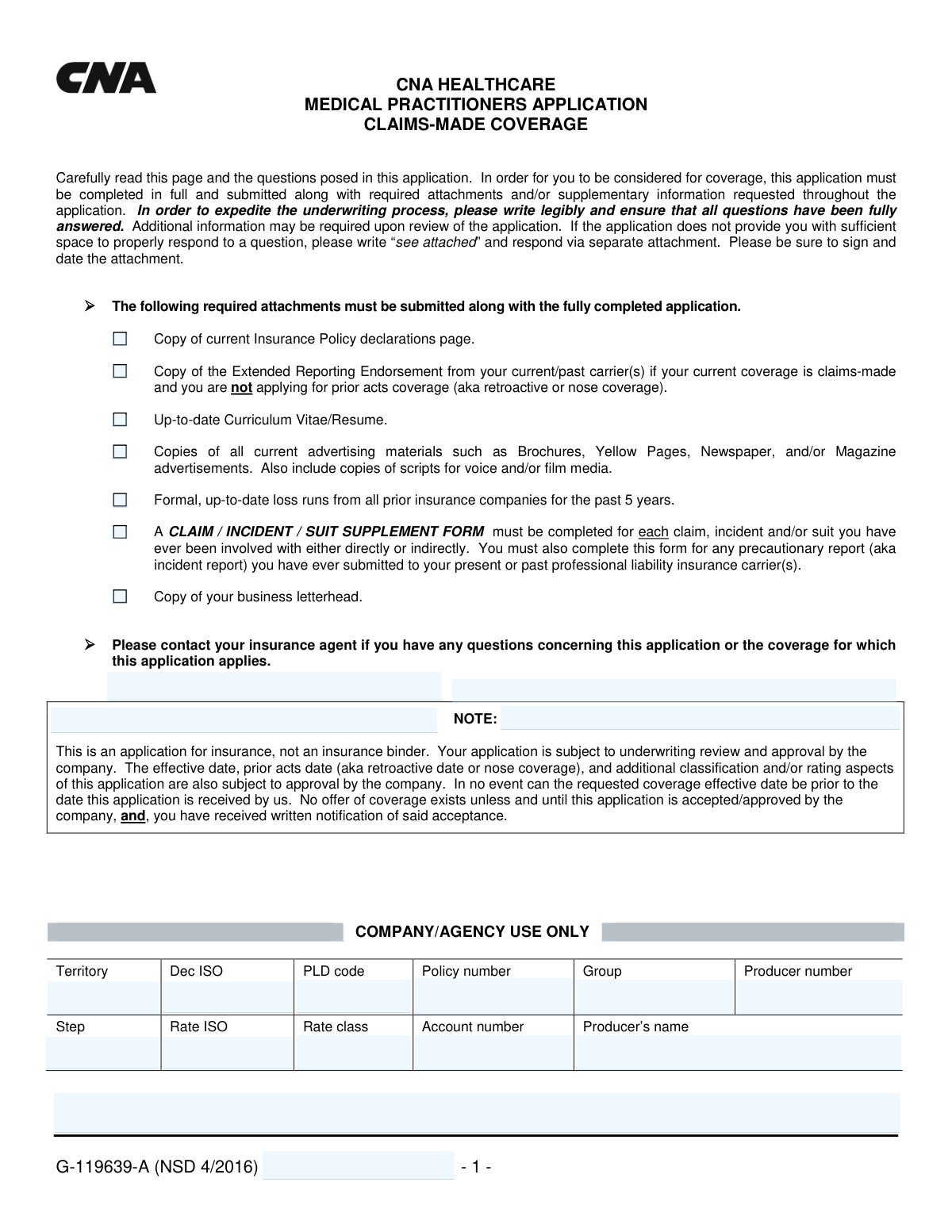
Yes! You can use AI to fill out Physician's Professional Liability Insurance Application
The Physician's Professional Liability Insurance Application is a critical document for medical professionals seeking malpractice coverage. It requires a thorough disclosure of the applicant's personal, educational, and professional history, including practice details, procedures performed, and any prior claims or disciplinary actions, which underwriters use to assess risk. Today, this extensive form can be filled out quickly and accurately using AI-powered services like Instafill.ai, which can also convert non-fillable PDF versions into interactive fillable forms.
Our AI automatically handles information lookup, data retrieval, formatting, and form filling.
It takes less than a minute to fill out Physician's Professional Liability Application using our AI form filling.
Securely upload your data. Information is encrypted in transit and deleted immediately after the form is filled out.
Form specifications
| Form name: | Physician's Professional Liability Insurance Application |
| Number of fields: | 932 |
| Number of pages: | 14 |
| Language: | English |
| Categories: | insurance application forms, insurance forms, physician forms |
Instafill Demo: How to fill out PDF forms in seconds with AI
How to Fill Out Physician's Professional Liability Application Online for Free in 2026
Are you looking to fill out a PHYSICIAN'S PROFESSIONAL LIABILITY APPLICATION form online quickly and accurately? Instafill.ai offers the #1 AI-powered PDF filling software of 2026, allowing you to complete your PHYSICIAN'S PROFESSIONAL LIABILITY APPLICATION form in just 37 seconds or less.
Follow these steps to fill out your PHYSICIAN'S PROFESSIONAL LIABILITY APPLICATION form online using Instafill.ai:
- 1 Navigate to Instafill.ai and upload your Physician's Professional Liability Insurance Application, or select it from their template library.
- 2 Provide your personal and contact information, including your full name, date of birth, Social Security Number, and practice addresses.
- 3 Detail your complete educational and professional background, including medical school, internships, residencies, fellowships, and board certifications.
- 4 Answer all questions regarding your current medical practice, including your specialty, practice structure, procedures performed, and any professional associations.
- 5 Disclose your complete professional liability insurance and claims history, attaching any required supplement forms or loss run reports.
- 6 Carefully review all the information pre-filled by the AI for accuracy, make any necessary corrections, and provide your electronic signature to authorize the application.
- 7 Download, print, or securely submit the completed application along with all required attachments, such as your CV and insurance declarations page.
Our AI-powered system ensures each field is filled out correctly, reducing errors and saving you time.
Why Choose Instafill.ai for Your Fillable Physician's Professional Liability Application Form?
Speed
Complete your Physician's Professional Liability Application in as little as 37 seconds.
Up-to-Date
Always use the latest 2026 Physician's Professional Liability Application form version.
Cost-effective
No need to hire expensive lawyers.
Accuracy
Our AI performs 10 compliance checks to ensure your form is error-free.
Security
Your personal information is protected with bank-level encryption.
Frequently Asked Questions About Form Physician's Professional Liability Application
This is an application for medical professional liability insurance, also known as malpractice insurance. It is used by underwriters to evaluate your practice's risk profile and determine eligibility and pricing for coverage.
This application is for medical professionals, such as Doctors of Medicine (MD) and Doctors of Osteopathic Medicine (DO), who are applying for new or renewal professional liability insurance.
You must submit several documents, including your current insurance policy declarations page, an up-to-date CV, formal loss runs from all prior insurers for the past 5 years, and copies of advertising materials. Refer to the 'Required Attachments Checklist' for a complete list.
Loss runs are official reports from your previous insurance carriers that detail your claims history. They are required for the past five years to help the new insurance company accurately assess your risk profile.
Tail coverage is purchased from your current carrier to allow reporting of claims after a claims-made policy ends. Prior acts coverage is requested from your new carrier to cover incidents that may have occurred before your new policy's start date.
You must disclose all past claims, incidents, or suits by completing and attaching a separate 'Claim/Incident/Suit Supplement Form' for each event. You must also provide formal loss run reports from your prior carriers.
If you practice part-time, you must indicate this and provide the date you started practicing part-time. You will also need to detail the average number of hours you spend per week on various activities like patient care, administrative duties, and hospital rounds.
You must report the arrangement and provide details about the operational setup. This includes whether you share a receptionist, patient charts, or waiting rooms, and you must provide the exact wording on the practice's entrance sign.
You must disclose that you perform telemedicine and provide a detailed description of the services. You also need to list the states where you provide these services and confirm your adherence to professional telemedicine standards.
You must answer 'Yes' to the corresponding question in the 'Medical License Disciplinary Questions' section. You are then required to provide a detailed written explanation of the circumstances, outcome, and relevant dates.
Processing times vary, but you can ensure a faster review by making sure the application is complete and all required documents are attached. Missing information, especially loss runs or claim supplements, is a common cause of delays.
Yes, services like Instafill.ai use AI to auto-fill form fields accurately and save time. This can be especially helpful for long, repetitive applications like this one, reducing the time spent on data entry.
Simply upload the form to the Instafill.ai platform. The AI will make the document interactive, allowing you to type your answers directly, save your progress, and securely store your information for future use.
If you have a flat, non-fillable PDF, you can use a service like Instafill.ai to instantly convert it into an interactive, fillable form. This allows you to easily type your information instead of printing the form and filling it out by hand.
Compliance Physician's Professional Liability Application
Validation Checks by Instafill.ai
1
Social Security Number Format
This check ensures the 'Social Security Number' field is entered in a valid format, either as a 9-digit number (XXXXXXXXX) or with hyphens (XXX-XX-XXXX). This is critical for uniquely identifying the applicant for underwriting, reporting, and legal purposes. If the format is incorrect, the system should prompt the user to correct the entry before submission.
2
Date of Birth Reasonable Age Check
Validates that the 'Date of Birth' is a real calendar date and that the calculated age is within a reasonable range for a practicing physician (e.g., over 25 and under 85). This check prevents simple data entry errors and flags applications that may be fraudulent or require further review due to an unusual age. An invalid or unreasonable date will trigger an error message asking for correction.
3
Conditional Explanation for Disciplinary Actions
This validation ensures that if an applicant answers 'Yes' to any of the 'Medical License Disciplinary Questions' (items a-g), the corresponding 'Medical License Disciplinary Explanation' field must be filled out. This is a critical underwriting requirement, as any affirmative answer necessitates a detailed explanation for risk assessment. Failure to provide an explanation will prevent form submission and prompt the user to provide the required details.
4
Aggregate vs. Per-Claim Limit Logic
This check verifies the logical relationship between the desired liability limits, ensuring the 'Professional Liability Limit (Aggregate)' is greater than or equal to the 'Professional Liability Limit (Each Claim)'. The aggregate limit represents the total coverage for a policy period and cannot be less than the limit for a single claim. An error will be shown if this condition is not met, guiding the applicant to enter valid coverage amounts.
5
Prior Acts Date Consistency
This validation confirms that the 'Prior Acts Date' is not later than the 'Policy Effective Date'. The Prior Acts Date establishes the starting point for coverage of past events on a claims-made policy, so it must logically precede or match the new policy's start date. This prevents a nonsensical policy structure and ensures the applicant understands the coverage being requested.
6
Education and Employment Date Chronology
For each entry in the medical education and practice history sections, this check ensures the 'To Date' or 'End Date' is after the corresponding 'From Date' or 'Start Date'. This maintains the logical timeline of the applicant's career and education, which is fundamental to verifying their experience. If an end date is before a start date, the system will flag the entry as an error.
7
Patient Clientele Percentage Sum
This check calculates the sum of all percentages entered in the 'Patient Clientele Percentage Breakdown' section (Medicare, Managed Care, Workers' Comp, etc.). The total must equal 100%. This ensures the applicant has provided a complete and accurate breakdown of their practice composition, which is vital for underwriting and risk analysis. If the sum is not 100, an error message will appear, requiring the user to adjust the values.
8
Required Attachments Completeness
This validation confirms that every checkbox in the 'Required Attachments Checklist' section has been checked. These documents are mandatory for the application to be considered complete and for underwriting to begin. If any box is unchecked, the system should display a warning or prevent submission, informing the user that all required documents must be included.
9
Conditional Explanation for Policy Lapse
Verifies that if an applicant answers 'Yes' to the 'Claims-Made Policy Lapse Question', the 'Policy Lapse Explanation' field must contain text. A lapse in coverage is a significant underwriting concern that requires a detailed explanation to assess the risk of uninsured periods. The form will be considered incomplete if 'Yes' is selected without a corresponding explanation.
10
ZIP Code and State Consistency
This check validates that the entered 'Primary Practice ZIP Code' corresponds to the selected 'Primary Practice State'. This can be done by referencing a database of US postal codes. This validation improves data accuracy, which is crucial for determining territory-based rating, sending correspondence, and complying with state-specific regulations. An inconsistency would trigger an error prompting the user to review the address information.
11
Conditional Requirement for Previous Office Location
This rule ensures that if the value entered for 'Years at Current Office Location' is less than three, the 'Previous Office Locations and Dates' field must be filled out. Underwriters need a stable practice history to assess risk, so recent moves require additional information. The system should make the 'Previous Office Locations' field mandatory if the condition is met.
12
Practice Specialty Percentage Sum
This validation ensures that the sum of the 'Specialty Practice Percentage' and 'Sub-specialty Practice Percentage' fields equals 100%. This confirms a complete picture of the applicant's practice focus, which is a primary driver of risk and premium calculation. If the total does not equal 100%, the user will be prompted to correct the percentages.
13
Conditional Details for High-Risk Procedures
This check ensures that if an applicant answers 'Yes' to performing a high-risk procedure (e.g., 'Abortions - Yes', 'Bariatric surgery - Yes'), the corresponding detail field (e.g., 'Abortions Percentage of Practice', 'Annual Bariatric Procedures Performed') must be filled with a non-zero value. This information is essential for accurately assessing the specific risks associated with the applicant's practice. The system will flag this as a required field if the initial question is answered affirmatively.
14
Conditional Explanation for Space-Sharing
This validation checks that if an applicant answers 'Yes' to being in a 'Space-Sharing Arrangement', then subsequent detail fields like 'Space-sharing physician name' and 'Practice entrance sign wording' must be completed. Space-sharing can create vicarious liability risks, so underwriters need to understand the specifics of the arrangement. The form should enforce completion of these details if the initial question is 'Yes'.
Common Mistakes in Completing Physician's Professional Liability Application
Applicants often fail to report every claim, suit, or incident, sometimes because they believe an event was minor or did not result in a payout. The form requires disclosure of any circumstance that could reasonably lead to a claim, including patient record requests or letters from attorneys. Omitting this information can be considered misrepresentation, potentially leading to policy cancellation or denial of a future claim.
This application requires numerous attachments, such as a CV, loss runs, declarations pages, and business letterhead. A frequent mistake is checking the boxes on the checklist but failing to include the actual documents, which immediately halts the underwriting process. This leads to significant delays and back-and-forth communication to gather the missing information.
The form contains many questions requiring a 'Yes' or 'No' answer, where a 'Yes' necessitates a detailed written explanation (e.g., for disciplinary actions, health issues, or non-standard practice activities). Applicants often check 'Yes' but forget to provide the mandatory explanation in the designated section or on an attachment. An unexplained 'Yes' answer renders the application incomplete and cannot be processed until the clarification is received.
Medical liability insurance is complex, and applicants frequently confuse the 'Policy Effective Date' with the 'Prior Acts Date' (or retroactive date). Entering the wrong date can inadvertently create a gap in coverage, leaving past medical services uninsured. It is crucial to accurately transfer the prior acts date from the current policy's declarations page to ensure continuous coverage for past work.
The application explicitly asks for formal loss runs from all prior insurance companies for the past five years, not just the current carrier. Applicants often submit only the most recent loss run, leading to an incomplete underwriting file. Underwriters need a complete history to assess risk, and failing to provide it will delay the quoting and binding process until all required documents are obtained.
Underwriters require a continuous, chronological history of an applicant's education, training, and practice locations since medical school. Applicants sometimes leave gaps of months or years in their history, which are immediate red flags for underwriters and require further investigation. It is essential to account for all time periods, even explaining periods of non-practice, to avoid processing delays and scrutiny.
The form asks for details on all employed or supervised staff, including their status as an Employee (E), Supervised only (S), or Independent Contractor (I/C). Misclassifying staff, such as listing an independent contractor as an employee, has significant legal and liability implications. This mistake can affect who is covered under the policy and the premium charged, potentially leaving the applicant exposed to vicarious liability.
Applicants sometimes mistakenly write in sections clearly marked 'Company/Agency Use Only' or 'For Internal Use'. This can cause confusion, require the form to be re-done, or lead to data entry errors by the processing team who may not notice the mistake. It is important to only fill out fields designated for the applicant. AI-powered form filling tools like Instafill.ai can help by locking these sections to prevent user input.
This long application requires the applicant's name and other identifiers on multiple pages, headers, and footers. Applicants may use slight variations in their name (e.g., 'John F. Doe' vs. 'John Fitzgerald Doe') or provide incomplete addresses, missing suite or apartment numbers. These inconsistencies can cause data entry problems and delays, while incomplete addresses can lead to missed correspondence. Using a tool like Instafill.ai ensures data is entered consistently and completely across the entire document.
When asked to list surgical procedures or break down the practice by patient type or activity, applicants may provide vague answers or percentages that do not add up to 100%. Underwriters rely on this specific data to accurately classify the risk and calculate the premium. Ambiguous information requires follow-up questions and delays the quoting process until a clear picture of the practice is established.
Saved over 80 hours a year
“I was never sure if my IRS forms like W-9 were filled correctly. Now, I can complete the forms accurately without any external help.”
Kevin Martin Green
Your data stays secure with advanced protection from Instafill and our subprocessors

Robust compliance program
Transparent business model
You’re not the product. You always know where your data is and what it is processed for.
ISO 27001, HIPAA, and GDPR
Our subprocesses adhere to multiple compliance standards, including but not limited to ISO 27001, HIPAA, and GDPR.
Security & privacy by design
We consider security and privacy from the initial design phase of any new service or functionality. It’s not an afterthought, it’s built-in, including support for two-factor authentication (2FA) to further protect your account.
Fill out Physician's Professional Liability Application with Instafill.ai
Worried about filling PDFs wrong? Instafill securely fills physicians-professional-liability-insurance-application forms, ensuring each field is accurate.